Building for the Australian Climate
Taking on an owner-builder project with a kit home is a fantastic way to create a space tailored to your lifestyle. While the structural integrity of your steel frames is the skeleton of the house, the insulation acts as the skin and fat that keeps the internal environment stable. Australia has some of the most diverse weather patterns on the planet, ranging from the humid tropics of the north to the alpine chills of the south. Because kit homes are often built in regional or coastal areas where weather extremes are common, getting your insulation strategy right is one of the most significant steps in the building process.
Understanding Your Local Climate Zone
The Australian Building Codes Board divides the country into eight distinct climate zones. Before you even unpack your kit home components, you need to know which zone your site falls into. A home in Climate Zone 1 (High Humidity Tropical) requires a completely different approach compared to a home in Climate Zone 7 (Cool Temperate). In hotter areas, the goal is to stop radiant heat from entering the home through the roof and walls. In cooler regions, the priority shifts to retaining the heat generated inside. Most kit homes provide a standard insulation package, but as an owner-builder, you have the flexibility to enhance this based on your specific location. Check the National Construction Code requirements for your zone to ensure you meet the minimum R-value performance levels.
Thermal Performance and Steel Frames
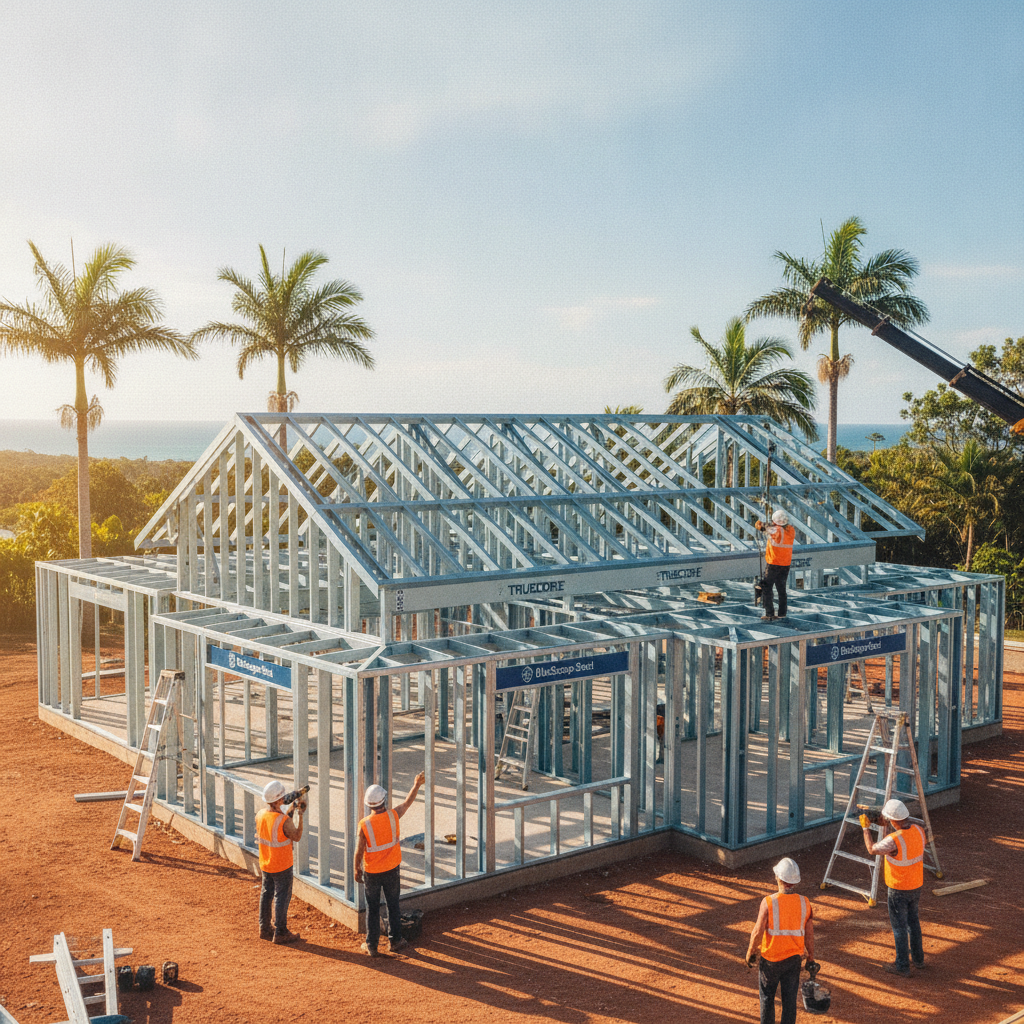
Using BlueScope Steel TRUECORE frames for your kit home offers incredible benefits, including termite resistance and perfectly straight walls. However, steel is a conductor of heat, which introduces a concept known as thermal bridging. This happens when heat travels through the steel studs, bypassing the insulation batts sitting between them. To combat this, building techniques for steel-framed kit homes include the use of thermal breaks. A thermal break is a material with low thermal conductivity placed between the steel frame and the external cladding. This could be a specialized high-density foam strip or a reflective foil laminate. By breaking the path of heat transfer, you ensure that the R-value of your wall is maintained, keeping your home much more comfortable during a scorching Aussie summer.
Bulk Insulation vs. Reflective Insulation
To get the best results, you need to understand the two main types of insulation used in Australian builds. Bulk insulation, like glasswool or polyester batts, works by trapping millions of tiny pockets of air within its structure. This slows down the transfer of conducted heat. Reflective insulation, often called sarking or foil, works by reflecting radiant heat away from the building. In most parts of Australia, a combination of both is the most effective approach. For example, in a typical kit home roof, you might have a layer of reflective foil under the metal roofing sheets to bounce away the sun's rays, paired with thick bulk batts in the ceiling to keep the cool air from escaping the living spaces below.
Roofing and Ceiling Best Practices
The roof is where your home gains and loses the most heat. Since most kit homes feature metal roofing, managing the temperature in the roof cavity is vital. One highly recommended technique is using a roofing blanket, which is a thin layer of bulk insulation faced with reflective foil, installed directly under the roof sheets. This helps with thermal performance and also acts as a brilliant sound dampener during heavy rain. Once the roofing is secure, you can then install ceiling batts from the underside before the internal plasterboard goes up. Ensure there are no gaps between the batts, as even a small opening can allow a significant amount of heat to bypass your insulation system. If you are installing downlights, make sure they are IC-4 rated so they can be safely covered by insulation, or use dedicated covers to maintain a continuous thermal barrier.
Insulating the Walls of Your Kit Home
Wall insulation is your second line of defence. When you are installing your kit home cladding, you will usually start with a wall wrap. This is a membrane that protects the steel frame from moisture while providing an extra layer of thermal resistance. For owner-builders, choosing a breathable wrap is often a smart move, as it allows moisture from inside the home to escape, reducing the risk of mould. Inside the frame, bulk batts should be fitted snugly between the TRUECORE steel studs. Because these frames are manufactured to precise dimensions, you will find that the batts fit much more consistently than they might in a timber frame that has warped or twisted. Always avoid compressing the batts to make them fit, as squashing them reduces the amount of trapped air and lowers their effectiveness.
Managing Condensation and Ventilation
As modern kit homes become more airtight to improve efficiency, the risk of condensation increases. When warm, moist air from cooking or showering hits a cold surface, it turns into water. If this happens inside your walls, it can lead to issues over time. Proper building techniques involve creating a drained cavity between your wall wrap and your external cladding. This allows any moisture that does get behind the cladding to run down and escape through the bottom of the wall. Additionally, ensure your home has adequate ventilation. This might include whirlybirds on the roof to vent the attic space or using eaves vents to allow fresh air to circulate. A well-ventilated roof space can be significantly cooler than one that is completely sealed, reducing the load on your air conditioning.
Sealing the Envelope
You can have the thickest insulation in the world, but if your home has drafts, you will still feel the chill. As you finish the installation of windows and doors provided in your kit, pay close attention to the gaps around the frames. Using expanding foam or specialized sealants to fill the spaces between the window frame and the steel wall studs is a simple task that pays off in the long run. Don't forget the bottom of external doors. Installing high-quality weather seals can prevent drafts and also keep out dust and insects. For owner-builders, this attention to detail during the fit-out phase is what separates a standard build from a high-performance home.
Floor Insulation Options
If your kit home is built on a raised sub-floor rather than a concrete slab, don't overlook what is under your feet. Sub-floor insulation can prevent cold air from rising through the floorboards in winter. There are specialized concertina-style foils or rigid foam boards designed specifically for this purpose. If you are building on a concrete slab, you might consider slab-edge insulation, which prevents heat from leaching out into the surrounding soil. While this is often overlooked, it can make a noticeable difference to the thermal mass performance of your floor, helping it stay at a more consistent temperature throughout the day.
Practical Tips for the Owner-Builder
When it comes time to install your insulation, safety and precision are your two best friends. Always wear a long-sleeved shirt, gloves, a mask, and goggles when handling glasswool batts to avoid irritation. Use a sharp utility knife and a straight edge to cut your batts slightly oversized, usually about 10mm wider than the gap, so they friction-fit perfectly into the steel frame. Check that you aren't covering any electrical cables that need air space to stay cool, and always keep insulation away from old-style hot chimney flues or non-LED light fittings. Taking the time to do a neat, gap-free job will ensure your kit home remains a sanctuary of comfort for decades to come.
The Long-Term Benefits of Proper Insulation
Investing the time and effort into high-quality insulation techniques during the construction of your kit home is one of the smartest decisions you can make. It creates a quieter, more stable living environment and reduces the reliance on mechanical heating and cooling. By understanding the interaction between your TRUECORE steel frames, your chosen insulation materials, and the local climate, you can build a home that is as efficient as it is beautiful. For the Australian owner-builder, these small steps during the build process lead to a lifetime of comfort and a home that truly stands up to the elements.