Managing Water Before the Build Begins
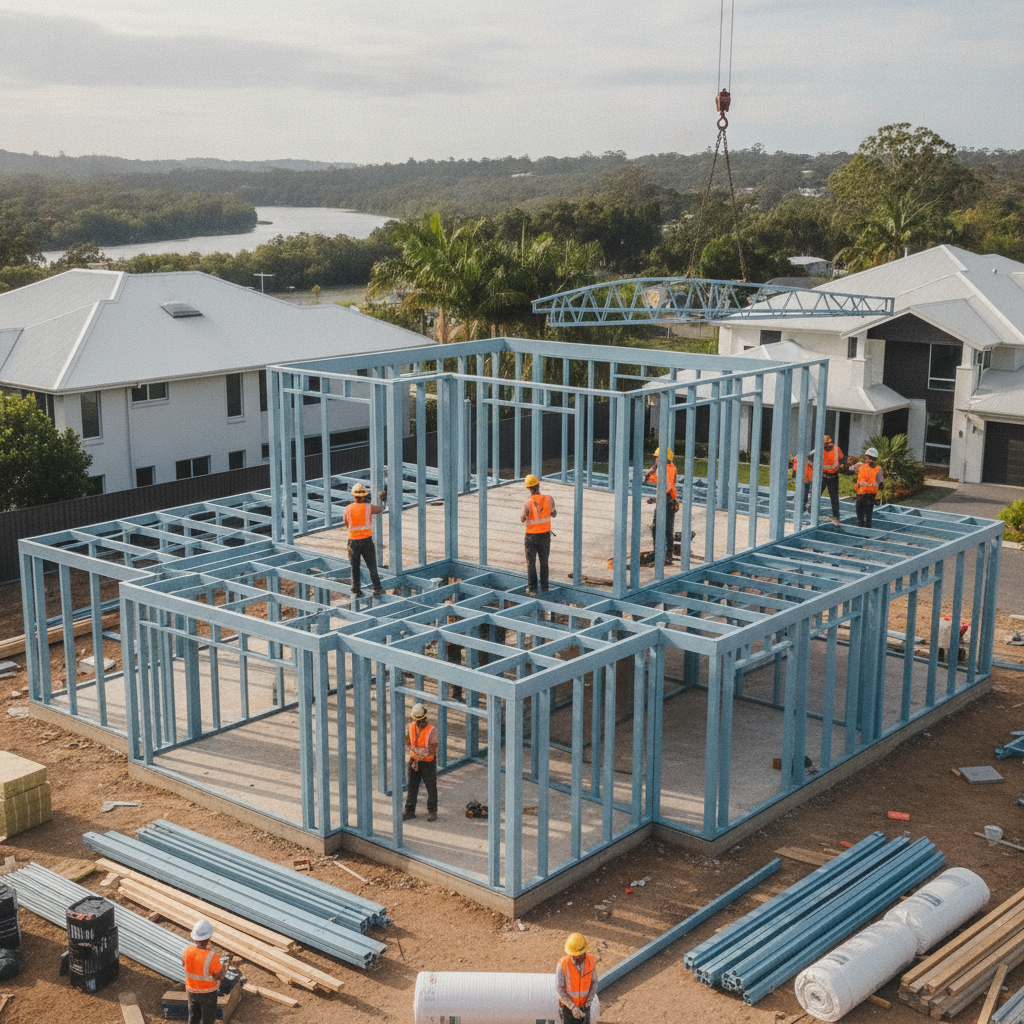
Building your own kit home is a massive project that offers a great sense of achievement. When you take on the role of an owner-builder, you are responsible for the site from the ground up. One of the most overlooked aspects of a successful build is drainage. Water is a powerful force that can undermine foundations, cause soil movement, and create long-term dampness issues if it is not managed correctly from day one. Before your BlueScope Steel TRUECORE frames arrive on site, you need a clear plan for where every drop of rain is going to go.
Australia is a land of extremes. One week you might be dealing with a dusty site, and the next, a tropical downpour or a southern low could dump a month's worth of rain in an afternoon. Proper drainage ensures that this water moves away from your structure quickly and efficiently. This keeps your slab dry and provides a stable base for the steel frame construction that follows.
The Importance of Site Fall and Surface Drainage
The simplest way to manage water is through gravity. This starts with the site cut and the finished ground levels around your slab. Standard building practices usually require a minimum fall away from the house of about 50mm over the first metre. This prevents water from pooling against the edge of the concrete slab. If water sits against the slab, it can seep underneath, causing the soil to swell or shrink, which leads to movement and potential cracking.
For many owner-builders, using swales is a practical and cost-effective solution. A swale is a shallow, wide depression in the ground designed to pick up surface runoff and direct it towards a legal discharge point, such as a street kerb or a dedicated stormwater easement. You can line these with grass or rocks to prevent erosion. When you are planning your site works, look at the natural contour of the land. It is almost always better to work with the natural slope than to fight against it.
Surface Pits and Grated Drains
In areas where you have large expanses of hard surfaces, like a driveway or a paved outdoor area, swales might not be enough. This is where surface pits and grated drains come into play. These are designed to catch high volumes of water during heavy rain. If you have a garage or a carport integrated into your kit home design, a grated drain across the entrance is a smart move to prevent water from flowing inside. When installing these, make sure the pipes leading away from the pits are sized correctly for the expected rainfall in your specific region of Australia.
Foundation Protection and Steel Frame Longevity
One of the main reasons people choose steel frame kit homes is the durability of the materials. BlueScope Steel TRUECORE is designed to withstand the harsh Australian environment and is famously termite-proof. However, even with the best steel frames, you want to ensure your foundation stays dry. Moisture rising through a slab can affect flooring, skirting boards, and internal finishes later on.
During the slab pour, ensure your builder or concretor has installed a high-quality moisture barrier (vapour barrier) underneath. Once the slab is cured and the steel frames are standing, the focus shifts to the slab edge. You want to make sure that the weep holes in your cladding or brickwork are never covered by garden beds or mulch. These holes allow any moisture that gets behind the cladding to escape and provide ventilation. If you block them with dirt or woodchips, you are inviting moisture to sit against your steel frames and the bottom plate of your wall structure.
Subsoil Drainage: The Hidden Hero
Sometimes the water you cannot see is the biggest threat. Subsoil drainage, often called an aggie pipe (agricultural drain), is a perforated pipe buried in a trench filled with gravel. This system is designed to collect groundwater before it reaches your house foundation. These are particularly important if you are building on a site with high clay content or if your house is cut into a slope.
When installing subsoil drains, always wrap the pipe in a geofabric sleeve. This acts as a filter, allowing water in while keeping silt and dirt out. Without the fabric, the pipe will eventually clog up with fine soil particles and stop working. The trench should be backfilled with clean 20mm aggregate to allow for fast water movement. Remember, these drains should never be connected directly to your roof water downpipes. They serve different purposes and can overflow if the two systems are joined together.
Roof Drainage and Stormwater Management
Your kit home will come with roofing and guttering, but as an owner-builder, the installation and the connection to the stormwater system are under your watch. The roof is a massive catchment area. For every millimetre of rain that falls on a square metre of roof, you get one litre of water. On a standard family home, a 20mm storm can result in thousands of litres of water rushing off the roof in a very short time.
Guttering and Downpipes
Make sure your gutters have the correct fall towards the downpipes. If they are too flat, water will pool and cause debris to build up, leading to rust over time, even on high-quality coated steel. Downpipes should be positioned to handle the volume of water from the specific roof area they serve. In areas prone to heavy summer storms, you might consider larger downpipes or additional rainheads to prevent the gutters from overflowing back into the eaves.
Rainwater Tanks and Overflows
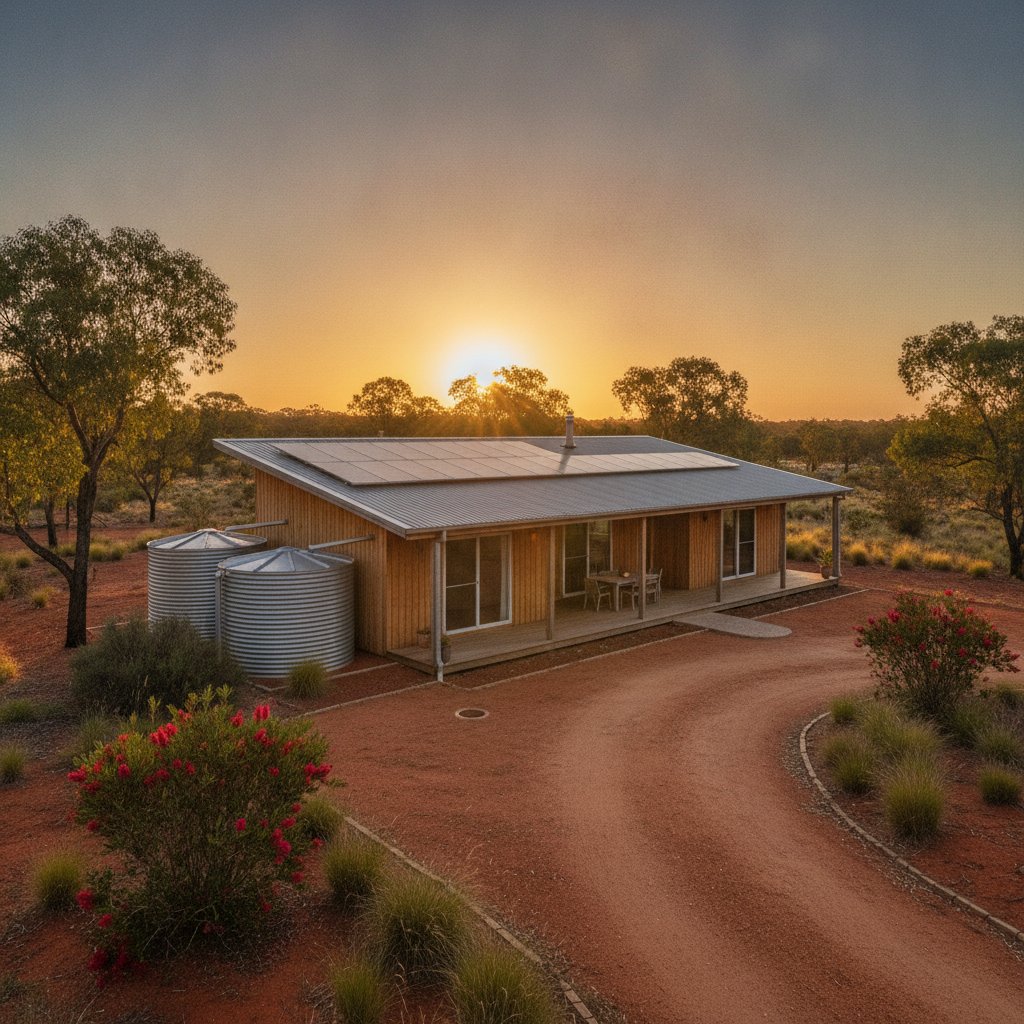
Many councils across Australia require the installation of rainwater tanks for new builds. This is a great way to conserve water, but the overflow must be managed correctly. When the tank is full, the excess water needs to go somewhere. This overflow must be piped to the legal point of discharge, just like your standard stormwater. Do not just let the tank overflow onto the ground next to your house, as this can saturate the soil near your foundations and cause the very issues you are trying to avoid.
Retaining Walls and Hydrostatic Pressure
If your site involves retaining walls to create a level building pad for your kit home, drainage behind those walls is non-negotiable. Without it, water builds up behind the wall, creating what is known as hydrostatic pressure. This pressure is incredibly strong and can cause even a well-built wall to lean, crack, or collapse.
Every retaining wall should have a dedicated aggie pipe at its base, surrounded by gravel and protected by geofabric. This pipe needs to discharge to a safe area or be connected to the stormwater system. Additionally, weep holes should be placed in the face of the wall to allow any trapped water to escape. If you are building a wall over a certain height, check with your local council as you might need an engineer to sign off on the drainage and structural design.
Legal Requirements and the AS3500 Standard
In Australia, plumbing and drainage work is governed by the AS3500 standard. While you might be doing a lot of the work yourself as an owner-builder, most states require a licensed plumber to sign off on the final stormwater and sewerage connections. This is for a good reason. Incorrectly connected drains can cause major issues for your neighbours or the local council infrastructure.
Always identify your legal point of discharge before you start digging. This is the spot where the council allows you to connect your stormwater. It might be a pipe in the corner of your lot, or you might have to pipe the water all the way to the street. Never ever connect your stormwater to the sewerage system. This is illegal and can cause sewage to back up into your home or your neighbours' homes during heavy rain.
Practical Tips for the Long Term
Drainage is not a set-and-forget part of your building project. As an owner-builder, you should get into the habit of checking your systems regularly. After the first few heavy rains, go outside and see how the water is moving. Are there puddles forming near the slab? Are the swales flowing freely? Is there any sign of erosion near your discharge points?
Keep your gutters clear of leaves and debris. If you have a lot of trees nearby, installing gutter guards can save you a lot of time and effort. Also, check your silt pits once or twice a year. These pits are designed to catch dirt before it enters your main pipes. Simply lift the lid and shovel out any accumulated mud. It is a five-minute job that can prevent a massive headache later on.
The Value of a Dry Site
By putting in the effort to get your drainage right, you are protecting your investment. A dry site means a more stable foundation, a healthier living environment, and a longer life for your building materials. Your steel frame kit home is a precision-engineered structure, and it deserves a solid, dry base to stand on. While digging trenches and laying pipes might not be as exciting as seeing the steel frames go up, it is the hard work you do underground that ensures your home stands strong for decades to come.