No More Twisty Timber: Why Steel Frames Don't Warp Like Your Old Deck
Listen, if you've ever wrestled with a warped piece of hardwood decking, trying to get it straight before you screw it down, you know the frustration. Timber moves. It always has, and it always will. That's just how the natural material behaves - it breathes, expands, shrinks, and twists with every change in humidity and temperature. Now, imagine that happening inside the walls of your new home. Not ideal, right? That's precisely why we build our kit homes with steel frames, specifically BlueScope TRUECORE steel. It's a game-changer for anyone wanting a house that stays square and true, long after the last nail goes in.
Owner-builders, especially, need to pay attention here. You're putting in the hard yards, the sweat equity, the late nights. You want a product that makes your life easier, not harder, down the track. A wonky frame from the get-go can create a cascade of headaches: plasterboard cracking, door frames going out of square, windows that don't quite seal. Nobody wants that. Steel frames largely eliminate these common frustrations, giving you a solid, stable foundation for everything else you build on top of it.
The Problem with Timber: It's a Living Thing
Think about timber for a sec. It's organic. It’s a tree, cut down and milled. Even when it's dried and treated, it retains a memory of its life in the forest. When the air gets humid, timber sucks up moisture like a sponge, swelling. When it dries out, it shrinks. This movement isn't just a minor annoyance; it can be significant. We're talking about variations that can throw a perfectly plumb wall out by millimetres over its height, or cause studs to cup and bow. Ever tried to hang a new kitchen cupboard on a wall that's not flat? It's a nightmare. You spend hours shimming, packing, and swearing, just to get things level.
And it's not just the big movements. Over time, that constant expansion and contraction puts stress on your plasterboard, your cornices, even your roof sheeting. Little cracks start to appear, paint lines get wavy, and suddenly your brand-new home starts looking a bit tired, a bit old before its time. Plus, timber's natural inconsistencies, knots and grain patterns, can mean some pieces are stronger, some weaker, some straighter, some prone to twisting. You're constantly sorting through stacks, picking out the 'good' ones for critical structural elements.
Why Steel is Different: Unmatched Dimensional Stability
Steel, on the other hand, is an engineered material. It doesn't have the same organic 'memory' as timber. When we talk about dimensional stability, we mean that steel frames hold their shape, their size, and their straightness, regardless of what the weather is doing outside. Hot, humid summer day? No worries. Freezing, dry winter night? Still no dramas. This isn't just a small difference; it's fundamental to the long-term integrity of your home.
BlueScope TRUECORE steel, the stuff we use for our frames, is precision-rolled. Every stud, every top hat, every truss member is exactly the same profile, exactly the same length (within tiny tolerances). This means your frame goes together square, level, and plumb. And crucially, it stays that way. We're talking about a material that barely moves at all due to changes in moisture content. Thermal expansion? Yes, steel will expand and contract slightly with temperature changes, but it's predictable and factored into the design. It's a uniform, controlled movement, not the unpredictable warping and shrinking you get with timber.
Real-World Impact: What This Means for Your Build
- Easier Lining and Finishing: Imagine putting up plasterboard on walls that are perfectly straight. No more trying to bend a sheet to match a bowed stud. This saves you time, cuts down on material waste, and gives you a far superior finish. Your painter will thank you; your tiler will love you.
- Door and Window Precision: Doors will swing freely without catching, windows will open and close smoothly, and seals will remain tight for years. This isn't just about convenience; it's about energy efficiency too, preventing drafts and maintaining consistent indoor temperatures.
- Long-Term Structural Integrity: A stable frame means less stress on all your finishes. Fewer cracked cornices, straighter walls, and a home that simply feels more solid and robust for decades. It's an investment in peace of mind.
- Predictability for Owner-Builders: For DIYers, predictability is gold. You can trust that the frame you put up today will be the same frame tomorrow, next month, and next year. This removes a massive variable from your build and lets you focus on the next step with confidence.
The Kit Home Advantage: Built to Spec
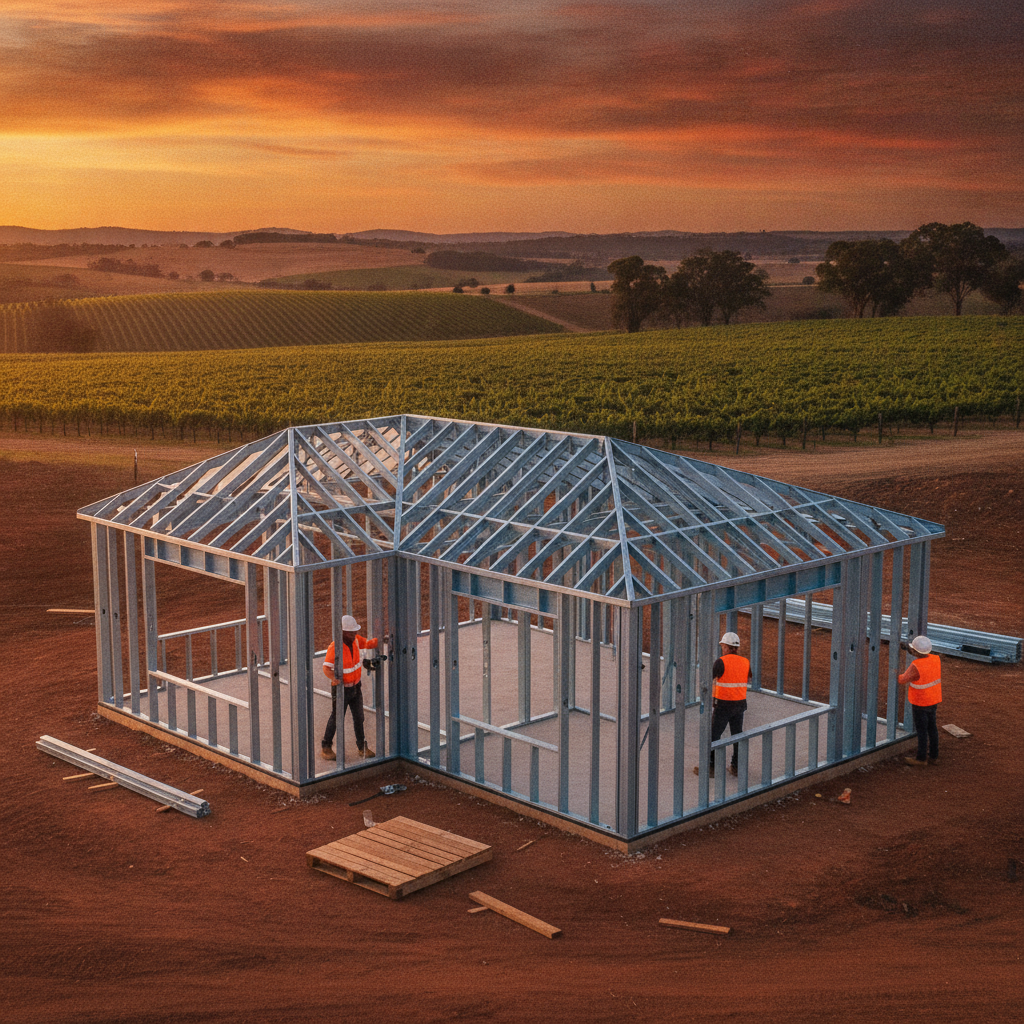
When you get a kit home from us, the steel frame components arrive on site, pre-cut, pre-punched, and ready to bolt together. This isn't just about speed; it's about accuracy. Because steel doesn't move and our frames are engineered with precision, every piece fits exactly where it's supposed to. It's like a big LEGO set for grown-ups. The plans specify every connection, every screw, every brace. This massively reduces the chance of errors during the frame erection stage, which is critical for owner-builders who might not have years of framing experience under their belt.
We've had owner-builders in places like Gympie and Tamworth tell us how much they appreciated the ease of assembly. They could see the quality of the components, how everything lined up perfectly. This isn't just about building a house; it's about building it right, the first time. Plus, because the frame is so dimensionally stable, you're not battling it as you put up your roof trusses, or when you're installing your windows. It just sits there, solid, waiting for the next step.
Beyond Stability: Other Steel Frame Perks for Aussie Homes
While dimensional stability is a huge win, especially in our often-extreme Aussie climate, steel frames bring other benefits that are worth mentioning:
- Termite Resistance: This one's a no-brainer. Termites love timber. They chew through it like there's no tomorrow. They can't eat steel. Full stop. In Queensland and Northern NSW, where these little buggers are rampant, a steel frame is just good common sense. No expensive chemical treatments needed for your frame, ever.
- Fire Resistance: Steel is non-combustible. It won't ignite, and it won't add fuel to a fire, unlike timber. While it can lose strength at very high temperatures, it still performs better in a fire than timber frames, offering better protection for your home and its occupants. This is a big plus in many bushfire-prone areas across Australia.
- Lightweight and Strong: Don't let the 'lightweight' part fool you into thinking it's weak. Steel has an incredible strength-to-weight ratio. This means your frame can be lighter, yet stronger than a comparable timber frame, making it easier to handle on site, and potentially reducing the load on your slab.
- Environmentally Friendly: BlueScope steel contains recycled content, and at the end of its very long life, it's 100% recyclable. Plus, because it doesn't need pest treatments or chemical preservatives, it's a cleaner material to work with and to live with.
Practical Tips for Owner-Builders with Steel Frames
So, you're sold on steel. Good choice. Here's a few things to keep in mind when you're working with it:
- Read the Plans Carefully: The beauty of a steel kit home is its precision. Every piece has a place. Follow the assembly instructions to the letter. Don't eyeball it. Use your tape measure.
- Use the Right Tools: You'll need an impact driver for self-drilling screws, and maybe a nibbler or specific steel cutting tools if you need to make modifications. Don't try to hack at it with a timber saw.
- Beware of Electrocution: Steel conducts electricity. Always be mindful of power lines, and ensure all electrical work is done by a qualified electrician, following all safety standards.
- Plan for Services: While our frames come with pre-punched holes for plumbing and electrical, always double-check your service runs. It's harder to cut new holes in steel than it is to drill through timber, so get it right the first time.
- Consider Thermal Bridging: Steel is a good conductor of heat and cold. While the frame itself is fine, good insulation practices are crucial. We include insulation in our kits for a reason. Make sure it's installed correctly, especially on external walls, to prevent thermal bridging and ensure your home stays comfortable.
- Hanging Heavy Items: Unlike timber, you can't just screw a heavy shelf anywhere into a steel stud. Plan for noggins or blocking where you know you'll be hanging TVs, large mirrors, or kitchen cabinets. It's much easier to add these during framing than trying to retrofit later.
The Long View: A Home That Lasts
Building a home is one of the biggest investments you'll ever make, especially when you're pouring your own time and effort into it as an owner-builder. You want that investment to last. You want a home that stands up to the harsh Australian sun, the torrential rain, the dry spells, and everything else our climate throws at it. A steel frame, with its incredible dimensional stability, gives you that confidence. Your walls will stay straight, your doors will close properly, and your finishes will last longer. No more looking at wavy plaster or doors that stick. Just a solid, stable home you can be proud of, built to weather decades of Australian life.
It's not just about building a house; it's about building a home that's truly built to last. And with BlueScope TRUECORE steel frames, you're setting yourself up for success, ensuring your hard work results in a home that's as straight and true on day one as it is on day 5,000.