The Great Australian Dream: Bringing the Indoors Out
There is something uniquely Australian about the way we live. While the four walls of a house provide us with shelter and comfort, the true heart of an Australian home often lies just beyond the sliding glass doors. Whether it is a Sunday afternoon barbecue, a quiet morning coffee listening to the kookaburras, or a starlit dinner party with friends, our outdoor spaces are where memories are made. When you are planning a kit home in Australia, you have a golden opportunity to design this lifestyle from the ground up.
Building a kit home is about more than just choosing a floor plan, it is about envisioning how you will inhabit every square metre of your property. By treating your outdoor entertaining area as a primary living zone rather than an afterthought, you can effectively double your usable floor space and create a home that feels expansive, breezy, and connected to the landscape.
Designing for the Australian Climate
Before you pick out the outdoor lounge or the wood fired pizza oven, you need to consider the practicalities of the Australian environment. Our sun is harsh, our rain can be torrential, and the direction of the breeze can make or break a summer evening.
Orientation is Everything
One of the biggest advantages of being an owner builder is the control you have over site placement. For the ultimate outdoor living space, aim to position your main entertaining deck or patio on the north side of the home. This allows for beautiful solar gain in the winter while providing opportunities to manage the summer heat with clever shading.
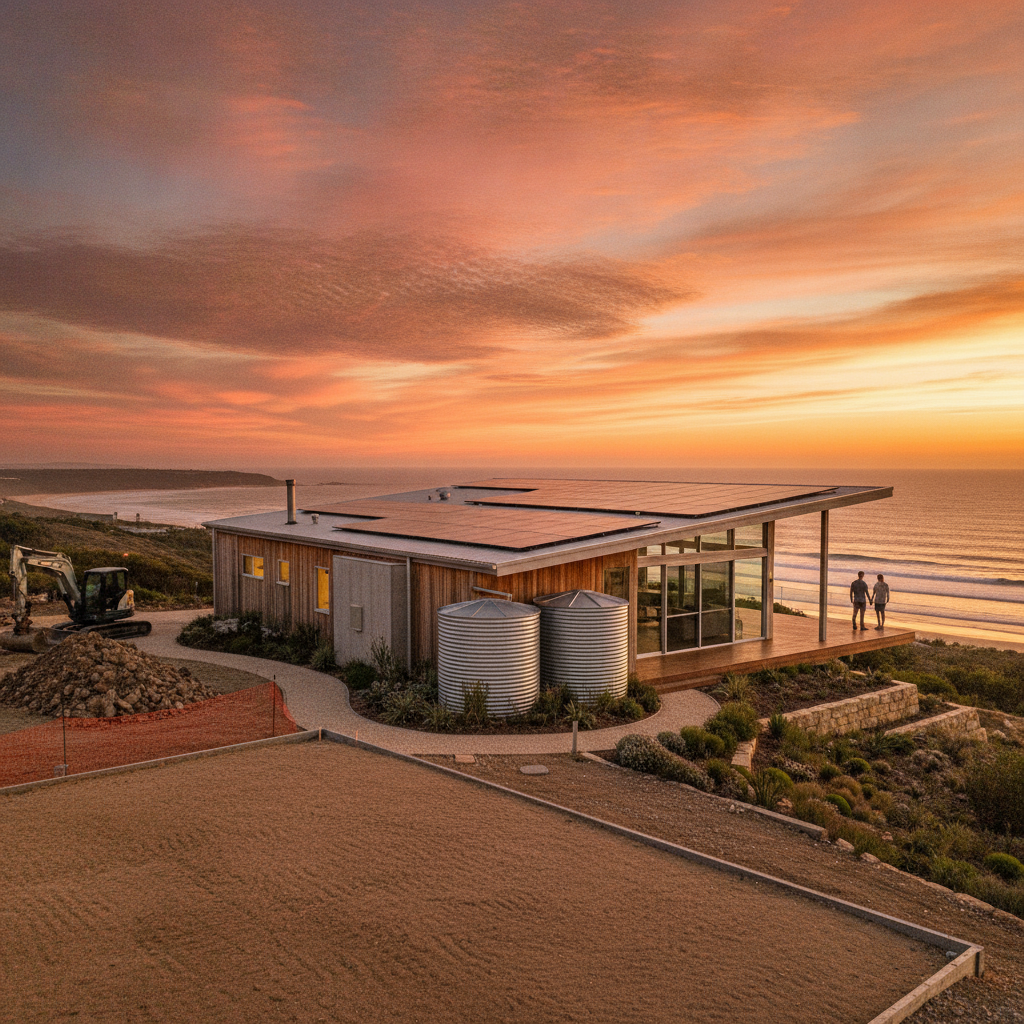
Think about the prevailing winds in your specific region of Australia. In coastal areas, you might want to capture those cooling sea breezes, while in more exposed rural settings, you may need to design your kit home in an L-shape or U-shape to create a protected courtyard that shields your outdoor dining area from gusty winds.
Seamless Transitions: The Secret to Flow
To make an outdoor space feel like a natural extension of your kit home, the transition needs to be as seamless as possible. This is where your choice of doors and flooring plays a starring role.
Large Apertures and Thresholds
When selecting the windows and doors for your kit home, consider oversized sliding doors or stacker doors. These allow you to open up entire sections of your wall, blurring the line between your kitchen and your deck. If your budget allows, look into flush threshold tracks that sit level with your flooring, removing the physical step and making the transition feel effortless.
Material Continuity
A clever design trick is to use materials that speak to each other. If you have chosen a particular timber for your internal flooring, try to find a decking timber or a tile for the outdoor area that has a similar tone or texture. Even the structural elements of your kit home, such as the sleek lines of the steel frame roof extension, can be mirrored in the design of your pergola to create a sense of architectural harmony.
The Multi-Functional Outdoor Hub
Today’s Australian housing trends are moving away from the simple concrete slab with a lone barbecue. We are now seeing sophisticated outdoor hubs that serve multiple purposes throughout the day.
The Outdoor Kitchen
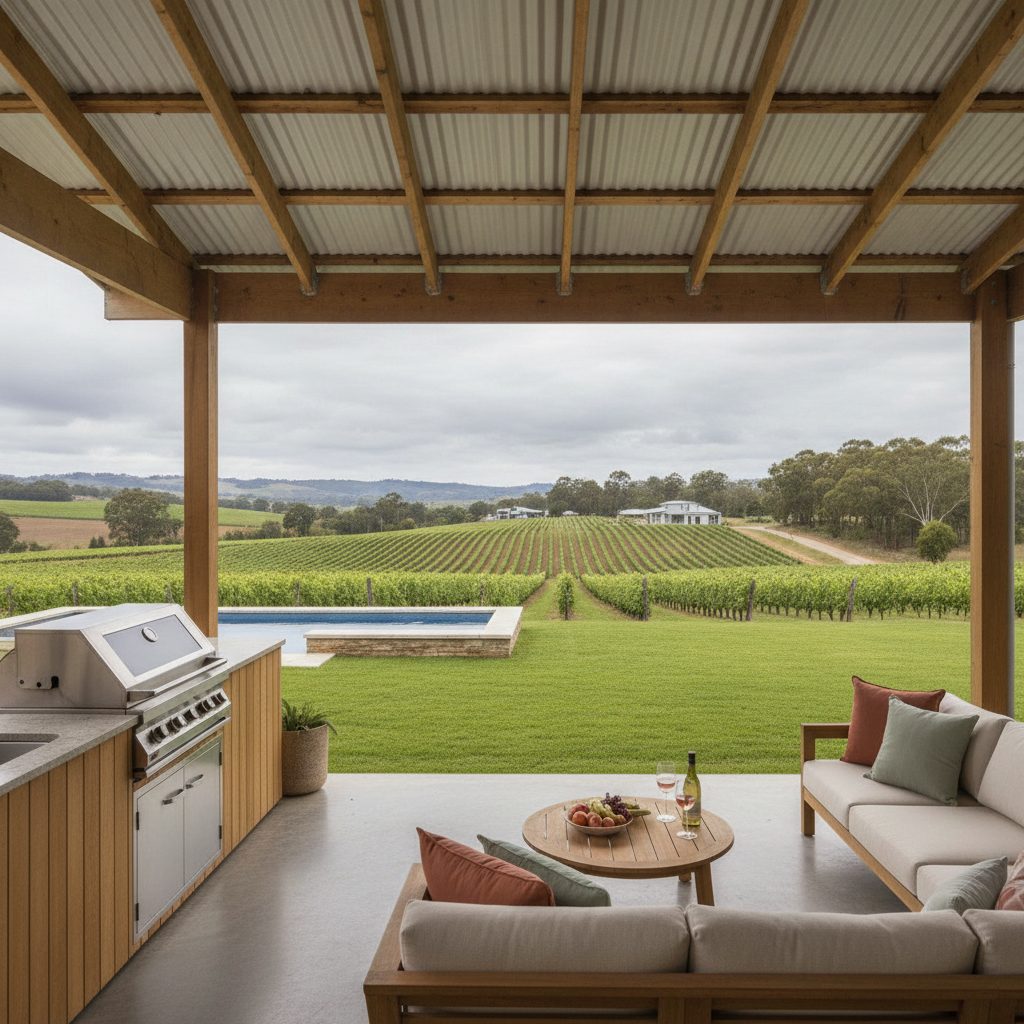
If you love to entertain, an outdoor kitchen is a game changer. This does not have to be a multi-thousand dollar installation. By extending your kit home’s plumbing and gas lines to the external wall during the early build phase, you can easily install a sink and a built-in barbecue later. This keeps the cook involved in the conversation and prevents constant trips back and forth to the main kitchen.
Zoned Areas for Different Moods
Just like your indoor floor plan, your outdoor space should have zones. You might have a dedicated dining area under the main roofline of the kit home for shade, a sun-drenched nook with comfortable armchairs for reading, and perhaps a lower level fire pit area for evening gatherings. Using different textures, like a mix of timber decking and stone pavers, can help define these zones without the need for walls.
Owner Builder Tips: Planning for Longevity
As an owner builder, you are in the driver's seat when it comes to the quality and durability of your build. When you are constructing a kit home, you are already starting with a high quality foundation, particularly if you are using Australian made BlueScope steel frames. Here is how to ensure your outdoor space lasts just as long as the house itself.
Choose Low Maintenance Materials
The Australian sun is relentless on building materials. For your outdoor entertaining area, look for cladding and decking options that require minimal upkeep. Steel roofing and wall cladding are excellent choices because they do not warp, rot, or requires constant painting. Many owner builders are also opting for composite decking which gives the look of timber without the need for annual sanding and oiling.
Integrated Lighting and Tech
It is much easier to run electrical cables while your steel frames are exposed and before the internal linings go on. Plan your outdoor lighting early. Think about dimmable LED downlights in the eaves, spike lights in the garden to create depth at night, and even outdoor speakers or a wall mounted television point. Having these integrated into the initial build ensures a clean, professional finish without messy exposed conduits later on.
Bringing in the Greenery
No Australian outdoor space is complete without a connection to nature. Your landscaping should feel like an extension of your kit home’s design. If you have gone for a modern, industrial look with dark steel cladding and sharp lines, consider architectural plants like agaves or ornamental grasses. For a more classic Australian farmhouse kit home, native wattles, banksias, and eucalyptus trees will help the home sit softly in the landscape.
Consider using vertical gardens or climbing vines on a trellis to soften the transition between your house walls and the garden. This not only looks beautiful but can also provide a natural layer of insulation, keeping your outdoor area cooler during the height of summer.
Summary of Key Kit Home Tips for Outdoor Living
- Plan for the eaves: Wide eaves are a hallmark of Australian design. They protect your windows from the sun and provide a sheltered perimeter around your home for walking and sitting during rain.
- Check your bushfire rating: Depending on where your property is located in Australia, you may need to use specific non-combustible materials for your deck and outdoor structures. Steel frames and metal roofing provide a great head start in meeting high BAL (Bushfire Attack Level) requirements.
- Think about privacy: Use clever screening, such as timber slats or laser-cut metal panels, to create a sense of seclusion if your neighbours are close by. This also acts as a great windbreak.
- Ventilation is key: If you are enclosing your outdoor area with screens or bistro blinds, ensure there is still plenty of airflow to keep the space comfortable.
The Importance of the Steel Frame Advantage
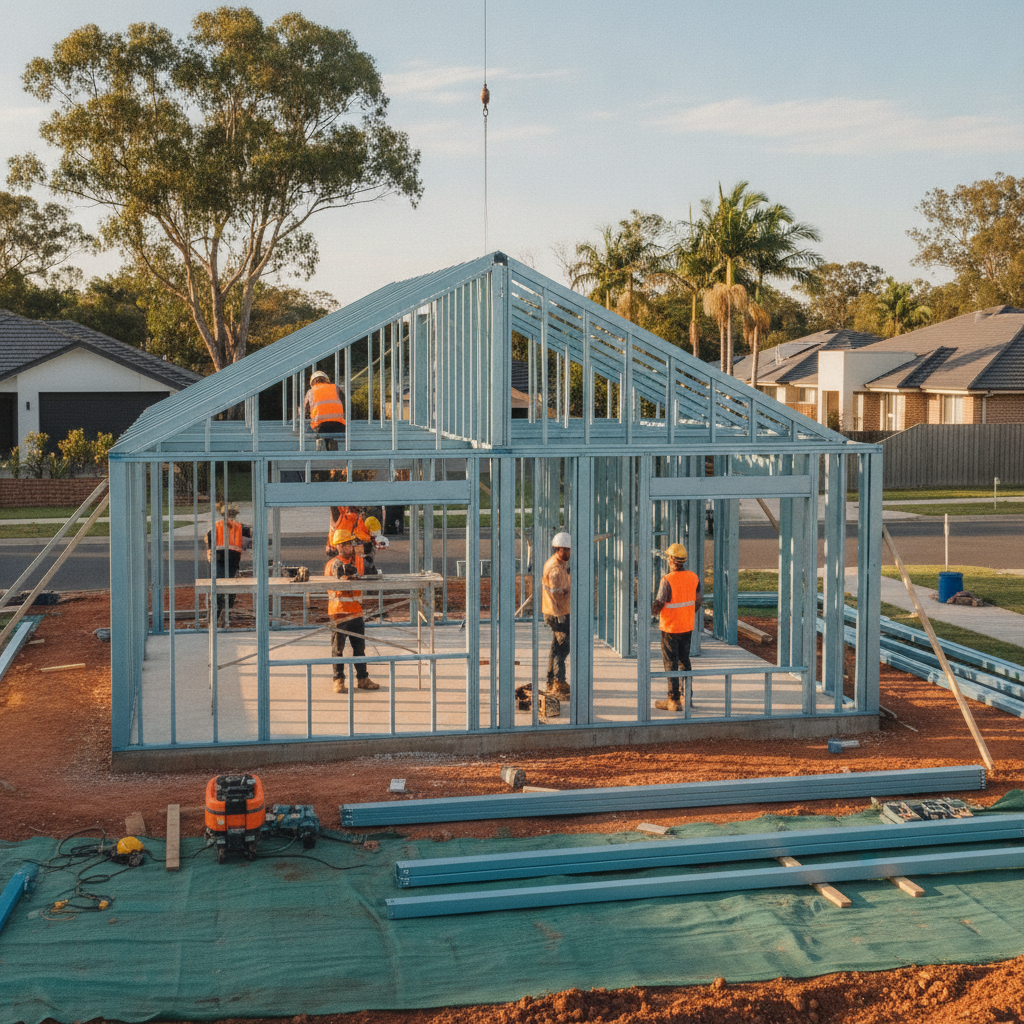
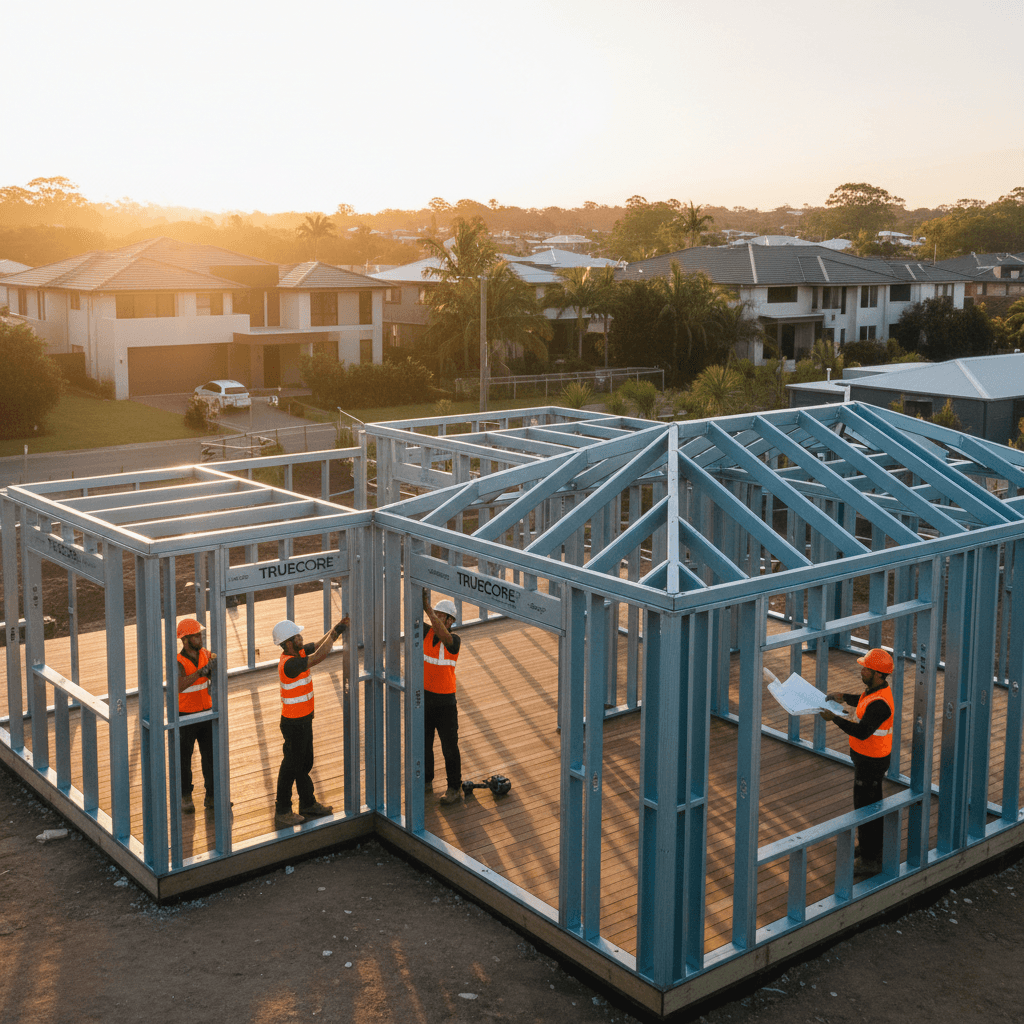
While design and lifestyle are the focus, the bones of your home matter. Using a steel frame kit home, specifically one using TRUECORE steel, offers incredible peace of mind for an owner builder. Steel is perfectly straight and stays that way, which is vital when you are installing large sliding doors that require precision. It is also resistant to termites, which can be a significant concern for outdoor timber structures in many parts of Australia. By starting with a precision-engineered steel kit, you are giving yourself the best possible canvas to create your dream outdoor oasis.
Conclusion: Your Lifestyle, Your Way
Building a kit home in Australia is a journey of self expression. It is an opportunity to move away from cookie-cutter designs and create a sanctuary that reflects how you truly want to live. By focusing on your outdoor entertaining spaces from the very beginning, you are not just building a house, you are building a lifestyle.
Whether it is the flow between the kitchen and the deck, the way the late afternoon sun hits your patio, or the durability of your steel frame structure, every decision counts. Take the time to plan, visualize your future gatherings, and don’t be afraid to think outside the box. Your perfect Australian outdoor lifestyle is just a kit home away.