Before the Kit Arrives: Site Prep for Your Aussie Kit Home
Right, so you've signed off on the plans for your new kit home. You've picked out the cladding, maybe even argued with the missus over the kitchen layout. Good stuff. But now comes the bit where the rubber really hits the road, the actual ground. Getting your site ready for a kit home delivery, especially if you're out in the sticks, isn't something you can just wing. It takes proper planning, a bit of muscle, and a fair bit of common sense. Otherwise, you'll have trucks stuck, a stressed-out owner-builder, and a whole lot of unnecessary headaches before you've even screwed in the first TRUECORE steel frame.
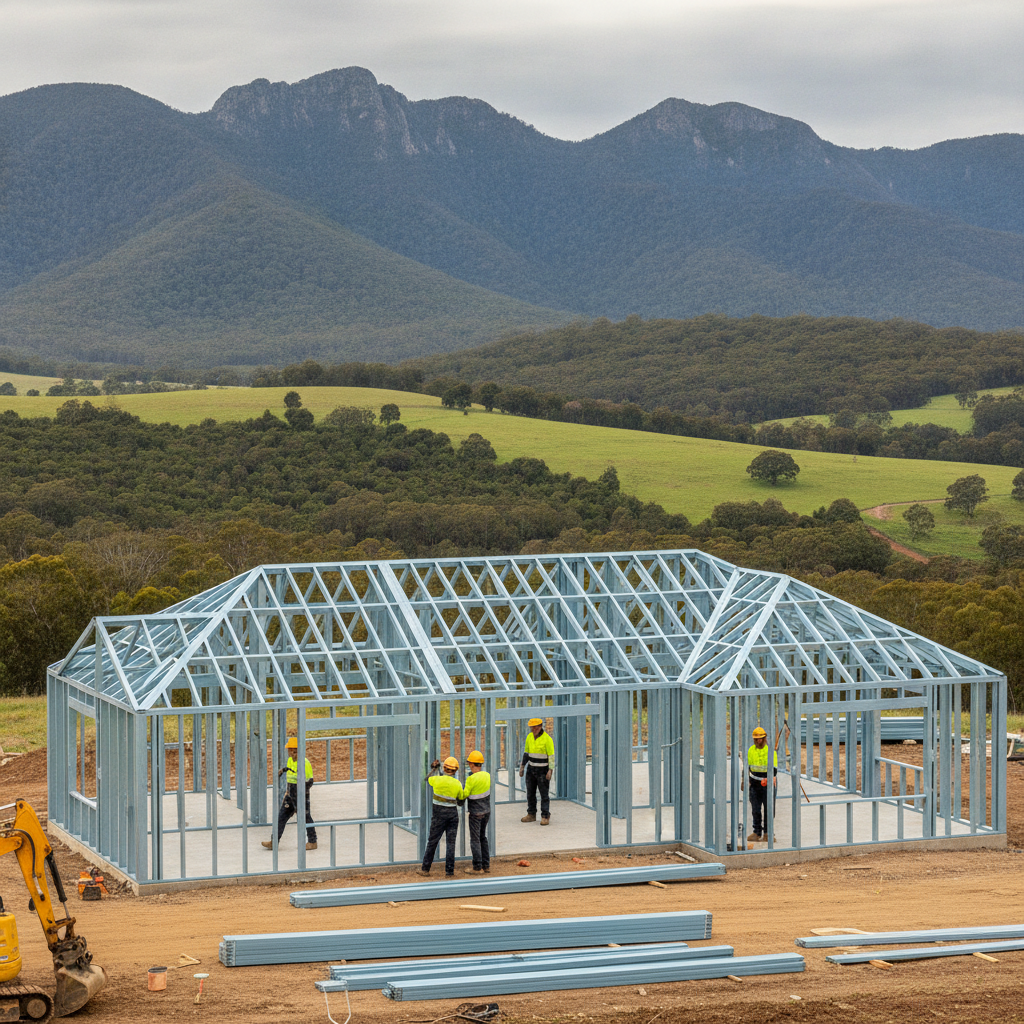
See, a kit home isn't like a traditional build where materials trickle onto the site as needed. Nope. Your kit, with all its steel frames, roof trusses, cladding, windows, and doors, arrives in a few big, coordinated loads. If your site ain't ready, those trucks are going to struggle, they'll charge you for waiting, or worse, they'll have to unload miles from where you actually need the stuff. Nobody wants that. Especially not when you've got a deadline looming and that first slab pour is booked.
Clearing the Path: Access Roads and Turnarounds
First up, and it's probably the most overlooked bit, is getting those delivery trucks in and out. Think about it. We're talking semi-trailers, sometimes with a dog trailer if you're getting a big kit. These aren't your mate's ute. They need room. Heaps of it.
Is your driveway wide enough? Can a B-double turn around without chewing up half your paddock or getting bogged in the winter mud? If you're building rural, which a lot of our kit home customers are, this is paramount. You might need to temporarily widen a gate. Cut back some overhanging branches that are a menace to truck paintwork. Reinforce a culvert that's seen better days. That old farm track? It might need a fresh layer of gravel, maybe even a bit of grading to stop it turning into a bog hole after a decent shower. We had a customer near Armidale last year. Big kit, decent drive, but he hadn't thought about the turnaround. Truck driver spent 45 minutes trying to reverse out, nearly wiped out a fence line. Could've been avoided with a bit of foresight and a small, temporary turning circle.
Make sure the final drop-off point, where the crane or forklift will do its work, is solid ground too. No soft spots. You don't want a 20-tonne truck sinking to its axles. And it needs to be close enough to your actual build pad to make moving materials easy. Remember, you'll be handling these packs, maybe with a small telehandler or a few strong blokes. Keep the distance short.
The Slab: Your Foundation for Everything
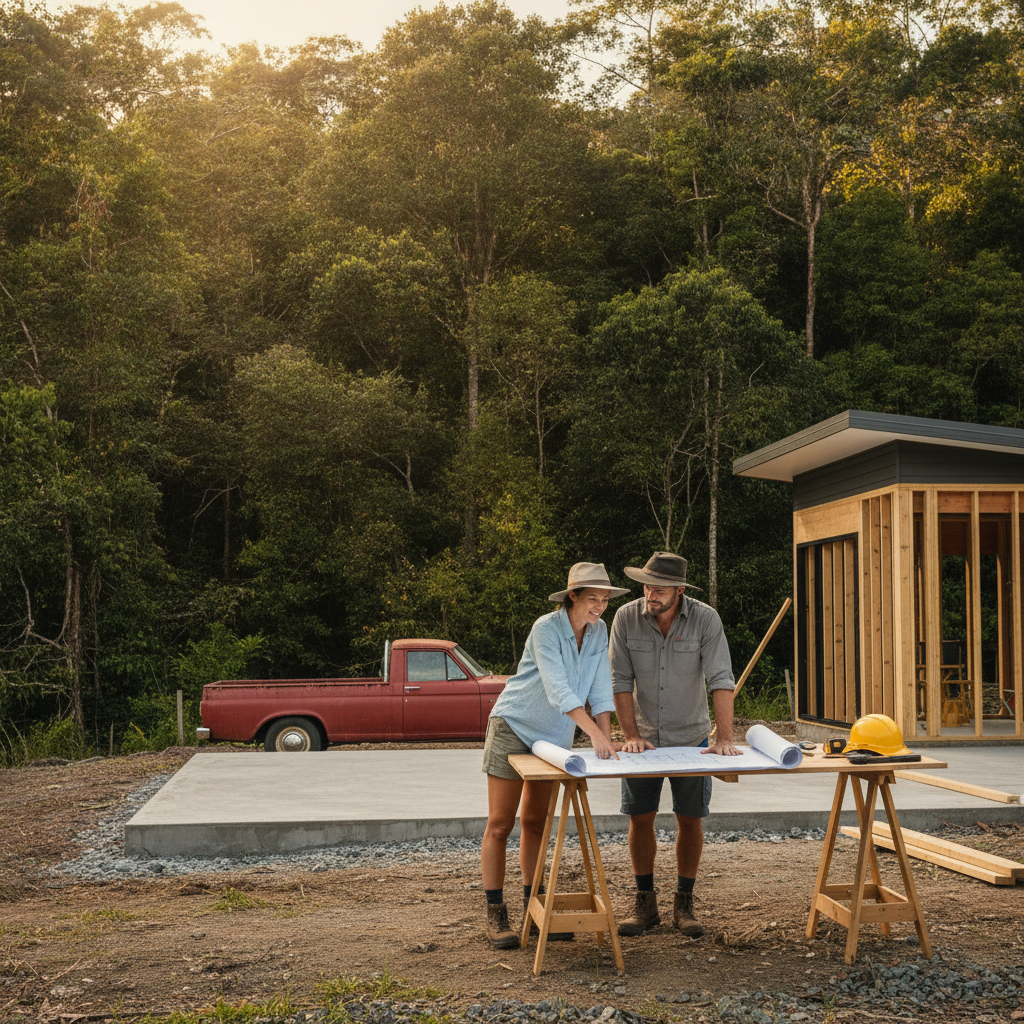
Alright, so the trucks can get in. Brilliant. Now, let's talk about the slab. This is the bedrock of your kit home. You've got to have this poured, cured, and ready to go before your kit even leaves the factory. There's no building a steel frame onto bare dirt, mate. It just doesn't happen.
Your engineer's plans, the ones you got with your kit drawings, will detail exactly what kind of slab you need. This ain't a guessing game. Soil tests are crucial, especially on rural blocks where conditions can vary wildly. Is it reactive clay? Rocky ground? Sandy? All this determines the slab design – waffle pod, raft, pier and beam, whatever. Get a good earthmover in there, one who knows what they're doing. They'll cut and fill, compact the sub-grade, and get it level. You wouldn't believe how many owner-builders try to skimp here, and it bites them hard later. A dodgy slab means a dodgy house, period.
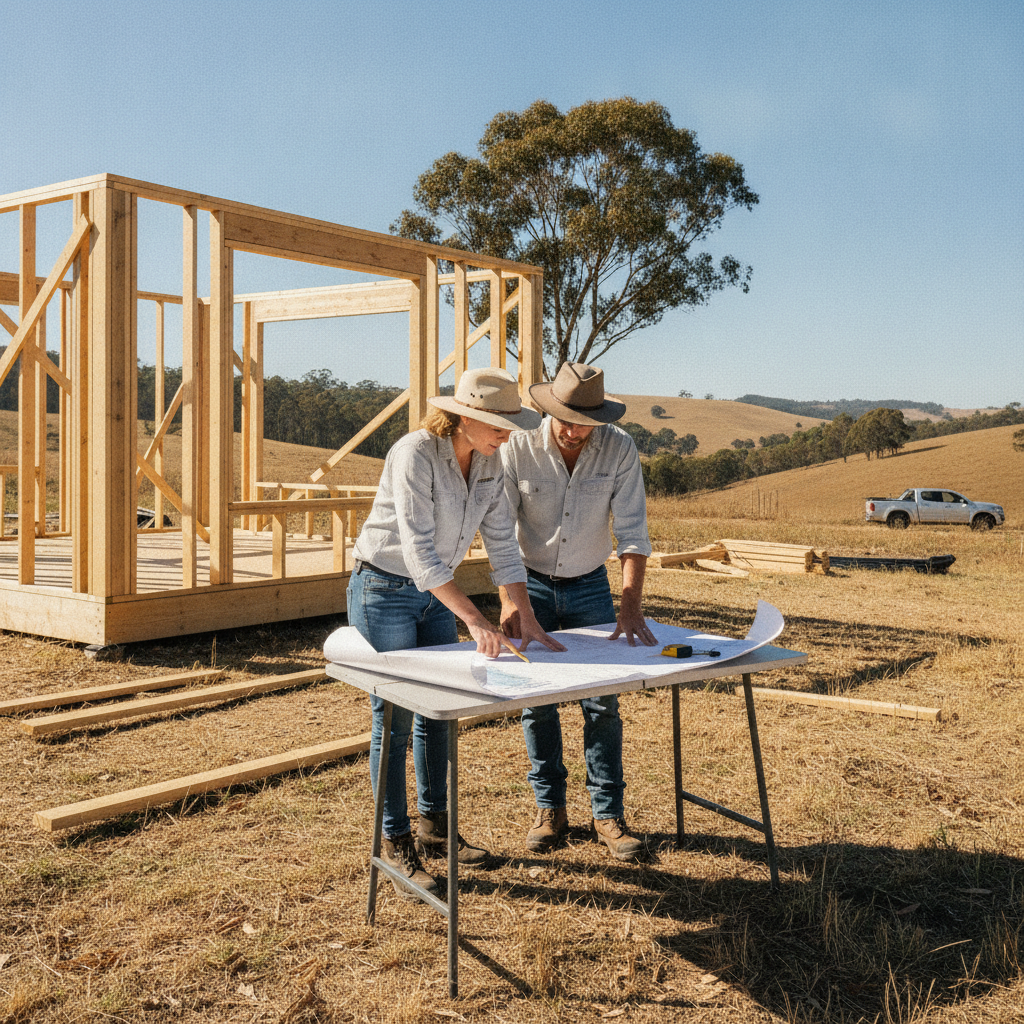
Make sure the slab is spot on for dimensions too. Our steel frames are precision-engineered. They expect the slab to be exactly where it should be. A few millimetres out might not sound like much, but it can throw out your walls, your roof lines, everything. Measure twice, pour once, as they say. Or rather, let your concreter measure a hundred times before they pour.
Services: Power, Water, and Waste
Before any frames go up, you need to think about your services. No, I don't mean just for when you move in. I mean for the build itself. This is another area where rural sites differ massively from suburban ones.
Powering Up
You'll need temporary power. How are you going to run your drop saw, your grinders, your drills? Are you connecting to the grid with a temporary builders' pole? Or, if you're really remote, are you running off a generator? Generators are fine, but they're noisy, they chew fuel, and they're not always reliable. Plus, you need somewhere safe and secure to keep it. If you're going for a temp pole, get it sorted with your local electricity provider well in advance. These things take time, permits, inspections. Don't leave it to the last minute.
Water Works
Water is another big one. You need it for mixing concrete, for cleaning, for drinking. If you're on town water, happy days, just get a temporary tap installed. But if you're on a tank, which many rural kit homes are, you need that tank in place, connected, and full. Or at least have a plan for a temporary water supply. You can't rely on hauling drums from the nearest town. It's just not practical.
Waste Management
And then there's waste. Not just human waste for the tradies – that means a porta-loo, usually. But also building waste. You'll have offcuts, packaging, all sorts of rubbish. Plan for skip bins. Know where they're going to sit so they don't get in the way of deliveries or other work. And have a clear plan for what you're doing with your greywater and blackwater for the finished house, too. Septic tank? Advanced treatment system? These often need to go in the ground before your kit arrives, or at least have the excavation done.
Site Security and Storage: Protecting Your Investment
When your kit turns up, it's a big investment sitting there. Those packs of TRUECORE steel frames, the roofing, the windows – that's thousands of dollars of materials. You need a secure place to store it.
Is your site fenced? Can you lock it up at the end of the day? If you're remote, maybe a lockable shipping container for smaller, high-value items is a good idea. Even if your site's secure, you need to protect the materials from the elements. Tarps, heavy-duty ones, are your best mates here. Stack the material neatly, off the ground on some sleepers or pallets to prevent moisture damage. Wind and rain can ruin insulation or warp timber if it's left exposed. We've seen it happen. Don't be that bloke.
Think about where the packs will be placed. You want them close enough for easy access, but not so close they're in the way of your actual build space. And make sure they're not in a spot that turns into a dam when it rains. Water pooling around your kit materials is a recipe for disaster.
Council Requirements and Inspections
Before you even think about swinging a hammer, make sure your DA (Development Application) is approved and you've got your Construction Certificate (CC). This should be a given, but sometimes keen owner-builders get ahead of themselves.
Your slab will need a final inspection by your certifier before any frames go up. Make sure you've scheduled this well in advance. No certifier, no frames. It's that simple. And understand any specific conditions council or your certifier has placed on your site, especially for rural builds. Bushfire Attack Level (BAL) ratings, for example, dictate specific construction requirements, often starting with the slab and sub-floor areas. Your kit components will be designed to meet these, but the ground works need to follow suit.
Pest Control: A Rural Reality
If you're building in the bush, termites are a real threat. A massive one, actually. Even with our steel frames, which termites can't eat, they can still make nests and travel through other parts of the structure, like timber roof trusses (if you've got them), internal fit-out, or even just set up shop under your slab. You need to have your termite barrier in place. This could be a chemical treatment around the slab perimeter, or a physical barrier system. Your certifier will want to see this. Don't skip it. It's cheap insurance against a very expensive problem.
Final Word: Plan, Plan, and Plan Some More
Look, building your own kit home is a massive undertaking. It's rewarding as hell, but it's not for the faint-hearted. And honestly, the success of the build often hinges on how well you've prepared the site before the first kit delivery truck even fires up its engine. Get your access right. Make sure that slab is perfect. Sort your power and water. Secure your materials. And for goodness sake, talk to your certifier and your trades. Communicate everything. That way, when your kit arrives, you're not scrambling. You're ready to get stuck into it, just as you planned.
A well-prepped site means a smoother build, fewer delays, and ultimately, less stress on your end. And that's priceless when you're an owner-builder.