The Allure of the Australian Coast
There is something undeniably magnetic about the Australian coastline. From the rugged cliffs of the Great Ocean Road to the sun-drenched stretches of the Sunshine Coast, beachside living represents the pinnacle of the Australian lifestyle. For many, the dream is to wake up to the sound of crashing waves and the scent of salt spray. While building a custom home in these prime locations can often feel out of reach, the rise of high quality kit homes has opened doors for owner-builders looking to create a bespoke coastal sanctuary without the traditional architectural price tag.
Designing for the coast is about more than just aesthetics. It is a harmonious balance between breathtaking style and the resilience required to withstand harsh marine environments. In this guide, we explore how to fuse modern design trends with the practicalities of coastal construction, focusing on the freedom and durability offered by steel frame kit homes.
Embracing the Coastal Aesthetic: Design Trends for 2024
Modern coastal design has evolved far beyond the seashell motifs and navy stripes of the past. Today, the look is grounded in sophisticated minimalism, natural textures, and a seamless connection between indoor and outdoor spaces. When planning your kit home layout, consider these key design pillars.
The Pavilion Style Layout
One of the most popular trends in Australian coastal architecture is the pavilion layout. By breaking the home into distinct wings connected by glass walkways or decking, you maximize airflow and natural light. This setup is perfect for kit homes, as it allows owner-builders to create private zones for bedrooms while keeping the central living area open and social. This design also encourages cross-ventilation, which is essential for staying cool during those humid Australian summers.
Blurring the Lines Between In and Out
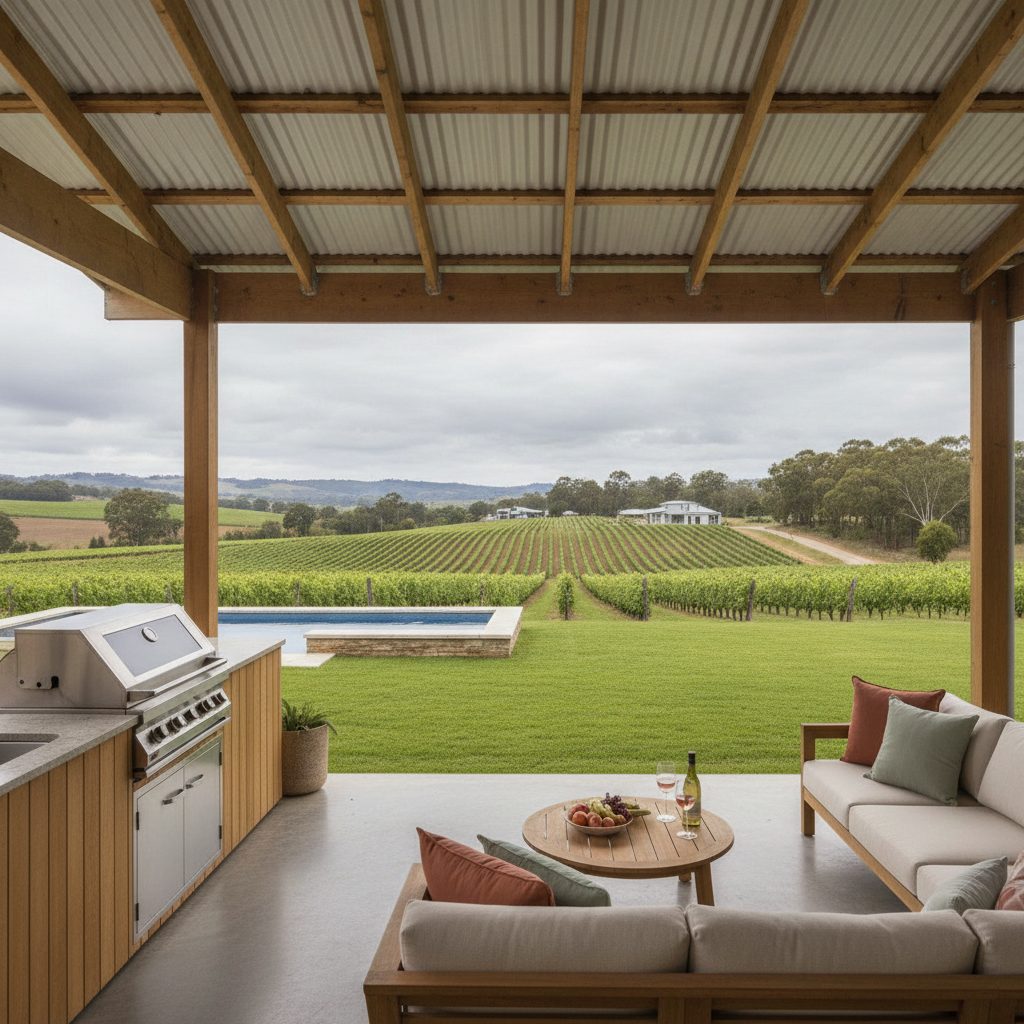
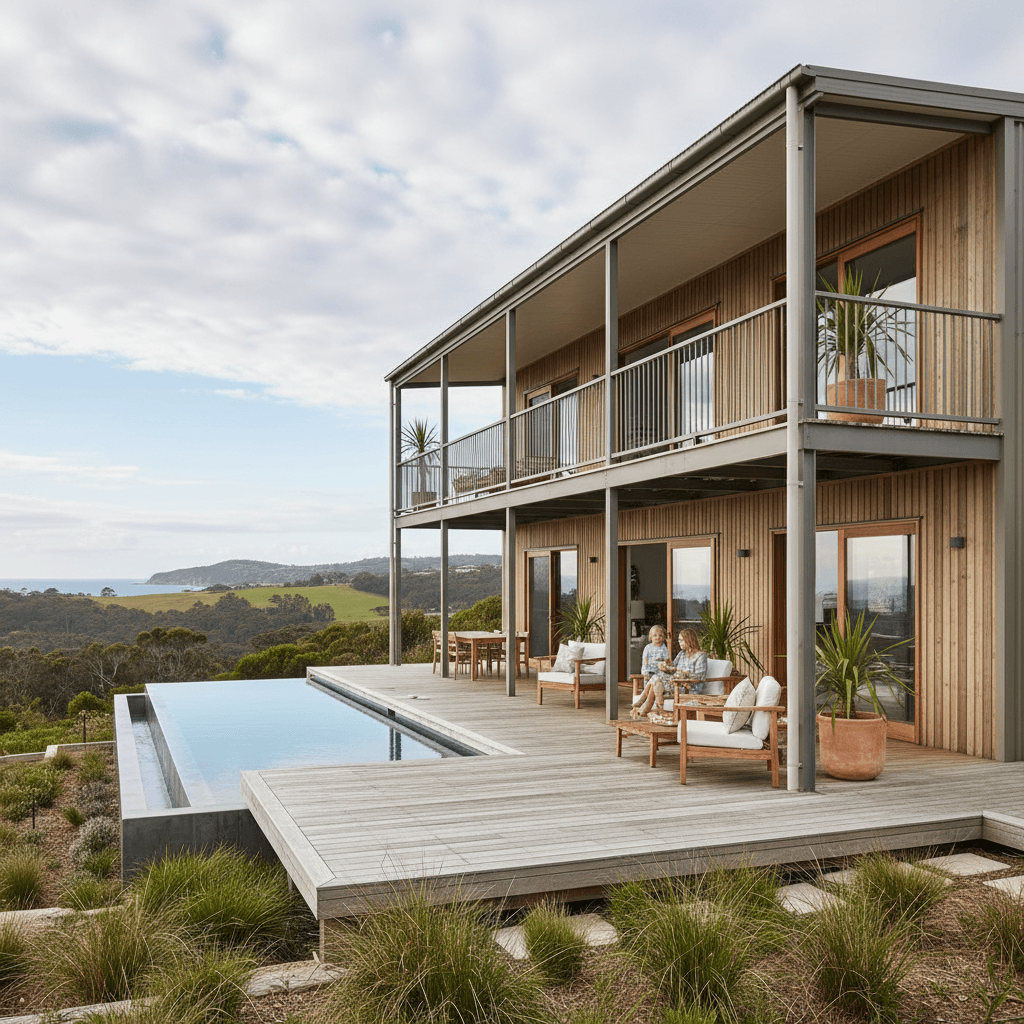
Coastal living is all about the outdoors. When selecting your kit home options, prioritize large sliding glass doors and expansive windows. Wrap-around verandas are not just a nostalgic nod to the traditional Australian homestead, they are functional spaces that provide shade and extra living square footage. Imagine folding back your stacker doors to turn your lounge room into an open air terrace, perfect for catching the evening sea breeze.
A Palette Inspired by the Shore
Your external finishes should reflect the landscape. Think bleached timbers, soft greys, and crisp whites. Utilising high quality cladding that mimics the look of traditional weatherboards can give your home that classic Hamptons or ‘Queenslander’ feel, while being far easier to maintain in a salt-heavy environment. This is where the choice of materials becomes critical to the longevity of your design.
Building for the Elements: Why Materials Matter
While design captures the heart, construction quality protects your investment. Coastal areas are notoriously tough on buildings. Salt spray, high winds, and intense UV radiation can wreak havoc on traditional timber frames over time. This is why many Australian owner-builders are turning to steel frame construction for their beachside projects.
The Strength of BlueScope Steel
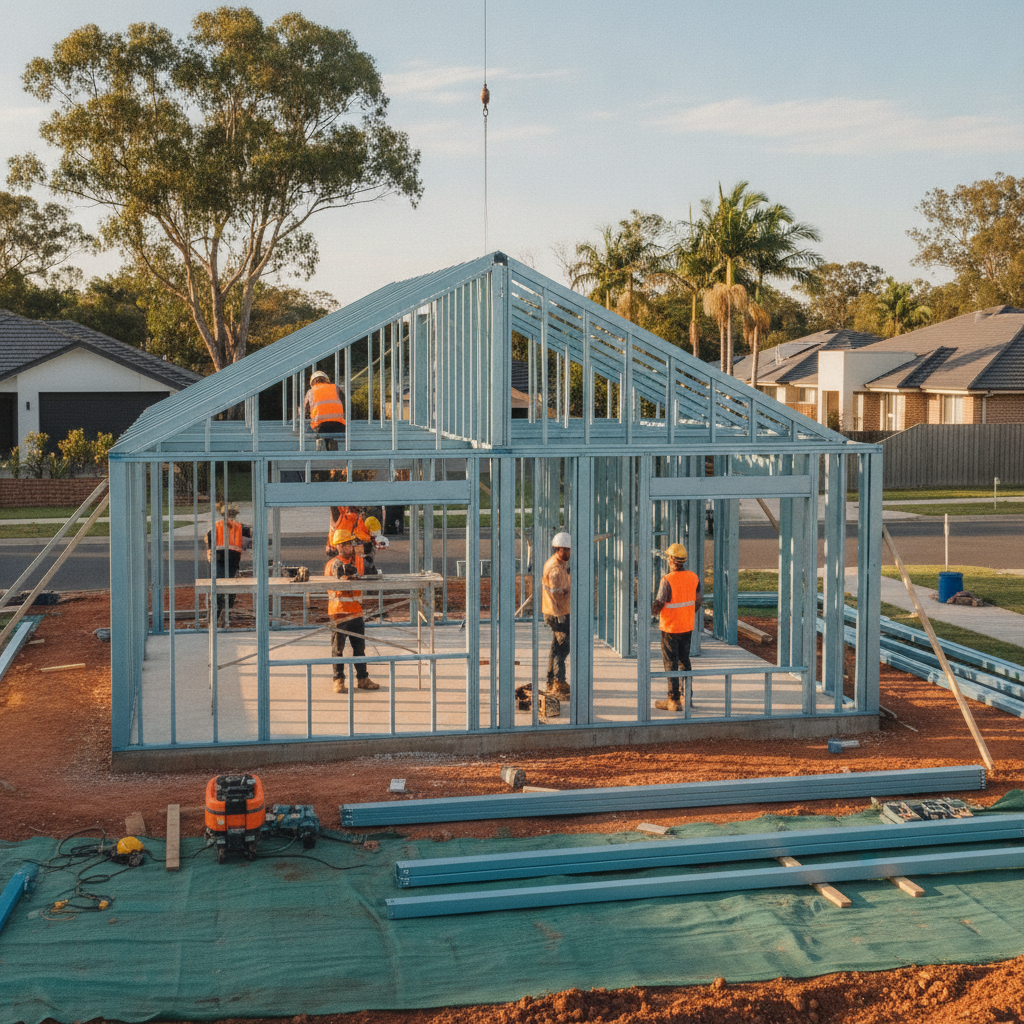
Using a kit home with a frame made from BlueScope Steel, specifically the TRUECORE brand, provides a level of peace of mind that is hard to beat. Unlike timber, steel is dimensionally stable. It won’t warp, twist, or shrink over time, ensuring your window and door frames remain perfectly aligned even as the home settles. Most importantly for coastal dwellers, steel is non-combustible and termite-proof, providing an extra layer of security in the Australian landscape.
Corrosion Resistance and Cladding
When building near the ocean, every component needs to be coastal-rated. From the roofing iron to the external cladding, choosing materials engineered for marine environments is non-negotiable. Modern kit homes often include premium roofing and wall systems designed to resist the corrosive effects of salt air, ensuring your home looks fresh decades after the build is complete.
Practical Tips for the Coastal Owner-Builder
Taking on a kit home project as an owner-builder is an empowering journey, but it requires careful planning, especially on the coast. Here are some actionable tips to keep your project on track.
Understand Your Site Wind Speed
Coastal blocks often face high wind classifications. Before you finalize your kit home design, ensure it is engineered for the specific wind rating of your land. A reputable kit home provider will work with you to ensure the steel frames and roof trusses are reinforced to handle the gusts that come off the ocean.
Prioitise High-Performance Insulation
The Australian sun can be relentless. While kit homes often come with standard insulation, coastal builders should consider upgrading to high-performance bulk insulation and reflective foil. This works in tandem with the steel frame to create a thermal break, keeping your home cool in summer and warm during those chilly winter nights.
Choose Low-Maintenance Finishes
You moved to the coast to enjoy the beach, not to spend every weekend painting and sanding. Opt for powder-coated aluminium window frames and high-quality cladding that requires minimal upkeep. Choosing materials that are pre-finished or highly durable means you spend more time in the water and less time on a ladder.
The Owner-Builder Advantage
The beauty of the kit home model is the control it gives the homeowner. As an owner-builder, you are the project manager. You choose the trades, you manage the timeline, and you have ultimate say over the final fit-out. This DIY spirit is at the heart of many Australian coastal communities. By managing the site works, slab, and internal finishings yourself, you can ensure every tapware choice and floorboard matches your seaside vision perfectly.
Navigating Technical Knowledge
You don't need to be a master builder to manage a kit home project, but you do need to be organized. The kit arrives with the frames, roofing, and windows ready to go, which simplifies the process significantly. Use the assembly guides provided and don't be afraid to ask questions of your suppliers. The modern kit home is designed for efficient assembly, allowing you to get the structure at lock-up stage faster than a traditional build.
Sustainable Coastal Living
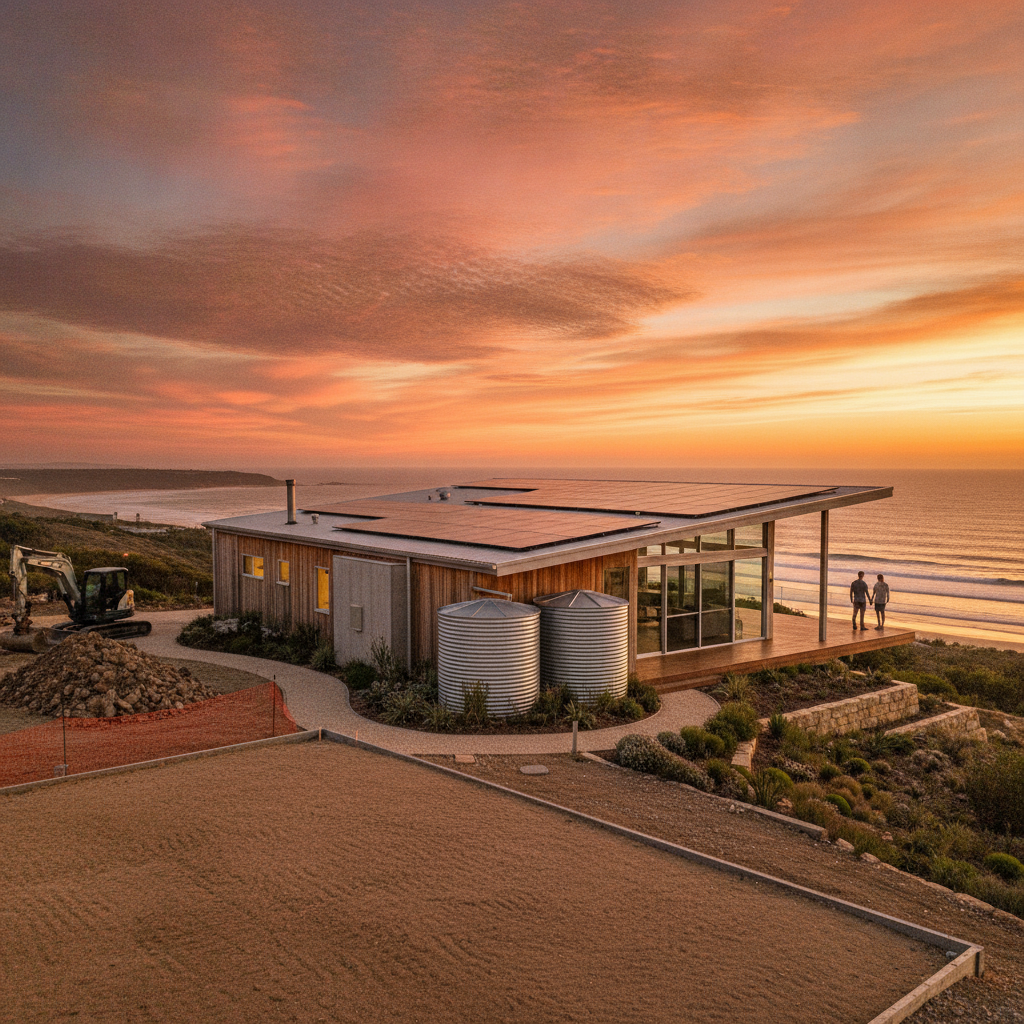
Sustainability is a core component of modern Australian housing trends. When designing your beach home, consider the path of the sun. Position your living areas to the north to capture winter warmth while using deep eaves to block the harsh summer glare. Because steel is 100 percent recyclable and kit homes result in minimal on-site waste, your project can have a smaller environmental footprint, preserving the very coastline you love.
Conclusion: Your Sanctuary Awaits
Building a coastal home is about creating a space that reflects your personality and the relaxed pace of beachside life. By choosing a kit home with a robust steel frame and focusing on smart, resilient design, you can build a home that is both beautiful and built to last. Whether it is a small surf shack or a sprawling family residence, the path to coastal living is more accessible than ever for the motivated Australian owner-builder. All it takes is a clear vision, the right materials, and a bit of that classic Aussie DIY determination.