Dodgy Decisions & Delays: How Owner-Builders Screw Up (And Fix It)
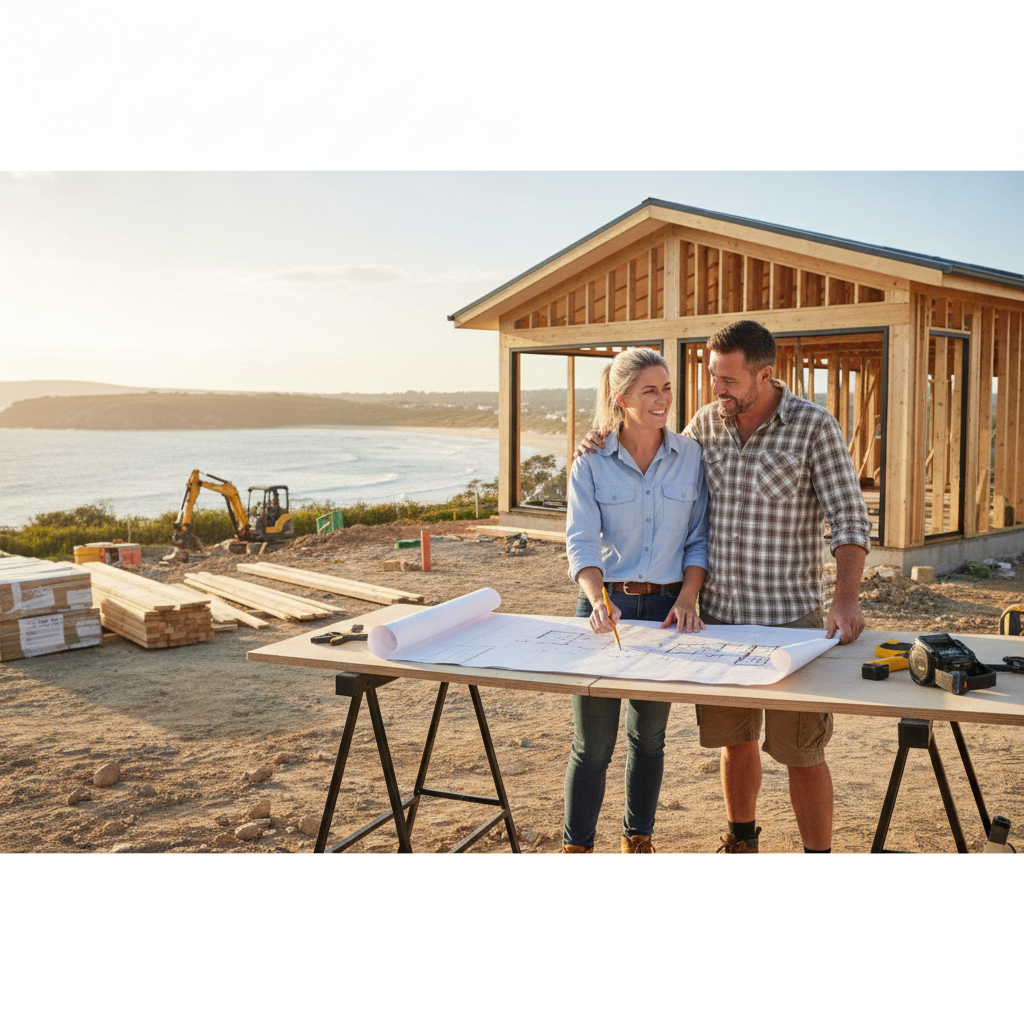
Right, so you’ve decided to tackle a kit home as an owner-builder. Good on ya, it's a hell of a ride. But let me tell you, after 15 years in this game, selling thousands of steel frame kit homes, I've seen more owner-builders trip over their own feet than you can poke a stick at. It's not usually a lack of smarts, it's a lack of experience. They get keen, they get stuck in, and then they hit a wall. Big delays, blown budgets, and a whole lot of headaches. But it doesn't have to be that way.
We supply the bones – the strong, straight, termite-proof BlueScope Steel (TRUECORE) frames, the roof, cladding, windows, doors, insulation. You, the owner-builder, you're the orchestrator. You sort the dirt, the concrete slab, all the tradies, and the bits and bobs inside. It's a huge job. So, let's talk about where it all usually goes wrong, and how you can actually keep your sanity and your build moving.
Getting Your Site Prep Wrong: It's Not Just Digging a Hole
This is probably the biggest cock-up I see, hands down. Owners think site prep is just clearing some scrub and getting a bobcat in. Mate, it's way more than that. You need to understand your block. Is it flat? Is it sloped? What's the soil like? Clay? Sand? Rock? That affects your footings, big time. We had a bloke up near Toowoomba, reckoned his block was flat as a pancake. Turns out, once they scraped off the topsoil, it was on a slight fall, and the engineer called for a much deeper cut and fill, and a retaining wall. Bang. Weeks of delays, extra tens of thousands.
Not Getting a Proper Geotech Report
Seriously, fork out the cash for a proper geotechnical report. Don't cheap out here. It tells you what's under the dirt. It informs your engineer about the slab design. Without it, you're just guessing. A guess on a slab can be a disaster. Subsidence, cracking down the track – all because you saved a grand on a report. It’s false economy, plain and simple.
Ignoring Drainage and Earthworks
Think about water. Where's it going to go? Before you even pour a slab, you need to consider site drainage. Run-off from your roof, storm water, even just heavy rain. You don't want water pooling around your new foundations. Plan for swales, sub-surface drains, or even just grading the land away from the house. Get this wrong, and you’re fighting water issues for the life of the home. Especially up north during wet season, that's just asking for trouble.
The Slab: Your Foundation, Your Future Problems
Once the site's ready, the slab's next. And this is another one where owner-builders often stumble. It's not just concrete; it's a precise engineering feat. Your kit home steel frame sits on this thing. If it's not level, not square, or not built to spec, you're in for a world of pain. Our frames are precision-rolled from TRUECORE steel; they're straight and true. If your slab isn't, something's gotta give. And it won't be our frames.
Choosing the Wrong Concreter (or No Engineer Oversight)
Don't just go with the cheapest quote. Ask for references. Go look at their previous work. A good concreter is worth their weight in gold. Even better, make sure your structural engineer is doing site visits during the slab prep and pour. They need to sign off that it meets the design. We had a client in Bathurst whose concreter decided to 'interpret' the engineer's plans. Ended up with a slab that was a few millimetres out of square, which meant a nightmare trying to get the steel frame walls plumb. Took extra shimming and fiddling, wasting precious days.
Not Protecting the Slab
Once it's poured, it needs to cure properly. Keep it damp, don't let it dry out too fast in the sun, especially during a scorching Aussie summer. Cover it with hessian and keep it wet, or use a curing compound. Skipping this step can lead to a weaker slab, and nobody wants that.
Mismanaging Trades: It's Like Herding Cats
You're the boss. You're responsible for coordinating everyone. This is where a lot of owner-builders get overwhelmed. Trades are busy. They've got multiple jobs. You need to be organised, clear, and realistic.
Poor Scheduling and Communication
Have a schedule, even if it's just a rough one on a whiteboard. Let your trades know when you expect them. Confirm dates a week out, then again a couple of days before. Don't assume they'll just show up. And be clear about what you need them to do. "Yeah, just put the power points in" isn't good enough. "I need four double GPOs in the living room, two in each bedroom, and one external waterproof GPO on the patio, all to AS/NZS 3000 standards" – that's better.
Trying to Be Too Friendly (or Too Strict)
You need a professional relationship. Be polite, but firm. Don't let them walk all over you, but don't treat them like dirt either. A happy tradie is a good tradie. Pay them on time, keep the site tidy, and make sure they have access to power and water. Small things make a big difference.
Ordering Materials: The Goldilocks Problem
You need to order materials – for the slab, for the fit-out, for everything after our kit gets delivered. This is a balancing act: too early, and stuff sits around getting damaged or stolen. Too late, and you hold up the build. We've seen it all.
Measuring and Ordering Wrong
Double-check your measurements. Then triple-check them. Ordering the wrong amount of plasterboard, or the wrong size window for an internal stud opening, is a rookie error that costs time and money. Always order a little extra for wastage, but don't go nuts. A few extra sheets of cladding or a spare box of tiles is smart; an entire pallet of tiles you don't need isn't.
Storage and Security
Where are you going to put all this stuff? Our kit gets delivered to your site. You need space. And you need to protect it. Good quality BlueScope steel frames are tough, but plasterboard, insulation, and timber for internal fit-out don't like getting wet. Invest in a lockable shipping container or a secure, weatherproof shed on site. Theft of building materials is a real problem, especially in regional areas.
Permits and Paperwork: The Bureaucratic Bog
Australian councils are… thorough. And slow. Don't underestimate the time it takes to get plans approved, permits issued, and inspections done. This isn't something you can rush.
Not Starting Early Enough
As soon as you have your kit home plans finalised, get your DA (Development Application) or CDC (Complying Development Certificate) application in. Like, yesterday. Council approval times vary wildly. Some councils are quick, some are a nightmare. Six weeks to six months isn't uncommon. You can’t start moving dirt until you have that approval in your hand. This is often the first big delay for owner-builders who think they can just rock up and start digging.
Missing Documentation
Read the council's checklist carefully. Submit everything they ask for the first time. Missing surveys, engineering reports, energy efficiency ratings, or even just the wrong coloured pens on a form will send you straight back to the bottom of the pile. And then you wait again. It's frustrating, but it's the game we play.
Ignoring Safety: Don't Be a Statistic
This isn't just about avoiding fines; it's about not getting yourself or anyone else hurt. A construction site is dangerous. Period.
Lack of Site Safety Plan
As an owner-builder, you are responsible for site safety. You need a safety plan. Basic stuff, like fencing off the site, having a first aid kit, keeping access clear, and making sure power tools are tagged and tested. If you have others working on site, you need to provide a safe environment for them. This includes your mates helping out on a Saturday. Read up on your state's WorkSafe requirements. It's not optional.
Working at Heights Without Proper Gear
Climbing up to put the roof on your steel frame? Great. Make sure you've got proper scaffolding, not just a wobbly ladder. Use fall protection. Harnesses, safety nets. One slip and your dream home becomes a nightmare. It's not worth the risk. Same goes for power tools – eyes, ears, hands. Protect 'em.
The Takeaway: Plan, Plan, and Plan Some More
Look, owner-building your own kit home is immensely rewarding. You save a heap of cash and you get exactly what you want. But it's not a walk in the park. The key to avoiding delays and disasters is meticulous planning. Get your site sussed out, hire the right people, manage your materials, stay on top of the paperwork, and put safety first.
Talk to us about the kit, we’ll sort that out. The rest, mate, is on you. But with a bit of smarts and preparation, you can absolutely build a cracker of a home and not end up tearing your hair out in the process.