Owner Builder Insurance: Don't Get Caught Out on Your Rural Kit Home Build
So, you’ve made the call. You're building your own kit home out on the block, maybe near Tamworth or down by the Murray. Fair enough, it’s a brilliant way to get exactly what you want, save a few bucks, and have a yarn about it for years. But let me tell you, if you don't sort out your owner builder insurance properly, that dream can turn into a genuine bushfire of problems. And not the good kind.
This isn't just some boring bit of paper. This is your safety net, the thing that stops your whole project, and possibly your life savings, from going completely belly-up if a brickie drops a wall, or someone trips over a pile of BlueScope steel framing and breaks a leg. Especially when you’re out in a rural spot, where help isn't always around the corner and you're dealing with more variables than a city block. Pay attention. It matters.
Why Owner Builder Insurance Is Non-Negotiable
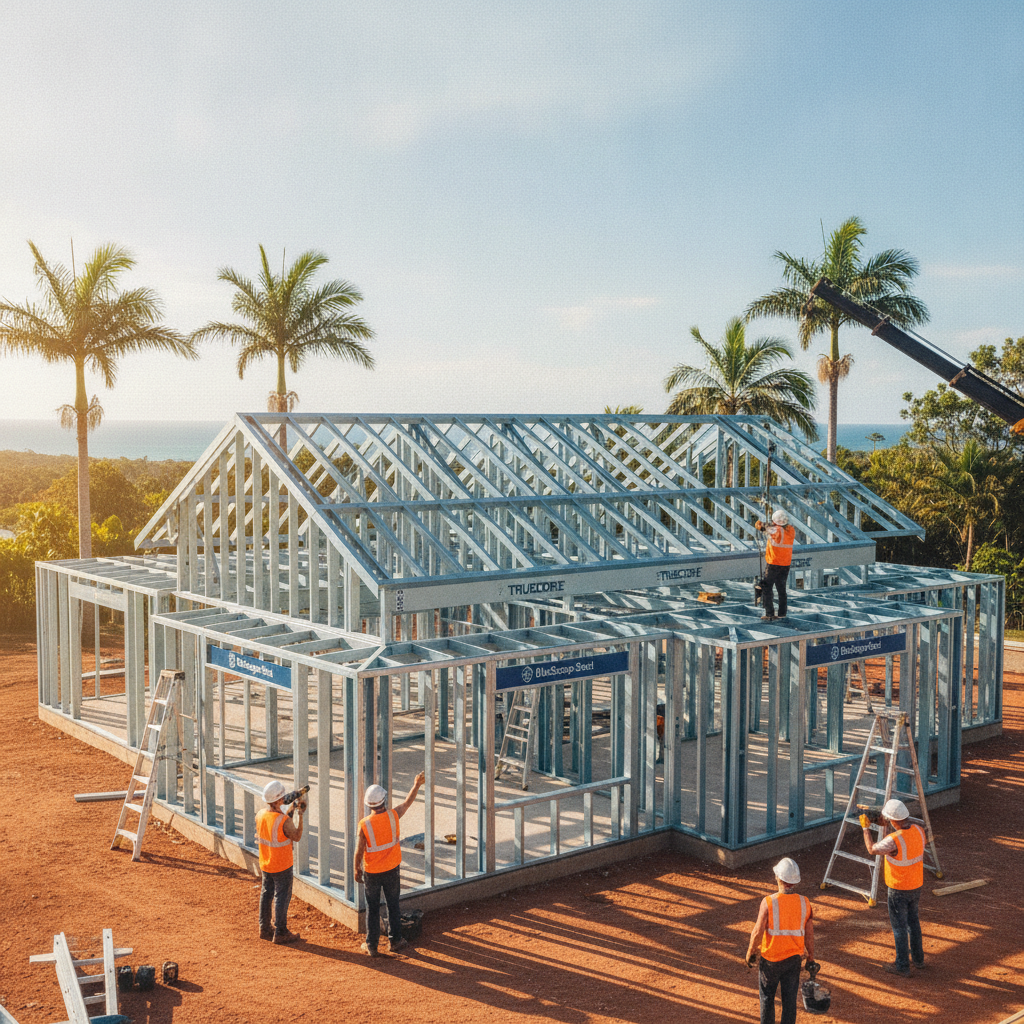
Forget everything else for a minute. Your kit home arrives, all those neatly bundled TRUECORE steel frames, the cladding, the windows – a big puzzle just waiting to be put together. Exciting, yes. But also a massive construction site. And construction sites, even small ones, are magnets for accidents. You've got materials everywhere, power tools humming, people moving around, often under pressure. A single mistake, a gust of wind, or even just plain bad luck can cost you a fortune.
Think about it: who's responsible if the roof sheeting, mid-lift, decides to take a detour into your neighbour’s prize-winning veggie patch? Or if a mate helping you out slips off a ladder and ends up in hospital with a broken arm? What if your partially built home gets ransacked by local vandals, or a storm rips through, leaving half your brand-new wall frames looking like modern art? Without the right insurance, all that expense lands squarely on your shoulders. And believe me, hospital bills, property damage claims, and replacing stolen materials don't come cheap, particularly when you're already juggling a build budget.
The Big Three: What Coverage You Absolutely Need
Alright, so you need insurance. Not just 'a' policy, but the right policies. There are three main types you absolutely have to sort out before anyone even steps foot on your site with a shovel. Don’t skimp on these. Ever.
1. Construction All Risks (CAR) / Contract Works Insurance
This is your bread and butter, your main line of defence for the actual structure. CAR insurance covers the physical loss or damage to your kit home while it's being built. We’re talking about everything from the moment the materials arrive on site – those steel wall frames, roof trusses, cladding, right through to practical completion.
- What it covers: Fire, storm, flood (check specifics, some areas have exclusions), theft of materials on site, accidental damage (like dropping a window frame, whoops). It even covers damage to the works in progress, like if a half-built wall gets knocked over.
- Why it's vital for kit homes: Your kit comes in a heap of parts. If those parts get damaged or stolen before they're installed, this policy helps you replace them. Think about a pallet of insulation sitting out in the open during a freak downpour. Or a stack of roofing iron vanishing overnight. This is the policy that swoops in.
- Owner builder tip: Make sure the sum insured reflects the full replacement value of your completed home, not just the kit cost. You’ve got the slab, the fit-out, your labour's value – it all adds up. And read the fine print on flood and storm. Some rural properties have specific risks.
2. Public Liability Insurance
Now, this is the one that protects you from claims by other people. Imagine you’ve got a mate helping you erect the steel roof trusses, and they trip over a leftover length of conduit, doing some serious damage to themselves. Or a delivery driver steps into an unmarked trench. Or, going back to that roof sheeting incident, it lands on your neighbour's new ute. This is where Public Liability kicks in.
- What it covers: Legal liability for death or bodily injury to third parties, or loss or damage to their property, caused by your owner builder activities.
- Why it's vital for rural builds: You might have fewer neighbours right on your fence line, but you still have people visiting the site – delivery drivers, council inspectors, electricians, plumbers, even curious rellies. Any one of them could have an accident. And a rural property can sometimes be seen as 'safer' or 'less risky', leading to complacency. Don't be complacent.
- Owner builder tip: Most insurers offer $10 million or $20 million in public liability cover. Always go for at least $10 million. Lawsuits are expensive, even if you win. And remember, if you're engaging other trades, make sure *they* have their own public liability cover too. Don't just assume. Ask for their Certificate of Currency.
3. Workers' Compensation Insurance (if applicable)
This one's a bit more nuanced. If you’re genuinely doing everything yourself, and only relying on family or unpaid mates, you might not need Workers' Comp in the traditional sense. BUT, if you hire anyone – even for a few days – and they're considered an employee under Australian law, you absolutely must have Workers' Compensation insurance.
- What it covers: Financial protection for workers injured or made ill as a direct result of their employment on your site. This includes lost wages, medical expenses, and rehabilitation costs.
- Why it's important: Every state and territory has different rules around who is considered an 'employee' versus a 'subcontractor'. Don't guess. If you're paying someone, even cash in hand, you could be liable. Getting this wrong can lead to huge fines and personal liability.
- Owner builder tip: Call your state's WorkCover authority. Seriously. Spend the ten minutes on the phone to explain your situation. They can tell you exactly where you stand. It's better to be safe than sorry, especially when someone’s livelihood or health is on the line.
Don't Forget About Home Warranty Insurance (NSW & VIC)
In NSW and Victoria, if you’re building as an owner builder and then selling the home within a certain period (e.g., 6 years in NSW, 6.5 years in Victoria), you will likely need to take out Home Warranty Insurance for the purchaser. This isn't for *your* protection during the build, but for the *next owner's* protection against defective work if you can't fix it. It’s a bit of a wrinkle in the system, and it often means you can't get it until the house is finished and you're ready to sell. Just be aware it's a thing. Rules vary by state, so again, check with your local fair trading or building authority.
Sorting Out Your Insurance: Practical Steps
- Talk to a specialist broker: Don't just go to your regular car insurer. Find an insurance broker who specialises in construction or owner builder insurance. They know the ins and outs, the exclusions, and can tailor a policy. They'll ask a heap of questions, and that's good.
- Read the Product Disclosure Statement (PDS): This is the Bible of your policy. It tells you exactly what’s covered, what’s excluded, and any conditions you need to meet. Don't skim it. Your kit home might be in a bushfire-prone area (BAL rating, remember?), or flood zone. The PDS will spell out if those are covered, or if you need specific add-ons.
- Be Honest with the Insurer: Don't try to hide anything about the build, your experience, or the site. If you lie, they can void your policy, and then you’re truly up a gum tree without a paddle.
- Understand Exclusions: Every policy has them. Common ones include faulty workmanship (which is on you to fix), general wear and tear, or defects in materials supplied by others (unless it's covered by the manufacturer's warranty, like with BlueScope Steel products). Know what you're not covered for so you can mitigate those risks elsewhere.
- Review Periodically: As your build progresses, your risk profile changes. You might have more expensive materials on site, or more people working. Give your broker a call every few months to make sure your coverage is still adequate.
Rural Kit Home Specifics - Don't Forget 'Em
Building out in the sticks adds a few extra layers of complexity to your insurance puzzle. It’s not just about kangaroos jumping into your newly painted wall.
- Bushfire Attack Level (BAL) Ratings: If your land has a high BAL rating, your insurance costs might be higher, and there might be specific conditions for coverage. Make sure your insurer knows your BAL rating from the get-go.
- Access and Emergency Services: Remote locations mean longer response times for fire, ambulance, or police. Make sure your insurer understands the site's accessibility.
- Security: Rural properties can sometimes be seen as easier targets for theft of materials or tools. Discuss security measures you'll have in place (fencing, lockable containers for tools, motion sensor lights) with your insurer. Some policies might have minimum security requirements.
- Weather Extremes: Inland Australia gets some wild weather – scorching heat, massive storms, hailstones the size of golf balls. Check how your policy handles these.
Look, building a kit home, especially using quality materials like TRUECORE steel, is a fantastic project. It gives you control, lets you learn a heap, and saves you coin. But it also means you’re taking on the risks that a builder normally would. Insurance is your way of offloading those financial risks. Don't treat it as an optional extra. It’s as fundamental as pouring a solid slab. Get it sorted, get peace of mind, and then you can really enjoy watching your rural dream home take shape.