So, You Want to Be an Owner-Builder?
There is something uniquely Australian about the dream of building your own home. It is about more than just saving money, it is about the sweat equity, the pride of seeing a structure rise from the red dust, and the knowledge that every bolt and batten was overseen by you. Kit homes have made this dream accessible to thousands of people across the country, offering a structured pathway to homeownership that does not involve a cookie-cutter suburban developer.
However, the transition from 'dreamer' to 'owner-builder' is a steep learning curve. While kit homes provide the components, the responsibility for the timeline, the site management, and the final quality rests squarely on your shoulders. In this guide, we are looking at the most common pitfalls that can stall a project for months and how you can navigate the construction process like a seasoned pro.
The Pre-Construction Trap: Council and Compliance
One of the biggest delays in any Australian building project happens before a single piece of steel arrives on site. Many owner-builders underestimate the complexity of local council requirements. Whether you are building on a rural block in Western Australia or a suburban lot in Queensland, every council has its own set of rules regarding setbacks, environmental impacts, and bushfire attack levels (BAL).
To avoid a six-month delay in the planning phase, do not wait until you have bought the kit to talk to a private certifier or your local council. Getting your Development Application (DA) or Complying Development Certificate (CDC) in order requires patience. Make sure your site plan accounts for things like wastewater management and existing trees, as these are common sticking points that can send your application back to the bottom of the pile.
Why Your Framing Choice Matters for Your Timeline
When you are managing your own build, efficiency is your best friend. This is where the choice of materials becomes a critical factor in avoiding delays. Many owner-builders are turning to steel frame construction, specifically systems using BlueScope TRUECORE steel, for a few very practical reasons.
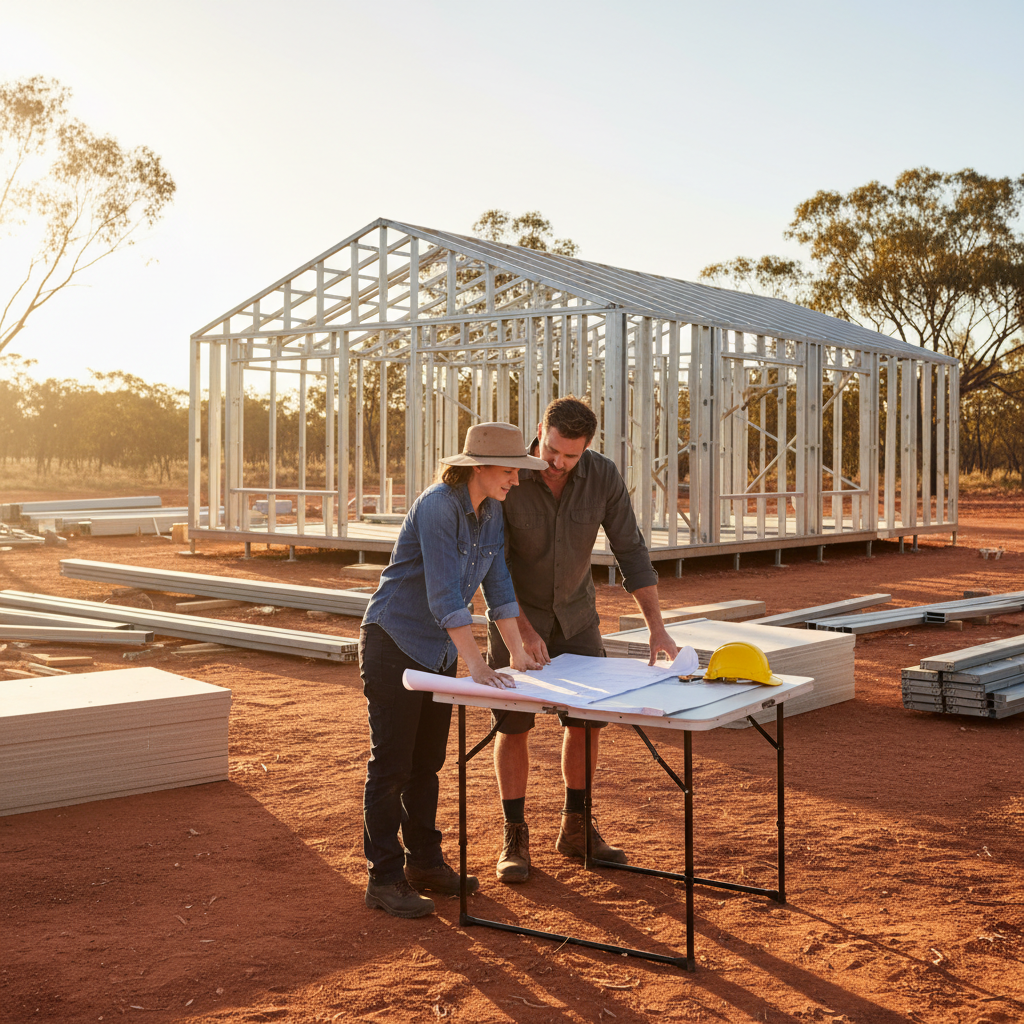
Firstly, steel frames are precision-engineered. Unlike traditional timber, which can warp, twist, or bow depending on the weather, steel remains dead straight. For an owner-builder, this is a massive time-saver. You won't spend days planing back studs or straightening walls before the gyprock goes up. The frames arrive on site ready to be bolted together, often with pre-punched holes for electrical and plumbing services. This 'Meccano-set' approach reduces the technical difficulty of the build and keeps the project moving forward when momentum is key.
Managing the 'Trade Gap'
The term 'owner-builder' does not mean you have to do every single task yourself. In fact, for things like plumbing and electrical work, you legally must hire licensed professionals. A common pitfall for first-timers is failing to book these trades well in advance.
In the current Australian building climate, good tradies are busy. If you wait until the day your kit arrives to start calling plumbers, you might be waiting weeks or even months for them to show up. To avoid these delays:
- Reach out to trades during your planning phase.
- Provide them with your floor plans early so they can give you accurate advice.
- Keep a 'buffer' in your schedule. If you think the roof will be finished on Tuesday, don't book the electrician for Wednesday. Give it a few days of breathing room.
Site Readiness: More Than Just a Flat Surface
Arrival day is the most exciting day of the build, but it can quickly turn into a nightmare if your site is not prepared. We have seen projects stall because the delivery truck could not access the site due to boggy ground or low-hanging branches. As an owner-builder, you are the site manager.
Before your kit arrives, ensure there is a clear, hard-stand area for unloading. Steel frames and roofing sheets are heavy and require a flat, dry space to be stored off the ground. If your slab is not poured and cured, or if your site access is blocked, you may face redelivery fees and forced downtime while you scramble to fix the site. Preparation is the difference between a smooth delivery and a stressful one.
The Importance of Weatherproofing and Storage
Australia is a land of weather extremes. From the scorching sun of the Top End to the sudden downpours of the Victorian coast, the elements can be a major source of delay. One of the advantages of using a kit home with steel frames and Colorbond cladding is the speed at which you can get the structure 'under roof'.
Once the steel frame is up and the roof is on, you have a dry, secure space to store the rest of your materials, like insulation and joinery. This allows work to continue inside even if the weather turns nasty. Without this strategy, you might find yourself constantly covering and uncovering materials with tarps, which adds hours of unproductive labor to your week.
Technical Knowledge: Knowing When to Ask
Perhaps the most dangerous pitfall for an owner-builder is the 'she'll be right' attitude toward technical specifications. While kit homes are designed to be user-friendly, they are still complex engineered structures. Ignoring the engineering plans or making 'on-the-fly' adjustments to the frame can lead to failing a mandatory inspection.
Take the time to read the manual. Understand the bracing requirements and the specific screw patterns required for your cladding. Using high-quality steel frames means the engineering is robust, but it still requires the builder (you) to follow the instructions to the letter. If you are ever unsure, stop and ask. It is much faster to make a phone call than it is to pull apart a finished wall because you forgot a structural tie-down.
Tools of the Trade
A common delay that often goes overlooked is the 'hardware store run'. You would be surprised how many hours are lost because an owner-builder realizes they are out of specific Tek screws or their drill battery has died. Before you start, invest in a high-quality set of tools. For working with steel frames, a good impact driver, a metal-cutting saw, and at least two or three high-capacity batteries are essential. Having a well-organized site office (even if it is just the back of your ute) with a surplus of fasteners and safety gear will keep you working instead of driving back and forth to town.
Maintaining Momentum and Mental Health
Building a home is a marathon, not a sprint. Many owner-builders hit a 'wall' about halfway through the project. The initial excitement has worn off, and the finish line still feels miles away. This mental fatigue can lead to poor decision-making and further delays.
To avoid burnout, set small, achievable goals. Instead of focusing on 'finishing the house', focus on 'finishing the wall framing' or 'installing the windows'. Celebrate these small wins. Also, don't be afraid to enlist help. Whether it is a working bee with friends to help with the insulation or hiring a laborer for a week to help with the heavy lifting, extra hands can provide a massive boost to both your timeline and your morale.
The Reward of Doing it Right
While the pitfalls are real, they are all avoidable with a bit of foresight and organization. The beauty of the kit home path is that it gives you a proven framework to work within. By choosing durable, straight, and termite-proof materials like steel, you are already giving yourself a head start. By managing your trades early, respecting the council process, and keeping a clean site, you ensure that the journey of building your own home is as rewarding as the day you finally move in.
Being an owner-builder is about taking control of your future. It requires grit, planning, and a willingness to learn, but there is no better feeling than standing in a house that you built with your own two hands, knowing it is built to last in the harsh Australian environment.