Setting the Foundation for Success
There is a unique kind of excitement that comes with the arrival of your kit home. Seeing the crane truck pull up and watching those precision-engineered steel frames being unloaded is the moment your dream starts to look like a reality. However, the success of that delivery, and the entire build that follows, depends heavily on the work you do before the first truck even leaves the warehouse.
In the world of Australian construction, site preparation is often the difference between a smooth, stress-free build and a project plagued by delays and extra costs. As an owner builder, you are the project manager. While the kit provider ensures your TRUECORE steel frames are manufactured to millimetre-perfect specifications, it is your responsibility to ensure the ground they sit on is ready to receive them. In this guide, we will break down the technical site preparation steps you need to master before your kit delivery day.
1. Clearing and Grubbing: More Than Just Mowing the Grass
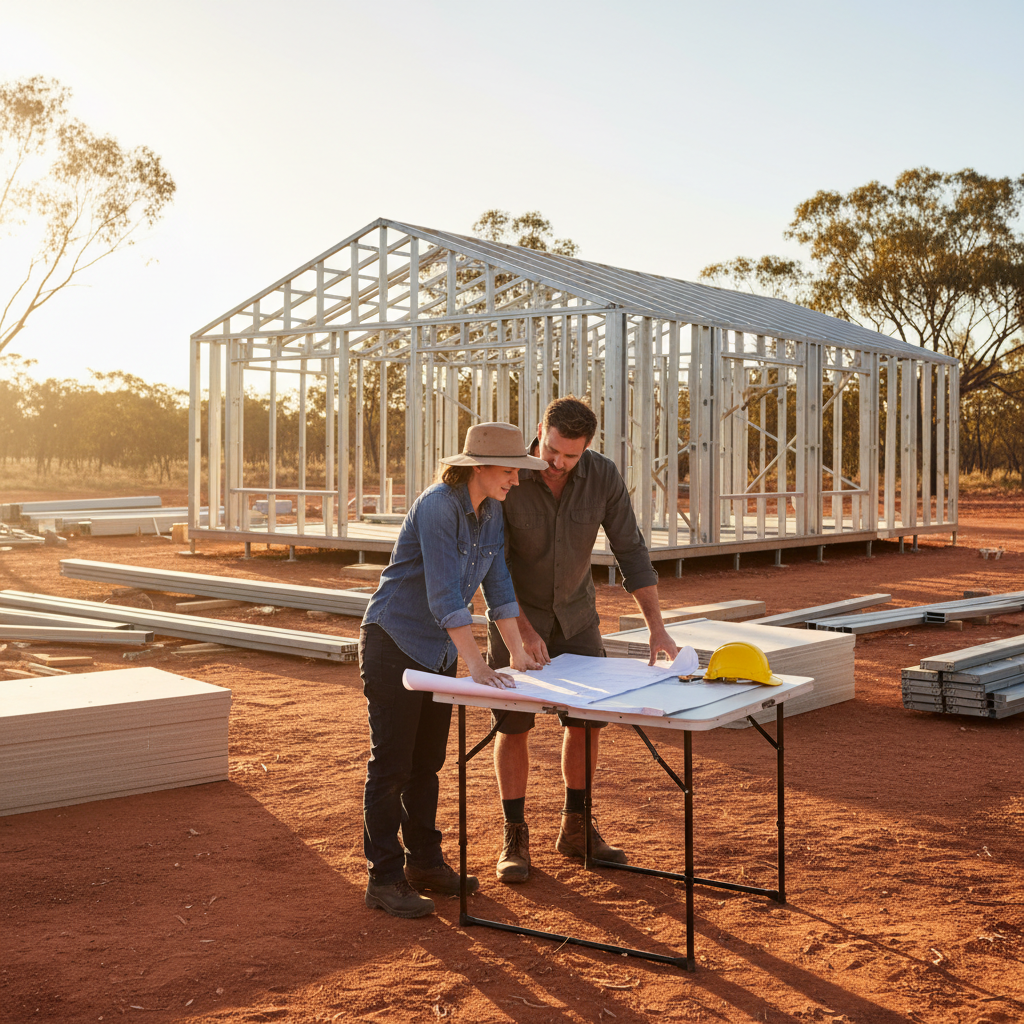
The first step in any building technique is a clean slate. Clearing and grubbing involves more than just a quick tidy-up. You need to remove all vegetation, rocks, and debris from the building footprint and at least a three-metre perimeter around it. This is crucial for several reasons.
Firstly, organic matter like tree roots or thick grass can rot over time, leading to soil subsidence and potential movement under your slab or footings. Secondly, you need a clear workspace for your trades and for the safe storage of your kit materials. When your roofing, cladding, and insulation arrive, they need to be stored on flat, clear ground away from moisture and trip hazards.
2. Site Access and Heavy Vehicle Planning
Australian kit homes are often delivered on large semi-trailers or crane trucks (HIABs). One of the most common mistakes owner builders make is forgetting to check if the delivery truck can actually get to where it needs to go. A standard delivery truck can weigh over 20 tonnes when fully loaded. If your driveway is soft, steep, or has low-hanging branches, you might find your kit being unloaded at the front gate instead of at the building site.
Consider the following technical requirements for site access:
- Turning Circles: Does the truck have enough room to turn around or exit the property?
- Overhead Obstacles: Check for power lines and low branches. Most trucks require at least 4.5 metres of vertical clearance.
- Ground Stability: If your delivery is scheduled for winter or after heavy rain, will the truck get bogged? You may need to lay down some road base or crushed rock to create a stable access track.
3. Earthworks and the Building Pad
Unlike some traditional building methods where you might level the house to the ground, with modern steel frame kits, we level the ground for the house. Your site will likely require a cut and fill to create a level building pad. This is a critical stage where you should work closely with a licensed earthmover and a surveyor.
Precision is key here. If your pad is out of level by even a few centimetres, it can cause significant issues when it comes time to bolt down your steel frames. Steel frames are manufactured to exact dimensions, and they don't have the 'play' that older timber methods might have. They demand a level surface for the best structural integrity and aesthetic finish.
4. Managing Drainage and Runoff
Water is the enemy of any construction site. Before your kit arrives, you must have a plan for where water will go. This involves more than just a few trenches. You need to consider the long-term drainage of the site to prevent soil erosion around your footings.
Temporary drainage is also vital. During the build, while your house is just a frame and roof, rainwater will pour off the structure. Without proper planning, this can turn your pristine building pad into a mud pit, making it difficult to install cladding or windows. Ensure you have silt fences in place to comply with local council regulations and to keep your site clean.
5. The Importance of Soil Testing
In Australia, soil is classified under AS 2870 based on its reactivity (how much it moves with moisture changes). Before you even order your kit, you should have a geotechnical report (soil test) done. This report dictates what kind of slab or footing system is required.
Whether you are building on a concrete slab or a raised floor system with steel piers, the footings must be designed for your specific soil type. As an owner builder, you need to ensure your footings are poured and cured well before the kit delivery date. For concrete slabs, a minimum of 7 to 14 days of curing time is usually recommended before you start standing frames, though always check with your structural engineer.
6. Storage Planning for Kit Components
When your kit is delivered, it won't just be a pile of steel. It includes roofing sheets, cladding, rolls of insulation, windows, and doors. These materials are high-quality finishes that need to be protected. You must prepare a dedicated storage area that is:
- Level: To prevents warping or bending of long components.
- Elevated: Use timber dunnage or pallets to keep materials off the wet ground.
- Accessible: Place materials in the order you will need them. Frames should be easy to reach first, followed by roofing, then cladding.
- Secure: Consider how you will protect smaller items like hardware and fixings from both the elements and potential theft.
7. Preparing for the Delivery Day
Communication is the final piece of the puzzle. Ensure you have spoken with the delivery driver or the logistics team from the kit provider. Confirm the delivery window and ensure you have enough 'manpower' on site if required, although many deliveries are performed by a crane truck that can place the packs exactly where you need them.
Have your site plans and engineering docs handy. If the driver can place the frame packs right next to where they will be installed, you will save yourself hours of back-breaking manual labour later on. This is where your earlier work of clearing a wide perimeter really pays off.
Final Thoughts
Proper site preparation is the ultimate investment in your new home. It is rhythmic work that requires patience and attention to detail. By ensuring your site is level, accessible, and dry, you are creating the perfect environment for your steel frame kit to be assembled. Remember, the quality of your finished home is built on the quality of the preparation you do today. Keep your site tidy, follow your engineering plans to the letter, and you will find the owner builder journey to be one of the most rewarding experiences of your life.