Getting Started with Site Preparation
The arrival of a kit home is a significant milestone for any Australian owner-builder. It is the moment your plans start to take physical shape. However, the work you do before the delivery truck arrives determines how smoothly your assembly process will go. Proper site preparation is about creating a safe, organized, and efficient workspace that allows you to focus on building rather than solving logistics problems on the fly. For those using steel frame kits featuring BlueScope Steel TRUECORE, precision is the name of the game from day one.
Preparing your site involves several layers of activity. You need to consider physical access for heavy vehicles, the structural integrity of your building pad, and the logical layout of where materials will be stored. Since you are managing the site works and trades yourself, having a clear plan ensures that when the frames, roofing, and windows arrive, you are ready to hit the ground running without delays or double handling of heavy components.
Evaluating Site Access and Deliveries
One of the first things you need to assess is how a large delivery truck will get onto your property. Most kit homes are delivered on semi-trailers or large crane trucks. These vehicles are heavy and require significant space to turn and offload. You should check the entry point of your property for any narrow gates, tight corners, or soft ground that might cause a truck to get bogged. If your block is rural, ensure the driveway can handle the weight of a multi-tonne vehicle, especially if it has rained recently.
Look up as well as down. Overhead branches and power lines are common hazards. You generally need at least 4.5 metres of vertical clearance for the truck to pass safely. If there are low-hanging trees, trim them back well in advance. If there are power lines near your drop-off zone, you may need to consult with your local energy provider about safety distances. Providing a clear, firm path for the driver makes the delivery day much less stressful for everyone involved.
Clearing and Leveling the Building Envelope
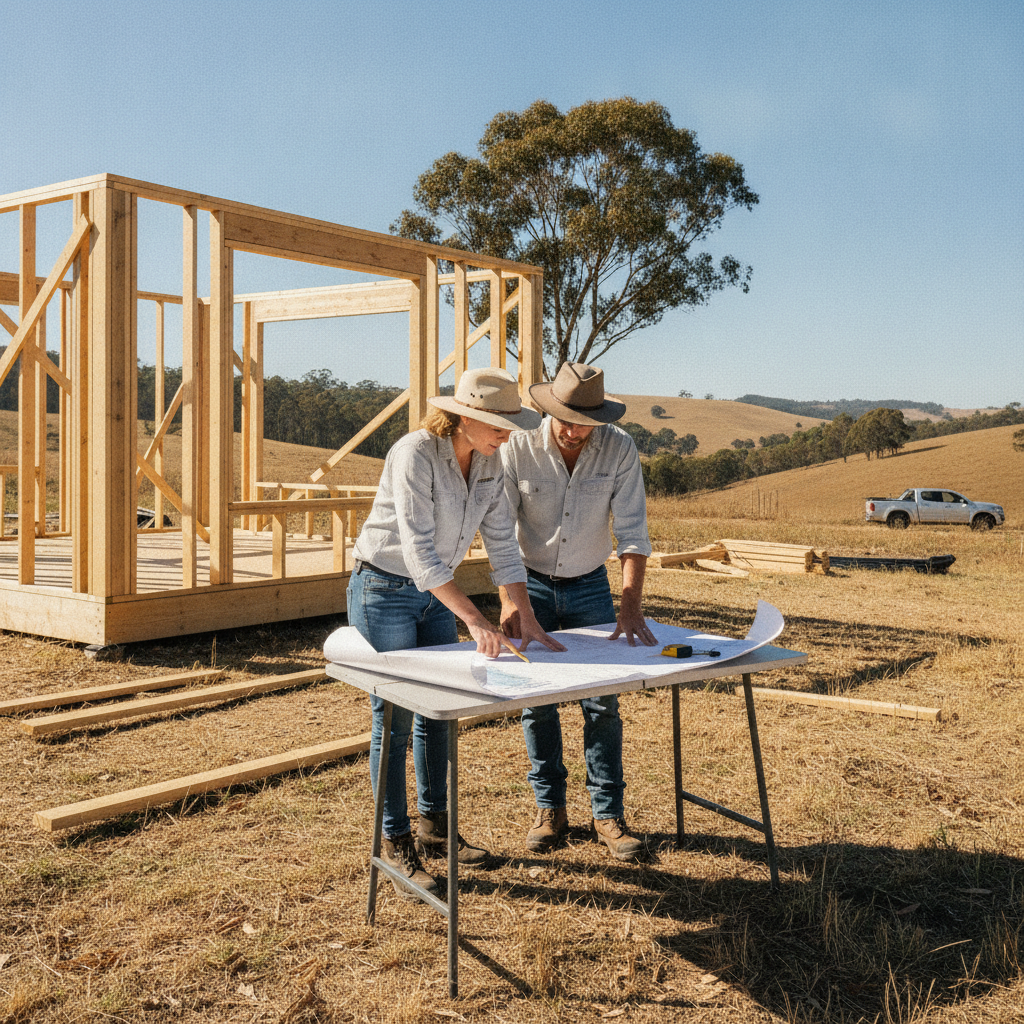
The building envelope is the specific area where your home will sit. This area needs to be cleared of all vegetation, large rocks, and debris. It is not just about the footprint of the house itself. You should clear at least two to three metres beyond the slab edge to give yourself and your trades room to work. This extra space is where ladders will stand and where you will walk while carrying frames or cladding panels.
Leveling the site is a job for a professional earthmover. Even if your block looks flat to the naked eye, a surveyor or a laser level might tell a different story. For a kit home, starting with a level building pad is a huge advantage. It makes the formwork for your slab easier to install and helps ensure your drainage works as intended. If you are building on a sloping block, you will need to consider cut-and-fill techniques or pier systems, which should be finalized and stabilized long before the kit arrives.
The Importance of a Precise Slab
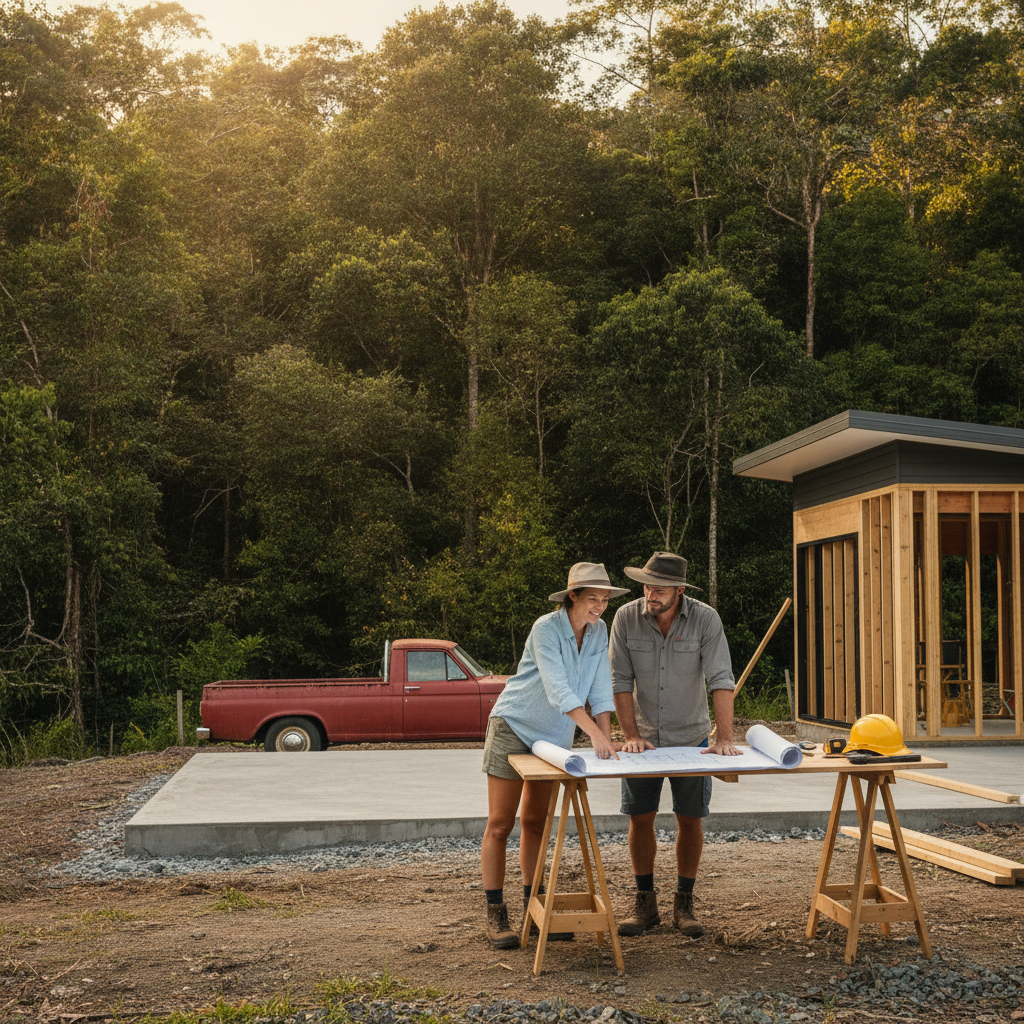
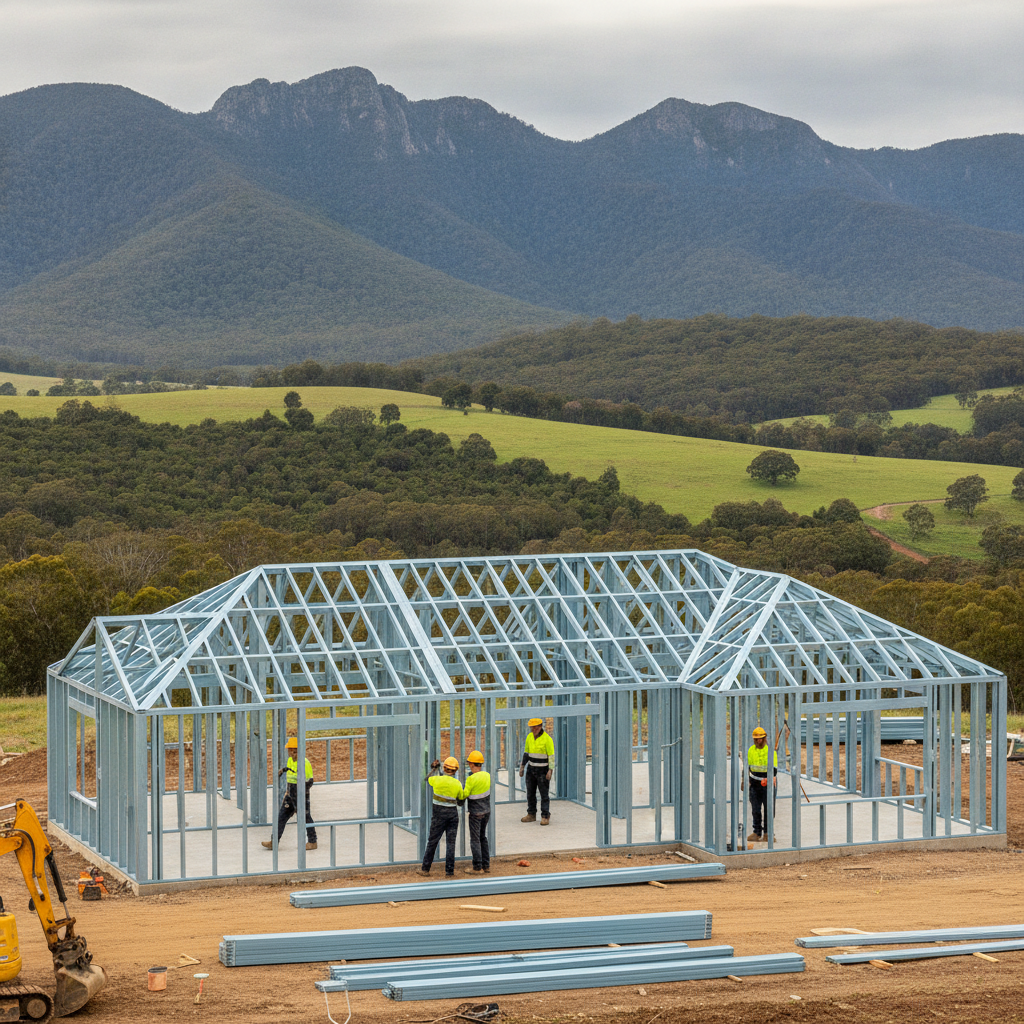
Most Australian kit homes are designed to sit on a concrete slab or a raised floor system. If you are pouring a slab, precision is everything. Because your kit includes pre-engineered steel frames made from TRUECORE steel, the dimensions are exact. Unlike traditional timber framing where you can sometimes trim a bit off here and there, steel frames are manufactured to the millimetre. This means your slab must be perfectly square and level.
Work closely with your concretor to ensure the slab matches the engineering plans exactly. Pay special attention to the location of plumbing and electrical rough-ins. Once the concrete is poured, moving a pipe that is 50mm out of place becomes a difficult and messy task. Give the slab plenty of time to cure before the kit delivery. Most builders prefer at least seven to fourteen days of curing time before they start bolting frames down, as this ensures the concrete has reached sufficient strength to hold the anchors.
Setting Up Your Storage and Staging Area
When your kit arrives, you will receive a lot of material at once. This includes the steel frames, bundles of roofing iron, cladding, insulation, windows, and doors. You do not want to be moving these items multiple times. Think about a staging area that is close to the building pad but not in the way of the actual construction work.
Use timber sleepers or dunnage to keep your steel frames and roofing off the ground. This prevents moisture from the soil causing issues and keeps the materials clean. Arrange the bundles so that the items you need first are the most accessible. For example, your floor or wall frames should be easier to reach than the internal doors or insulation. For windows and glass doors, always store them upright and on a slight angle, never flat on the ground. Cover your materials with high-quality tarpaulins to protect them from the harsh Australian sun and rain, but ensure there is some airflow to prevent condensation build-up under the plastic.
Installing Temporary Services and Amenities
An organized site needs basic services. As an owner-builder, you are responsible for arranging temporary power and water. Even though many modern tools are cordless, you will still need a reliable way to charge batteries and run larger equipment. A temporary power pole or a high-capacity generator is a necessity. Similarly, water is needed for cleaning tools, mixing small batches of mortar, and keeping the site tidy.
Do not forget the human element. If you have trades coming to site to assist with the slab or the electrical work, you need to provide a portable toilet. This is often a council requirement in many parts of Australia. Having a designated area for rubbish is also vital. A skip bin or a fenced-off area for waste helps keep the site safe and prevents materials from blowing into the neighbours' yards. A clean site is a safe site, and it makes the building process much more pleasant.
Managing Drainage and Environmental Obligations
Site preparation also involves looking after the environment around your build. Local councils in Australia have strict rules about sediment control. Before any dirt is moved, you should install silt fences to prevent loose soil from washing into gutters or local waterways during a downpour. This is a simple step that can save you from significant fines.
Think about how water will flow around your site once the building starts. If you are building on a slope, you might need to dug temporary diversion trenches to keep water away from your fresh slab or your storage area. Once the roof goes on your kit home, you will have a large surface area catching rain. Have a plan for where that water will go before your permanent downpipes are connected to your tanks or stormwater system. Temporary flexible piping can be used to lead water away from the footings during the construction phase.
Final Safety Checklist Before Delivery
As the delivery date approaches, do a final walkthrough of your site. Check that your site fencing is secure and that all required safety signage is visible. In Australia, this usually includes a sign with the owner-builder's name, contact details, and permit numbers. Ensure there is a clear spot for the delivery driver to park and that your storage area is ready with dunnage in place.
It is a good idea to have a few extra sets of hands available on delivery day. While the truck might have a crane to lift heavy bundles, having someone to help guide the loads and help with the paperwork is a big help. Check the inventory against the delivery docket as the items come off the truck. If you spot any damage to windows or missing components, note it down immediately. Being prepared and organized at this stage sets the tone for the rest of your build. When you have a clear site, a level slab, and well-organized materials, the process of turning your steel kit into a finished home becomes a much more manageable and rewarding task.