Building for the Australian Elements
Australia is a land of extremes. From the sun-drenched plains of the interior to the salt-sprayed cliffs of the coastline, our geography dictates how we build. For anyone embarking on an owner builder journey with a kit home, there is one technical detail that stands above almost all others: the wind rating. It is not just a checkbox for council approval, it is the fundamental blueprint for how your home will stand up against Mother Nature at her most ferocious.
Whether you are planning a quiet retreat in the bush or a coastal escape, understanding wind classifications (from N1 all the way up to C4) is vital. These ratings influence everything from the thickness of your steel frames to the type of fasteners used in your roofing. In this guide, we will break down the technical jargon into practical knowledge so you can build with confidence and peace of mind.
What Exactly Are Wind Ratings?
In Australia, wind ratings are determined by the Australian Standard AS 4055 (Wind Loads for Housing). This standard categorizes sites based on their geographic location, the surrounding terrain, and the shielding provided by other structures or trees. The goal is to calculate the maximum design gust wind speed a building is likely to face during its lifetime.
When you purchase a kit home, the structural engineering must match the wind rating of your specific block. This ensures that the steel frame, cladding, and windows are robust enough to handle the pressure. Building to the wrong rating is not just a safety risk, it is a significant legal and insurance liability.
The 'N' Series: Non-Cyclonic Regions
Most Australian homes fall into the 'N' (Non-Cyclonic) category. These areas are generally located in the southern parts of the country, inland regions, and major cities like Sydney, Melbourne, Adelaide, and Perth. However, even within these regions, the specific rating can change based on how exposed your block is.
N1 and N2: Sheltered Environments
N1 is the lowest wind rating. It is typically reserved for suburban areas where houses are surrounded by other buildings or dense trees that break the wind's force. N2 is slightly higher and is very common in standard residential developments. These ratings allow for standard construction techniques and are generally the most straightforward to build.
N3 and N4: Exposed and Elevated Sites
As we move into N3 and N4, things get more serious. If you are building on top of a hill, on the edge of a valley, or in an open rural area with few trees, you will likely be looking at an N3 or N4 rating. At this level, the structural requirements for a kit home increase. This might mean closer spacing for wall studs, specialized bracing, or heavy-duty roof screws. If you are an owner builder, you will notice that the weight and frequency of the steel components in your kit will reflect this added strength.
The 'C' Series: Cyclonic Regions
If you are building in the northern parts of Australia, along the coast of Queensland, Western Australia, or the Northern Territory, you are entering the 'C' (Cyclonic) zone. These regions are subject to intense tropical cyclones that can deliver devastating wind speeds.
C1 and C2: Coastal Moderate
C1 and C2 ratings are the cyclonic equivalents of N3 and N4, but with a crucial difference: they account for the sustained pressure and high-velocity gusts unique to cyclones. Kit homes designed for C1 or C2 areas will feature enhanced tie-down systems. This means the path from the roof to the slab is reinforced with high-tensile rods or specialized brackets to ensure the house stays anchored during a storm.
C3 and C4: The Extreme End
C3 and C4 are the highest ratings in Australia. C4 is particularly rare and is usually only required for the most exposed coastal locations in regions like Exmouth or the Top End. Building in these zones requires specialized engineering. Every window, door, and piece of cladding must be tested and certified to withstand extreme wind pressure and potential debris impact.
How is Your Rating Calculated?
You cannot simply guess your wind rating. As an owner builder, you will need a site-specific wind classification report, often prepared by a structural engineer or a building surveyor. They look at four key factors:
- Region: Divided into A, B, C, and D across Australia.
- Terrain Category: Is the ground flat and open, or is it covered in houses and trees?
- Topography: Is the house on a hill, a slope, or in a flat valley?
- Shielding: How much protection do neighbouring buildings provide?
Why Steel Frames Excel in High Wind Zones
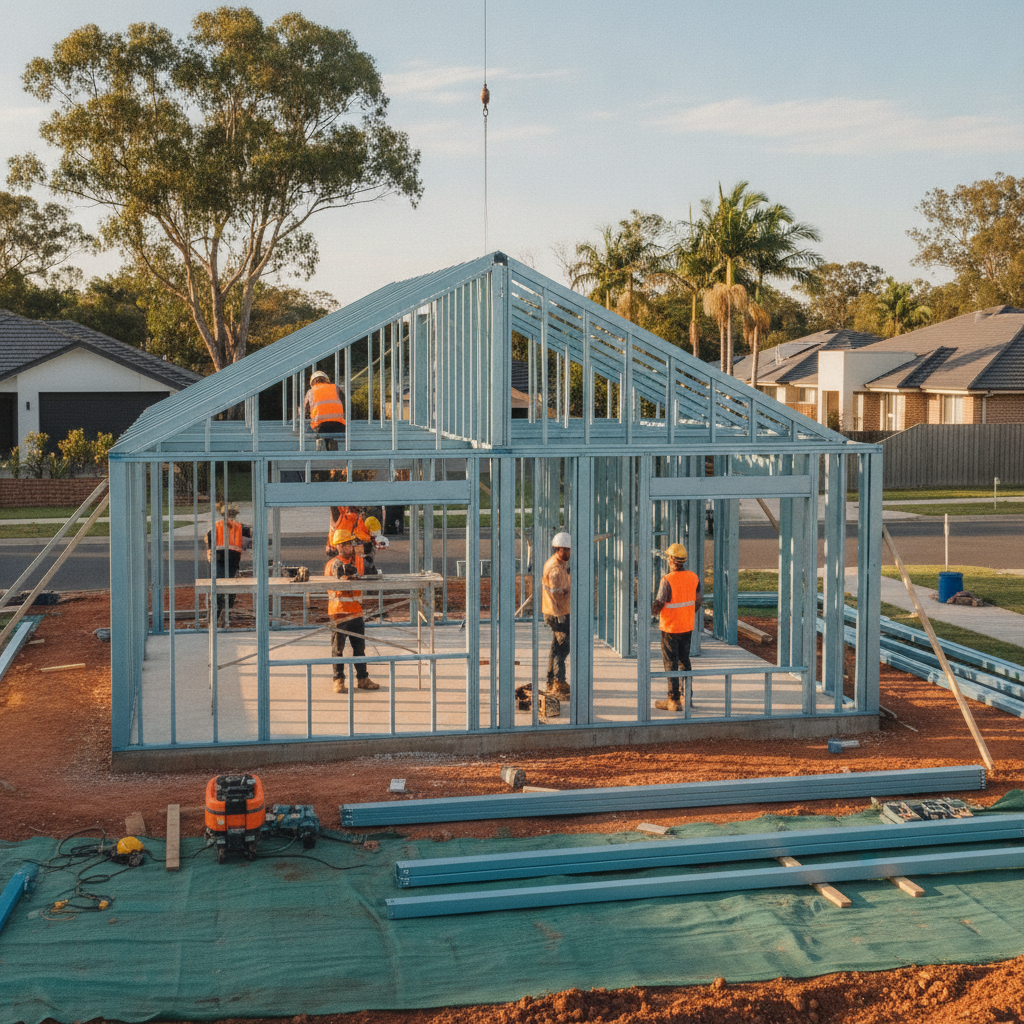
When dealing with high wind ratings, the material choice for your frame is paramount. Steel frames, particularly those made with high-quality BlueScope TRUECORE steel, offer a distinct advantage. Steel has a high strength to weight ratio, meaning it can provide the necessary structural integrity for an N4 or C2 rating without becoming impossibly heavy or bulky.
Furthermore, steel frames are precision engineered. This means the connection points, pre-punched holes, and bracing locations are calculated to the millimetre. For an owner builder, this provides a level of certainty that every screw and bolt is contributing to a house that can withstand the elements. Steel does not warp or shrink, ensuring that the structural connections remain tight and secure over decades of seasonal changes.
Practical Tips for Owner Builders
Managing your own home build is a rewarding challenge, but when it comes to wind ratings, there is no room for error. Here are some actionable tips for those planning a kit home:
Get Your Soil and Wind Reports Early
Do not wait until you have chosen a floor plan to get your site reports. The wind rating of your block will dictate the engineering requirements of your kit home. Knowing this early helps the kit provider give you an accurate design that meets all safety standards from the outset.
Understand 'Tie-Down' Requirements
In high wind areas, the way the house is attached to the foundation is critical. Whether you are using a concrete slab or a raised flooring system, the 'tie-down' path must be continuous. Talk to your trades about how the steel frames will be anchored to the footings. This is the most common area where inspections can fail if not done strictly according to the engineering drawings.
Choose Your Windows and Doors Carefully
In a kit home, the windows and doors are part of the building's 'envelope.' In N3, N4, or Cyclonic regions, these must be rated for the specific wind pressure of your site. Ensure that the glass thickness and frame strength match your wind classification. High-quality kits will include windows that are already matched to the structural engineering of the frame.
The Importance of Insulation and Sealing
While wind ratings focus on structural stability, they also relate to how a house performs in terms of weatherproofing. In high wind areas, rain can be driven horizontally against the walls. A well-designed kit home includes high-quality insulation and sarking (weather barriers) that protect the steel frame and the interior from moisture ingress. When building your kit, pay close attention to the sealing around window frames and door sills to ensure a wind-tight finish.
Conclusion
Building a home in Australia is a dream for many, and the kit home path offers a fantastic way for owner builders to get hands-on with the process. However, the technical side of building, especially understanding wind ratings, is where the longevity of your home is decided. From the modest N1 suburban site to the rugged N4 hilltop, every classification requires a specific approach to engineering and construction.
By opting for a steel-framed kit home, you are already starting with a material known for its resilience and precision. When you combine that with a clear understanding of your site's wind demands and a commitment to following engineering specifications, you aren't just building a house, you are building a sanctuary that will stand strong for generations of Australians to come.