The Great Migration: How Remote Work is Transforming the Australian Dream
For decades, the Australian dream was tethered to the CBD. Employment meant a commute, and a commute meant living within a specific radius of our capital cities. However, the last few years have seen a seismic shift in how-and where-we work. With high-speed internet and flexible workplace policies, the 'Zoom town' phenomenon has taken hold across regional Australia.
At Australian Housing News, we’ve tracked a significant surge in building permits for regional and rural lots. But with traditional builders facing backlogs and material shortages, a different solution is rising to the top: the modern kit home. Specifically, the demand for high-quality, steel-frame kit homes has skyrocketed as professionals seek to build sustainable, affordable, and architecturally stunning residences on their new acreage.
The Appeal of the Kit Home in a Regional Market
Building in a remote area presents unique challenges. Professional labor can be scarce, and transport costs for traditional materials can blow a budget. This is where the kit home model shines. By pre-fabricating the primary components-such as the 2440mm high, 90mm wall frames-and shipping them as a complete package, the logistical nightmare of a rural build is significantly mitigated.
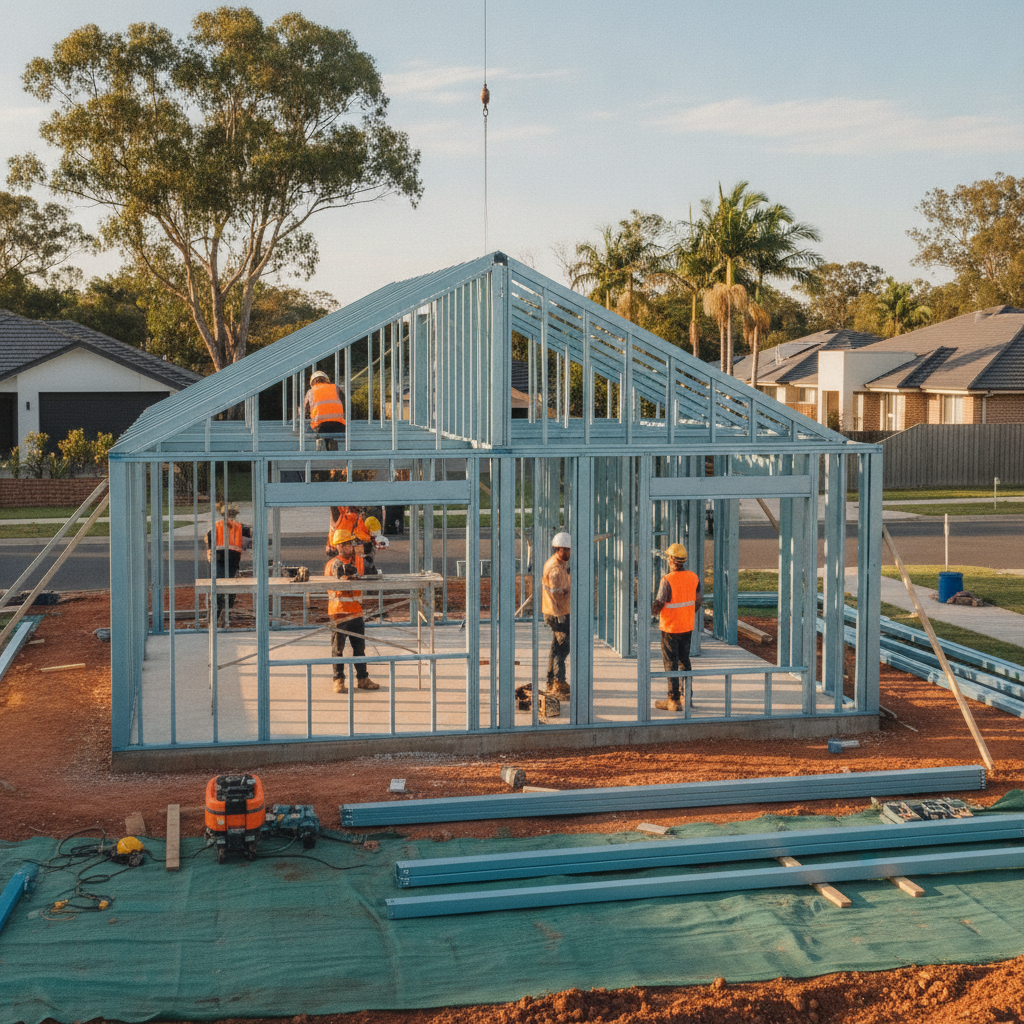
For those looking at modular and kit home options, the speed of assembly is a major drawcard. When components are engineered to fit perfectly before they even arrive on-site, the 'grey shell' of a house can be erected in a fraction of the time it takes for traditional stick-built timber homes.
The Steel Advantage: Why BlueScope TRUECORE® is Non-Negotiable
In the Australian climate, the choice of framing material is the most critical decision an owner-builder will make. While timber has been the historical standard, the shift toward steel is undeniable. At the heart of this shift is BlueScope TRUECORE® steel.
Why is steel winning the battle? Here are the technical benefits every buyer should know:
- Termite Immunity: In rural Australia, termites are a constant threat. Steel frames are 100% termite-proof. There is no need for chemical treatments to protect the structural integrity of your home's skeleton.
- Fire Resistance: With the increasing risk of bushfires in regional areas, non-combustible steel framing provides an essential layer of safety and peace of mind.
- Dimensional Stability: Timber shrinks, twists, and warps as it dries and ages, leading to cracked plaster and sticking doors. Steel frames made from BlueScope TRUECORE® are dimensionally stable; they stay perfectly straight and true for the life of the building.
- Warranty: BlueScope offers a 50-year structural warranty on TRUECORE® steel, providing a level of long-term security that timber simply cannot match.
Technical Specifications: What’s Inside a Quality Australian Kit?
When researching kit homes, it is vital to look at the engineering. A standard high-quality kit should include prefabricated steel roof trusses with 40mm steel roof battens and 22mm ceiling battens. This creates a rigid, high-tensile structure capable of withstanding the harsh Australian elements.
Standard kits usually come with an N3 Wind Rating, but for those moving to the coast or the far north, the ability to upgrade to C2 cyclonic ratings is essential. This ensures that whether you are on a windswept ridge in Victoria or a coastal plot in Queensland, your home is engineered for its specific environment.
The Owner-Builder Journey: Practical Tips for Success
Taking on a kit home as an owner-builder is an empowering way to save money and ensure quality control. However, it requires meticulous planning. Here are our top tips for those starting the journey:
1. Understand Your Inclusions
A comprehensive kit should provide the 'envelope' of the home. This includes your architectural plans, engineering certification, BlueScope steel frames, and external claddings like Hardiflex or Blue Board. Quality kits also include premium finishes like Colorbond® corrugate 0.40 roof sheets, fascia, and gutters. Ensure your kit includes the 'little things' that add up, such as 50mm Anti-Con roof blankets and high-quality entry sets like the Gainsborough Trilock.
2. Budget for the 'Exclusions'
To avoid financial stress, remember that a kit home price typically does not include the 'wet trades' or site-specific works. You will need to budget separately for:
- Earthworks and the concrete slab (or an elevated DURAGAL floor system).
- Electrical, plumbing, and gas installations.
- Internal fit-outs: kitchens, bathrooms, and laundry joinery.
- Floor coverings, painting, and tiling.
3. Site Access is Key
If you have purchased a beautiful, remote block of land, ensure a heavy truck can actually reach the building site. You don't want your kit delivered to the front gate if the house pad is two kilometers up a muddy track.
Designing for the Lifestyle: Aesthetics and Efficiency
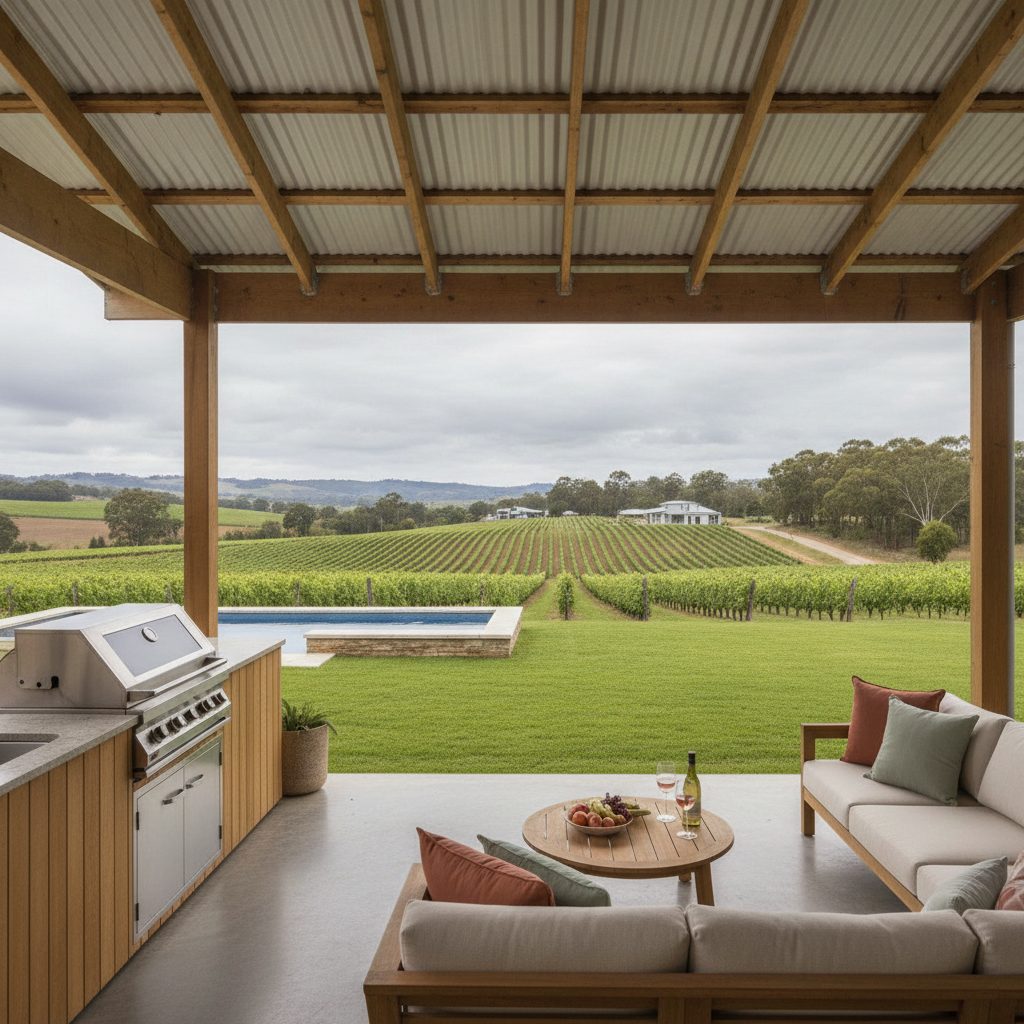
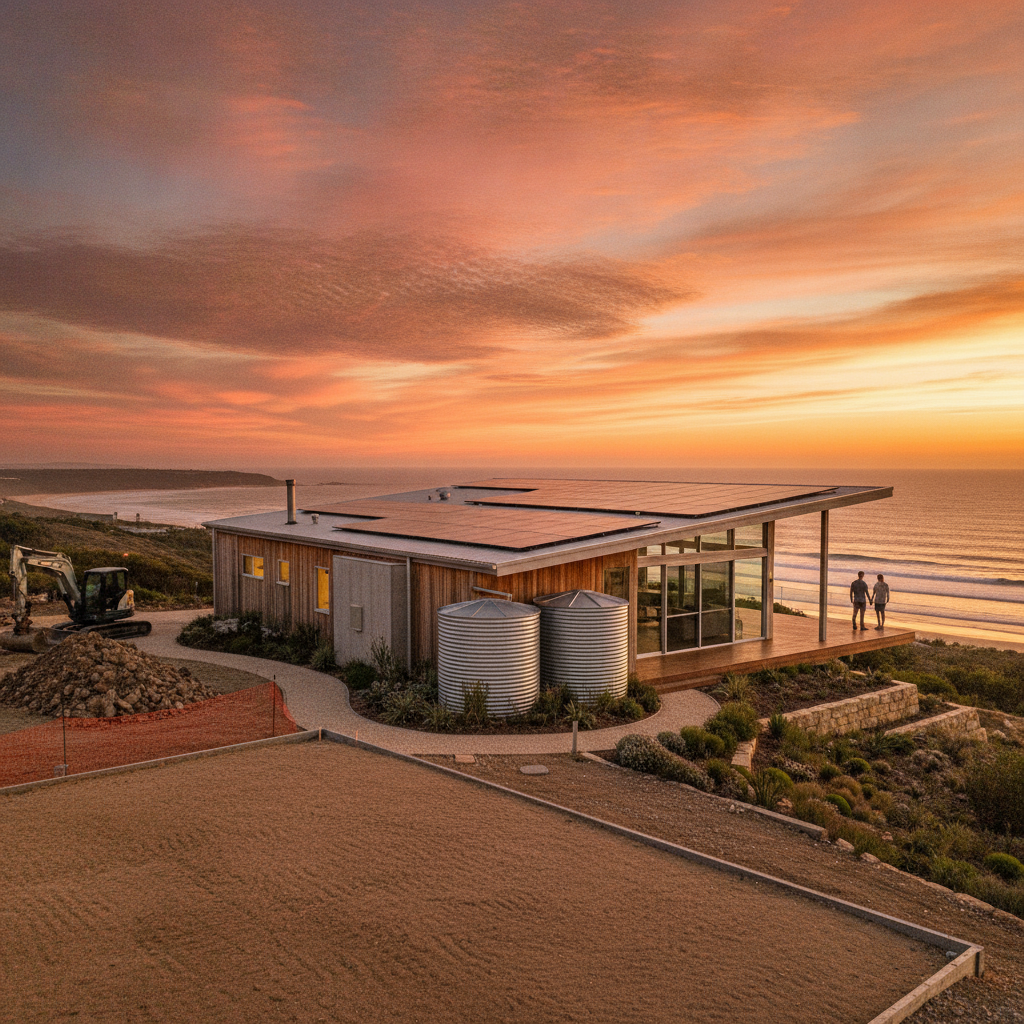
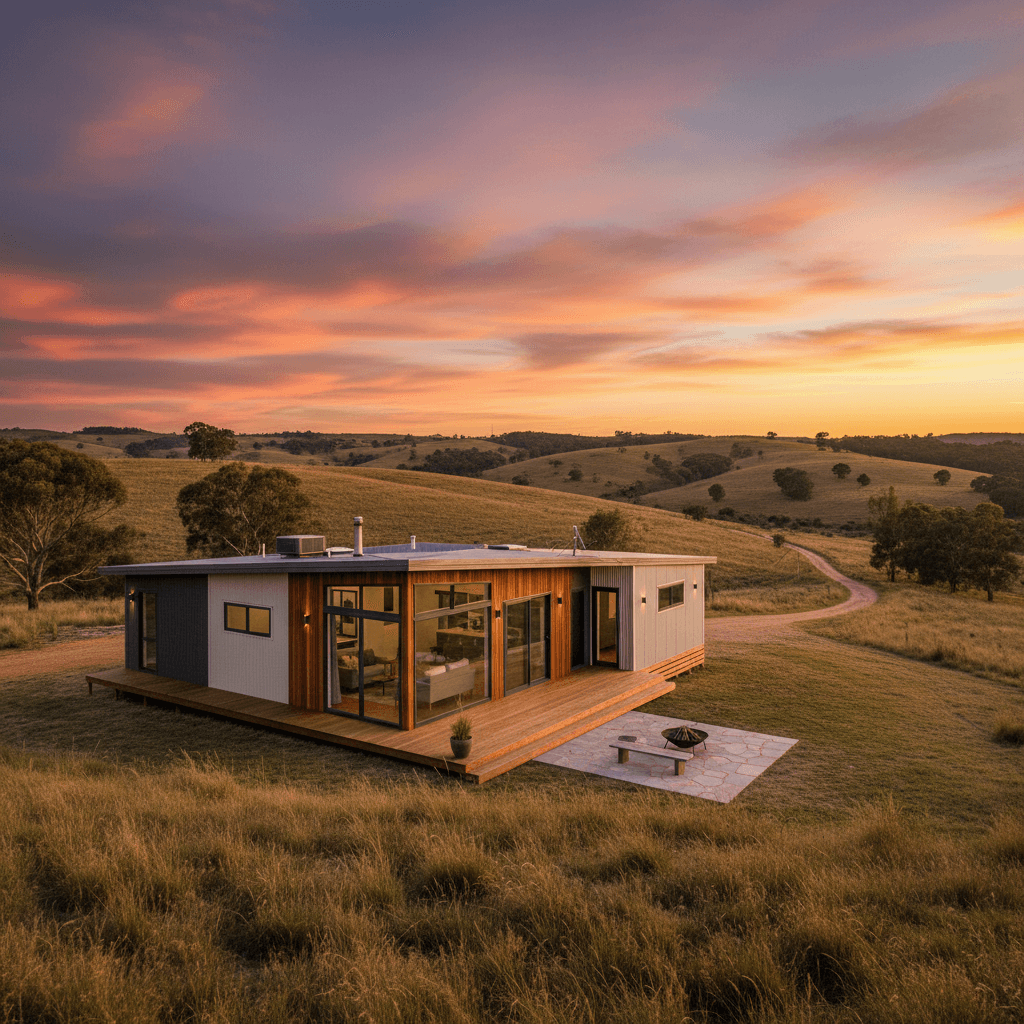
The modern kit home is a far cry from the utilitarian sheds of the past. Today's designs focus on the 'lifestyle' element of rural living. Large aluminium sliding windows and doors are essential for capturing those valley views and allowing for cross-ventilation. For those in alpine regions, snow load engineering is a must, while those on sloping blocks should consider elevated floor systems to minimize site disturbance and maximize the view.
Energy efficiency is also a priority. Using 10mm plasterboard with 90mm cove cornice provides a clean, modern interior finish, while double-sided foil wall insulation helps maintain a stable internal temperature, reducing the reliance on expensive air conditioning.
The Financials: Is a Kit Home More Affordable?
The short answer is yes-if managed correctly. By acting as the project manager (owner-builder), you eliminate the builder's margin, which can range from 15% to 30% of the total project cost. Furthermore, because components like the melamine shelving in robes and pre-hung internal door jambs are included in the kit, you save significant time and labor costs during the fit-out phase.
However, we always recommend a contingency fund of 10-15%. Regional builds can encounter surprises, from unexpected rock during excavation to fluctuating prices in local trade labor.
Conclusion: A Sustainable Path Forward
The shift toward regional living isn't just a trend; it's a structural change in the Australian lifestyle. As we look toward a future where we spend more time in our homes, the demand for quality, resilience, and affordability will only grow.
By choosing a kit home built with Australian-made BlueScope TRUECORE® steel, owner-builders are choosing a home that is built for the long haul. It is a smart investment that combines the best of modern manufacturing with the timeless desire for a piece of the Australian landscape to call one's own.
Whether you are dreaming of a compact modular retreat or a sprawling family homestead, the kit home industry is ready to help you make the move to a better way of living.