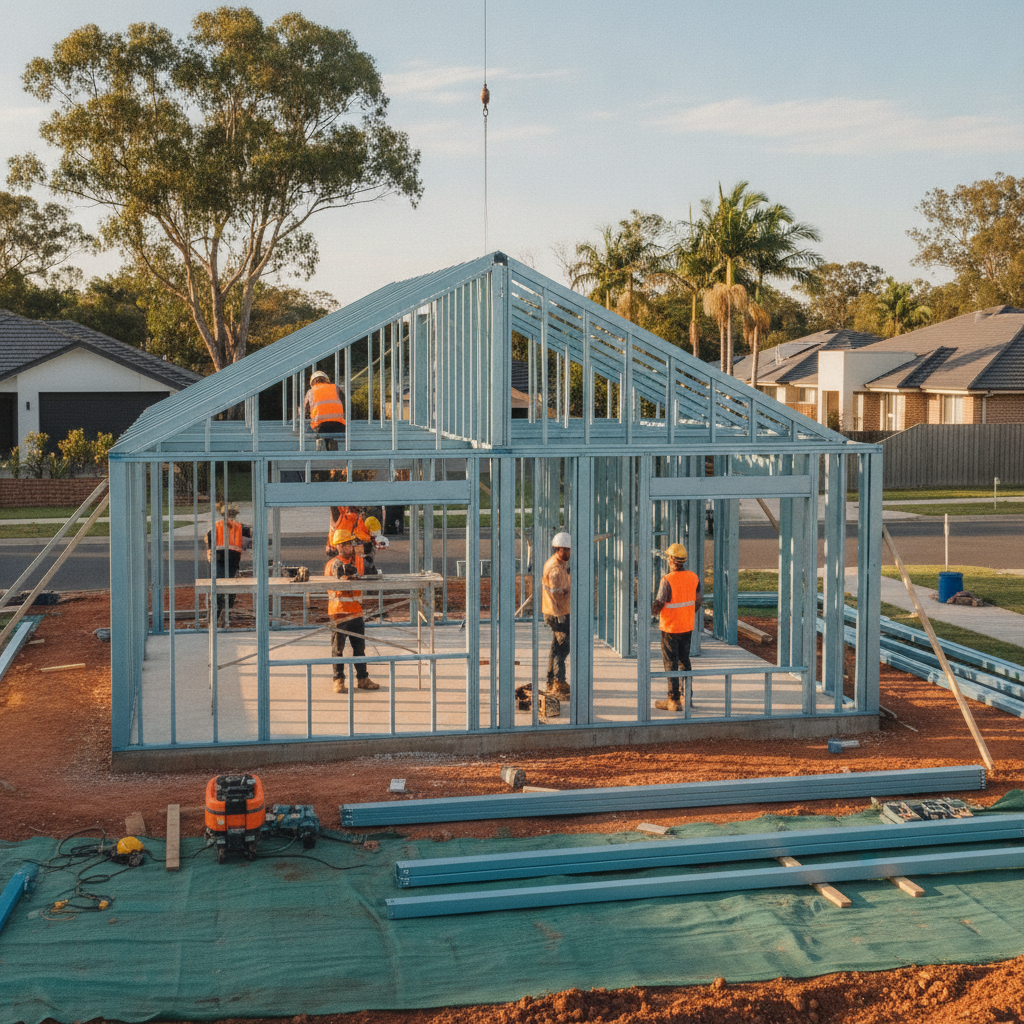
I saw a bloke last month standing on a dirt patch in outer Ipswich. He had a delivery of steel wall frames sitting on the ground, a set of engineering plans in his hand that looked like they'd been through a car wash, and a look of pure panic on his dial. He was meant to be the owner builder. The problem? His slab was 30mm out of square and his plumber had ghosted him because 'the job looked too fiddly'. This is where most kit home dreams go to die. Not because the house is hard to build, but because communicating with trades is a skill most people simply don't have.
The Myth of the 'Simple' Kit Home Job
Let's get one thing straight. A kit home is a real house. It uses BlueScope TRUECORE steel, it's got to meet the National Construction Code (NCC) Volume 2, and it requires professional hands for the bits you can't or shouldn't do yourself. When you call a sparky or a plumber and tell them you're doing a kit, half of them will roll their eyes. Why? Because they've dealt with owner builders who don't know a top plate from a tail bone. They expect you to be disorganized. They expect to show up and find out you haven't even got a site toilet or a temporary power pole ready. If you want a trade to actually show up, you have to sound like you know exactly what comes next. Don't ask them what they need. Tell them the site is ready, the frames are upright, and the service penetrations are exactly where the plans say they are.
Speaking the Language of Steel
If you're using steel frames, you're already ahead on straightness, but you're in a different world for some trades. Your electrician needs to know they're working with steel. They'll need grommets for every single hole where a wire passes through a stud to prevent the sharp edges from slicing the insulation. This isn't optional. It's AS 3000 stuff. If your sparky starts complaining about 'too much drilling', fire them. Modern steel kits come with pre-punched service holes. Point them out. Show them the plans. If they haven't worked with steel lately, they might think they need to bring a heavy-duty mag drill for every hole. They don't. But you need to be the one to tell them that. Be the expert on your own house.
The Slab Is Everything
Everything starts with the concrete. If your slab is wonky, your steel frames won't sit flush. You'll be using packers until you're blue in the face, and then the plasterer will come in and call you every name under the sun because the walls have a wave in them. When you're talking to your concretor, don't just say 'yeah, a standard slab'. Tell them you need a tolerance of plus or minus 5mm over the whole footprint. Mention AS 2870. The moment you drop a Standard number, the tradie realizes you aren't just a guy who watched three YouTube videos and bought a tool belt from Bunnings on Saturday morning. They'll sharpen up. Or they'll hike their price because they know they can't slap it together. Either way, you win.
Ordering Your Chaos
Suppliers are a different beast. When you buy a kit home, companies like Imagine Kit Homes send you the big stuff - the roofing, the cladding, the doors, the frames. But you're the one sourcing the rest. Don't wait until the day you need 40 bags of rapid-set or a specific flashing to call the local yard. Build a relationship with the trade desk at your local hardware store. Not the retail counter. The trade desk. Walk in there with your owner builder permit and a box of donuts at 6:30 am on a Tuesday. Ask who the best local independent contractors are for roof plumbing. These guys see everyone. They know who's reliable and who's currently vibrating from too much caffeine and unpaid bills.
When deliveries arrive, don't just point at the driveway and walk away. Check the tally. If you're missing a box of tech screws or a specific vertical cladding joiner, and you only realize it three weeks later when you're halfway up a ladder, you've lost a day of progress. Suppliers are busy. They make mistakes. It's your job to catch them before the crane hire clock starts ticking at 150 bucks an hour.
The Art of the Site Meeting
Stop emailing. Start talking. If you've got a tricky bit of flashing around a window or you're worried about how the insulation sits against the wall battens, get the trade on site. Show them. 'How are we going to finish this corner?' is a much better question than 'Why does this look like crap?' after they've already finished. Trades appreciate a builder who's thinking two steps ahead. Because at the end of the day, you ARE the builder. You aren't 'the client'. You're the project manager.
If you see a trade doing something that looks dodgy, ask them to explain it. Maybe there's a reason. Maybe they're cutting corners. If they can't explain it in a way that aligns with the engineering drawings provided with your kit, tell them to stop. It's your name on the permit. It's your family sleeping under that roof. Steel is unforgiving - it doesn't rot or warp, but it also doesn't 'give' much if you've put a fastener in the wrong spot. Get it right the first time.
Dealing With the 'Kit Home' Tax
You'll find some chippies try to charge you a premium because they think a kit is harder. It's usually the opposite. Everything is cut to length. The holes are there. The spans are engineered. If a trade tries to tell you it takes twice as long to screw off a steel frame than a timber one, they're taking you for a ride. A decent impact driver and the right self-drilling screws make the work fly. Frame out a small section yourself on the weekend if you have to. Then, when the trade says it’s 'impossible' to do it quickly, you can show them exactly how long it took you. Nothing shuts down a price hike faster than demonstrated knowledge.
Practical Checklist for Trade Communication:
- Have three printed copies of the floor plan and elevations on site at all times. One for you, one for the trade, and one to get muddy.
- Mark the slab with a chalk line or permanent marker to show exactly where stud walls start and finish before the chippy arrives.
- Ask for a 'fixed price per stage', not an hourly rate. Hourly rates for owner builders are a recipe for a very long, very expensive coffee break.
- Confirm the arrival time the night before. A quick text: "See you at 7am? Site is clear and power is on." This makes it harder for them to 'forget' you and head to a bigger commercial site instead.
Building your own place is a massive slog. It's dusty, your back will hurt, and you'll spend more time on the phone than a teenager. But when those steel frames go up and you see the skeleton of your actual house standing there against the Aussie sun, it's a feeling you can't buy. Just remember that you're the boss. Act like it. Don't be a jerk, but don't be a pushover either. If you treat your trades with respect and show them you've done your homework, they'll usually return the favor. And if they don't? There's always another bloke with a ute who wants the work.