I have spent years watching owner-builders lose sleep over floor plans while completely ignoring the red dirt under their boots. It is a classic mistake. You find a design you love, you start dreaming about where the fridge goes, and then the site survey comes back. Suddenly, that flat block you thought you bought looks more like the side of a mountain in the Great Dividing Range. Now you have a choice to make. Do you cut and fill the land for a concrete slab, or do you lift the whole kit home up on steel stumps? Both have their place, but pick wrong and you'll be burning cash before the first truck even arrives.
The Slab Life: When Low and Slow Works
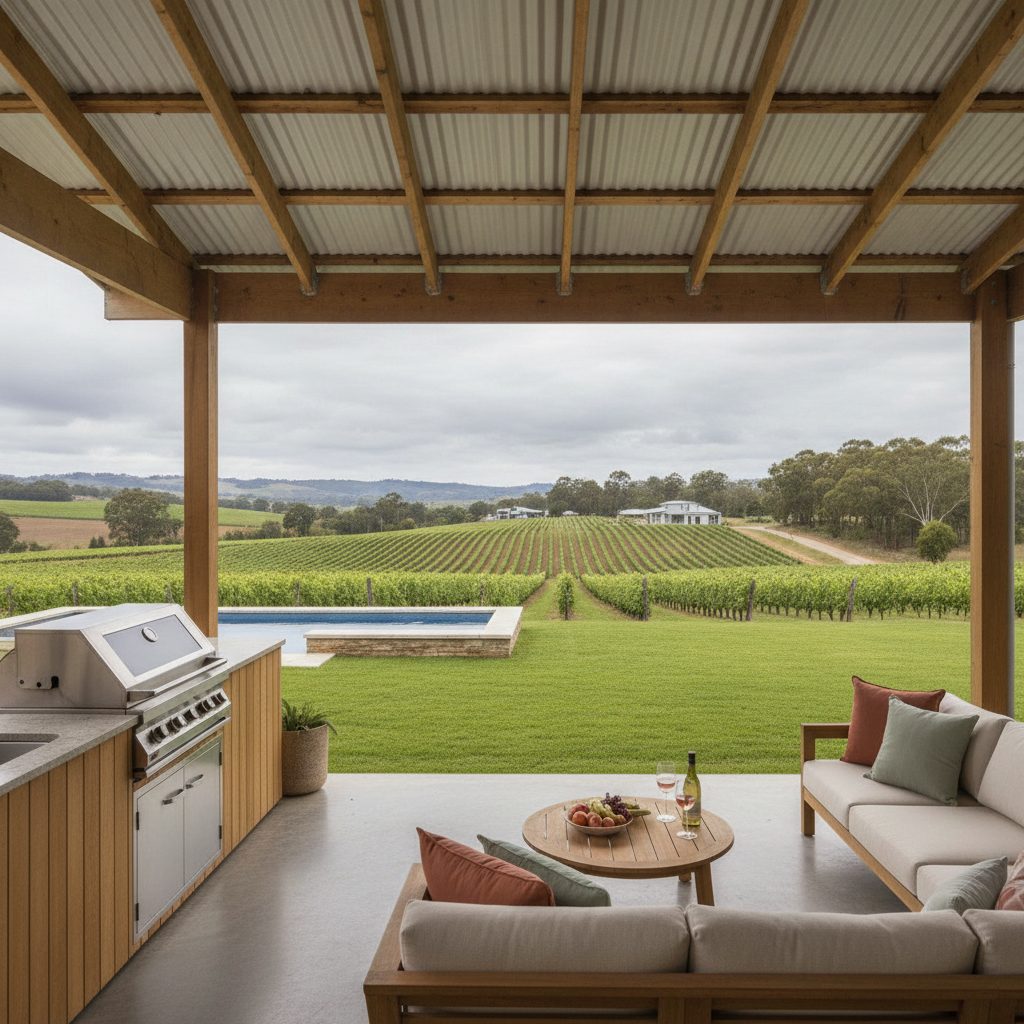
Most people default to a concrete slab on ground. It is the standard Australian way of building these days, especially in new estates around places like Ipswich or the outer suburbs of Melbourne. If you have got a flat block of dirt with decent drainage, a slab is often the path of least resistance. It feels solid. It’s easy to get in and out of. Plus, it gives you that seamless indoor-outdoor flow if you are planning a big alfresco area.
But slabs are unforgiving. Once that concrete is poured, your plumbing is locked in a tomb. If you decide later that the toilet really should have been ten inches to the left, you are looking at a jackhammer and a very expensive week. Also, if you are building on reactive clay, which is half of Australia, your slab needs to be engineered to handle the movement. We are talking internal beams, heavy reinforcement, and plenty of plastic. If the ground moves and your slab isn't meaty enough, it cracks. Simple as that.
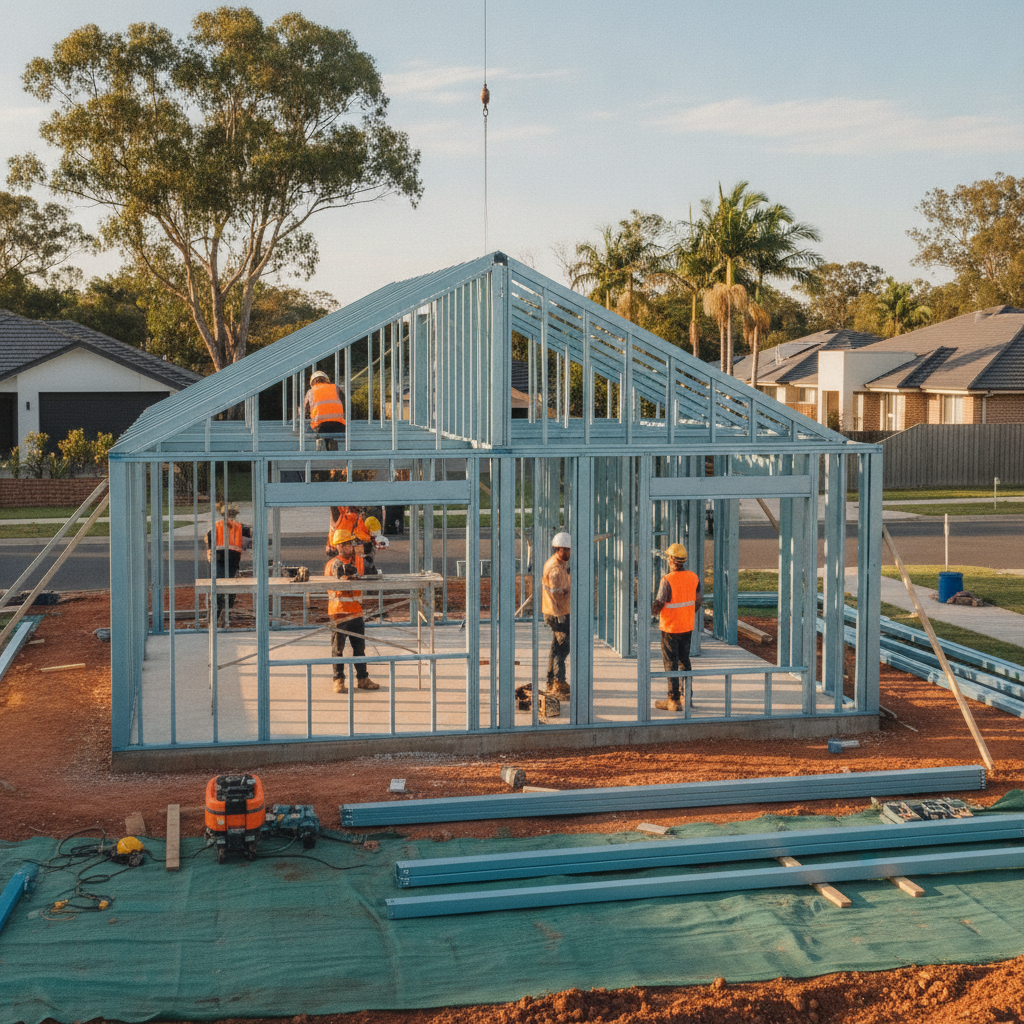
Steel frames actually perform quite well on slabs because they have a bit of flex in them compared to rigid masonry. We use BlueScope TRUECORE steel precisely because it stays straight and true. It won't twist as it dries out like a green timber stud might, which is a godsend when you are trying to line up your gyprock on a big open-plan living area.
Getting Off the Ground: The Case for Elevated Kits
If your block has more than a metre of fall across the building envelope, stop thinking about a slab. Just stop. To make a slab work on a slope, you have to excavate. You’re paying for a digger, you’re paying to haul dirt away, and then you’re paying for massive retaining walls. I’ve seen owner-builders spend forty grand on retaining walls before they even had a roof over their heads. It’s madness.
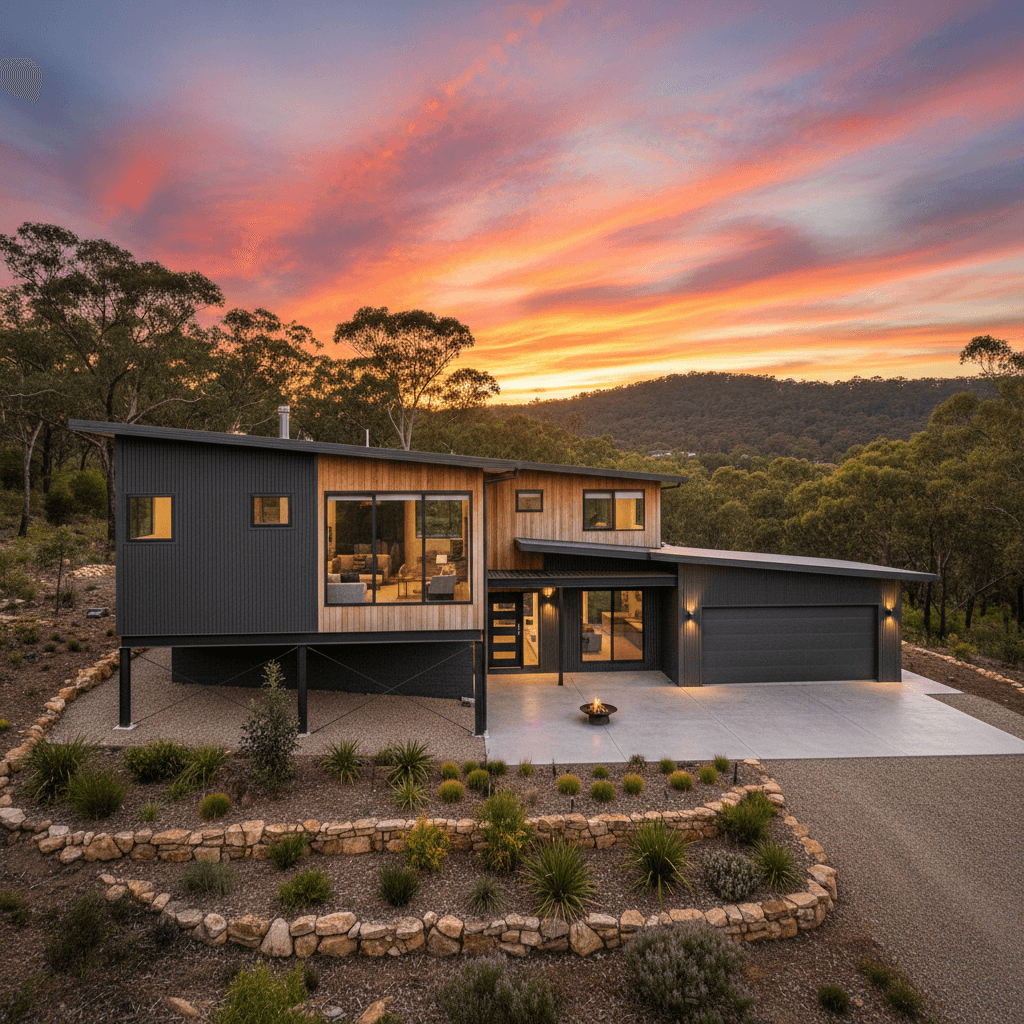
An elevated kit home sits on steel posts or piers. This is the smart play for sloping sites or areas prone to heavy rain. Because the house is up in the air, the water just runs underneath it. No need for complex drainage systems to stop your house from becoming a dam. And let's talk about the airflow. In the humidity of Far North Queensland or the Top End, an elevated home is the only way to live. You get those breezes under the floorboards which helps keep the whole place cooler.
The best part? Access. Need to add a power point later? Want to move a sink? You just crawl underneath. No jackhammers. No mess. It’s a tradie’s dream. We supply steel sub-floors with many of our kits because they are lightweight and incredible at spanning long distances without a forest of posts. It’s clean, it’s fast, and it doesn't leave a massive footprint on your land.
Steel Frames and the Termite Factor
Whether you go slab or stumps, the frame matters. I’ve seen what termites can do to a house in a single season in places like Bundaberg or even the leafy suburbs of Sydney. It isn't pretty. They find a tiny crack in the slab or climb up a stump, and before you know it, your wall studs are basically wet cardboard.
This is why we stick to steel. Termites can’t eat it. It’s that simple. When you’re an owner-builder, you’re already managing a hundred different things. Not having to worry about your house being eaten from the inside out is one less headache. Plus, steel frames are non-combustible. If you’re building in a Bushfire Attack Level (BAL) zone, which is more and more common across the Aussie bush, steel gives you a massive leg up on your compliance. It doesn't mean the house is fireproof, but it won't be the fuel for the fire.
Practical Tips for Your Site Choice
Don't just take the real estate agent's word that the block is 'easy to build on'. Get a contour survey done. It’ll cost you about $800 to $1,500 depending on where you are, but it’s the most important piece of paper you’ll ever own. It shows every bump and dip. If the lines are close together, you’re looking at an elevated build.
Check your soil report too. This is the 'S', 'M', 'H', or 'E' classification on your paperwork. An 'E' site means extremely reactive soil. If you put a slab on an 'E' site, it has to be thick and heavy. An elevated kit can often be cheaper here because you’re only digging holes for piers rather than a massive trench for a whole house footprint.
Trade-offs Nobody Tells You
I’ll be honest with you. Elevated homes have more bounce. Even with heavy-duty steel joists, you don’t quite get that 'walking on a rock' feel that a concrete slab provides. You have to think about your flooring too. On a slab, you can polish the concrete for a modern look. On an elevated kit, you’re looking at yellow tongue flooring then adding your finish on top.
Insulation is another one. With a slab, the earth helps regulate the temperature. With an elevated home, the wind blows right under your feet. You must insulate under the floorboards. If you skip this, your feet will be freezing in July, I don't care how many heaters you have running. We include insulation in our kits for a reason. Don't leave it in the shed. Use it. Because the last thing you want is a beautiful new home that feels like a fridge in the winter.
The Verdict
There is no right answer, only the right answer for your specific piece of Australia. If you've got a flat, sandy block in WA, go the slab. It’s straightforward and cost-effective. But if you’re looking at a site with a view, a bit of a hill, or you just want to keep the local termites hungry, look at the elevated option. It saves the landscape and usually saves your sanity during the build process. Just make sure you suss out your site's BAL rating and soil class before you sign on the dotted line. Preparation is what separates a successful owner-builder from someone who ends up with a half-finished frame and a drained bank account.