The Brutal Reality of the Australian Building Site
Walk onto any building site in Queensland or the Northern Territory in the middle of February and you'll see exactly why timber is a headache. You've got humidity that makes your shirt stick to your back by 7am and termites that can smell a pine stud from two suburbs away. I've spent fifteen years watching owner-builders struggle with frames that arrived straight from the mill but turned into boomerangs after three days sitting in the sun. It's frustrating. It's expensive. And honestly, it's unnecessary. If you're building a kit home in this country, you need to understand that the bones of your house determine whether you'll be fixing cracks in five years or sitting back with a cold one knowing your walls are dead straight.
We use BlueScope TRUECORE steel for a reason. It isn't because it looks shiny. It's because the Australian environment is designed to kill houses. Between the bushfire risks, the white ants, and the wild temperature swings that make wood expand and contract like a pair of lungs, steel is the only material that stays put. I reckon if more people saw what a colony of Coptotermes acinaciformis can do to a timber-framed lounge room in six months, nobody would ever use wood again. Steel frames aren't just a modern alternative. They're a necessity for anyone who doesn't want to spend their weekends worrying about structural integrity.
Termites Don't Eat Steel
This is the big one. In most parts of Australia, it's not a matter of if termites will find your place, but when. I've heard the arguments about treated timber. People say the chemicals keep the bugs away. Sure, they do, for a while. But treatments leach out, or the termites find a tiny gap in the barrier where the slab has settled, and suddenly they're at the buffet. Steel frames are 100 percent termite-proof. No chemicals, no annual sprays that smell like a lab, and no constant paranoia every time you see a bit of mud on the brickwork. It gives you a level of peace of mind that you just can't get with wood.
Because the steel is non-combustible, it also changes the way you think about fire safety. We aren't just talking about major bushfires here, although that's a massive factor if you're building in a BAL-rated zone. Even a simple electrical fault in a wall cavity is less of a catastrophe when the frame itself won't catch fire. It's about layers of protection. When you combine TRUECORE frames with the right insulation and non-combustible cladding, you're building a fortress, not a tinderbox.
Precision That Makes the Trades Love You
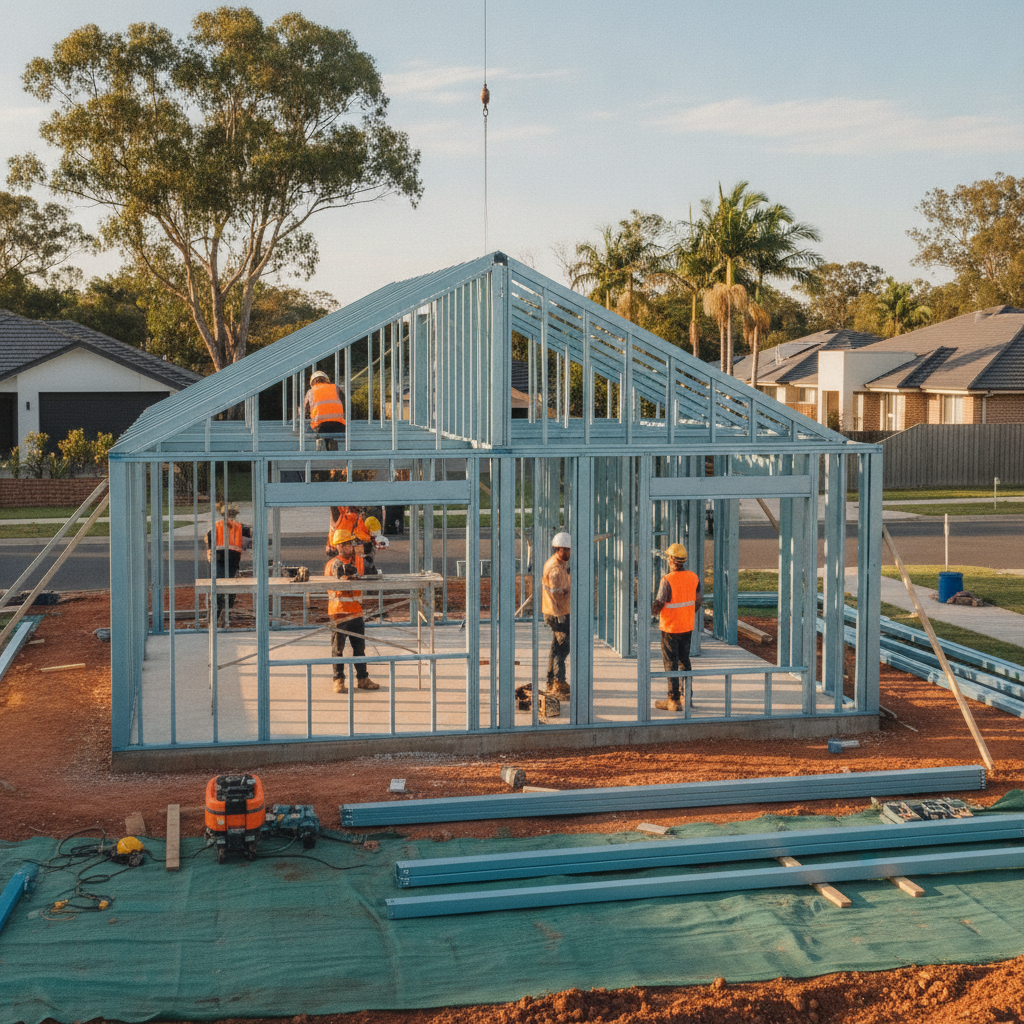
One thing nobody tells first-time owner-builders is how much a wonky frame ruins the rest of the build. If your studs are bowed, your plasterboard will have waves in it. Your kitchen cabinets won't sit flush against the wall. Your doors will stick in summer and rattle in winter. It's a nightmare for the finishings. Steel frames are manufactured to millimetre precision. They come out of the factory straight and they stay straight. Forever. They don't warp when they get wet and they don't shrink when the dry heat hits.
I remember a project out near the Blue Mountains where the owner-builder had used a cheap timber supplier for a shed before starting his main kit home with us. He spent three days just trying to plane down studs so he could get his internal lining flat. When his steel kit arrived for the house, he was done with the framing in half the time because everything just clicked together. The holes for your electrical wiring and plumbing are already punched out too. Your sparky and plumber will be in and out faster because they aren't spending hours drilling through hardwood. It's these small details that save you thousands in trade labor down the track.
Handling the Weight on Site
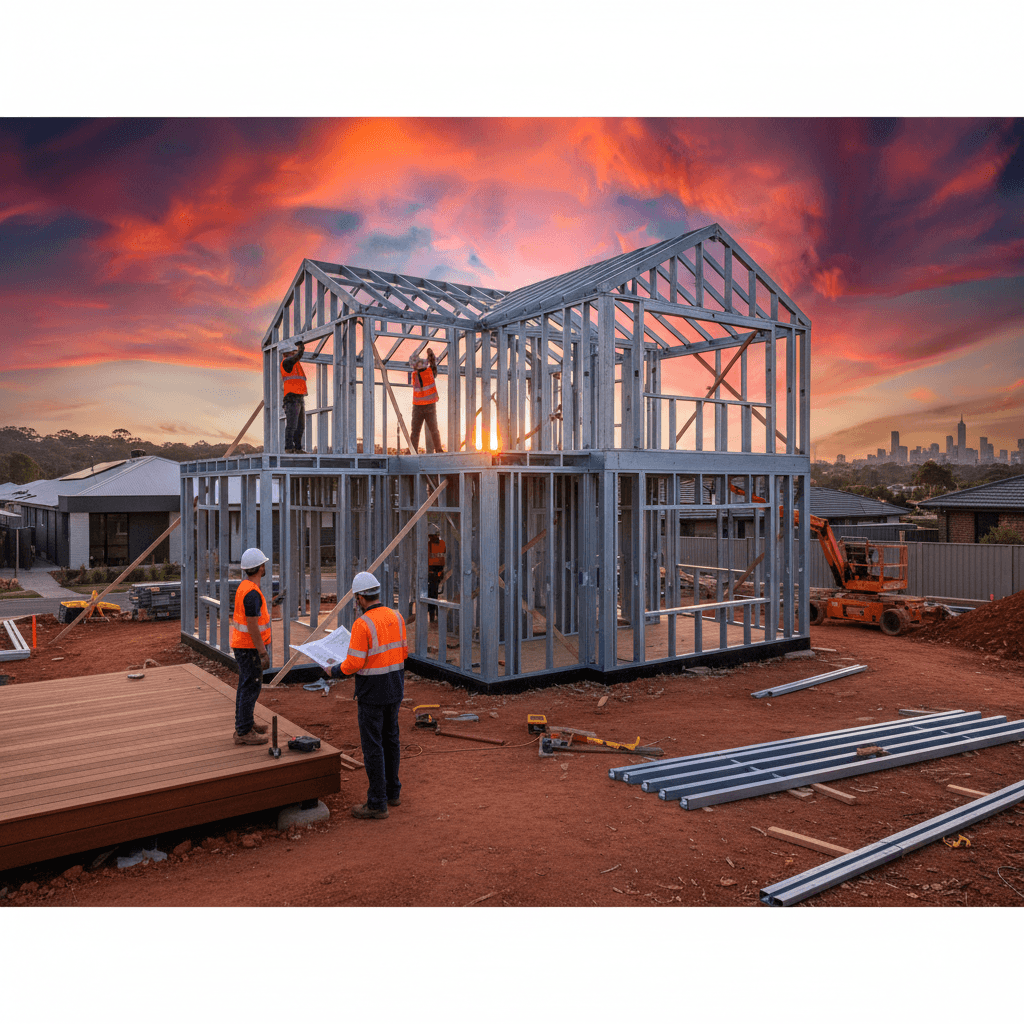
If you're DIY-ing a lot of the assembly, your back will thank you for choosing steel. A steel wall frame is significantly lighter than a seasoned timber one. You can usually have two people stand up a wall section without needing a crane or a massive crew of mates. This is a massive win for the owner-builder who is trying to keep site costs down. Plus, since the frames are pre-assembled into panels, you aren't standing there with a nail gun trying to figure out if your studs are 450 or 600 centres. It's already done. You just follow the layout plan, bolt them down, and move on to the next one.
The BlueScope Warranty Factor
Let's talk about the actual material. We use TRUECORE because it's specifically designed for the Australian residential market. It's not some generic imported light-gauge steel that might rust out if you live within ten clicks of the ocean. It has a distinctive blue finish and a zinc/aluminium alloy coating that protects it from corrosion. BlueScope offers a warranty of up to 50 years on these frames. Try getting that from a timber yard. You won't. They'll laugh you out of the office. This warranty is a huge asset when it comes time to sell later on. Prospective buyers love hearing the house has a steel skeleton because it means less maintenance for them too.
But it's not all rainbows. You've got to be smart about how you work with it. For example, if you're planning on hanging heavy floating shelves or a massive 85-inch TV, you need to think about your noggins during the framing stage. You can't just screw into steel anywhere like you can with wood. You need to plan your mounting points or use the right Tekscrews and brackets. It's a different way of thinking, but once you get the hang of it, it's actually more secure. No more worrying about a screw pulling out of a soft pine stud.
Environmental Impact and Sustainability
People often assume timber is the green choice, but it's not that simple. Steel is 100 percent recyclable. If the house ever gets demolished in a hundred years, every bit of that frame can be melted down and turned into something else. There's also zero waste on site. When we deliver a kit, every piece is accounted for. You don't have a massive pile of offcuts and sawdust that you have to pay to haul away to the tip. For a DIY builder, a clean site is a safe site. It makes the whole process feel less like a chaotic mess and more like a professional project.
Advice for the Aussie Owner Builder
If you're sussing out your options for a kit home, don't just look at the floor plan. Look at the specs. Ask what the frames are made of. If someone is offering a kit with generic timber, ask them about the BAL rating and the termite protection. In my experience, the money you think you're saving on the initial purchase of a cheaper frame gets eaten up by site delays, extra trade hours, and long-term maintenance.
When your kit arrives, make sure you've got your slab ready to go. Even though steel handles the weather better than wood, you still want to get it up and under roof as quickly as possible. It keeps the site tidy and protects your insulation and floorboards later on. Also, get yourself a good quality impact driver and a set of hex head bits. You'll be driving a lot of screws, and the cheap tools from the bargain bin won't last the week. Spend the extra fifty bucks at Bunnings for the decent gear. Your wrists will thank me later.
Building your own home is a massive undertaking. It's stressful, it's tiring, and it'll probably take longer than you think. But there's a specific kind of pride in standing back and looking at a finished house that you helped put together. By choosing a steel frame, you're making sure that the house you're building today is still going to be standing straight and true when your grandkids are running around. It's about doing the job right the first time. In the Australian bush or the suburbs, steel isn't just an option. It's the only way to build for the long haul.