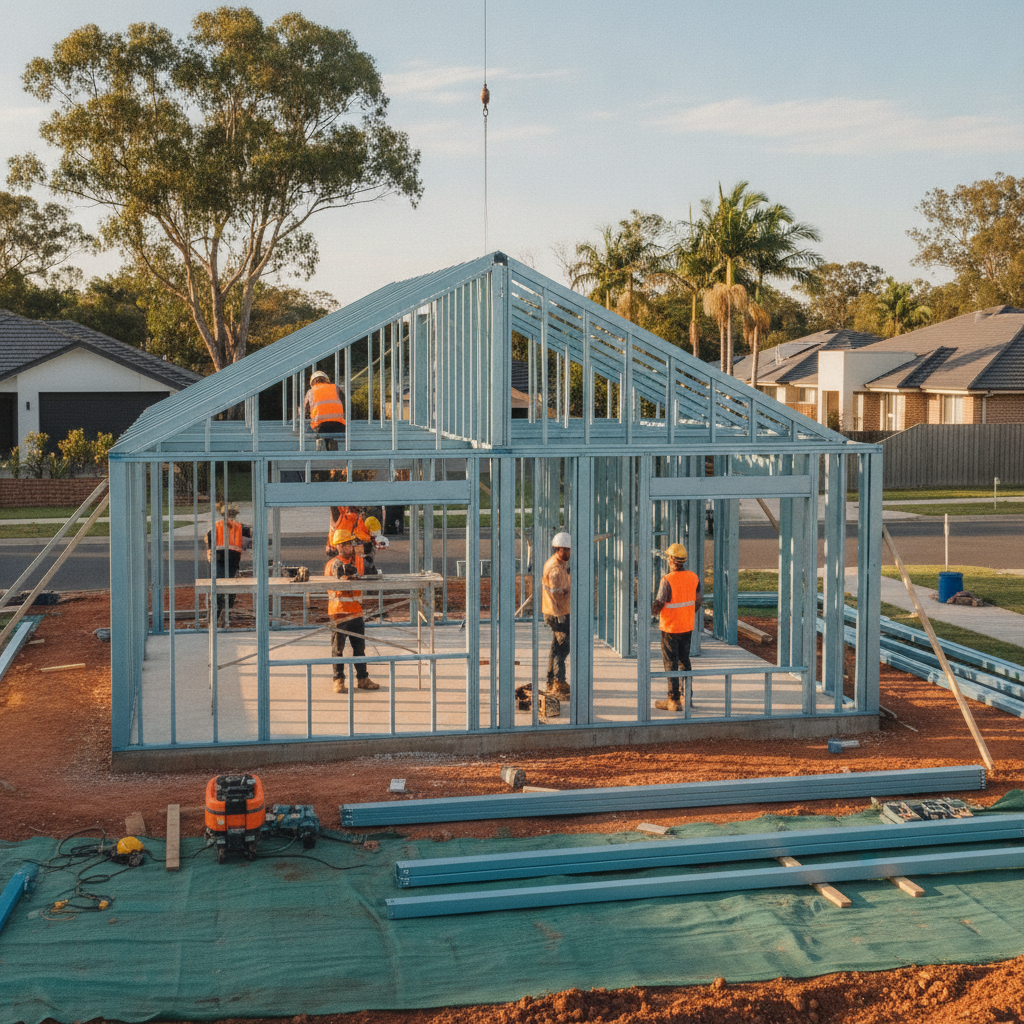
I was standing on a site out near Mudgee last month, watching a truck unload a pile of steel frames for a new build. The sun was beating down, probably 34 degrees by mid-morning, and the owner-builder was poking around the stack of TRUECORE steel with a grin. He told me he chose steel because he didn't want to spend the next thirty years worrying about his house quite literally being eaten from the inside out by white ants. But there is a bigger story here than just termite protection. People talk a lot about 'green building' these days, but most of it is marketing fluff designed to sell expensive imported gadgets. If you actually want to build a kit home in Australia that respects the land, you have to look at what happens to the materials over fifty or a hundred years. Steel is the only material that really closes that loop.
The Infinite Life of BlueScope Steel
Most building materials follow a one-way street. You buy it, you use it, and eventually, it ends up in a hole in the ground. Steel doesn't work like that. It is 100% recyclable. Not just 'sort of' recyclable like some plastics that get downgraded into park benches and then buried. You can melt down a steel frame from a house built in 1995 and turn it into brand new structural sections for a house in 2024. No loss of quality. No degradation. It is a permanent resource. Because we use BlueScope steel in our kit homes, you're tapping into a local supply chain that understands this lifecycle better than anyone. When you're an owner-builder, you're usually thinking about the slab pour or the council DA, not what happens to the house in a century. But knowing your home won't contribute to the massive waste problem in the construction industry is a massive win for the conscious builder.
Zero Waste on the Job Site
Standard stick building is messy. Go to any traditional residential construction site and you'll see a skip bin (or three) overflowing with offcuts, sawdust, and treated timber scraps. It's a waste of money and a waste of resources. Kit homes change the math because the steel frames are precision engineered. They arrive on your site pre-cut and ready to bolt together. There's no pile of scrap because everything was calculated to the millimetre before it left the factory. Plus, you aren't dealing with the chemical nasties found in treated timber. To make wood survive the Australian termite pressure, it gets pumped full of insecticides and fungicides. Steel doesn't need chemicals to stay upright. It's naturally inedible to pests. That means a cleaner site for you and a healthier environment for the soil around your new home.
Termites: The Silent Environmental Tax
In places like Queensland or the Northern Territory, termites aren't just a nuisance. They're an inevitability. If you build with traditional materials, you're looking at a lifetime of chemical barriers and spray treatments. That's more poison going into the ground every few years. Steel frames completely remove that requirement. It's a one-time decision that pays off every single year you live there. And let's be honest, nothing is worse for the environment than having to rebuild a house because the guts of it got hollowed out by a swarm of hungry insects. Longevity is the ultimate form of sustainability. If a house lasts 100 years instead of 40, you've effectively halved its environmental footprint.
Lightweight Strength and Site Footprint
Steel has a strength-to-weight ratio that makes timber look bit sad, frankly. Because steel frames are so much lighter than heavy hardwood or masonry, your footings don't always have to be as massive. This is a big deal if you're building on a sensitive site or a slope. Less concrete in the ground means less carbon. It also means you can often keep more of the natural vegetation on your block because you don't need heavy machinery to lug massive beams into place. A few mates and a battery drill can do a lot of the heavy lifting. I've seen owner-builders in the Adelaide Hills put up an entire frame over a long weekend without needing a single crane. It's efficient building at its best.
How it Handles the Aussie Bush
Bushfire Attack Levels (BAL) are a reality for almost every kit home buyer in Australia now. If you're building in a BAL-29 or BAL-40 zone, steel frames give you a massive leg up. Steel is non-combustible. It won't add fuel to the fire if the worst happens. While the frame alone doesn't make a house fireproof, it's a critical component of a resilient build system. We include the roofing, cladding, and insulation in our kits specifically to work with the steel frame. It creates a tight, secure envelope that stands up to the elements better than almost anything else. It's about building for the reality of the Australian climate, not just for a pretty picture in a magazine.
Practical Tips for Steel Frame Success
If you've decided to pull the trigger on a steel frame kit home, don't just jump in blind. There are a few things you need to suss out early. First, get a decent impact driver. Not a cheap one from the bargain bin, but something with some grunt and a couple of 5.0Ah batteries. You'll be driving a lot of tek screws. Second, talk to your plumber and sparky early. They need to know they're working with steel. Most modern trades are fine with it, but you want them to bring the right grommets. You can't just drag a copper pipe through a steel stud or it'll rattle and eventually corrode. It's a simple fix, just plastic grommets in the pre-punched holes, but if your tradesman is an old-school 'wood only' bloke, he might complain. Find trades who appreciate the dead-straight lines of a steel frame. They'll find the fit-out much easier because there are no bows or warps in the walls.
Third, think about your thermal bridge. Steel is a great conductor, so you need that thermal break between the frame and your external cladding. We include insulation in our kits for a reason. It's not just about keeping the heat in, it's about stopping the outside temperature from transferring through the studs. Get your weather wrap and your batts right, and you'll have a house that stays cool in a Perth summer and warm in a Tassie winter without the AC running 24/7. That's the real environmental benefit: lower energy bills for the life of the home.
The Myth of the 'Hard to Build' Kit
I hear people say steel frames are too complex for a DIYer. Total rubbish. I've seen accountants, nurses, and retired couples put these together. The frames come out of the plant with all the holes pre-drilled. It's like a giant Meccano set for grown-ups. Because they're dimensionally stable, they don't move. Timber shrinks, twists, and gets heavy when it gets rained on during the build. Steel stays exactly where you put it. This makes your life much easier when you get to the gyprock stage. You aren't chasing your tail trying to plane back a stud that's twisted 10 degrees since it was delivered. You get straight walls and square corners. Every time.
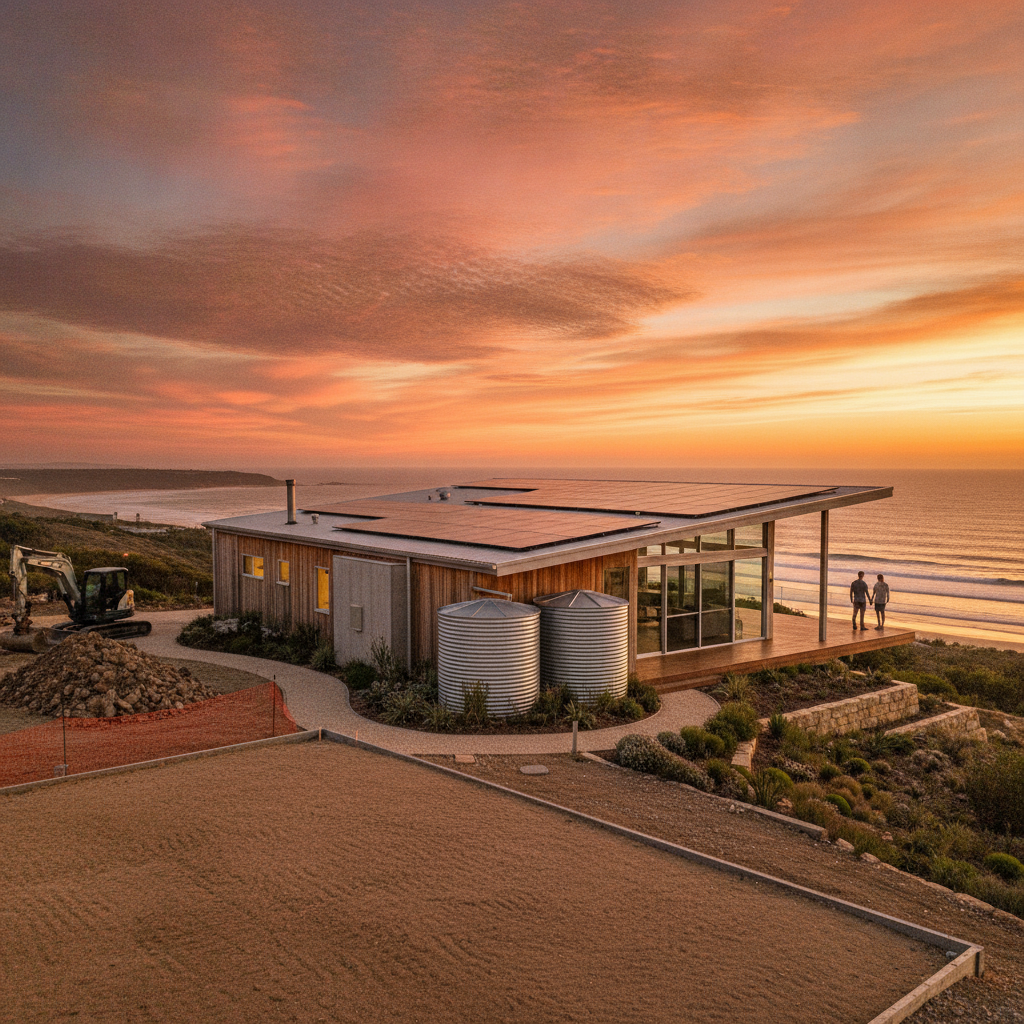
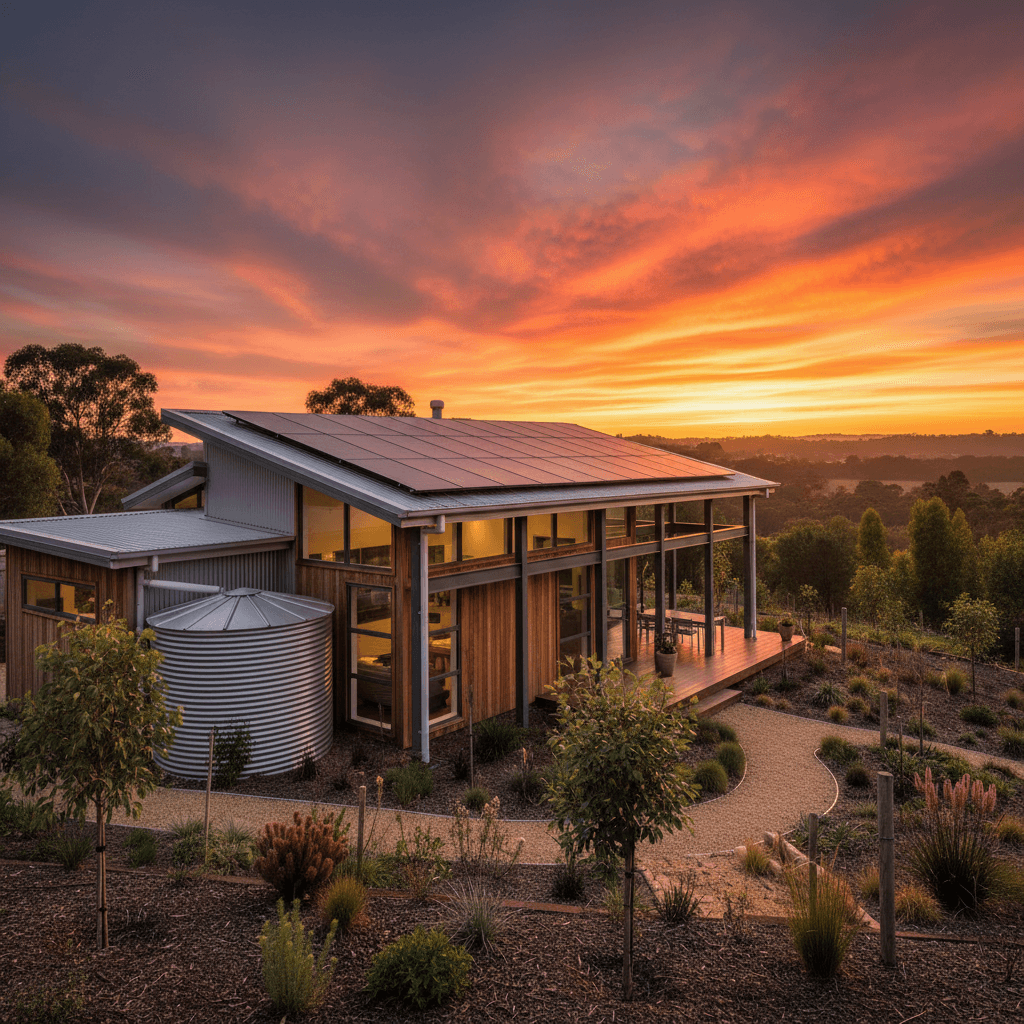
Building your own home is an enormous undertaking. It's stressful, it's messy, and it'll probably take longer than you think. But choosing a steel frame kit home is one of those rare decisions where the easier path is also the better one for the planet. You get a house that won't burn, won't be eaten by bugs, and won't end up in a landfill. It's just smart building. So, when you're looking at your block of land and dreaming of the finished product, think about what's actually holding the roof up. If it's BlueScope steel, you're off to a bloody good start.