Decoding Wind Ratings for Your Australian Building Project
When you start planning your dream kit home in Australia, your mind is likely filled with kitchen layouts, deck placements, and floor plans. However, before a single screw is turned or a steel frame is raised, there is a critical technical factor that dictates how your home must be engineered: the wind rating. In Australia, our diverse climate means a home in a leafy Melbourne suburb faces very different structural pressures than a home perched on a ridge in North Queensland.
Understanding wind ratings is not just a box-ticking exercise for council approval. It is a fundamental part of building techniques that ensures your home is resilient, safe, and built to last. For owner-builders, grasping these ratings early in the piece can save significant time and ensure that the kit you purchase is fit for your specific block of land.
What Exactly is a Wind Rating?
In simple terms, a wind rating (or wind classification) is a measurement of the maximum gust wind speed a stucture is expected to withstand at a specific location. These ratings are determined by Australian Standard AS 4055, which categorizes sites based on geographic region, shielding, topography, and terrain category.
When you order a kit home, the engineering of the steel frames, the thickness of the cladding, and the type of fixings used are all calibrated to these ratings. Building a home designed for a low wind area in a high wind zone is dangerous, while over-engineering for a calm area can lead to unnecessary material costs.
The Two Categories: Non-Cyclonic (N) vs. Cyclonic (C)
Australia is divided into wind regions based on the likelihood of extreme weather events. Generally speaking, most of Australia south of Gladstone in the east and south of Carnarvon in the west falls under the Non-Cyclonic (N) classification. The tropical north and certain coastal strips are classified as Cyclonic (C) regions.
Understanding Non-Cyclonic Ratings (N1 to N6)
Most residential projects in suburban and inland areas will fall into the N1, N2, or N3 categories. As the number increases, so does the wind speed the home must withstand.
- N1 (W28): Low wind speeds, typically found in well-shielded suburban areas.
- N2 (W33): The most common rating for standard suburban residential developments.
- N3 (W41): Common for exposed hilly areas or coastal regions just outside cyclonic zones.
- N4, N5, N6: These are less common for standard residential kits and involve significantly higher wind speeds, often requiring specialized heavy-duty engineering.
Understanding Cyclonic Ratings (C1 to C4)
In the north of Australia, the threat of tropical cyclones is a reality. Homes here require different building techniques to manage the intense pressure changes and potential debris impact.
- C1 (W50C): The entry-level cyclonic rating.
- C2 (W61C): Found in moderately exposed cyclonic areas.
- C3 (W74C): High-risk cyclonic zones, often right on the coast.
- C4 (W86C): The highest level of domestic wind classification, reserved for the most extreme conditions.
Factors That Determine Your Site Classification
It is a common misconception that if your neighbor is an N2, you must be an N2 as well. Your specific wind rating is determined by four key factors:
1. Wind Region
The broader geographical area where you are building. This is the starting point for any assessment.
2. Terrain Category
This describes the surface roughness of the land surrounding your site. For example, a site surrounded by tall trees and other houses (Category 3) will have more protection than a home built on an open plain with no obstructions (Category 2).
3. Topographic Class
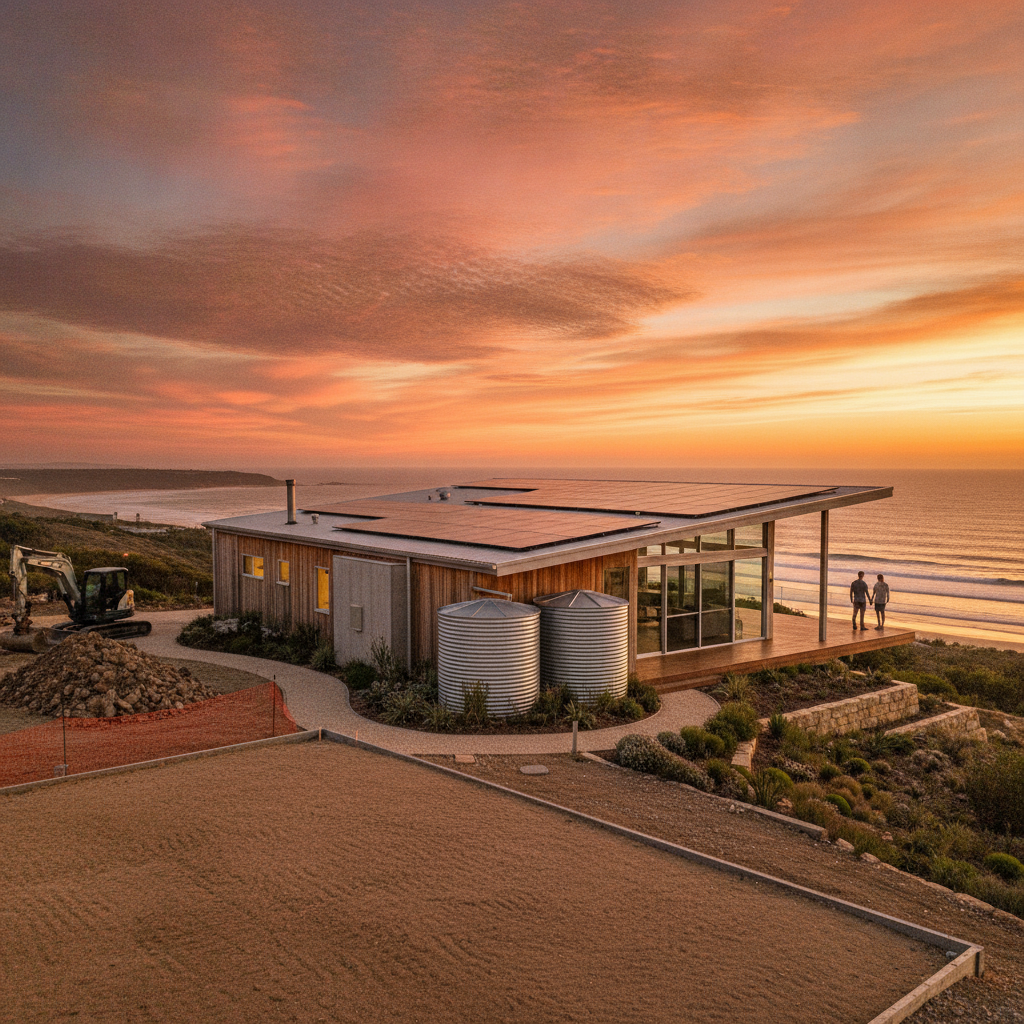
This looks at the slope of the land. Wind accelerates as it moves up a hill or over a ridge. If your kit home is going on the crest of a hill to catch a view, your wind rating will likely be higher than if you were building in the valley below.
4. Shielding
Shielding refers to how much your direct neighbors or nearby structures block the wind. Full shielding means you are surrounded by other buildings, whereas no shielding means your site is isolated and exposed.
Implications for Kit Home Construction
As an owner-builder, it is vital to know your wind rating before finalizing your kit order. All reputable providers in Australia will require this information to ensure the engineering matches your site. Here is how wind ratings affect the technical side of your build:
Steel Frame Engineering
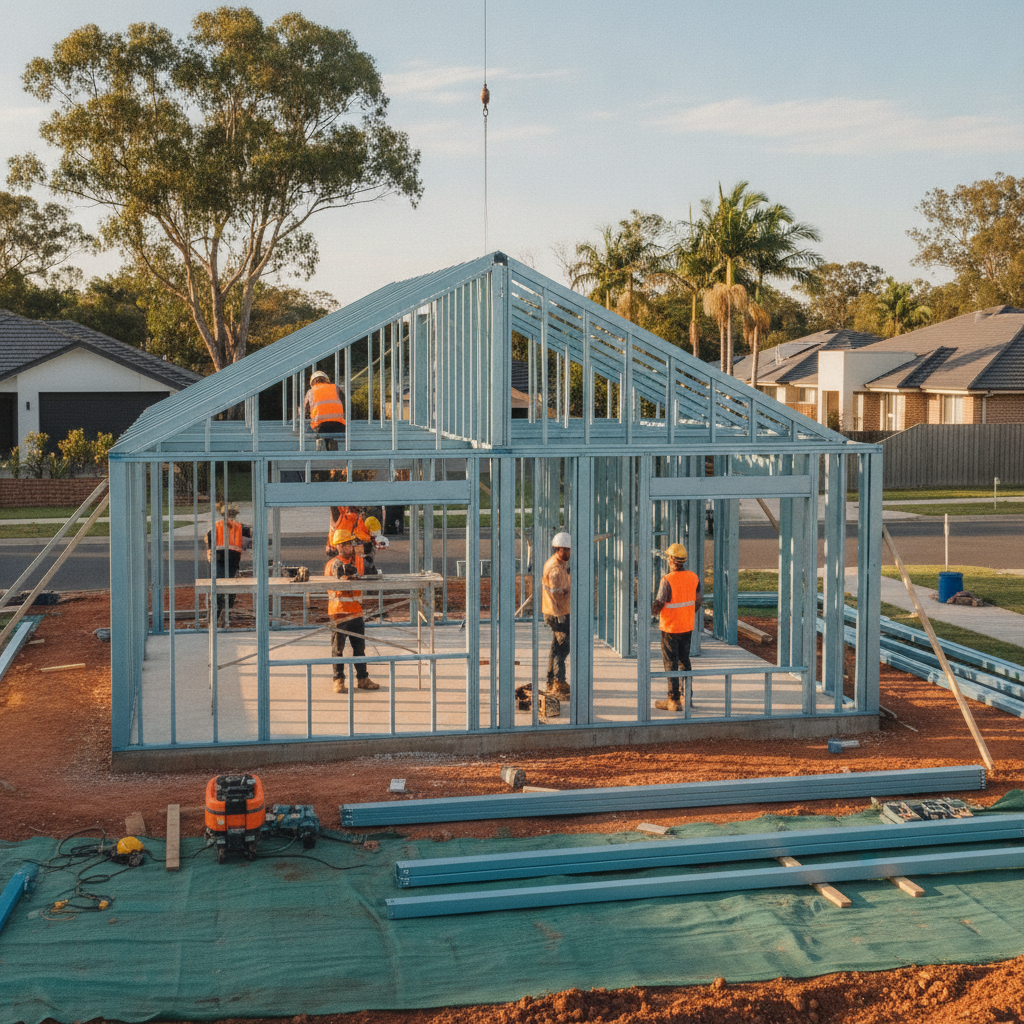
Steel frames are incredibly versatile and strong, which is why they are a gold standard for high wind areas. However, for a C3 rating compared to an N2 rating, the gauge of the steel, the spacing of the studs, and the type of bracing used will vary significantly. High wind ratings require more robust tie-down systems from the roof through to the slab.
Roofing and Cladding
The way your roofing sheets and wall cladding are attached changes with the rating. In cyclonic areas, you may require specific washers and more frequent screw patterns to prevent the wind from peeling the sheets off the frame. The insulation also plays a role in managing the internal pressures of the home.
Windows and Doors
Glass is often the weakest point in a high wind event. Windows and glass sliding doors must be rated to match the wind classification of the building. This includes the strength of the glass itself and the integrity of the frame and seals to prevent water ingress during driving rain.
Pro Tips for Owner-Builders
Managing your own build means you need to stay on top of the technical details. Here are some practical tips for dealing with wind ratings:
- Get a Site Classification Report early: Engage a qualified engineer or building surveyor to perform a site-specific wind classification. Do not guess. Getting it wrong can lead to costly retrofitting or permit rejections.
- Check your BAL vs. Wind Rating: Often, hilly areas that have high wind ratings also have high Bushfire Attack Levels (BAL). Ensure your choice of materials satisfies both the wind pressure requirements and the fire resistance standards.
- Verify the Kit Inclusions: When comparing kit homes, ensure the quote includes the engineering for your specific wind rating. Some entry-level quotes assume an N1 or N2 rating, and the price will change if you require C2 engineering.
- Focus on the Tie-Downs: During the construction phase, pay close attention to the tie-down instructions provided in your engineering plans. This is where the strength of a kit home is found. Ensuring every bolt and strap is installed correctly is what keeps the roof on in a storm.
The Role of Modern Building Techniques
Gone are the days when a owner-builder had to figure out complex structural loads on their own. Modern kit homes utilize sophisticated computer-aided design (CAD) to ensure every component of the steel frame is optimized for the site conditions. This precision means that while the engineering is complex, the assembly remains straightforward for the person on-site.
Unlike traditional timber framing where adjustments might be made on the fly, a steel frame kit is a pre-engineered system. Each piece is designed to work in tension or compression with its neighbors, creating a rigid box that behaves predictably under stress. This is exactly what you want when a gale is blowing outside.
Conclusion
Wind ratings might feel like an overwhelming piece of jargon when you first start your building journey, but they are essentially the "DNA" of your home's structural integrity. By understanding the difference between N1 and C4 classification, you are better equipped to talk to suppliers, engineers, and council. Investing the time to get your wind rating right ensures that your Australian kit home remains a safe haven for your family, regardless of what the weather decides to do. Building with high-quality steel frames and adhering to site-specific engineering is the smartest way to build for the long term in our unique Australian environment.