The Great Australian Dream: Life Beyond the Four Walls
There is something uniquely Australian about the way we inhabit our homes. We are a nation built on sunshine, salt air, and the smell of a barbecue heating up on a Saturday afternoon. When we dream of our ideal home, we rarely stop at the back door. Instead, we imagine how our living room flows into a deck, how the kitchen services a dining area under the stars, and how we can catch a cross-breeze on a humid January night.
For those embarking on the journey of building a kit home, the opportunity to bake this indoor-outdoor lifestyle into the very blueprint of the house is one of the most exciting parts of the design process. Because you are often working with a blank canvas and a customizable floor plan, you have the power to create a sanctuary that celebrates the landscape around you. Whether you are building on a sprawling rural block or a coastal suburban lot, the secret to a successful home lies in extending your living area into the great outdoors.
Designing for Connectivity and Flow
When you sit down with your kit home floor plans, the first thing to consider is flow. A common mistake in older Australian homes was treating the backyard as an afterthought, often separated by a single narrow door or a laundry room. Modern design flips this on its head.
To create a true lifestyle home, look for opportunities to install wide sliding or stacker doors along the main living axis. By using large expanses of glass, you effectively remove the visual barrier between your interior and your garden. When the doors are open, your floor space effectively doubles. This is where the structural integrity of your home comes into play. By utilizing a high-quality steel frame, such as those made from BlueScope TRUECORE steel, you can often achieve larger spans and wider openings without the need for bulky support columns that might obstruct your view.
Think about the transition from your kitchen to your alfresco area. An increasingly popular trend in Australian kit homes is the integrated servery window. By extending your kitchen bench through a gas-strut or bifold window, you create a functional bridge. You can pass drinks and platters directly to guests outside, keeping the cook part of the conversation while maintaining a tidy interior.
The Backbone of Great Design: Why Steel Frames Matter
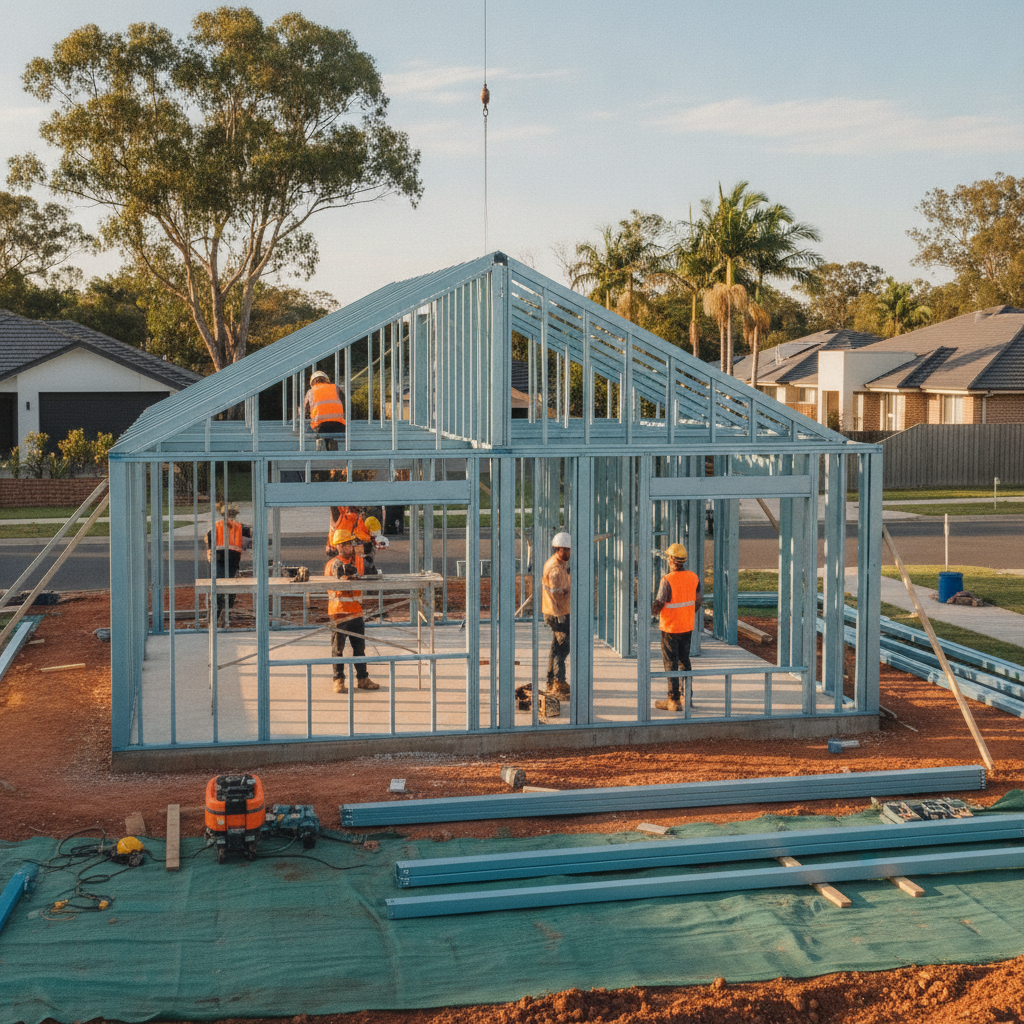
While we often focus on the aesthetic finishes like timber decking or stone pavers, the skeleton of your home plays a vital role in your long-term comfort. In Australia, we deal with harsh conditions, from the baking sun to the persistent threat of termites in many regions. This is where choosing a steel frame kit home provides a significant lifestyle advantage.
Steel frames are precision-engineered and dimensionally stable. This means they will not warp, twist, or shrink over time. For a home designed around large glass doors and seamless transitions, this stability is crucial. It ensures your heavy stacker doors continue to glide smoothly year after year. Furthermore, the termite-proof nature of steel gives owner-builders immense peace of mind, especially when building in bushland settings where outdoor living is a top priority.
Zoning Your Outdoor Space for Maximum Utility
Just as you have specific zones inside your home for cooking, relaxing, and working, your outdoor area should be zoned to suit your lifestyle. Simply throwing some concrete down behind the house is rarely enough to create a space you will actually use.
The Cooking and Dining Zone
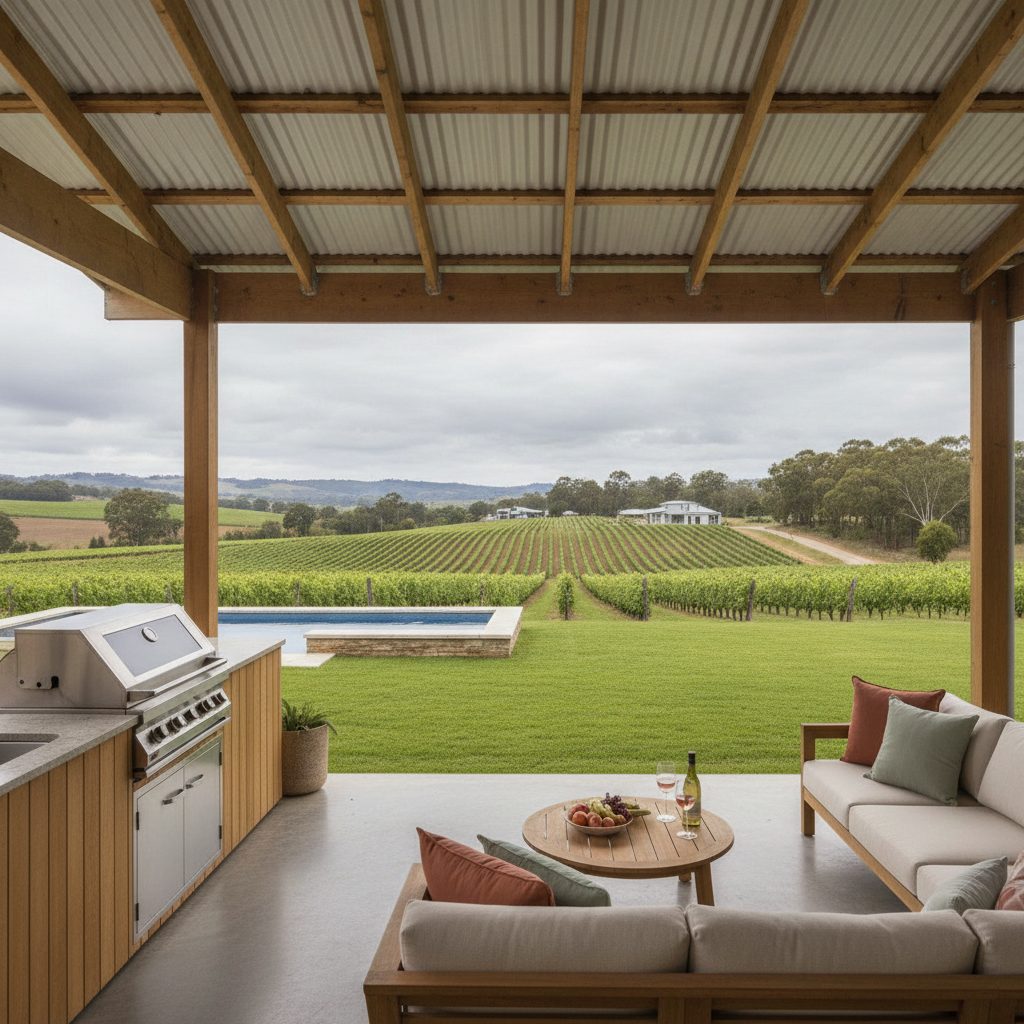
If you love to entertain, the outdoor kitchen is the crown jewel. This doesn't necessarily mean a full second kitchen, but a dedicated space for a built-in barbecue, a small bar fridge, and a sink can transform a patio into a destination. Position this close to the internal kitchen to make transporting supplies easy.
The Lounge and Relaxation Zone
Consider a separate area with comfortable, deep-seated outdoor sofas and perhaps a low coffee table. This is the space for morning coffees or evening wine. Using different floor textures, such as transitioning from smooth tiles to a timber deck, can help define these zones without the need for walls.
The Fire Pit or Star-Gazing Nook
Further away from the main structure, you might want to create a secondary destination. A fire pit area with gravel underfoot provides a rustic, cozy atmosphere for winter nights, drawing people out of the house and into the garden regardless of the season.
Owner-Builder Tips: Bringing the Vision to Life
As an owner-builder, you have the unique advantage of being the project manager of your own dream. This means you can hand-pick the finishes and trades that align with your vision for an outdoor oasis. Here are a few practical tips for managing the outdoor component of your kit home project:
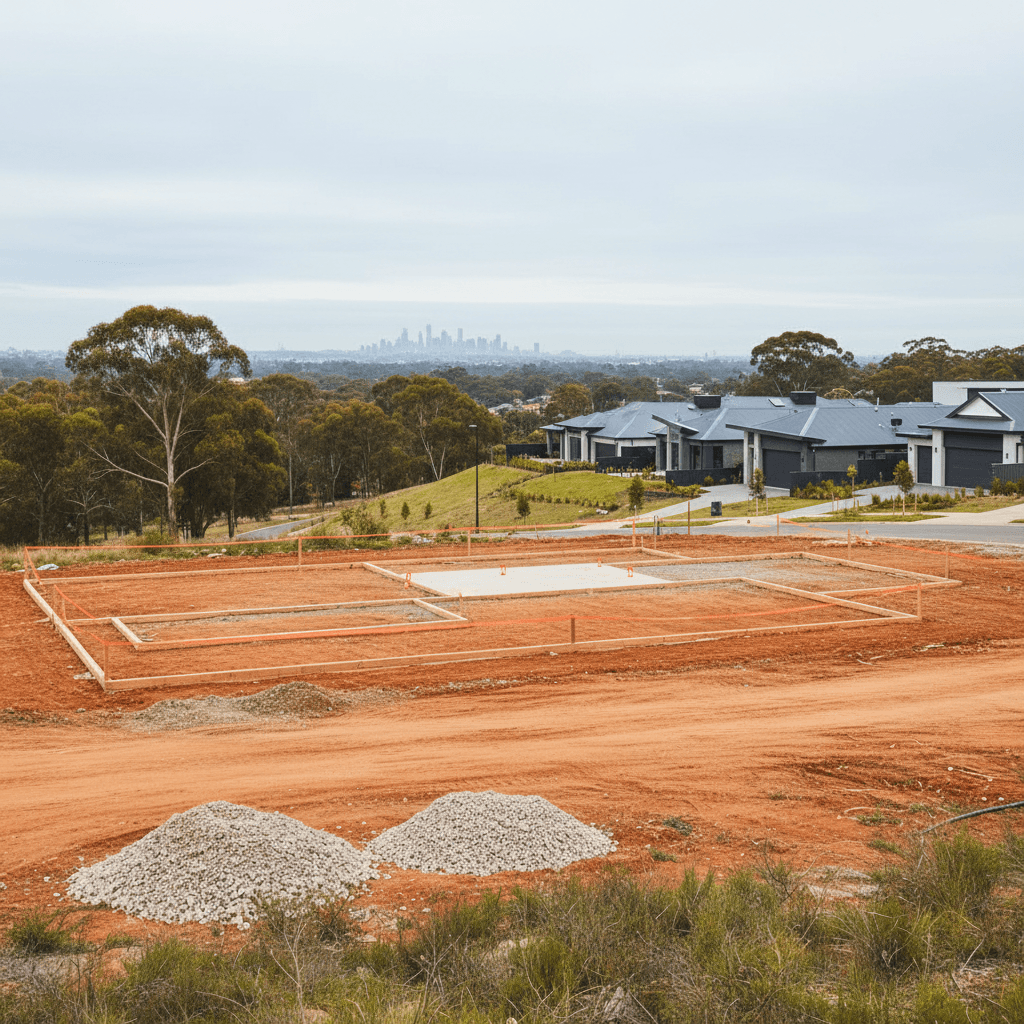
- Think about levels early: During your site works and slab pour, talk to your concreter or builder about achieving a flush finish between your indoor floor and your outdoor deck. Removing that small step-down makes a massive difference in the feeling of continuity.
- Plan your services: It is much cheaper to run plumbing for an outdoor sink and electrical lines for speakers or fans while your site is being prepared than to retro-fit them later.
- Orientation is key: In the southern hemisphere, a north-facing outdoor area will capture the best winter sun while being easier to shade in the summer. Use eaves and pergolas to manage heat load on your home's steel frame and glass surfaces.
- Lighting matters: Don't rely on a single floodlight. Use a mix of task lighting over the BBQ, ambient festoon lights for atmosphere, and up-lighting in the garden to create depth at night.
Australian Trends: Bringing the Indoors Out
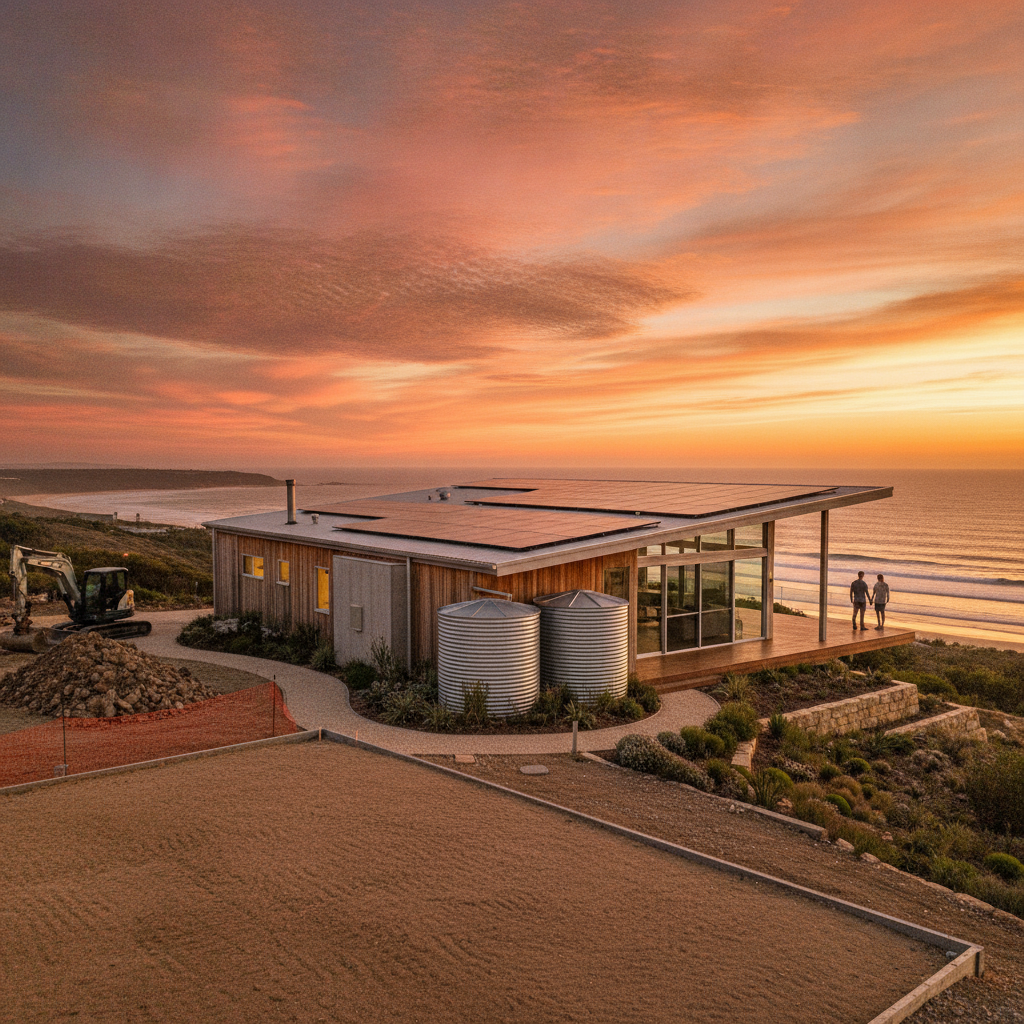
Current housing trends in Australia show a shift toward "biophilic design," which is the practice of connecting occupants more closely to nature. We are seeing more kit home owners opting for vaulted ceilings and highlight windows that draw the eye upward toward the sky and treetops. Using natural materials like recycled timber for decking or local stone for features helps ground your new build into its environment.
Another rising trend is the "outdoor room" concept, where the alfresco area is fully under the main roofline of the kit home. This provides superior weather protection and makes the space feel like a genuine extension of the home's footprint rather than a tacked-on addition. Because kit homes utilize lightweight but incredibly strong steel roofing and cladding, creating these large, sheltered spans is both achievable and visually striking.
Creating Privacy in a Suburban Setting
Not everyone is building on a multi-acre lot. If you are building your kit home in an established suburb, privacy is a key component of your lifestyle design. You can achieve this without feeling boxed in by using clever landscaping and architectural features. Vertical gardens, slatted timber screens, or even oversized potted plants can create a soft boundary. Consider the placement of your windows and outdoor areas to overlook your own garden beds rather than the neighbor's fence.
Conclusion: A Home Without Boundaries
Building a kit home in Australia is about more than just putting a roof over your head; it is about creating a backdrop for the life you want to lead. By focusing on the flow between your internal rooms and your outdoor entertaining spaces, you create a home that feels larger, brighter, and more connected to the world around it.
From the strength and precision of a steel frame foundation to the creative flourishes of your final landscaping, every choice you make as an owner-builder contributes to that final feeling of stepping out onto your deck, breathing in the fresh air, and knowing you are exactly where you belong. Start with a great design, embrace the Australian climate, and watch as your living area extends far beyond your front door.