Stop building boring bathrooms
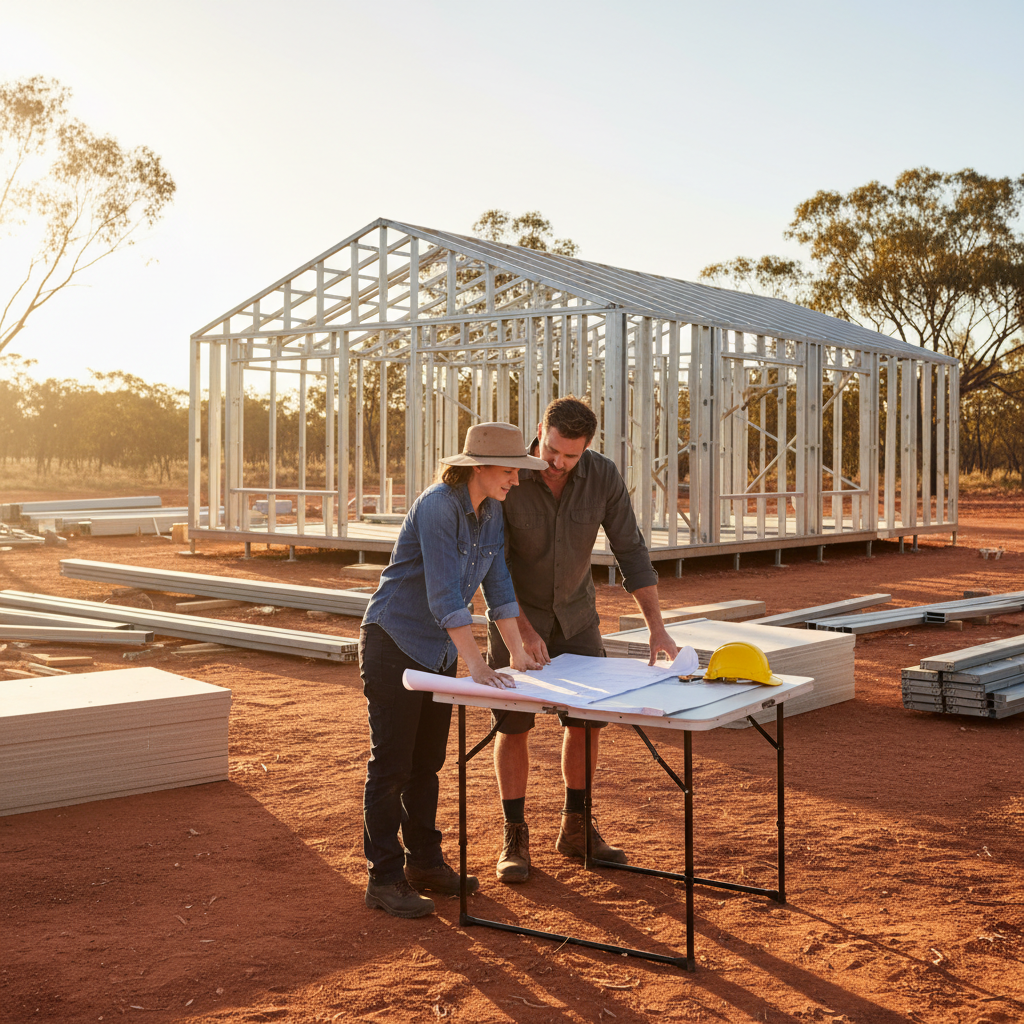
Most bathrooms in Australia look like they were designed by someone who hates fun. You know the ones. White tiles, white grout, chrome taps, and a mirror that’s just a bit too small for the wall. It’s clinical. It’s boring. And when you're building a kit home from the ground up, there is absolutely no excuse to settle for that builder-grade mediocrity. You've got the steel frame sitting there, the BlueScope TRUECORE skeleton is up, and now you're staring at a floor plan wondering how to make the wet areas feel like a retreat rather than a hospital wing.
I’ve seen plenty of owner-builders spend six months obsessing over their kitchen stone only to slap together a bathroom in the final three weeks of the project. That’s a mistake. The bathroom is the one place in the house where you’re actually alone with your thoughts. It needs to work. It needs to hold up against the humidity of a Queensland summer or a freezing Victorian winter. And frankly, it needs to look like you put some heart into it.
The raw and the cooked: Texture over colour
People get terrified of colour in wet areas. They worry about resale value. They worry it’ll date. So they go back to the safe, boring white. If you’re scared of bright green tiles, I get it. But you can’t be scared of texture. The biggest trend I’m seeing right now in regional Australian builds—everywhere from the Hunter Valley to the Margaret River—is the move toward tactile surfaces. Think matte finger tiles, tumbled limestone, or even just a concrete-look porcelain that doesn't feel like a skating rink when your feet are wet.
Because kit homes often feature open-plan living with heaps of natural light, you can afford to go darker in the bathroom. A charcoal floor tile that runs right up the wall of the shower creates a sense of depth that a white tile just can't touch. It makes the room feel larger, weirdly enough. Plus, it hides the hair and dust much better than a gloss finish ever will. Just keep an eye on your lighting. If you go dark, you need localized task lighting. A single oyster light in the middle of the ceiling is a crime. Use LED strips under the vanity or wall-mounted sconces that throw light towards your face, not just the top of your head.
Layouts that actually make sense
Let’s talk about the 'Golden Triangle' but for bathrooms. You want the vanity to be the hero. When you walk through that door, you should see the mirror and the basin, not the toilet. Nobody wants to walk into a room and stare at a ceramic bowl. It’s basic design, but you’d be surprised how many standard floor plans get this wrong. If you’re building one of our steel-framed kits, you’ve got total flexibility with your non-load-bearing internal walls before the plaster goes on. Use that to tuck the loo behind a nib wall.
And for the love of everything holy, consider a wet zone. This is where you put the bathtub and the shower behind the same glass screen. It’s a massive win for owner-builders because it simplifies the waterproofing process and keeps all the splash in one corner of the room. It stops the rest of the floor from becoming a swamp every time someone takes a shower. Just make sure your falls are spot on. AS 3740 is your bible here. If your screed isn't right, you’ll have puddles for the next twenty years. Get a pro to do the waterproofing and the screed even if you're DIY-ing the rest. It's not worth the risk of a leak under your floorboards.
The steel frame advantage in wet areas
One thing people don't mention enough is how much easier it is to get a dead-straight finish in a bathroom when you’re working with steel. Timber moves. It twists. It bows. You get a wet winter during the build and suddenly your studs have warped 5mm, meaning your large-format tiles are going to have 'lippage' no matter how good your tiler is. Steel doesn't do that. Those TRUECORE frames stay straight and true. This means when you’re laying those 600x600 tiles, they sit flat. It makes the whole job look high-end even if you’ve used budget-friendly tiles from the Saturday morning clearance rack at the local tile shed.
Also, because we're talking about kit homes in Australia, pests are always a factor. Termites love a damp bathroom wall more than anything on earth. Using steel frames means you’ve basically taken the best snack off the menu. It gives you that peace of mind when you’re soaking in the tub that the bones of your house aren't being eaten from the inside out.
The rise of the 'Mudraoom-Bathroom' hybrid
If you're building on an acreage block or somewhere with a bit of dirt, the traditional bathroom layout is changing. We call it the bush entry. It’s a bathroom that connects directly to the laundry or a secondary entrance. You come in from the garden, covered in dust or mud, and you go straight into a space where you can peel off the dirty gear and hop in the shower without dragging the paddock through the lounge room. It's practical. It's Aussie. And it’s becoming the standard for smart kit home designs.
Design-wise, these spaces should be rugged. Look at large-format bluestone or even epoxy-coated concrete floors. They can take a beating. Wall-hung vanities are great here too because you can mop right under them. No dark corners for spiders to hide in.
Owner-builder tips for a premium finish
- Niches are your friend. Don't use those plastic suction-cup corner shelves. Frame up a niche in the shower wall before the cladding goes on. It looks ten times better and it’s a great spot to hide the shampoo bottles.
- Think about your drainage. Linear drains are the gold standard right now. They look sleek and they allow you to use larger tiles on the shower floor because you only need a single fall in one direction.
- Don't skimp on the exhaust fan. If you don't vent that steam out properly, you'll be repainting your ceiling in two years. Look for a high-cubic-metre-per-hour rating. It should sound like a jet engine taking off but keep that air moving.
- Check your tapware offsets. There is nothing worse than installing a beautiful vessel basin only to find the wall-mounted tap is too short and you’re splashing water all over your toes. Measure twice. Then measure again.
The beauty of a kit home is that you aren't stuck with what some developer decided was 'good enough' for a mass-produced suburb. You’re the one in charge of the finishes. If you want a brass shower head that patinas over time, do it. If you want a window into a private courtyard so you can look at the ferns while you brush your teeth, make it happen. You're building for yourself, not for a brochure.
Final thoughts on the build
At the end of the day, a bathroom is a technical space wrapped in a pretty box. You’ve got to get the plumbing and the waterproofing right first. But once the internals are sorted, don't be afraid to get a bit adventurous. Mix your metals. Use a bit of timber for warmth—restored Aussie hardwoods like Blackbutt or Spotted Gum make incredible vanities if they’re sealed properly. Your kit home is a reflection of how you live. Make sure your bathroom says something better than 'I bought this because it was on sale'. You'll be using this room every single day, so make it a place you actually enjoy being in.