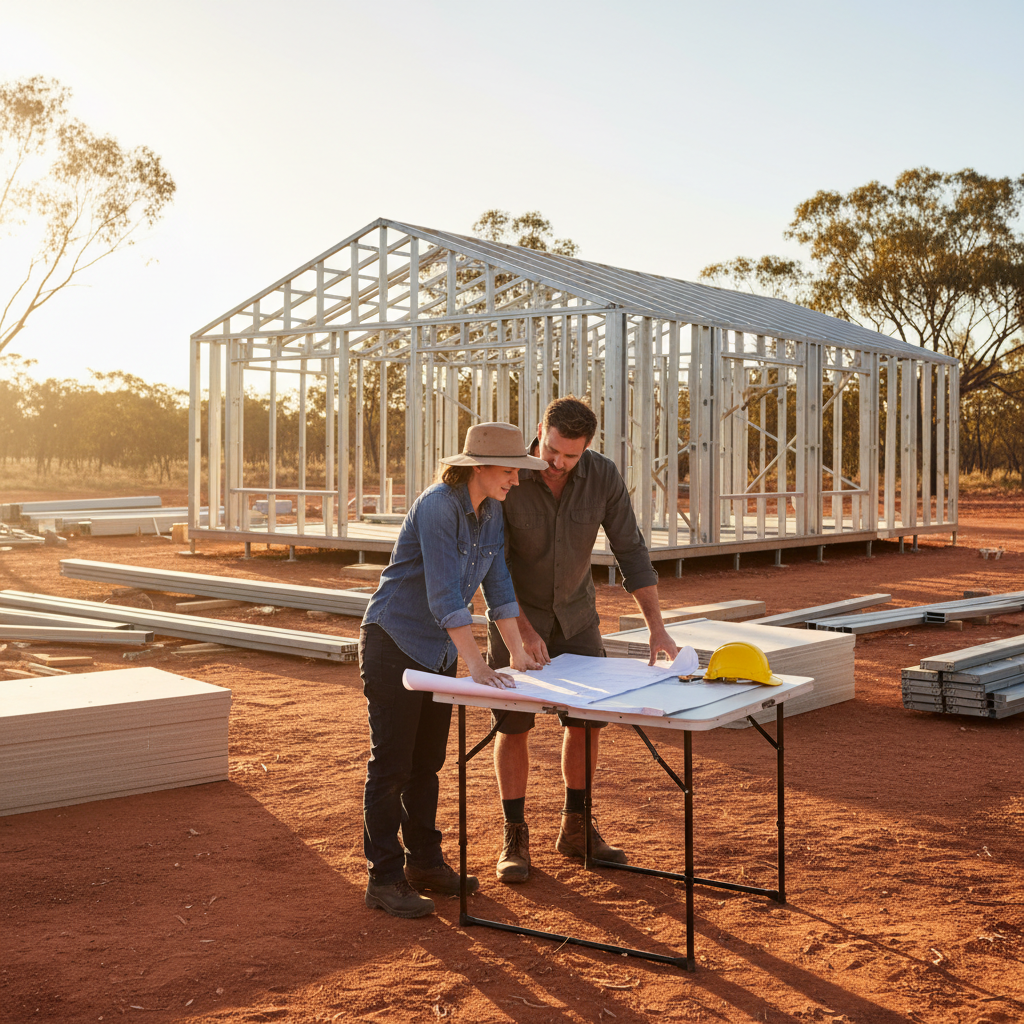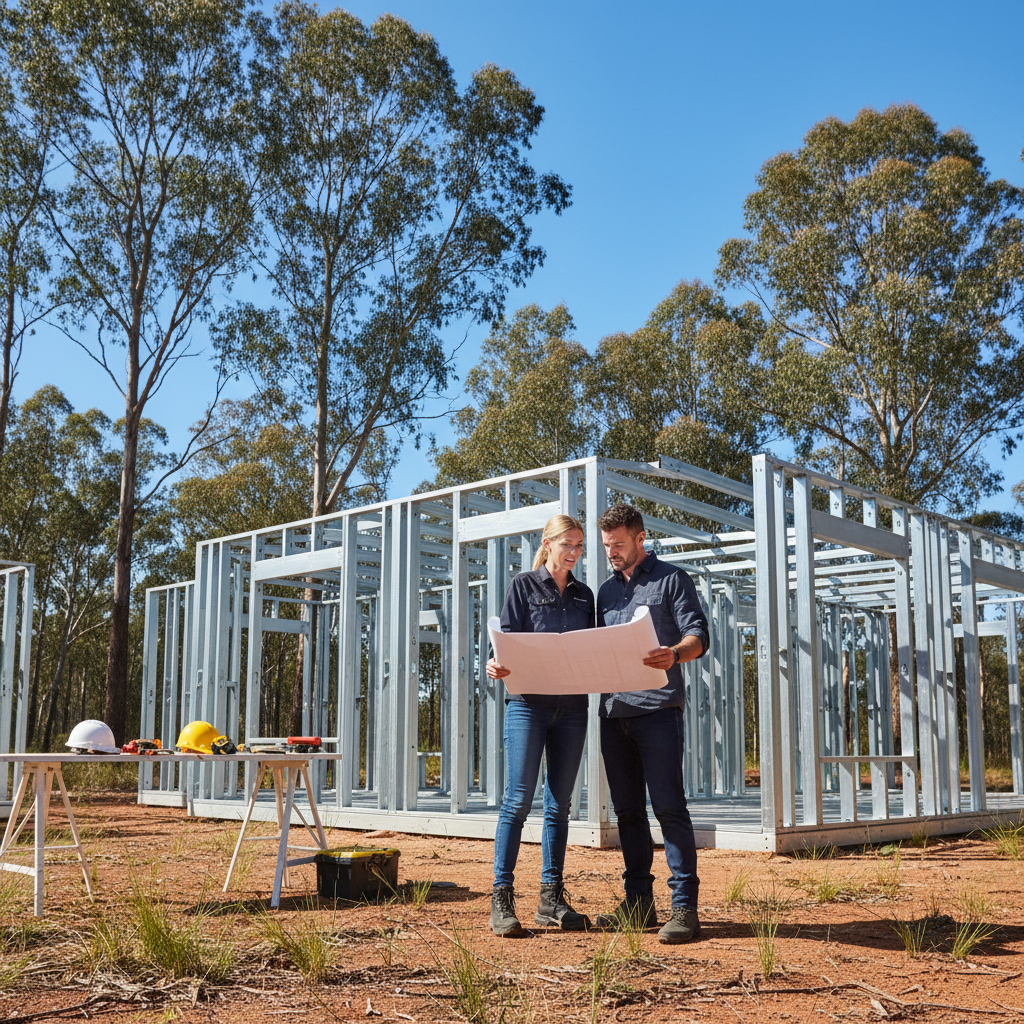
I was standing on a site up near Gympie last month, smack bang in the middle of a build using one of our steel frame kits. The owner-builder, a bloke named Mick, was scratching his head over the internal wall layout. He’d realized halfway through that his eldest son was only three years away from needing a study space, and the open-plan 'nook' he originally planned was basically just a spot for a noisy TV. This is the trap. You build for what you need at 2pm on an average Tuesday right now, instead of thinking about how that same house feels in five years when the kids are teenagers or when your parents need to move in for a bit.
The Myth of the 'Forever' Floor Plan
Most people sit down with a coffee and a stack of plans thinking they're going to nail the perfect layout on the first go. But families are messy. They expand, they contract, and their needs shift faster than a council inspector can change their mind. Designing for longevity isn't about adding more rooms. It's about flexibility. You want a house that can pivot. Because you're the owner-builder, you've got the power to make those calls at the design phase before a single piece of BlueScope Steel arrives on the back of a truck.
Steel frames give you an edge here. Since the strength is in the perimeter and the engineered trusses, you often have more freedom with where those internal non-load-bearing walls go. Or don't go. If you decide later that two small bedrooms should actually be one massive master suite, it's easier to manage when you aren't fighting a sagging roof line. But you've got to plan for that changeability today.
Zoning: The Secret to Sanity
If you've got young kids, you want them close. You want to hear them breathing in the next room. But fast-forward ten years. You'll want them as far away as possible. Deep into their gaming or loud music. The trick is 'zoning'. This isn't just a term for council maps. It's about separating the sleep zones from the living zones and the 'quiet' zones.
Think about a central living area with wings. One side is for the master suite and maybe a home office. The other side is for the kids. In the early years, that office is the nursery. Later, it's where you hide away from the noise of the living room. We see a lot of people in regional Queensland and NSW opting for a 'H-shape' or 'U-shape' design. It creates a natural buffer. Plus, it usually lets in more natural light, which makes a smaller footprint feel like a mansion.
Practical Tips for Growing Families
- Multi-purpose rooms are your best friend. A guest bedroom that doubles as a second lounge or a rumpus room is a smart play. Ensure you've got enough power points and data ports in there from day one.
- The mudroom is the unsung hero of Australian housing. If you're building on an acreage or a dusty block outside of Bendigo, do not skip a wet area entry. Boots, school bags, and wet dogs need a place to live that isn't your kitchen rug.
- Wide hallways are worth the extra square meterage. They make a house feel high-end, sure, but they also mean you aren't bumping shoulders every time someone tries to walk past you.
Building for the Golden Years
Design and lifestyle isn't just about the kids. It’s about you. If you’re planning on staying in this kit home until you retire, you need to think about 'Universal Design'. It sounds fancy, but it just means making sure a wheelchair or a walker can get through the door. Make your doorways 870mm or 920mm wide instead of the standard 820mm. It costs almost nothing to do during the framing stage but saves a fortune in renovations twenty years down the track. Level thresholds are another big one. Getting that slab and floor transition right so there’s no trip hazard between the inside and the deck is a win for everyone from toddlers to grandparents.
The Steel Frame Advantage in the Aussie Climate
I’ve seen too many timber frames get absolutely ravaged by termites in the Northern Rivers. It's heartbreaking. Using TRUECORE steel means you’re picking a material that doesn't provide a midnight snack for white ants. It also won't warp or twist over time. When you’re an owner-builder doing the fit-out yourself, having perfectly straight walls is a godsend. It means your skirting boards actually sit flush and your kitchen cabinets don't require weird shimming just to stay level.
And let's talk about fire. If you're building in a BAL (Bushfire Attack Level) rated zone, steel frames just make sense. They're non-combustible. Pair that with the right cladding and toughened glass windows, and you've built a structure that respects the reality of the Australian bush. It gives you a bit of peace of mind when the hot winds start blowing in from the west in February.
Future-Proofing Your Services
When you're arranging your trades, talk to your sparky and plumber about future needs. It is cheap to run an extra pipe or a bit of data cable while the walls are open. It is expensive to do it once the plasterboard is on and painted. If you think you might want an extra bathroom in five years, get the plumbing roughed in under the slab now. It’s a bit of a hassle during the site works phase, but you’ll thank yourself when you’re not jackhammering up your floor later on.
Think about the kitchen too. It's the heart of the home, right? Everyone says that. But is it big enough for four adults to use at once? Because that’s what a family of four looks like once the kids are over 15. A massive island bench isn't just for show. It becomes the homework hub, the breakfast spot, and the place you lean while you’re having a beer after work. If you've got the space, go big on the bench.
The Realities of the Owner-Builder Path
I won't sugarcoat it. Managing your own build is a lot of work. You’ll be on the phone to suppliers, chasing up contractors, and probably spend your weekends on a ladder. But the payoff is that you know exactly what’s behind every wall. You know the insulation was installed properly without gaps. You know the window flashing is done right. That's the pride of an owner-builder. You aren't just buying a house. You're building a legacy for your family.
Don't rush the design phase. Spend a Saturday afternoon on your block. Watch where the sun hits at different times of the day. Feel where the breeze comes from. Those observations will tell you more about where to put your windows and your outdoor living area than any Pinterest board ever will. Sit with the plans. Live in them mentally before you commit. Because once that steel is up, you want to be sure it's in the right place for the next thirty years.
Australian kit homes have come a long way. We aren't talking about basic sheds anymore. We're talking about high-spec, architecturally designed homes that stand up to the harshest conditions on the planet. Whether you're building a weekender in the Tassie wilderness or a family home in the suburbs of Perth, the principles remain the same. Build it strong. Build it smart. And most importantly, build it to grow.