Engineered for the Great Outdoors: Weatherproofing Your Australian Home
Australia is a land of extremes. One week you are dealing with a blistering heatwave, and the next, a coastal storm brings horizontal rain and gale force winds. For the owner-builder embarking on a kit home project, understanding how to weatherproof a structure is not just about comfort, it is about the long term integrity of your investment. Building a kit home offers incredible flexibility, but success lies in the technical execution of the building envelope.
In this guide, we dive deep into the building techniques required to ensure your home remains a sanctuary against the harsh Australian elements. From the structural advantages of high quality steel to the fine details of window flashing, we are looking at how to build for longevity in our unique climate.
The Foundation of Resilience: Choosing Durable Materials
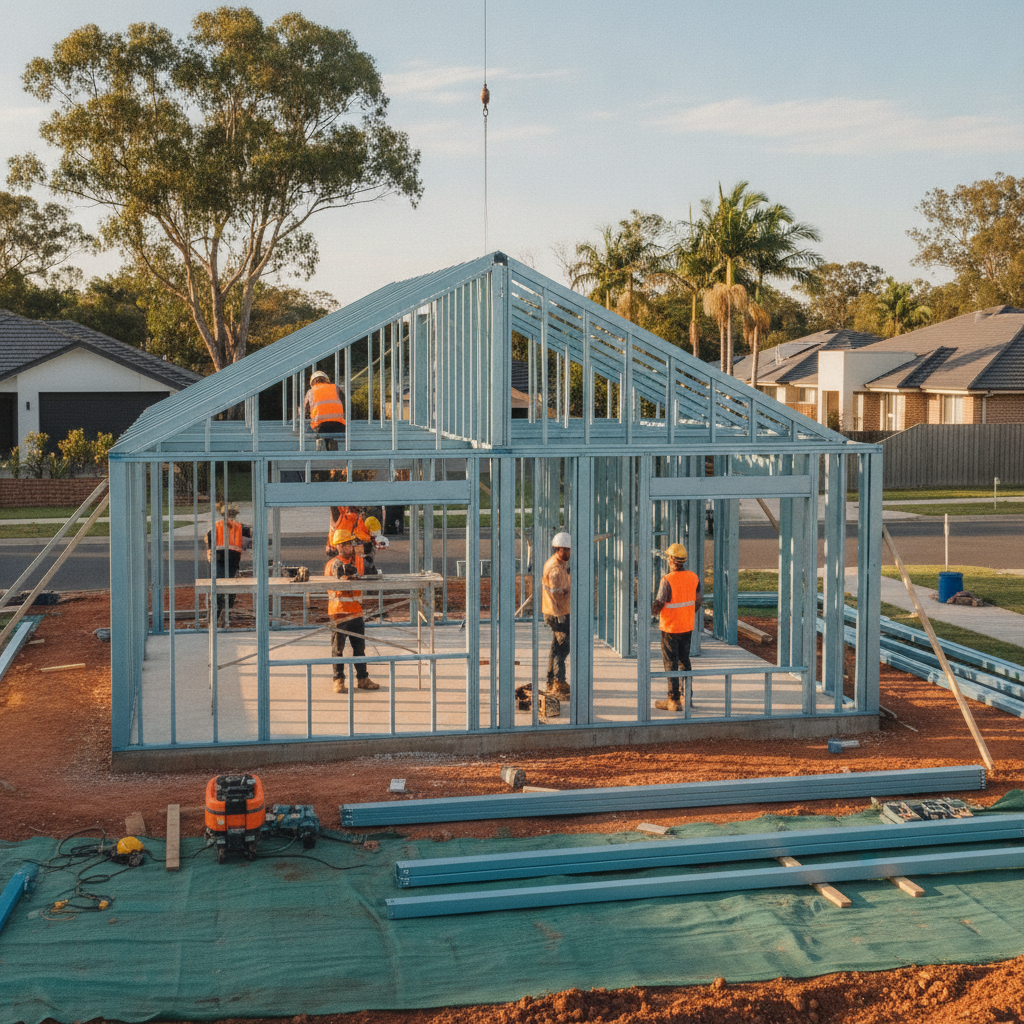
Weatherproofing starts long before the first storm hits. It begins with the selection of materials that can withstand the rigours of the Australian environment. Traditional timber remains popular, but many Australian owner-builders are turning to steel frames for their superior performance in harsh conditions.
Using premium materials like BlueScope TRUECORE steel provides a significant advantage. Unlike timber, steel does not swell, warp, or twist when exposed to moisture. In high humidity regions or areas prone to heavy rain, this dimensional stability is crucial. It ensures that your walls stay straight and your seals remain tight, preventing the small gaps that allow water ingress over time. Furthermore, steel is non-combustible and termite-proof, providing a multi-layered defence against some of Australia's most common building threats.
Mastering the Building Envelope: Sarking and Insulation
Think of sarking as the raincoat for your house. In a kit home, the installation of the reflective foil laminate (sarking) under the roof and behind the wall cladding is one of the most critical steps in the weatherproofing process.
Managing Condensation
In many parts of Australia, the temperature difference between the inside and outside of a home can lead to condensation forming within the wall cavity. If not managed properly, this moisture can lead to mould growth and structural rot. Using a high quality, breathable vapour barrier allows moisture to escape while preventing liquid water from entering. This is particularly important for steel frame homes where managing thermal bridging is a key part of the design.
Thermal Protection
While we often focus on rain, heat is a major weather element in Australia. Proper insulation keeps the interior cool and reduces the load on your air conditioning. When building your kit home, ensure that bulk insulation is installed snugly between frames without being compressed, as compression reduces its R-value (thermal resistance).
The Weak Points: Windows, Doors, and Flashing
Statistically, most leaks in Australian homes occur around openings. When you receive your kit home components, the windows and doors are usually high quality aluminium or timber units, but their performance depends entirely on how they are installed and flashed.
Flashings are Non-Negotiable
Flashings are the unsung heroes of building techniques. These thin pieces of folded metal or flexible material direct water away from critical junctions. In a kit home, you must ensure that head flashings (above the window), sill flashings (below), and jamb flashings (sides) are installed with the correct overlaps. A common mistake for DIY builders is neglecting the "end dams" on head flashings, which prevents water from running off the ends and into the wall cavity.
Sealants and Gaskets
Modern kit homes rely on high grade sealants to close gaps. However, sealants should be viewed as the second line of defence. The primary defence should always be the physical shedding of water through clever design and gravity. Use UV-rated external silicone sealants designed for the Australian sun, as cheaper alternatives will crack and peel within a few years of exposure.
Roofing Techniques for Storm Seasons
The roof of your kit home takes the brunt of the weather. Whether you are using corrugated steel or modern tray profiles, the installation technique is paramount. In Australia, we have specific standards for wind loads, especially in cyclone-prone northern regions.
Ensure that all roof screws are fitted with EPDM washers to create a watertight seal. When installing the ridge capping and valleys, the "turn-up" and "turn-down" of the roof sheets are vital. Turning up the ends of the logic-profile sheets at the high end prevents wind-blown rain from being pushed back under the ridge capping. Conversely, turning the ends down at the gutter line ensures water sheds cleanly into the drainage system rather than tracking back along the underside of the sheet.
Bushfire Resilience: A Unique Australian Requirement
For many Australians, weatherproofing includes preparing for fire. If you are building in a Bushfire Attack Level (BAL) rated zone, your kit home must adhere to specific construction standards. This often involves using non-combustible cladding, metal mesh screens over windows, and ensuring there are no gaps larger than 3mm where embers could enter the roof space or wall cavities.
Steel frames shine in these scenarios. Because the structural core of the home is non-combustible, it provides a safer framework compared to traditional methods. Pair your steel frame with fibre cement or steel cladding to create a building envelope that is significantly more resistant to radiant heat and ember attack.
Owner-Builder Pro-Tip: The Hose Test
One of the most practical tips for any owner-builder is to conduct a "hose test" before the internal linings (plasterboard) are installed. Once your windows, doors, and cladding are on, have a partner stand inside the home while you spray the exterior with a garden hose, mimicking heavy wind-driven rain. It is much easier to fix a small flashing leak now than it is after you have painted your walls and laid your carpets.
Maintaining Your Defence
Weatherproofing isn't a "set and forget" task. The Australian sun is brutal on building materials. To keep your kit home in top shape, conduct an annual audit. Check the rubber washers on your roof screws, clear your gutters to prevent water back-flow during storms, and inspect the caulking around your windows. A little bit of maintenance goes a long way in preserving the integrity of your home.
Conclusion
Building your own kit home in Australia is a rewarding journey that allows you to create a space perfectly suited to your lifestyle. By focusing on robust building techniques and selecting high quality materials like BlueScope steel, you can ensure your home is prepared for whatever the Australian climate throws at it. Remember, the goal is to work with the environment, not against it. Prioritize your building envelope, pay attention to the small flashing details, and you will enjoy a dry, comfortable, and durable home for decades to come.