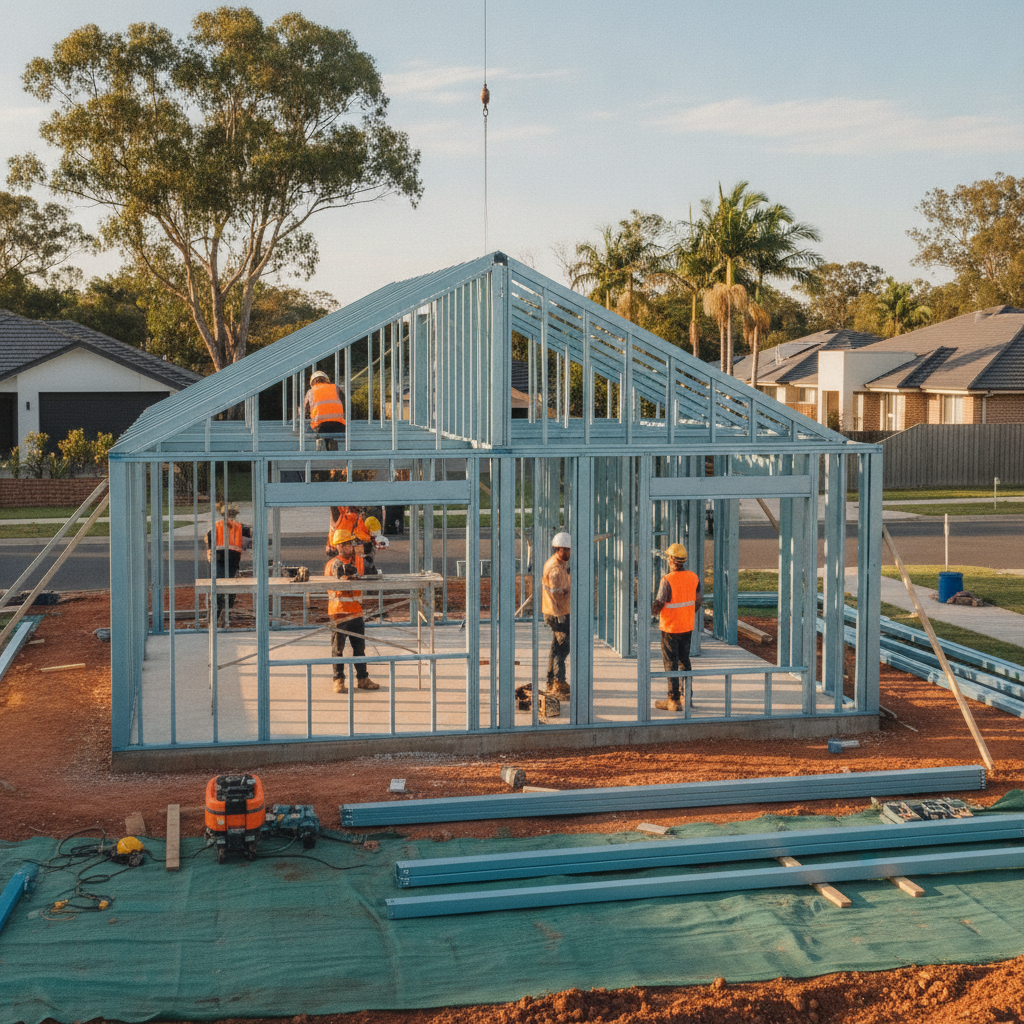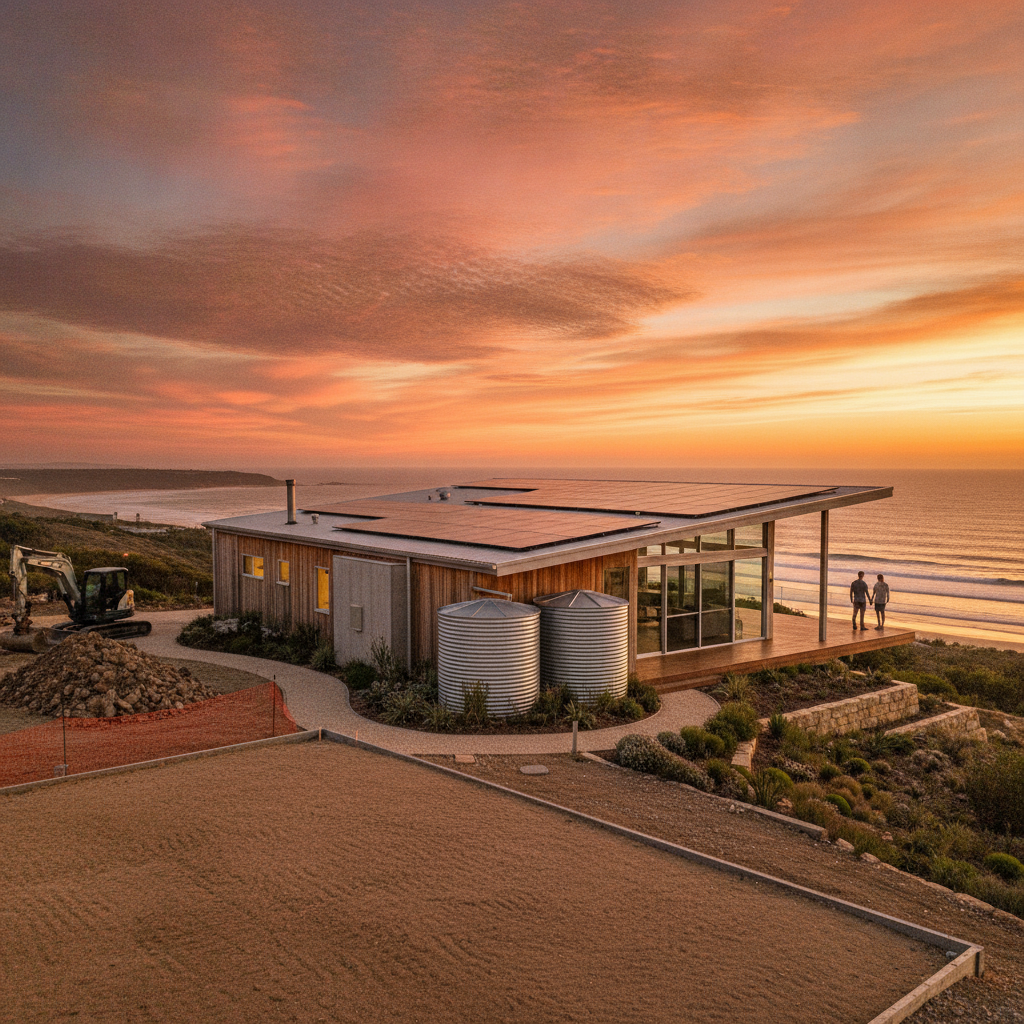
I was standing on a ridge in Maleny last October, right as a southerly buster started to howl through the valley. The owner-builder I was meeting held his hat down with one hand and pointed at his footings with the other. He asked me if an N3 rating was overkill for a kit home on a slope like that. I told him straight: your council doesn't care about your budget, they care about AS 4055. And looking at the way the wind was whipping up that escarpment, he'd be lucky if N3 even covered it.
Most folks starting out with a kit home get bogged down in floor plans and kitchen tiles. That's the fun stuff. But before you even think about the color of your cladding, you need to understand wind ratings. These ratings dictate how your steel frames are engineered, how many tie-down bolts you'll need, and whether your windows will stay in their tracks during a summer storm. In Australia, we use two main categories: Non-Cyclonic (N) and Cyclonic (C). If you get this wrong at the start, your building certification will hit a brick wall before you've even cleared the site.
The Basics of AS 4055 and Wind Classes
Everything in the Australian building industry eventually leads back to a standard. For housing, AS 4055 is the bible for wind loads. It breaks the country into regions. Most of us live in Region A, which covers the bulk of the southern half of Australia. Region B is the transition zone, while C and D are where the heavy-duty tropical cyclones live. But it's not just about your town. It's about your specific dirt. You could be in an N2 area, but because you're perched on top of a hill with no trees for five kilometers, your site gets bumped to an N3 or even an N4.
Wind speed is measured in meters per second (m/s). An N1 rating, the lowest on the pile, is designed for a serviceability wind speed of 26 m/s. By the time you get to a C4 rating, you're looking at an ultimate gust wind speed of 86 m/s. That's roughly 310 kilometers per hour. If your home isn't built for that, it's not a house anymore. It's debris.
Breaking Down the N Ratings (Non-Cyclonic)
N1 and N2 are the bread and butter of suburban Australia. If you're building in a flat, built-up area like Western Sydney or the Melbourne suburbs, this is likely what you'll find on your engineering papers. These kits are simpler to put together because the tie-down requirements aren't as aggressive. You aren't fighting physics quite as hard.
N3 is where things get serious. This is the rating for 'exposed' sites. Think coastal headlands or rural blocks where the wind has a clear run at your north-facing wall. When we design steel frames for N3, we start seeing more bracing. The screws for your roof batten tie-downs get longer. The BlueScope TRUECORE steel is plenty strong, but the frequency of the fasteners increases. You'll spend more time with your impact driver, that's for sure.
N4 is rare for most kit home builders but common in steep, mountainous terrain. It's essentially the bridge between standard residential construction and the heavy-duty engineering used up north in the tropics. It’s often cheaper to redesign the placement of the house to avoid an N4 rating than it is to pay for the extra steel and thick glass required to survive it.
Living in the Danger Zone: C Ratings
If your block is north of Bundaberg on the east coast, or north of Carnarvon in the west, you're in cyclonic territory. We don't use 'N' ratings here. We use 'C'.
- C1: This is the entry-level cyclonic rating. If you're building a bit inland in the tropics, this is your baseline.
- C2: Most coastal towns in North Queensland fall here. The engineering for a C2 kit home involves heavy-duty bracketry and very specific window ratings. You can't just chuck in any old sliding door. It has to be pressure tested to handle the suction and force of a cyclone.
- C3 and C4: This is the big league. Think Darwin or Karratha. In these zones, the home is basically a fortress. The roof sheets are thicker, the screws have cyclone washers ( those big diamond-shaped bits of metal), and the internal pressure calculations are a nightmare.
Because kit homes often use steel frames, they're actually great for cyclonic areas. Steel doesn't warp and it has a fantastic strength-to-weight ratio. But don't think that just because you're using steel, you can ignore the C-rating specifics. The frame is only as good as the way it’s bolted to the slab. In a C3 zone, those anchor bolts are huge. You'll be sweating through your shirt just getting them tightened to spec.
Four Factors That Determine Your Site's Wind Speed
When an engineer looks at your block, they aren't just guessing. They use four technical markers. First is the Wind Region. We covered that. Next is Terrain Category. Are you in a forest (TC3) or on an open airfield (TC1)? The more obstructions like trees and other houses you have around you, the lower the wind speed hits your walls.
Third is the Topographic Class. This is a fancy way of saying "How big is your hill?" Wind accelerates as it moves over slopes. If your kit home is sitting on the top third of a hill, you might as well be building in a wind tunnel. Finally, there's Shielding. If you have a two-story house right next door, it protects you. If you're the only house on the street, you're taking the full brunt.
Practical Advice for the Owner Builder
Don't buy a kit based on an N2 price if your site wind classification hasn't been done yet. I've seen it happen. A bloke buys a kit off the shelf, gets his soil test and site classification back three weeks later, and finds out he's actually N3. Now he has to go back to the manufacturer, pay for more steel, more bracing, and get the engineering redrawn. It's a mess. Get your site wind classification done by a local surveyor or engineer before you sign off on the kit design. It'll cost you a few hundred bucks up front, but it saves you thousands in variations later.
Also, pay attention to your glass. Windows are the weakest point in any home when the wind picks up. For higher wind ratings, you'll need thicker glass or even laminated glass. This adds weight to the frames, so make sure your mates are around on the day you're installing the windows. You won't be lifting an N3-rated double-glazed sliding door on your own without putting your back out.
Another tip: check your insulation. High wind areas often mean more air movement. While your kit home will come with a standard insulation package, if you're in an N3 or C1 zone, make sure your house wrap is taped properly. Every little gap is a chance for the wind to whistle through. It’s not just about structural integrity; it’s about not having your curtains move when the doors are shut.
Why Steel Frames Matter Here
I've been around long enough to see what happens to timber in high wind areas over twenty years. It moves. It creaks. Steel frames, especially the TRUECORE stuff we use, are consistent. When an engineer specifies a hole for a tie-down bolt in a steel flange, that hole is exactly where it needs to be. There’s no guesswork. For an owner-builder, this is gold. You aren't trying to figure out if a piece of wood is strong enough to hold a cyclone strap. You just follow the engineering plan, and the steel does the work. But remember, the steel is only the skeleton. You still need to make sure your cladding and roofing are screwed off exactly to the manufacturer's pattern. If the plan says screws at 300mm centers, don't do them at 450mm just because you're tired and want to get to the pub.
At the end of the day, your wind rating is the most important invisible feature of your home. You won't see the extra bracing once the plasterboard is up, but you'll definitely hear the difference when a storm rolls through at 2am and the house doesn't groan. Do the homework. Get the right rating. Sleep better.