Bushfire Built Tough: Why Steel Kit Homes Stand Up When It Counts
Look, if you’re planning a place in the bush, or even on the fringes of some regional town, you already know the deal with fire. It's not a matter of *if*, but *when* for a lot of us. And when that orange glow starts showing on the horizon, or the wind whips up a frenzy of embers, you want your home to be built right. You want it to stand a chance. That’s where steel frames, the backbone of our kit homes, really earn their keep, especially in those fire-prone parts of Australia. We’ve seen it time and again, houses gone but the frame still standing. It makes a difference.
The Firefight Starts with the Frame
Let’s cut to it: timber burns. Steel doesn't. Simple as that. You put a match to a pine stud, it'll catch. You hit a TRUECORE® steel stud with a torch, it'll get hot, but it won't ignite. This isn't just some marketing spin; it's basic physics. In a bushfire, you're not just dealing with direct flame contact. You’re talking about radiant heat that can cook materials before a flame even touches them. And then there are the embers – thousands of them, glowing hot, looking for a crack or a crevice to get into and start a new spot fire. Timber frames are fuel. Steel frames aren’t. It’s a fundamental difference when you're thinking about building in a high Bushfire Attack Level (BAL) area.
The Australian Building Code, specifically the National Construction Code (NCC) Volume Two, and Australian Standard AS 3959: Construction of buildings in bushfire-prone areas, they lay out some pretty strict rules for what you can and can't do in different BAL zones. And for good reason. From BAL-Low all the way up to BAL-FZ (Flame Zone), the requirements get tougher. Using a steel frame from the get-go often simplifies things when you're trying to meet those higher BAL ratings. It ticks a massive box right away because you're eliminating a primary combustible structural element.
No Fuel, Less Worry
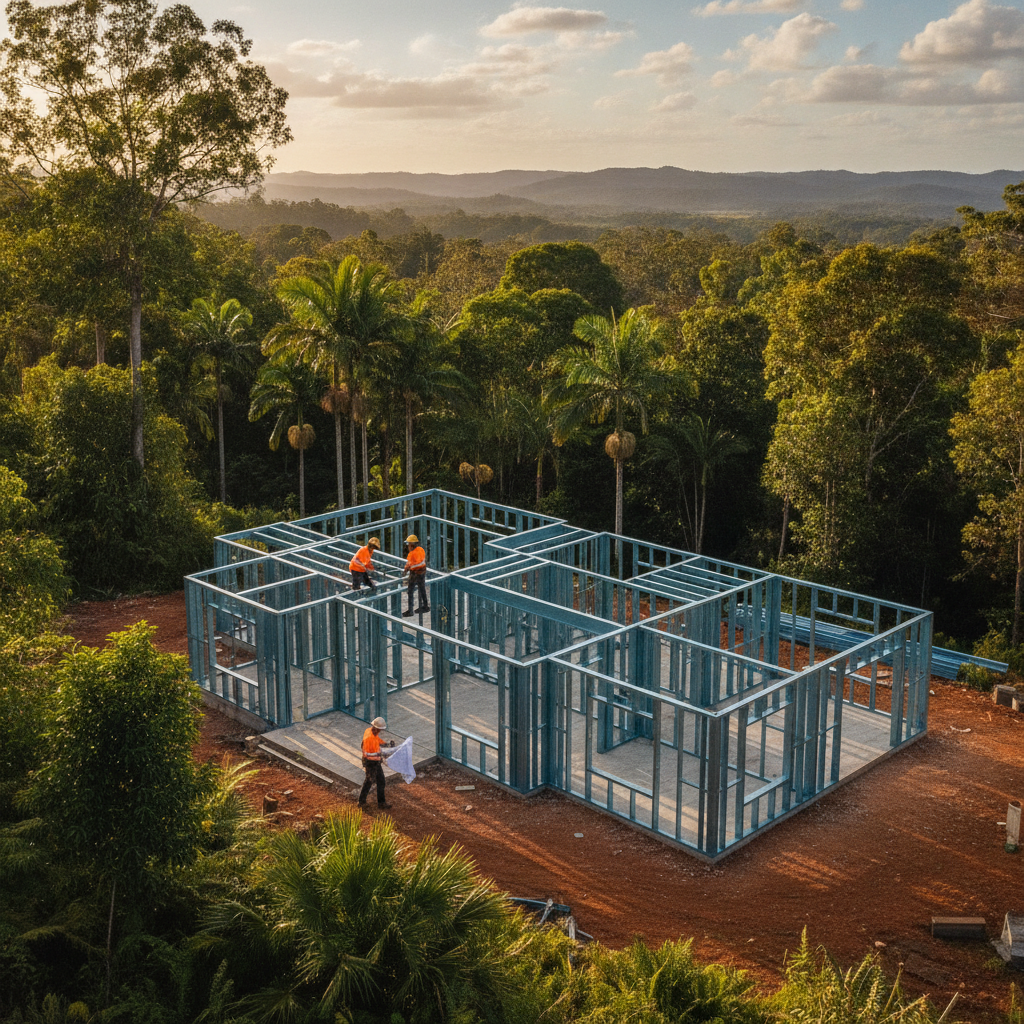
Think about it like this: if your house is made of timber, and a fire gets under the cladding or into the roof space, you’ve got a furnace. Your frame, the very thing holding up the roof and walls, becomes part of the fuel load. With steel, that risk is drastically reduced. We’re not saying a steel-framed house is fireproof – no house is. But it gives you a much better fighting chance. It provides a non-combustible skeleton. This is especially critical for rural kit homes, which often get built further into the bush, where fire brigades might take longer to reach.
Beyond the Flames: Embracing the Embers
Direct flame is terrifying, sure. But embers, those little glowing devils, they're the real silent killers in a bushfire. They can travel kilometres ahead of the fire front, landing on your roof, in your gutters, or getting sucked into vents. If your roof structure is timber, and an ember finds a way in, it can smoulder, unseen, and then suddenly you've got a fire in your ceiling space. Not good. Our kit homes come with a full steel frame, including the roof trusses. That means no timber in your roof structure to catch fire from an errant ember.
Plus, with a steel frame, you're often pairing it with fire-resistant cladding options like cement sheet or certain types of corrugated steel. This combination creates a really tough shell against both radiant heat and direct ember attack. We’ve seen customers in places like the Blue Mountains and around Gippsland specifically choose steel for this reason. They’ve sussed out the risks, and they’re building smart.
- Non-Combustible Material: Steel doesn't burn. Simple.
- Structural Integrity in Heat: While steel can lose strength at extreme temperatures, it doesn’t add fuel to the fire, unlike timber. This often means the structure stays standing longer.
- Less Vulnerable to Embers: No timber in the frame means fewer places for embers to ignite the house's bones from within.
Owner-Builder Tips: Building for Bushfire Resilience
Alright, so you’ve picked a steel frame – smart move for bushfire areas. But that’s just one piece of the puzzle. As an owner-builder, you’re the boss, which means you’ve got to think about the whole package. Here's what else you need to be on top of:
1. Get Your BAL Rating Right
Before you even draw up plans, get a professional bushfire assessment done for your specific block. Don't guess. The BAL rating dictates everything – the type of windows you need, the roof materials, even the subfloor construction. Our steel frames are compliant across all BALs, but the rest of your kit and the subsequent build needs to match that rating. We provide the frames, roofing, cladding, windows, doors, and insulation, but you’ll need to make sure your selections meet the specific BAL requirements for your site. A BAL-29 home needs different glazing than a BAL-FZ one, no question.
2. Think About the Entire Building Envelope
A steel frame is brilliant, but it's not a magic bullet if you chuck on flammable cladding or timber decks that butt right up to the house. You need to consider the whole envelope. For instance, our kits include quality cladding options like Colorbond® steel or cement fibre sheets, which are great for bushfire zones. But if you’re adding a pergola, make sure it’s detached or built with fire-resistant materials. The gaps matter too – seal up any openings, especially under the eaves or around penetrations for pipes and wires. Embers are tiny, they get everywhere.
3. Site Preparation is Non-Negotiable
This is on you, the owner-builder. Keeping the immediate surrounds of your home clear of combustible materials is absolutely vital. We’re talking about the 'defendable space' here. Clear vegetation, mow the lawn, remove leaf litter, store firewood well away from the house. If you've got a steel frame, but a pile of dry sticks right up against your external wall, you're just asking for trouble. It’s basic stuff, but so many people overlook it.
4. Water Supply and Access
If you're out rural, you need a reliable water supply for firefighting. That might mean a dedicated water tank with a suitable pump and hose connections that fire brigades can access. And don't forget access for fire trucks. A long, narrow, winding driveway that's choked with trees won't cut it. Talk to your local council and rural fire service about their specific requirements. They’ll have the best advice for your area.
5. Windows and Doors: The Weakest Link?
Even with a steel frame, your windows and doors can be a weak point in a bushfire. Radiant heat can shatter glass, and embers can sneak through gaps. For higher BAL ratings, you'll be looking at specific toughened glass, screens, or even shutters. Our kits provide windows and doors that can be upgraded to meet these ratings. Don’t skimp here. It's not just about protecting the house, it's about protecting anyone sheltering inside.
The Long-Term Payoff for Rural Kit Homes
Choosing a steel frame kit home for a rural or bushfire-prone block isn't just about the immediate safety aspect, though that's huge. It's about the long-term peace of mind. Knowing your home has a non-combustible frame, built with quality Australian BlueScope TRUECORE® steel, means one less thing to worry about when the summer months roll around. You've made a foundational choice that significantly bolsters your home's resilience.
Plus, let's not forget the other perks of steel: it's termite-proof, won't rot, won't twist or warp, and it's dimensionally stable. So while you’re building for fire safety, you’re also building a home that’s going to last, come hell or high water – or, more accurately, come bushfire or termites. It’s a solid investment in your future, especially when you're taking on the challenge of building it yourself. Get it right from the frame up, and you’ll sleep better at night. Simple as that.