The Art and Science of Choosing Your Home Exterior
When you embark on the journey of building a kit home in Australia, one of the most significant decisions you will face is the selection of your external cladding. While the steel frame provides the structural bones and the internal layout defines your lifestyle, the cladding is what gives your home its personality, street appeal, and protection against the harsh Australian elements.
From the classic coastal look of weatherboards to the rugged endurance of brick veneer, each material brings a unique set of technical requirements and aesthetic benefits to the table. For the owner builder, understanding these building techniques is crucial. It is not just about how the house looks on day one, it is about how the materials interact with your steel frame, how they handle thermal movement, and how much maintenance they will require over the next thirty years.
The Traditional Favorite: Weatherboard Cladding
There is something quintessentially Australian about a weatherboard home. Whether it is a traditional country cottage or a sleek, modern coastal pavilion, weatherboards offer a versatility that is hard to beat. In the context of a kit home, weatherboards are often the preferred choice for those looking to manage much of the installation themselves.
Technical Considerations for Weatherboard
Modern weatherboards are typically made from fiber cement or treated timber composites. When fixing these to a BlueScope steel frame, the technique involves using specific winged self-drilling screws that allow for the slight expansion and contraction of the materials. Because steel frames are incredibly straight and true, the installation of weatherboards becomes a much simpler task for the owner builder compared to working with inconsistent timber studs.
One of the main advantages here is the weight. Weatherboard is a lightweight construction technique, which means it puts less stress on your footings and slab. It also allows for easier transport to remote sites, a common scenario for many Australian kit home projects.
The Enduring Strength of Brick Veneer
While often associated with traditional suburban project homes, brick veneer remains a powerhouse in the Australian building industry for a reason. In a brick veneer kit home, the steel frame carries the structural load of the roof and the upper floors, while the brick skin sits on its own footing, separated by a small cavity.
Building Techniques for Brick on Steel
When using brick veneer with a steel frame, the two are joined using flexible brick ties. These ties are screwed into the steel studs and embedded in the mortar joints of the brickwork. This allows the frame and the brick skin to move independently, reducing the risk of cracking as the ground settles or as temperatures fluctuate.
Brick offers excellent high-thermal mass, which can be a double-edged sword. While it stays cool in summer, it can also hold onto heat long after the sun goes down. If you choose brick, ensure your wall insulation and sarking are top notch to prevent that heat from transferring through the cavity and into your living space. Brick is a heavy material, so it requires a more substantial concrete slab edge to support the weight, something to factor in during your initial site works phase.
The Modern Edge: Rendered Finishes and Composite Panels
If you are aiming for a contemporary, minimalist look, you might consider rendered finishes or large format architectural panels. Many owner builders achieve a rendered look by using fiber cement sheets designed specifically for seamless jointing and coating.
The technique involves fixing the sheets to the steel frame, applying a specialized jointing compound, and then finishing with a flexible acrylic render. This provides a solid, masonry-like appearance without the weight or the labor intensity of traditional bricklaying. It is an excellent way to give a kit home a high-end, custom-built feel while maintaining the efficiency of lightweight construction.
Comparing the Performance: Maintenance and Durability
When choosing your cladding, you need to think like a builder. Australia is a land of extremes, from salt spray on the coast to intense UV radiation in the outback and bushfire risks in the ranges.
- Bushfire Resistance: For those building in bushfire-prone areas (BAL rated zones), fiber cement weatherboards and brick veneer are excellent choices as they are non-combustible. Always check the specific BAL rating of your chosen cladding.
- Maintenance: Brick veneer is almost zero maintenance. Weatherboards, even modern fiber cement ones, will require painting every 10 to 15 years to keep them looking fresh and to protect the substrate.
- Installation Speed: Lightweight cladding like weatherboards or composite panels can be installed much faster than brick, which requires a specialist trade and more time on site.
The Owner Builder Advantage: Managing the Trade
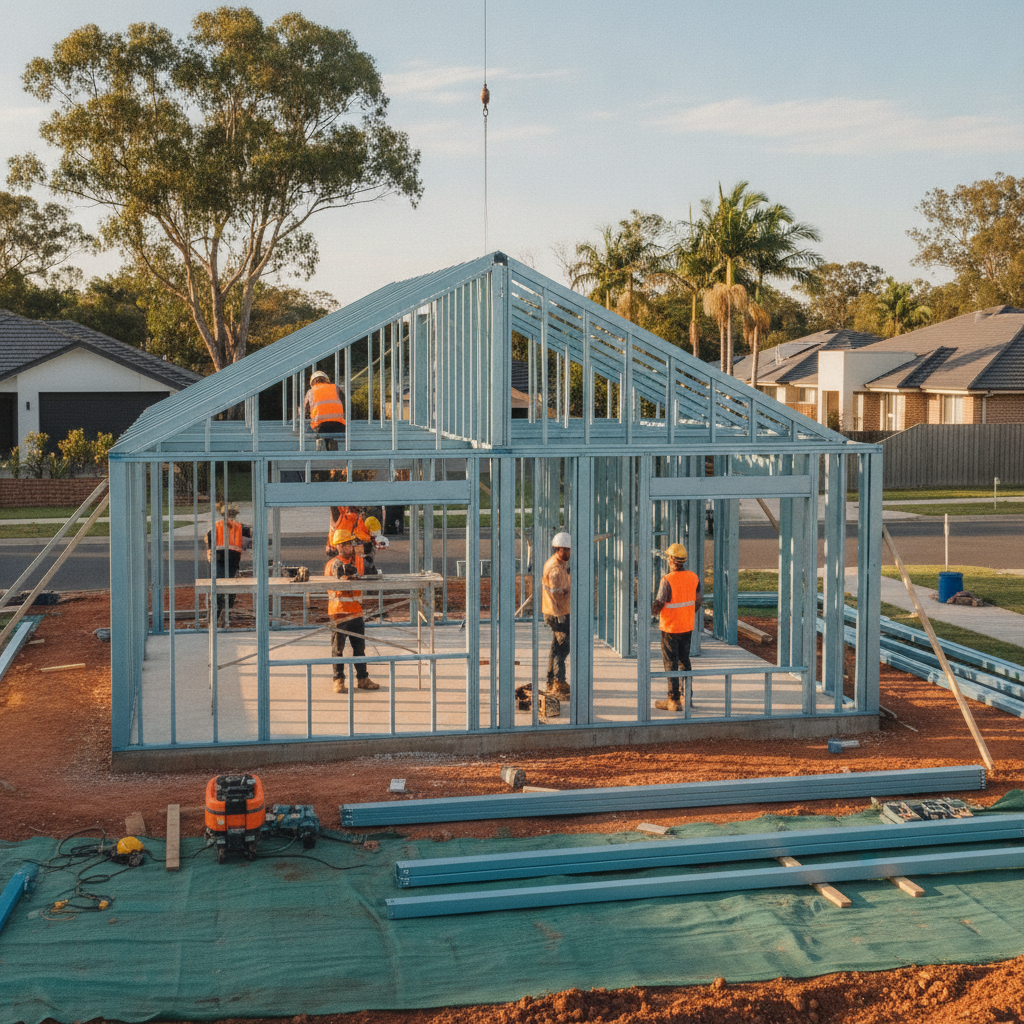
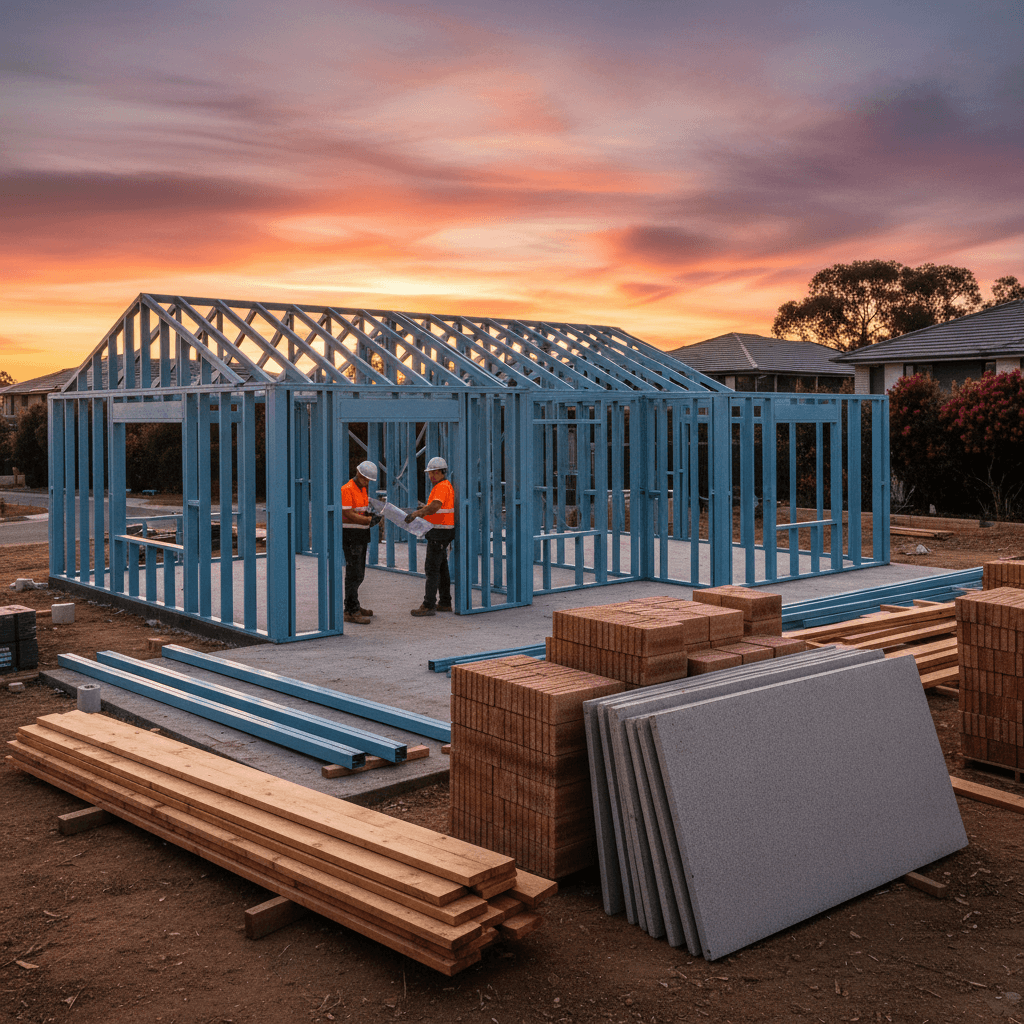
As an owner builder, your role is as much about project management as it is about swinging a hammer. If you choose a kit home with a steel frame, you are already starting with a precision-engineered base. This makes the following cladding stage much smoother.
If you are hiring a bricklayer, ensure they are familiar with fixing ties to steel frames. If you are doing the weatherboards yourself, invest in a quality coil nailer or screw gun designed for steel. The accuracy of the steel frame means your corners will be square and your lines will be straight, which is half the battle won when it comes to a professional exterior finish.
Don't Forget the Details: Flashings and Cavities
The most common mistake in home construction isn't the choice of material, but the way the details are handled. Regardless of your cladding choice, the management of water is paramount. This involves the correct installation of sarking (a weather-protective wrap) and flashings around windows and doors.
In a steel-framed kit home, the sarking acts as a second skin. It prevents moisture from reaching the frame and the insulation. Ensure there is a sufficient drainage cavity between the cladding and the sarking. This allows the building to breathe and ensures that any moisture that does get behind the cladding can drain away safely to the outside, rather than causing mold or dampness inside the walls.
A Note on Design and Lifestyle
Your choice of cladding should also reflect how you intend to live in the home. Large windows paired with dark-colored cladding can create a stunning modern aesthetic, but in a hot Australian climate, those dark colors will absorb more heat. Conversely, a white weatherboard home reflects the sun, keeping the interior cooler naturally. Mixing materials, such as using brick for the ground floor and weatherboard for the upper level, can also provide a great balance of thermal mass, weight distribution, and visual interest.
Conclusion
Building a kit home in Australia offers a unique opportunity to create a high-quality, durable residence that perfectly suits your site and your style. By understanding the technical differences between cladding options, from the weight and thermal properties of brick veneer to the versatility and ease of weatherboards, you can make informed decisions that will benefit your project for years to come.
Remember, the exterior of your home is your first line of defense against the elements. By combining a robust steel frame with expertly installed cladding, you are building a structure that is not only beautiful but also engineered to last in the demanding Australian landscape. Take your time, research the materials, and enjoy the process of bringing your vision to life.