Salt Air and Steel Frames
Buying a block of land near the ocean is the dream, but the reality of building there is a total battle against the elements. I have seen owners get caught out because they underestimated the sheer aggression of salt spray. If you are building within 500 metres of the breaking surf, everything changes. Your standard fasteners won't cut it, and your maintenance schedule becomes a part time job. That is why we start with the bones. Using TRUECORE steel for your house frames isn't just about straight lines. It is about peace of mind when the southerly buster hits. It won't warp when the humidity hits 90 percent in February, and the termites in coastal scrub won't find it particularly tasty either.
But you cannot just slap a standard suburban design on a sand dune and expect it to work. Coastal lifestyle is about the transition from outside to inside. You want a floor plan that handles sand on the feet and salt on the skin without ruining the vibe. Think about your entry point. A dedicated mudroom or a wide laundry right off the deck is a lifesaver. It is where the wet towels and the surfboard wax stay, rather than being dragged across your main living area rug at 4pm on a Saturday.
The Science of the Sea Breeze
Natural ventilation is more than a buzzword. It is the difference between a house that feels like a sauna and one that stays crisp. When we look at coastal designs like the Shoalhaven or the Noosa, we focus on cross-flow. You need windows placed directly opposite each other. Not just for a bit of air, but to create a pressure shift that sucks the heat out of the ceiling. Speaking of ceilings, go high. If the NCC Volume 2 says 2.4 metres is the minimum, aim for 2.7 or even raked ceilings where the kit allows. Heat rises. Give it somewhere to go that isn't right around your head while you're trying to sleep.
Louvres are your best friend here. They let you control the airflow even when it's raining sideways, which happens more than you'd think on the east coast. Plus, they look the part. There is a specific aesthetic to Australian beach houses that relies on horizontal lines. Combine those louvres with wide eaves. Eaves are the most underrated part of a house. They protect your window seals from the sun and keep the glass cool. Without them, your air conditioner will be screaming all summer, and your power bill will reflect that.
Owner Builder Realities on the Coast
Being an owner builder is a massive undertaking. You're the project manager, the site clean-up crew, and the person who has to tell the plumber he's late. On a coastal site, logistics get tricky. Is your block sand? If so, your site works and slab costs are going to be different than building on clay in the suburbs. You'll likely be looking at deepened edge beams or even screw piles if the soil report comes back soft. Do not skip the soil test. It's the most important couple of hundred bucks you'll spend. Because once that concrete is poured, you are locked in.
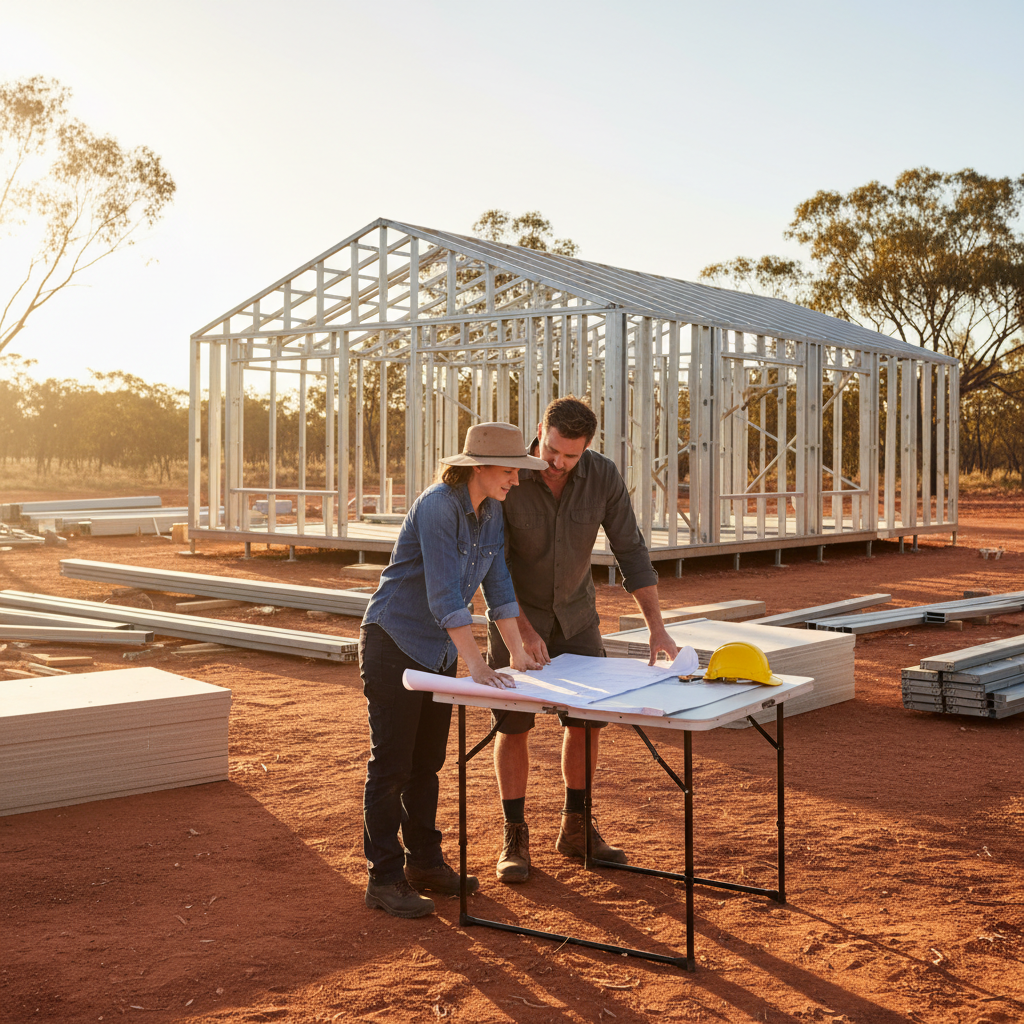
You'll receive your kit with the steel frames, the BlueScope roofing, and all the cladding ready to go. My advice? Get your storage sorted before the truck arrives. Salt air starts attacking raw materials the second they sit still. Keep your cladding off the ground and covered. If you are doing the assembly yourself, get a good impact driver and a couple of spare batteries. You'll be driving thousands of screws into that TRUECORE steel. It is satisfying work, but it'll make your forearms burn by the end of the day. But once those frames are up and plumb, you'll see why we use steel. It's straight. Every time. No bowing timber or knots to deal with when you're trying to get your plasterboard flat.
Choosing Materials for Longevity
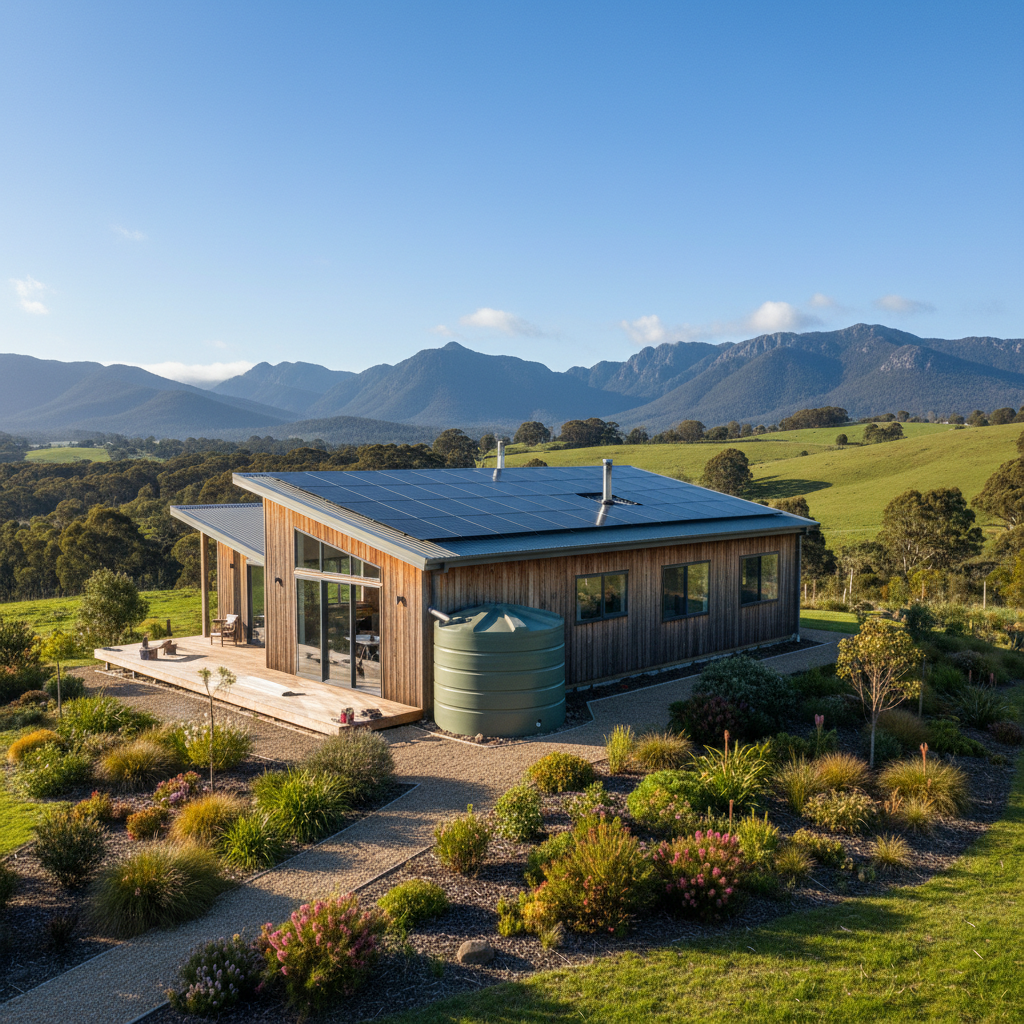
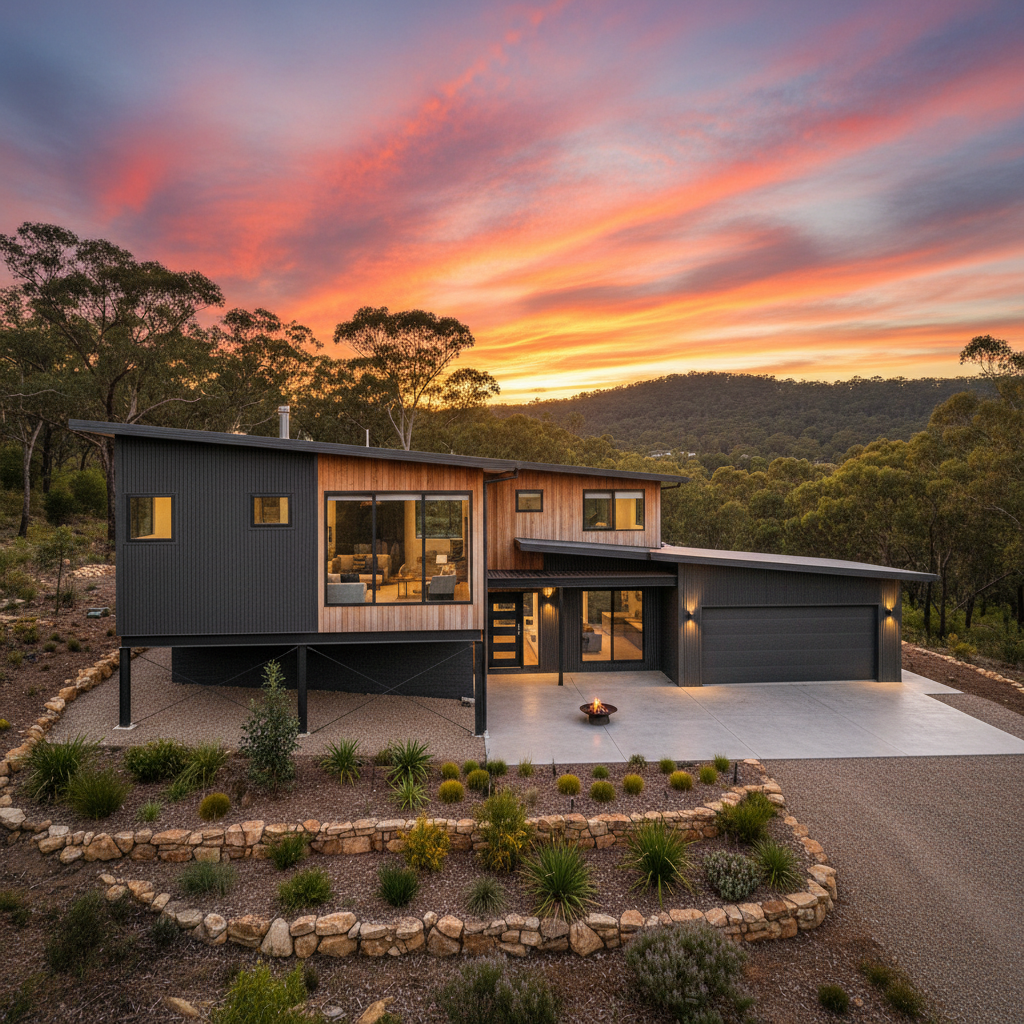
The Australian sun is brutal, but the salt is worse. When you are picking your roof and cladding from the kits, look at the grades of Colorbond. For most coastal spots, Ultra grade is the way to go. It has a thicker coating designed to handle that high-corrosion environment. It costs a bit more upfront, but replacing a roof in ten years costs a hell of a lot more. And skip the dark colours if you can. A Monument roof looks sleek, but in a North Queensland or even a NSW coastal summer, it turns your roof cavity into an oven. Go for lighter greys or off-whites like Surfmist. Your insulation will thank you.
Windows are another big one. Most people focus on the view, but you need to focus on the hardware. If you're near the water, you want stainless steel friction stays and high-quality seals. Salt gets into the tracks of sliding doors and turns into sandpaper. I always tell people to wash their windows and tracks with fresh water every month. It sounds like a chore, but it keeps the doors sliding like silk. It is those small maintenance habits that keep a kit home looking brand new for twenty years.
Design Touches That Make the Difference
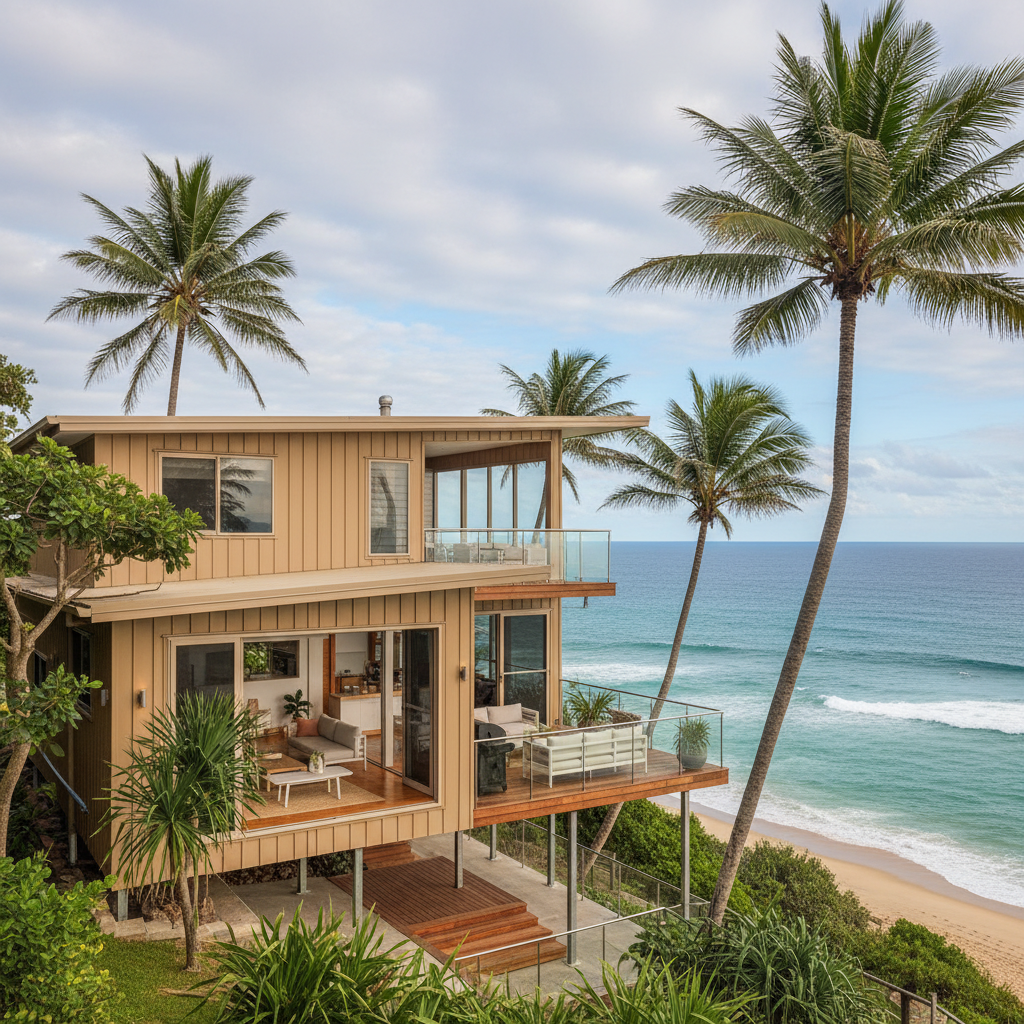
We are seeing a huge trend toward 'upside-down' living. If you have a view of the water, put the kitchen and living area on the top floor. Put the bedrooms downstairs where it stays naturally cooler. It changes the way you live. You'll spend your mornings watching the surf from the balcony with a coffee, and your evenings tucked away in a quiet, cool space. It also means your guest rooms or kids' rooms are separated from the noise of the kitchen. Wrap-around decks are great, but make sure they are wide enough. A two-metre deck is useless for a table. You need at least 2.5 to 3 metres if you actually want to eat outside without tripping over the chairs.
Inside, keep the palette simple. Use materials that feel organic. Plywood ceilings or exposed steel beams can give the house a bit of an edge without making it feel like an office. And don't forget the outdoor shower. It is the most used feature of any coastal kit home. Just a simple cold-water riser on the side of the house saves your bathroom from becoming a sandpit. It's about being smart with the layout. The kit gives you the structure, but the way you finish it defines the lifestyle. Grab your plans, sit on the block at sunset, and really think about where the wind comes from and where the sun hits. That's how you build a home, not just a house.