Stop building for right now
Walk into any suburban display village and you'll see a lot of shiny things that don't actually work in the real world. You see huge open-plan areas that look great on a brochure but sound like a jet engine when the kids are wrestling on the rug and the TV is blaring Bluey. I spent fifteen years on sites and in design offices, and the biggest mistake I see families make is building for the life they have this Tuesday, not the life they'll have in five years. Your three-year-old won't stay small. They'll turn into a six-foot-tall teenager who wants a drum kit and a place to hide from you. That's why your kit home layout needs to be more than just a box. It needs a strategy.
Kit homes give you a massive advantage here. Because we’re talking about steel frames, like the BlueScope TRUECORE stuff we use, you aren't stuck with internal load-bearing walls everywhere. You’ve got more freedom to play with the floor plan before you pull the trigger on the order. But you’ve got to get the zones right before the slab is poured.
The golden rule of secondary zones
The standard floor plan usually has the master bedroom at the front and kids' rooms at the back. That's fine. But what happens in the middle? If your only living space is the kitchen/dining area, you're going to lose your mind. You need a secondary breakout space. In the kit home world, we call this a multi-purpose room or a rumpus. Whatever you call it, put it near the kids' bedrooms. When they're toddlers, it's the toy room. You can literally just close the door on the Lego mess. When they're twelve, it's where they play video games with their mates so they aren't taking over the main lounge. It’s a simple shift in thinking, but it keeps the peace.
Think about the bathroom situation too. A single main bathroom with one toilet is a recipe for a fight once the kids hit high school. If you can't fit a full second bathroom, at least separate the toilet from the shower and vanity. It's an old-school Aussie design move that works because someone can be brushing their teeth while someone else is in the loo. Simple. Effective.
Future-proofing with steel and screws
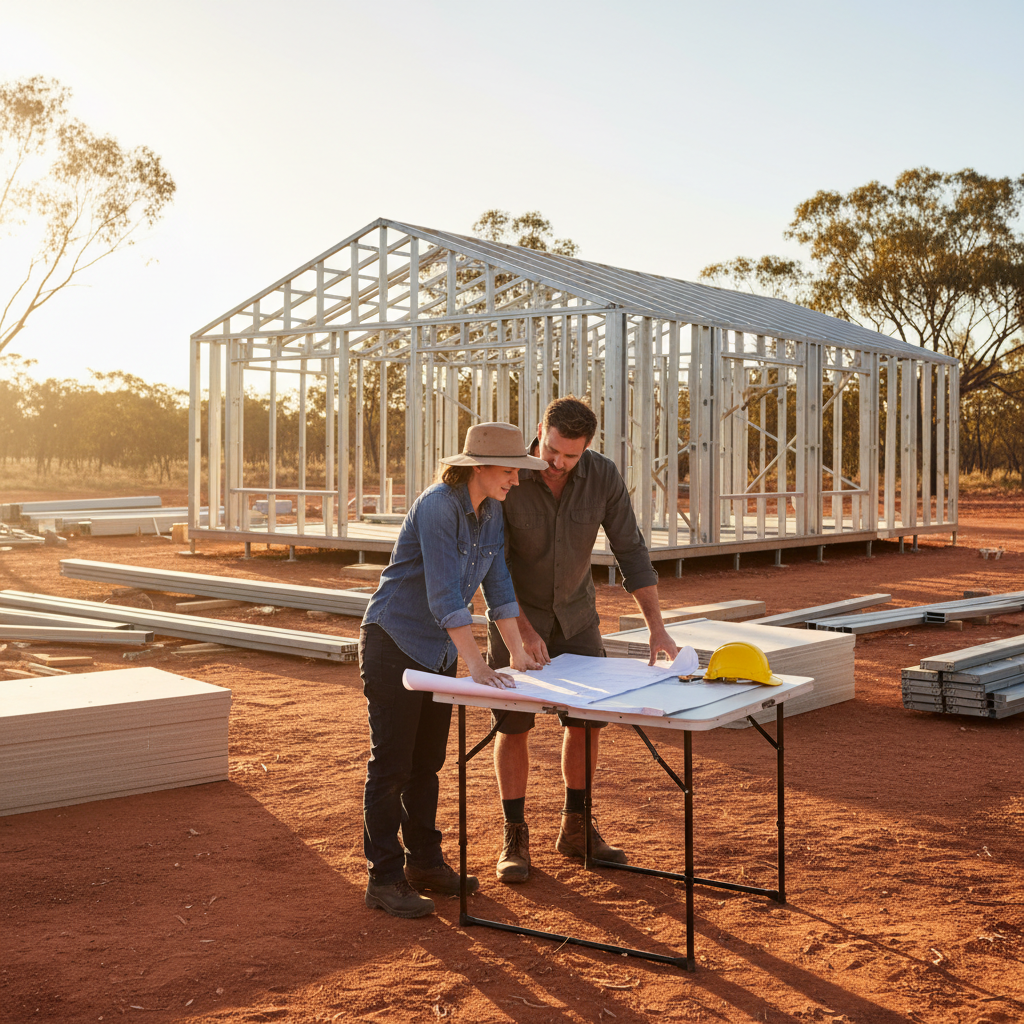
One of the beauties of a steel frame kit is the precision. When your kit arrives on the truck, every stud and noggin is exactly where it’s meant to be. If you’re an owner-builder, you’ll appreciate that because nothing frustrates a sparky or a plumber more than wonky timber frames. But think about what happens after the plaster goes up. If you reckon you might want to add a heavy wall-mounted TV or a pull-up bar in the garage later, tell your designer to throw in some extra noggins during the frame phase. It costs almost nothing to add a few more bits of steel before the insulation goes in, but it’s a nightmare to fix later. Because steel is uniform, it won't warp or twist as the seasons change, meaning your doors will actually shut ten years from now. I’ve seen cheap timber builds where the master bedroom door sticks every time it rains in Brisbane. You don't want that.
The laundry is a secret weapon
Most people treat the laundry as an afterthought. They tuck it in a cupboard or a tiny room off the kitchen. Big mistake. If you’re building on an acreage block or even just a decent-sized suburban lot, your laundry should be a mudroom. I’m serious. It should have an external door. This is where the kids dump their muddy footy boots or where you strip off after gardening before you track dirt through the house. Plus, if you're an owner-builder doing the fit-out yourself, you can install heaps of floor-to-ceiling storage here. You can never have enough linen space. Ever.
Plan for the ‘Work From Home’ reality
The world changed a few years back and now everyone needs a home office. But don't just shove a desk in the corner of your bedroom. That’s a terrible way to live. Your bedroom should be for sleep, not for staring at a computer screen at 9pm. Look at designs that offer a study nook or a small fourth bedroom that can transition. If the room is positioned near the front entrance of your kit home, it’s even better. It means if you have clients or deliveries, they aren't walking past your unmade bed or the pile of laundry on the couch. It keeps your professional life and your private life in two different zip codes, even if they're under the same roof.
Tips for the Owner-Builder Journey
- Get your site levels sorted early. A flat site is a fast build. A sloping site means more money in retaining walls that you’d probably rather spend on a better kitchen.
- Don't skimp on insulation. You’re getting the frames, roofing, and cladding in the kit. Make sure you choose high-quality batts and sarking. Australia is hot, and a steel roof needs proper thermal management to keep your power bills down.
- Check your BAL (Bushfire Attack Level) rating before you order. This dictates what kind of windows and doors you need. If you're in a BAL-29 or BAL-40 zone, your kit needs to be spec'd accordingly from day one.
- Talk to your trades before the kit arrives. Show your plumber and sparky the plans. They might spot a clash between a waste pipe and a steel floor joist that you missed. Catching that on paper is free. Catching it on-site involves a grinder and a lot of swearing.
Flexibility is the name of the game
I remember a bloke in Toowoomba who built one of our larger four-bedroom kits. He decided to leave the wall between two of the smaller bedrooms out and just used a massive wardrobe to divide the space. For the first five years, his two young boys had a giant shared playroom. When they got older and started fighting, he just put a proper wall in over a weekend. Because he was an owner-builder, he knew exactly how the floor was laid out and where the ceiling joists were. That’s the kind of flexibility you want. You aren't just buying a house, you're buying a shell that you can adapt.
Building a home is stressful. Anyone who tells you otherwise is lying or has never done it. You’ll be dealing with council DAs, weather delays, and the occasional headache with a contractor. But if you’ve got a solid design that considers how your family actually moves and grows, the end result is worth it. You want a place where you can sit on the deck on a Friday arvo with a cold drink and feel like you actually got it right. No regrets about a tiny kitchen or a missing second living area. Just a house that works. And that’s what we’re aiming for, isn't it?