Stop building ovens and start building homes
Most Australian suburbs look like a collection of dark-tiled hot boxes. It's a joke. We live in one of the sunniest places on earth and yet we keep building homes that require the aircon to be cranked to 18 degrees the second the clock hits noon. If you are going down the kit home path, you've got a massive advantage. You aren't stuck with what a volume builder wants to shove on a tiny block. You've got the floor plans in front of you and a chance to actually think about which way the wind blows and where the sun hits at 3pm on a Tuesday in February.
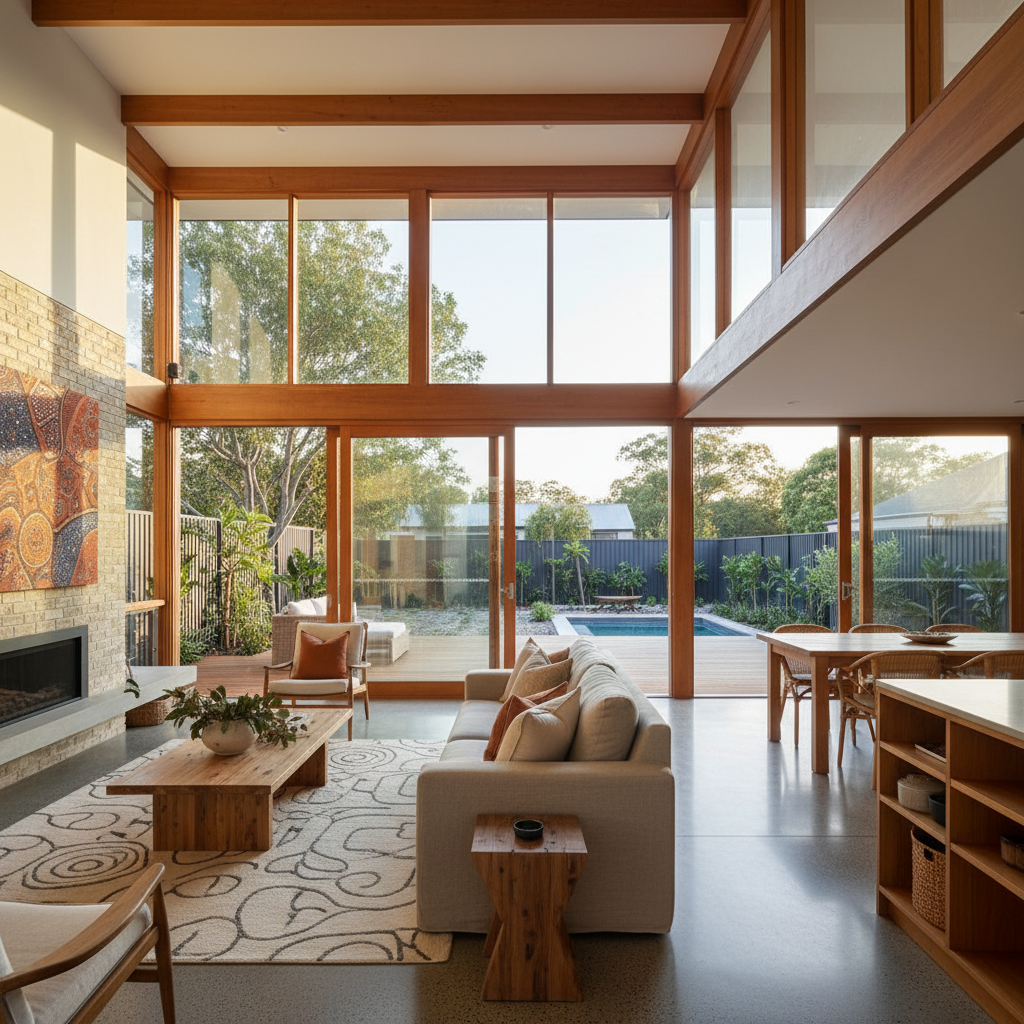
Sustainable design isn't about slapping a solar panel on the roof and calling it a day. That is the lazy way out. Real energy efficiency starts with the bones of the place. It starts with how you position the kit on your slab. I've seen blokes spend sixty grand on fancy batteries but they've pointed their main living room windows directly west. By dinner time, they're melting. It's nonsense. You want to aim those big glass doors toward the north. Let the winter sun sneak across your floor tiles to heat the house for free, then use a decent eaves overhang to keep the high summer sun out. Simple. Effective. Cheap.
The Steel Frame Advantage in Cold and Heat
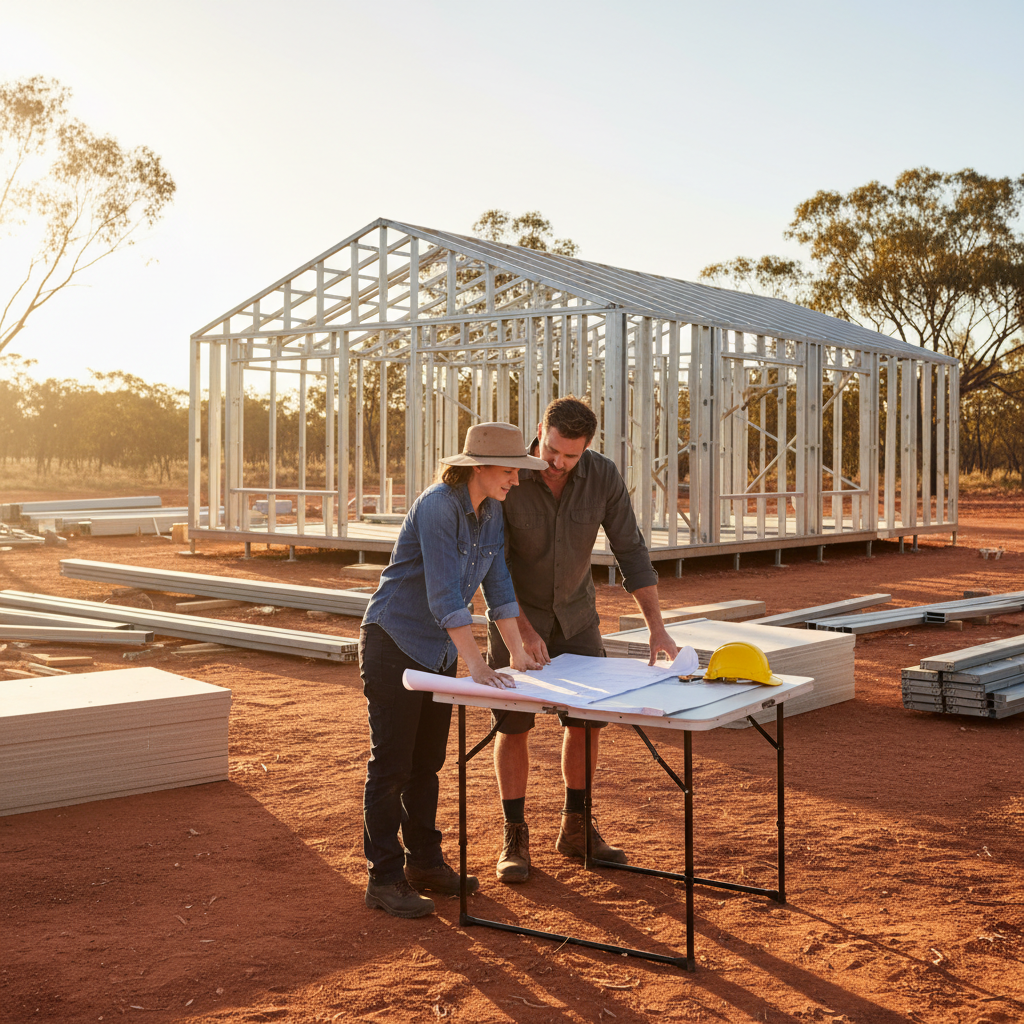
We use TRUECORE steel from BlueScope for a reason. It's dead straight. When you are lining up your windows or installing high-performance insulation batts, you don't want to be fighting a piece of timber that's warped like a banana since it was delivered. Precision matters for sustainability. Why? Because gaps are the enemy. If your frame is true, your seals are tight. If your seals are tight, you aren't losing all your expensive heating through a crack in the door frame. Plus, termites can't eat steel. There's nothing sustainable about having to spray gallons of poison into your soil every few years because your house belongs to the local colony of white ants.
But here is the trade-off. Steel conducts heat. You can't just slap cladding on a steel frame and expect it to be a thermos. You need a thermal break. It's non-negotiable in my book. Use a high-quality breathable vapour barrier and 20mm or 40mm thermal strips on the studs before your cladding goes on. It stops the heat from the outside wall transferring straight through the metal into your interior plasterboard. In places like Wagga Wagga or the Hunter Valley where the temps swing wildly from day to night, this makes the difference between a comfortable lounge room and a sweatbox.
Windows: Don't Skimp on the Glass
Windows are basically holes in your insulation. You can have the best R-value in your walls, but if you've got cheap, single-glazed aluminium windows, you might as well leave the front door open. I always tell owner-builders to look at the U-Value and the Solar Heat Gain Coefficient (SHGC). These aren't just fancy numbers. They tell you how much heat is leaking out and how much is screaming in. Double glazing used to be a luxury in Australia. Now, it's a basic requirement if you actually want to live comfortably without a massive power bill.
And think about the breeze. Cross-ventilation is a lifesaver. Look at your floor plan. Can you open a window on the south side and one on the north to get a pull-through? In the arvo, when the sea breeze or the gully wind kicks in, you want to be able to flush that hot air out in ten minutes. If you've got a dead end in your hallway with no opening, that heat just sits there and cooks you until midnight.
The Lifestyle Shift: Smaller Footprints
There is a trend lately towards 'right-sizing'. People are over cleaning four bathrooms and a theatre room they never use. A kit home lets you pick a layout that actually fits your life. If it's just you and the partner, do you really need 300 square meters? Every extra square meter you build is more space you have to heat, cool, and maintain. We're seeing more people choose two-bedroom designs with a massive, high-ceiling living area and a big deck. It's about that indoor-outdoor flow that Aussies love. You spend your money on the quality of the finish rather than just building a giant empty box.
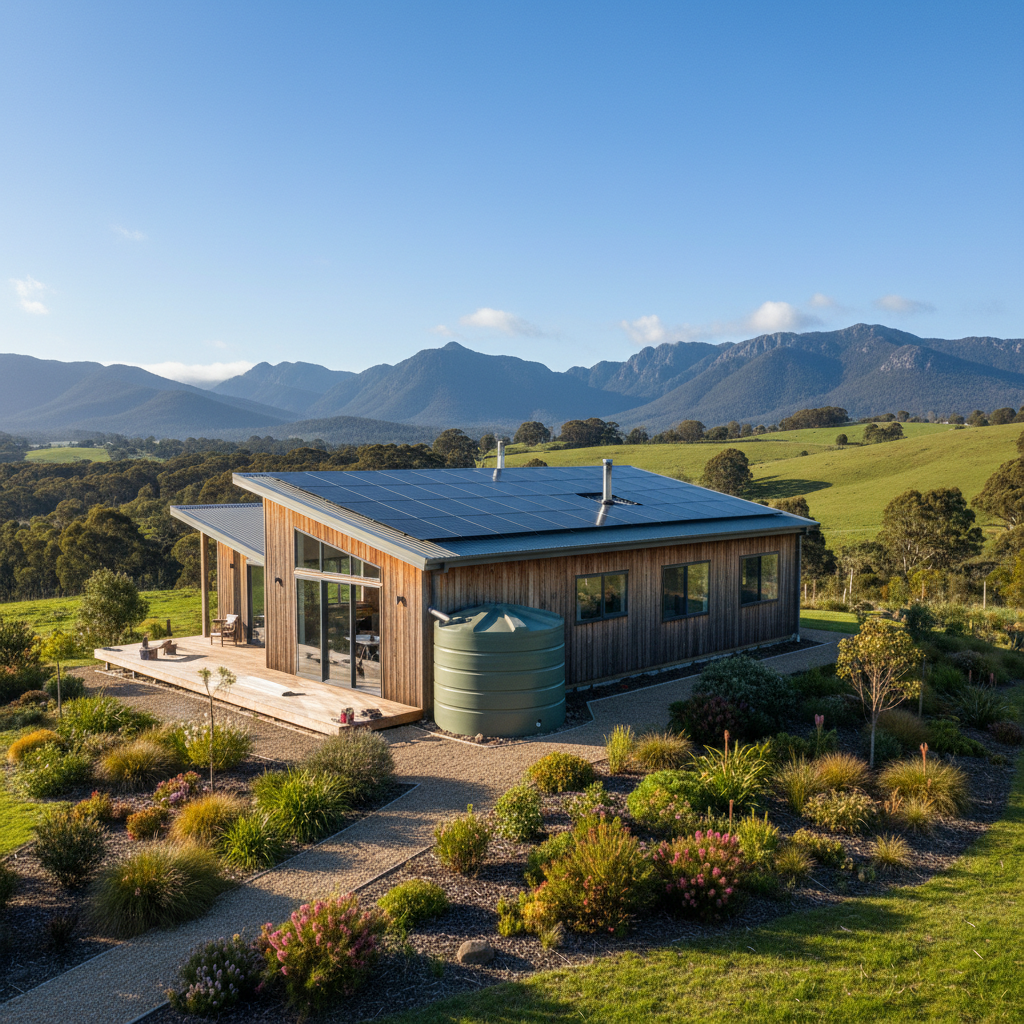
Plus, a smaller footprint means more room for your rainwater tanks and a decent veggie patch. If you're out on a rural block, you'll be on tank water anyway. But even in town, catching your own water for the garden just makes sense. It's part of the whole picture. Our kits include the roofing and gutters, so you're ready to start catching that rain the moment the roof is screwed down. Just make sure your plumber knows where you want the tanks before you pour the slab. It saves heaps of headache later with the drainage runs.
The Grit of Being an Owner Builder
Listen, being an owner-builder is not a walk in the park. It's a lot of phone calls to sparkies who don't show up and staring at the NCC Volume 2 at 10pm trying to understand the latest changes to energy ratings. But the payoff is huge. You know exactly what went into your walls. You know that the insulation isn't slumped at the bottom of the cavity because you put it in yourself and made sure it was a snug fit. You know the sarking is taped at every join.
It's those small details that create a high-performance home. It's not about'eco-bling'. It's about doing the basics right. The cladding we provide in our kits is durable and low maintenance. Combine that with a light-coloured roof—think Surfmist or something similar—to reflect the solar radiation. A dark roof looks cool, sure, but it's an oven. Unless you're in the Snowy Mountains, a light roof is the smartest move you'll ever make. Your attic space will stay twenty degrees cooler in January, and your aircon won't have to work half as hard.
So, take your time with the design. Think about where the shadows fall. Think about where you'll sit with a cold beer in the evening. If you get the orientation and the insulation right from day one, you'll have a home that's sustainable naturally, not just because you spent a fortune on gadgets to fix a bad design.