Navigating the DIY Divide as an Australian Owner Builder
Stepping into the world of owner building is an exhilarating journey. In Australia, the kit home movement is booming, driven by a desire for high quality, durable housing and the satisfaction of being deeply involved in the creation of your own home. However, one of the biggest questions every owner builder faces is: what should I actually do myself?
Building a home using a steel frame kit provides a fantastic structure for success, particularly when using precision engineered BlueScope TRUECORE steel. While the kit provides the 'bones' of the house, the magic happens in the execution. Balancing your own sweat equity with professional expertise is the key to a stress free build that meets Australian Standards and looks professional for decades to come.
The Owner Builder Mindset: Know Your Limits
Before picking up an impact driver, it is essential to be honest about your skill set. An owner builder is essentially a project manager first and a laborer second. Your primary job is to ensure the project moves forward efficiently. If a task is going to take you three weeks but a professional can do it in two days, your time might be better spent coordinating the next phase of the build.
When DIY Makes Sense
DIY is perfect for tasks that are labor intensive but low risk in terms of structural integrity or complex legal compliance. These are the areas where you can save significant money on hourly rates without compromising the safety of the dwelling.
When to Call the Pros
Australia has strict building codes and licensing requirements. In every state, electrical and plumbing work must be performed by a licensed professional. Furthermore, any task that requires specialized heavy machinery or carries high structural risk, like pouring a slab or complex earthworks, is usually best left to those with the right gear and insurance.
The Steel Frame Advantage: Why it Suits the Hands-On Builder
If you have chosen a steel frame kit home, you have already made your life a lot easier. Unlike traditional timber framing, where you might be Dealing with warped studs or complex onsite measurements, steel frames arrive pre-engineered and dimensionally accurate. Specifically, frames made from TRUECORE steel are lightweight and easy to handle without needing a massive crew.
For the DIY enthusiast, steel frames are like a life sized Meccano set. They are straight, true, and resistant to termites, which takes a lot of the guesswork out of the assembly process. Because the frames don't warp or shrink, your windows and doors will fit perfectly the first time, saving you from the frustration of structural adjustments later on.
Phase 1: Site Prep and the Slab
This is where we strongly recommend hiring professionals. The foundation is the most critical part of your home. If your slab is even a few centimeters out of level, it will cause a nightmare when you start erecting your steel frames. Professional concreters have the laser leveling equipment and the experience to ensure the pad is perfect. While you can certainly help with site cleanup or organizing the delivery of materials, let the experts handle the formwork and the pour.
Phase 2: Standing the Frames (The DIY Sweet Spot)
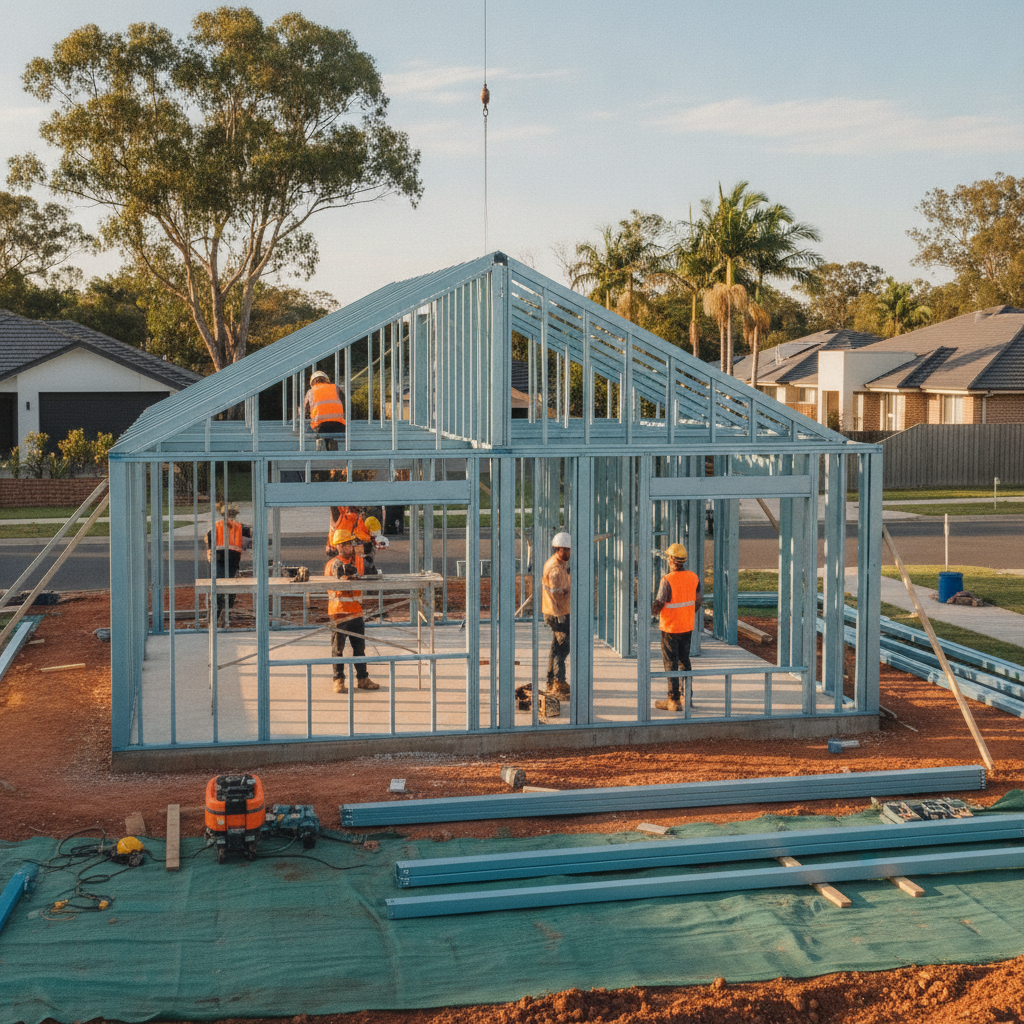
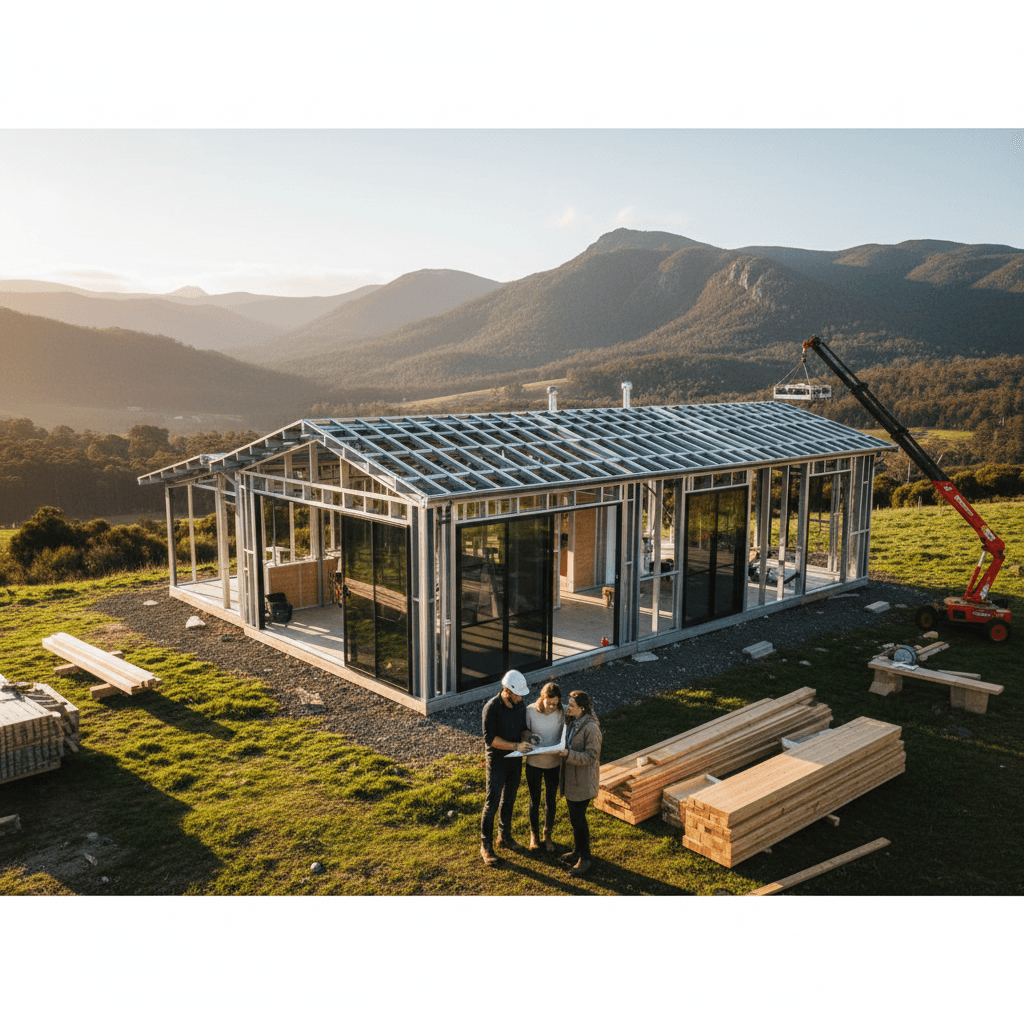
This is where many Australian owner builders find the most satisfaction. Because kit homes come with detailed assembly layouts, standing the wall frames and roof trusses is a very achievable DIY task for a small team of two or three people. Since steel is relatively light, you don't usually need a crane for single story residential builds, making it a perfect weekend project with a few mates.
Pro Tip: Invest in high quality cordless tools. Steel frames require specific fasteners and a good impact driver will make the process much faster and easier on your wrists.
Phase 3: Roofing and Cladding
Working at heights is always a risk, so assess your comfort level here. Many owner builders choose to install the wall cladding themselves but hire professional roofers. Cladding is highly visible, so it requires a steady hand and an eye for detail. If you are using corrugated steel or modern architectural panels, the precision of a steel frame makes it much easier to get those clean, straight lines that define a modern Australian home.
For the roof, a professional team can often have a house dried in within a day or two. This is vital for protecting the interior of your build from the unpredictable Australian weather. If you do tackle the roof yourself, ensure you have appropriate safety harnesses and scaffolding in place.
Phase 4: Windows and Doors
Installing windows and external doors is an excellent DIY task. Kit homes usually come with high quality aluminum units that are designed to fit perfectly into the steel openings. As long as you have a spirit level and some basic sealing knowledge, you can save a significant amount on installation fees here. Just remember that windows can be heavy and fragile, so never try to install large glass sliders alone.
Phase 5: Insulation and Internal Lining
Insulation is one of the easiest tasks for an owner builder to tackle. It is a simple, if somewhat repetitive, job that makes a massive difference to the energy efficiency of your home. Following the insulation, you might consider the internal plastering. While many DIYers attempt plastering, it is an art form. Getting a smooth, professional finish on joins and corners is harder than it looks. Many owner builders choose to hang the sheets themselves but hire a professional 'flusher' to do the final sanding and finishing.
The Golden Rule: Communication with Trades
If you are splitting tasks, for example, doing the frames yourself but hiring a plumber, communication is everything. Ensure your trades know exactly what you are providing and what you expect from them. Most Australian tradespeople are happy to work with owner builders, provided the site is clean, the materials are ready, and the previous work has been done to a high standard.
Always ask your trades for advice. A quick chat with your electrician before you start lining the walls can save you from accidentally covering up a wire or forgetting a power point location. These professionals see hundreds of homes, and their insight into layout and functionality is invaluable.
Essential Tools for the DIY Owner Builder
If you are going to be hands on, you need the right kit. For a steel frame build, your essential items include:
- A high quality impact driver and drill set
- Tin snips for minor cladding adjustments
- A 1200mm spirit level (and a smaller torpedo level)
- A string line and chalk line
- Magnetic tape measures
- Safety gear: Cut resistant gloves, eye protection, and sturdy boots
Conclusion
Becoming an owner builder in Australia is one of the most rewarding ways to secure your future. By choosing a steel frame kit, you are starting with a durable, precise, and user friendly foundation. The key to success is knowing when to grab the drill and when to pick up the phone. Focus your DIY efforts on the assembly, cladding, and internal fit out where your time can save you the most money, and leave the high risk or highly regulated tasks to the licensed experts. With a bit of patience and a lot of planning, you will create a home that is built to last, by the person who cares about it most: you.