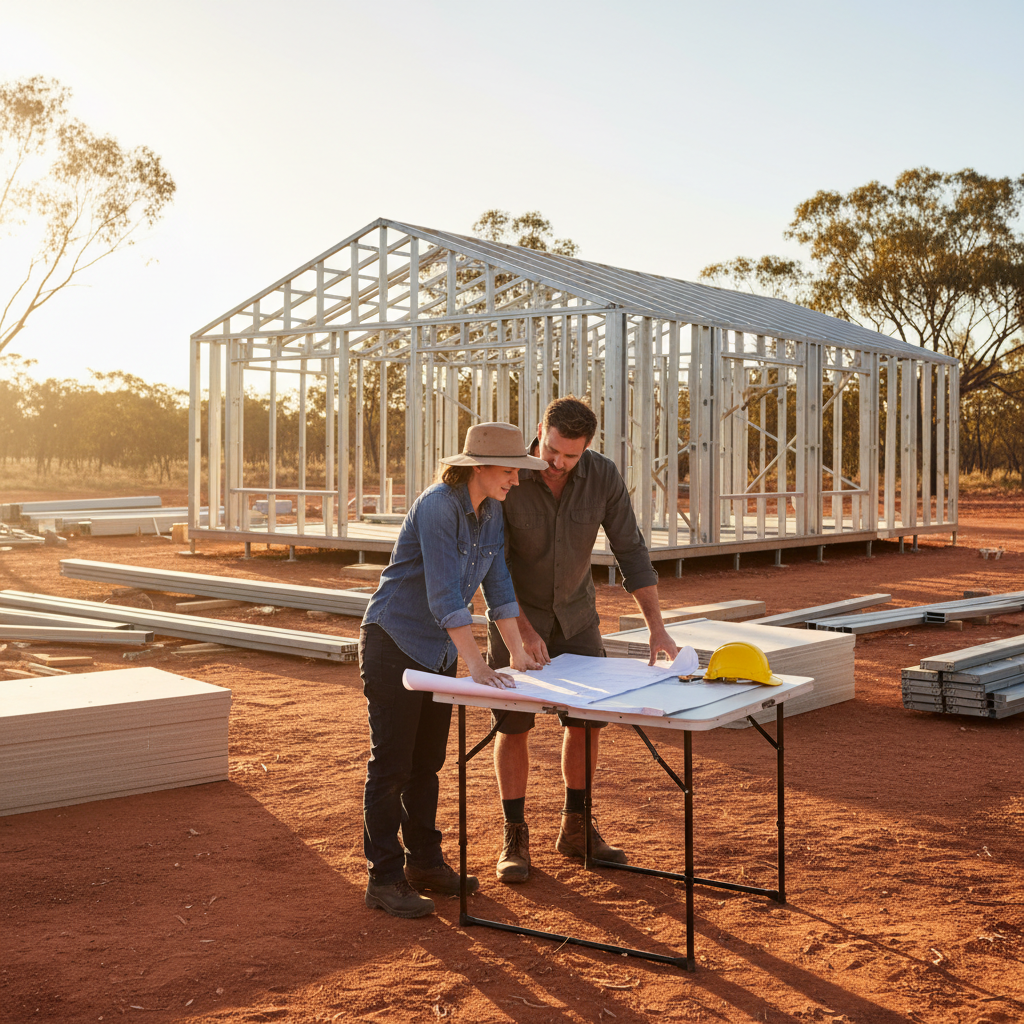
I have seen more owner-builder heartbreaks caused by a leaking shower than by any council planning dispute. You spend months picking out the perfect kit design, you've got your BlueScope TRUECORE steel frames up, and the site is finally looking like a house. Then, six months after moving in, you notice a damp patch on the hallway carpet or a swollen skirting board. By then, it's too late. The cost to retrospective fix a failed wet area is usually triple what it cost to build it in the first place because you're ripping out tiles, screed, and vanity units just to get back to the substrate.
The Ground Rules of AS 3740
In Australia, we follow AS 3740. It is the bible for waterproofing domestic wet areas. If you are building a kit home in a regional spot like Gympie or a coastal block in Nowra, the rules don't change. You've got to understand the difference between water-resistant and waterproof. A cement sheet wall is water-resistant. It won't fall apart when wet, but water will soak right through it like a sponge. The waterproof membrane is the actual barrier. It's the rubbery, messy goop you apply that actually keeps the liquid away from your steel frames and flooring. If you skip the membrane, you're basically relying on grout to save your house. Newsflash: grout is porous. It breathes. It lets water through eventual cracks.
Before you even open a tin of membrane, look at your floor. Most of our kit home customers are building on a concrete slab. You need to ensure that slab is cured. If you pour a slab and try to waterproof it fourteen days later, the moisture still escaping the concrete will blow the membrane right off the surface. It's called osmotic pressure. Wait at least 28 days. Longer if it's been raining. Use a moisture meter. If it reads over 4.5 percent, go have a beer and wait another week. It isn't worth the risk.
Prepping the Substrate is 90 Percent of the Battle
I can tell a bad waterproofing job before the first coat even goes on. It's all in the prep. You need to sweep, vacuum, and then vacuum again. Any bit of grit or saw dust left on the floor will create a pinhole in your membrane. Because steel frames are dead straight, your wall sheets should sit nice and flush, but check your corners. Use a bond breaker. This is a non-negotiable step. Buildings move. Even a rock-solid steel frame house will have micro-movements as the temperature swings from a 35-degree arvo to a 10-degree night. A bond breaker, usually a specific reinforced tape or a fillet of neutral cure silicone, allows the membrane to stretch over the joint rather than snapping. If the house moves 1mm and your membrane is stuck tight to the corner, it'll tear. Use the tape. Always.
The Screed Debate
Do you waterproof under the screed or over it? Or both? If you're an owner-builder doing it yourself, the answer is usually both, but particularly on top. If you only waterproof under a thick sand-and-cement bed, that bed becomes a giant wet sponge that sits under your tiles forever. It gets stagnant. It smells. You want the water to hit the tile, go through the grout, hit the membrane on top of the screed, and run straight down the puddle flange into the drain. That's how you keep a bathroom fresh for twenty years.
Choosing Your Weapons
Don't buy the cheapest bit of gear you find in the clearance bin. For a kit home, I usually recommend a Class III high extensibility liquid membrane. These things are like liquid rubber. They can stretch significantly without failing. Brands like Gripset or Ardex are staples in the Aussie trade for a reason. They work. You'll need a brush for the corners and a roller for the main flats. And don't be stingy. If the bucket says it covers 10 square meters, don't try to stretch it to 15. The thickness of the dry film (the DFT) is what actually stops the water. If it's too thin, it's just paint.
When you're working around your steel frames, ensure your wall sheeting is recessed properly into the shower base or set up with a proper water stop angle. An aluminum angle should be fixed to the floor across the doorway. This is your line in the sand. It stops water from 'wicking' through the bedding into the bedroom carpet. Glue it down with a serious adhesive, then membrane right over the top of it.
The Critical Areas People Forget
Everyone focuses on the shower. That's obvious. But what about the tap penetrations? We see heaps of blokes forget to seal the actual holes where the mixer comes out of the wall. Water runs down the tile face, goes behind the handle cover, and leaks straight into the wall cavity. Use pre-made pipe sleeves. They're cheap rubber gaskets that slide over the pipe. You membrane them into the wall. It’s a five-minute job that prevents a rotten wall plate three years down the track. Plus, it makes the certifier happy.
Vertical heights matter too. In a shower, you need to go up at least 1800mm from the floor. But don't just stop at the splashback in the rest of the bathroom. If you've got a free-standing bath, you've got to treat that whole area like a wet zone. Kids splash. A lot. If that water gets behind the skirting, it'll find a way to the structural elements. Even with the rust-resistant coatings on modern steel frames, you don't want standing water sitting in your floor track. It's just bad practice.
Testing Your Work
Once you've finished your two or three coats and the color has changed to that dark, cured look, don't just start tiling. Perform a flood test. Plug the drain, fill the shower base with an inch or two of water, and mark the level with a pencil. Leave it for 24 hours. If the level hasn't moved, you're golden. If it has, you've got a leak you need to find now while it's easy to fix. This is the difference between a pro and an amateur. A pro wants to find the leak before the tiles go down. An amateur hopes there isn't one.
Because kit homes are frequently built in locations without easy access to massive trade teams, you're the quality control. Take photos of every stage. Take a photo of the bond breaker, the first coat, the second coat, and the flood test. Your council inspector or private certifier will love you for it. Most 'compliance' issues come from a lack of evidence. If you've got the photos showing you followed AS 3740 to the letter, you'll sail through your final inspection.
Waterproofing isn't glamorous. It’s messy, it smells a bit like ammonia, and nobody ever sees your hard work once the tiles are laid. But it is the single most important technical skill you'll deploy on your kit home build. Get it right, and your home will stay solid and dry for the next fifty years. Mess it up, and you're just building a swimming pool inside your walls. Take your time, buy the good stuff, and don't be afraid to put on an extra coat for luck.