I've seen it a hundred times. A bloke spends six months agonizing over a floor plan, arguing with his partner about where the walk-in pantry goes, only to treat the roof as an afterthought. They just tick 'Surfmist' on the order form and call it a day. That's a massive mistake. Your roof is the only thing standing between you and a 42-degree day in Dubbo or a salt-laden southerly buster on the coast. In the world of kit homes, the roof is your primary shield. If you get it wrong, you're looking at skyrocketing power bills and a house that feels like a sauna.
The Steel Factor: Why We Use COLORBOND
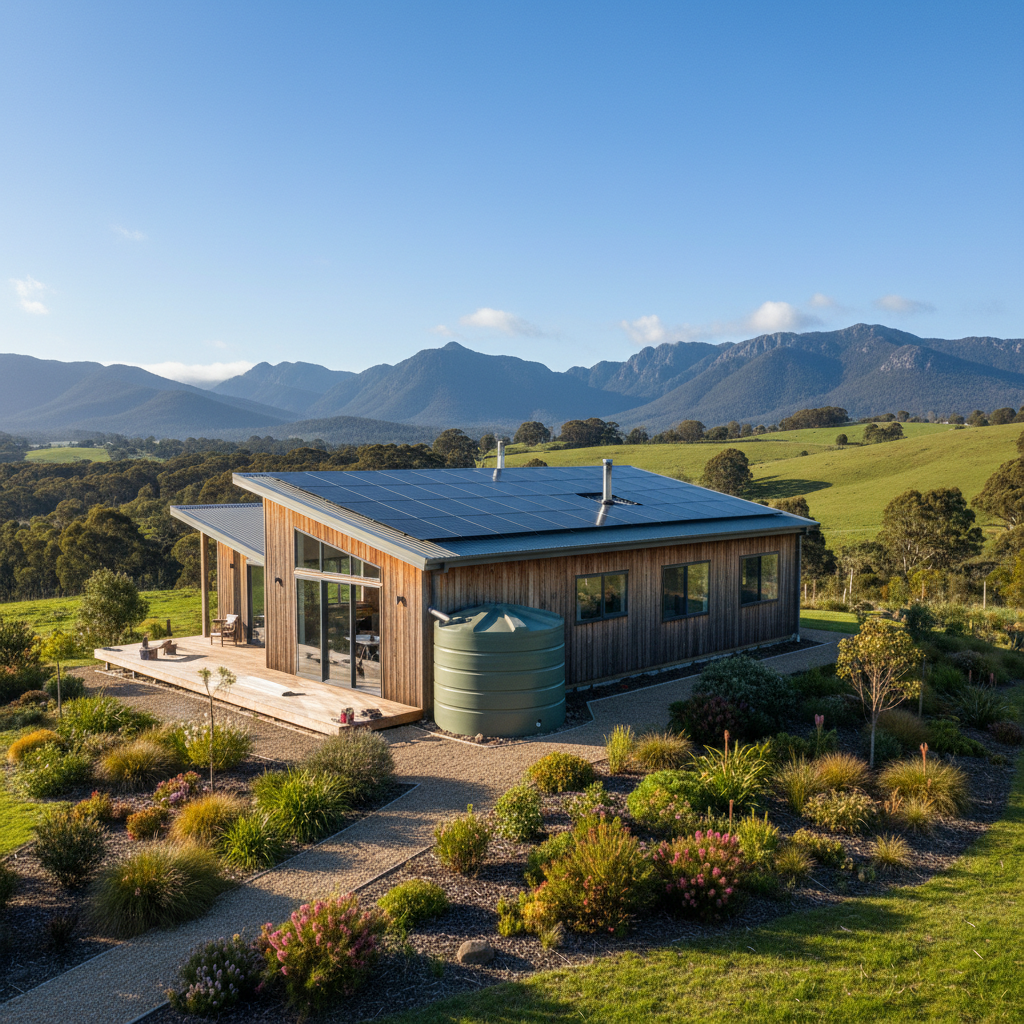
Down here, we deal with some of the harshest UV on the planet. I don't care what the brochures say, concrete tiles are heavy, they crack, and they hold onto heat like a brick in a kiln. That's why we stick with COLORBOND and TRUECORE steel for our kits. It's light. It's tough. And it reflects heat way better than traditional materials if you pick the right finish. When you're an owner-builder, weight matters too. Lugging tiles up a ladder is a young man's game and a recipe for a blown-out back. Screwing down corrugated sheets is faster, safer, and stays watertight in a way tiles just can't match when the wind starts howling at 90 clicks an hour.
Coastal Life vs. The Red Dust
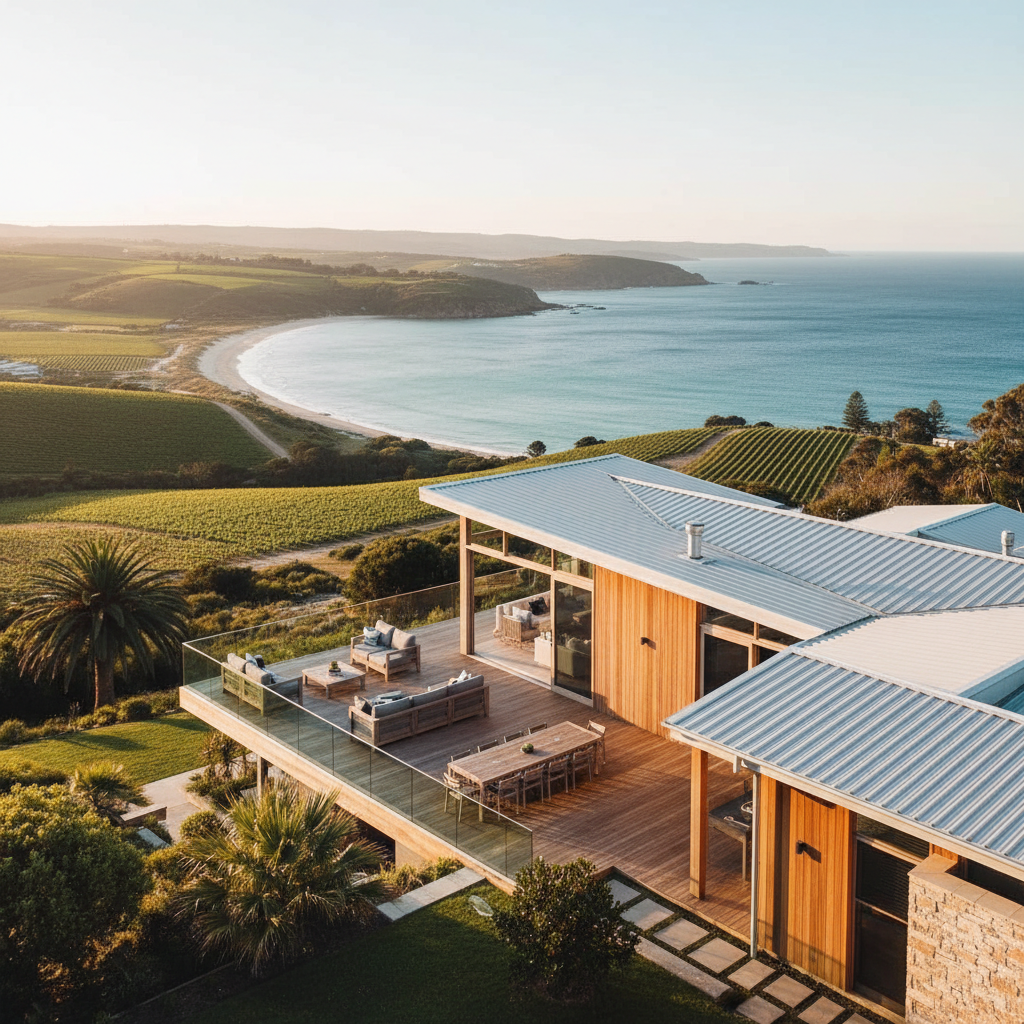
Where you're building changes everything. If you're within a stone's throw of the ocean, say in a spot like Gerringong or the Sunshine Coast, you can't just use standard grade steel. The salt air will eat it for breakfast. You need to be looking at COLORBOND Ultra. It's got a thicker coating designed specifically for marine environments. I've seen standard zincalume look like Swiss cheese after five years because someone tried to save a few bucks on a coastal block. Not worth it.
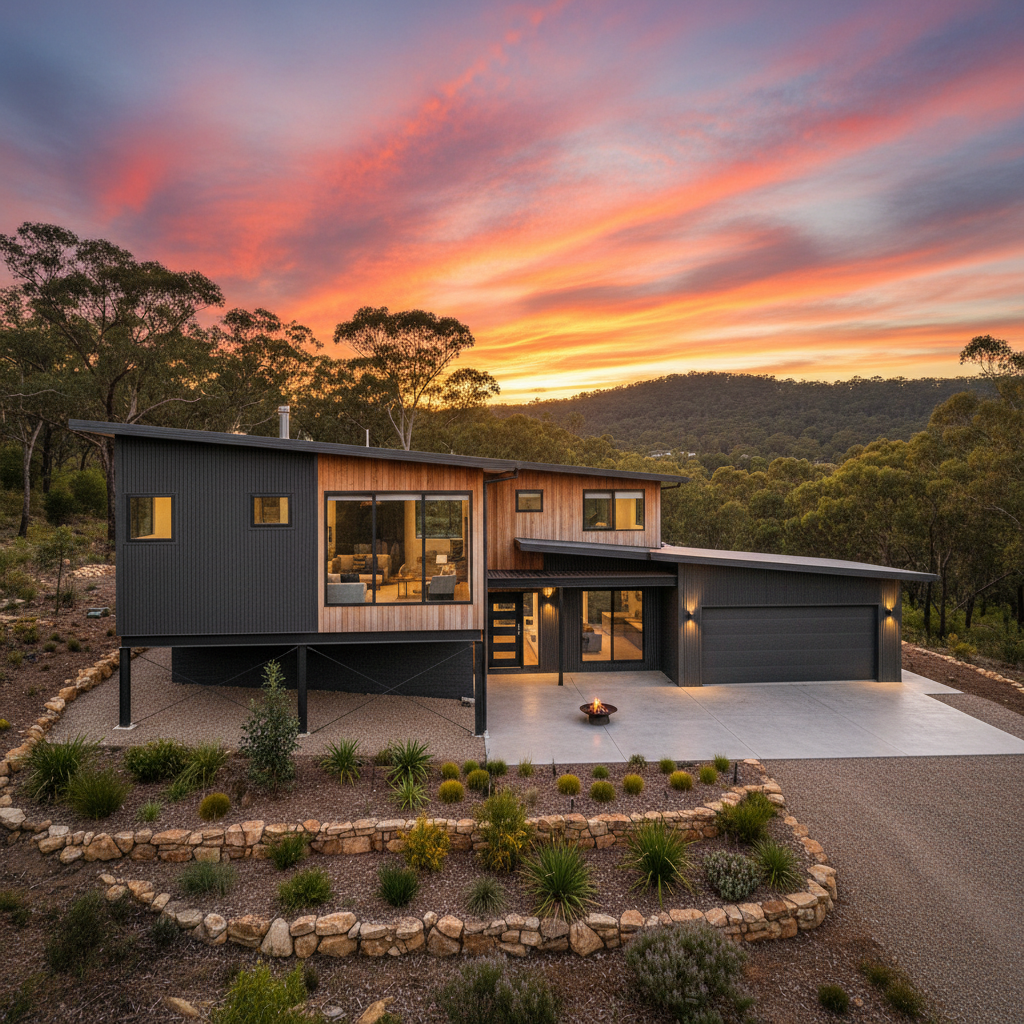
On the flip side, if you're out west where it's dry and dusty, your main enemy is thermal gain. Dark roofs are a disaster out there. I reckon if you choose 'Monument' or 'Night Sky' for a kit home in the Riverina, you're basically signing a contract with the local power company to pay them for the rest of your life. Stick to the lighter stuff. Classic Cream, Surfmist, or even Paperbark. It makes a tangible difference you can feel the second you walk through the door on a February arvo.
The Bushfire Reality (BAL Ratings)
We can't talk about Australian building without mentioning bushfires. If your block has a BAL (Bushfire Attack Level) rating, your roof choice is regulated. Because our kits use steel frames and metal cladding, you're already ahead of the curve. Steel doesn't burn. But the roof profile matters. You want to make sure your ridges and valleys are properly capped and sealed with metal mesh or fire-rated seals. Embers are tiny but they're deadly. They find their way into any gap, no matter how small. When you're assembling your kit, don't rush the flashing. Do it once and do it right.
Pitch Matters More Than You Think
People love the look of a flat roof. It's modern. It's sleek. But in the tropics? It can be a nightmare. If you're building up north near Cairns or Darwin, you want a pitch that can shed a decent downpour in seconds. We're talking 100mm of rain in an hour. A steep pitch helps, but you also need to oversize your gutters. Standard gutters will overflow and back up into your eaves before you can say 'crikey'. We usually recommend at least a 10 to 15-degree pitch for most kit designs unless there's a specific reason to go flatter. It gives you more 'ceiling' space for better insulation too.
Insulation: The Secret Sauce
A metal roof by itself is just a sheet of steel. What makes it a home is the stuff underneath. When you're putting together your kit, do not skimp on the anticon blanket. This is a layer of glasswool insulation faced with a foil membrane that sits directly under your roof sheets. It does two jobs. One: it stops condensation from dripping off the bottom of the cold steel into your ceiling. Two: it's your first line of defense against radiant heat.
I always tell owner-builders to go for the 55mm or even 75mm blanket if they've got the budget. It also dampens the sound of rain. Some people love the sound of rain on a tin roof, but when it's a tropical deluge at 2 AM, it can sound like a drum kit being thrown down a flight of stairs. The blanket muffles that racket.
The Owner Builder Trap: Laps and Screws
Here is a trade tip that'll save you a world of hurt. When you're laying your roof sheets, always, and I mean always, check the prevailing wind direction. You want to lap your sheets away from the wind. If the wind usually comes from the south, you start laying your sheets from the north plate move south so the 'join' faces away from the breeze. If you lap them the wrong way, heavy wind can actually drive water up under the sheet and into your roof cavity. It sounds like a small thing but it's the difference between a dry house and a soggy ceiling after a storm.
And use the right screws. We supply 14-gauge tek screws with a proper EPDM washer. Don't over-tighten them until the washer squishes out like a pancake. Just snug enough to seal. If you over-torque them, you perish the rubber, and three years down the track, you'll have a mysterious leak that's a nightmare to find.
Why Steel Frames Make It Easier
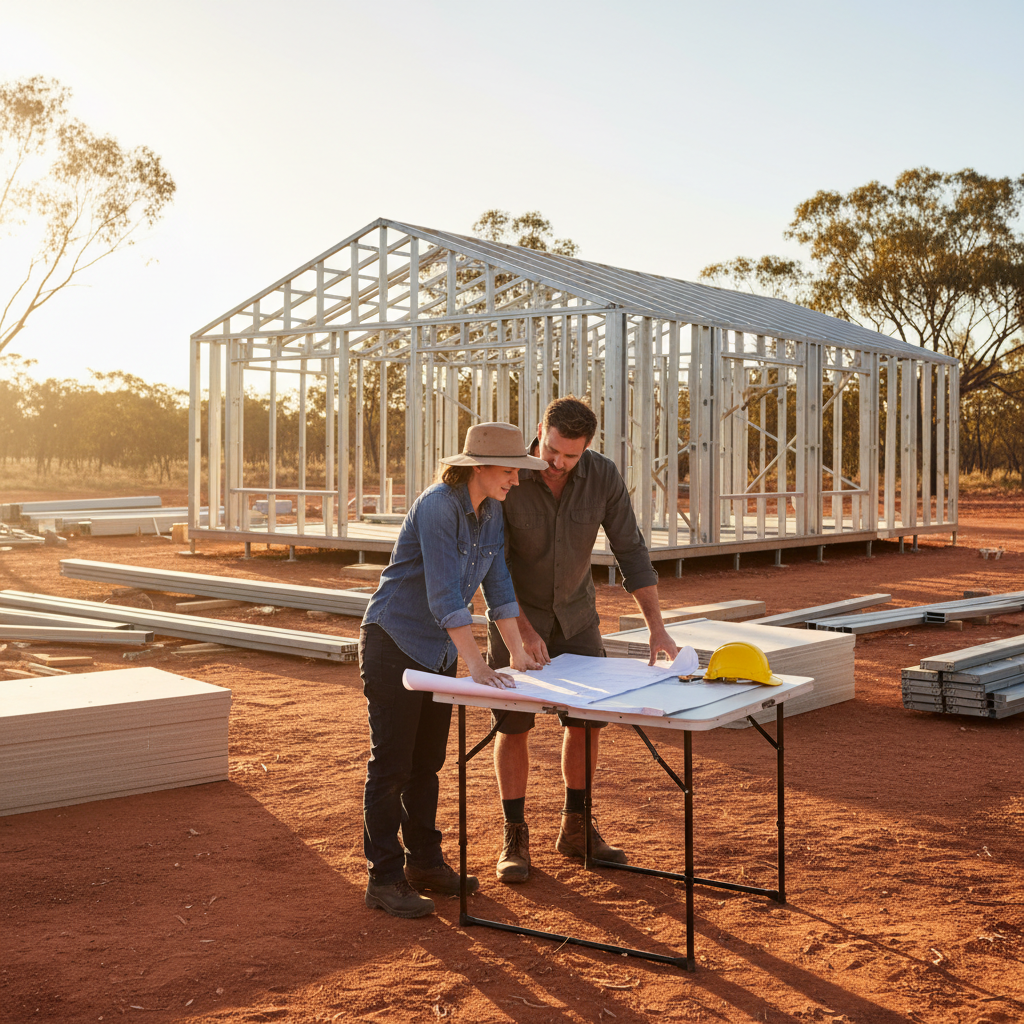
The beauty of the steel frames we use (that TRUECORE stuff from BlueScope) is that they're dead straight. Timber twists. It bows. You get a kit house on a slab and the roof rafters are perfect to the millimeter. This makes your battens easier to lath out and your roof sheets sit flatter. There's no 'oil canning' (that wavy look on metal roofs) because the structure underneath is true. Plus, for anyone building in Queensland or WA, termites won't touch the frame. They can eat your skirting boards if they want, but the house isn't going anywhere.
Final Thoughts for the Savvy Builder
Choosing your roof is a balancing act between aesthetics, local council rules, and common sense. Don't just follow the trends. Think about where your sun hits, how the wind blows across your clearing, and what your maintenance plan looks like. A steel roof is pretty much set-and-forget for 20 years if you wash the salt off once a year. It's the smart choice for anyone tackling a build themselves because it's forgiving. Get your pitch right, get your insulation sorted, and pick a color that won't cook you alive in summer. You'll thank me when the first heatwave hits and your air con isn't screaming for mercy.