I've seen it a dozen times. A bloke gets his council approval, the site is cleared, and he's chomping at the bit to get that first steel floor system down. He's thinking about the BlueScope TRUECORE frames arriving on the truck, but he hasn't spent five minutes thinking about what happens if a freak windstorm clips the frames while they're half-bolted. Or worse, if a delivery driver trips over a stack of cladding and decides to sue. Insurance is the most boring part of being an owner builder, but it's the only thing that'll keep you from losing your shirt.
Most people think their standard home and contents policy covers a construction site. It doesn't. Not even close. You're basically running a small business the moment you sign that owner builder permit, and you need to protect yourself accordingly. This isn't just about ticking a box for the bank, either. It's about making sure that if things go south on site, you aren't paying for it for the next thirty years. Because trust me, things go wrong. Regularly.
The Big One: Construction and Public Liability
Construction and Public Liability insurance is the absolute baseline. Think of it as your safety net for the physical stuff and the people. If you're building a kit home, you've got a lot of high-value materials sitting around. We're talking about your steel frames, your roofing sheets, and your windows. If a fire rips through the site or someone decides your stack of insulation looks good in the back of their ute at 2am, Construction insurance covers the loss. It usually covers the dwelling itself while it's under construction, too.
But the Public Liability side is actually more important. If a neighbor's kid wanders onto your site on a Sunday arvo and falls into a footings trench, you are liable. If a subcontractor gets hurt because your site isn't managed properly, they'll come after you. You need a policy that offers at least $5 million in liability, though most trades I know won't even step on a site unless it's $10 or $20 million. It sounds like a massive number until you look at legal fees and medical bills in Australia. So, don't be tight with the premiums here.
The Owner Builder Warranty Trap
This is where it gets tricky. In most states, like Victoria or NSW, you have specific obligations regarding Domestic Building Insurance (DBI) or Owner Builder Warranty if you decide to sell the house within a certain timeframe (usually six or seven years). If you build your kit home, live in it for two years, and then decide to move to the coast, you can't just slap a 'For Sale' sign on the lawn and walk away. You'll likely need to provide the buyer with a warranty policy that protects them against structural defects you might have caused. It's an extra hoop to jump through, but failing to arrange this can kill a house sale faster than a termite infestation in old pine rafters.
Because we use steel frames, the structural integrity conversation is a bit easier. Steel doesn't warp, twist, or rot. That gives you a bit of peace of mind when it comes to long-term warranty issues. But the insurance covers the installation too, so if you didn't bolt the frames down to the slab as per the engineering specs, that's on you. Always keep your certificates of compliance from your plumber and sparky. You'll need them for this insurance later.
What About Your Labor?
Voluntary Labor insurance is a niche one but worth a look. If your mates come over on a Saturday to help you stand the frames or screw off the roof sheets, they aren't covered by WorkCover. They're doing you a favor, but if they fall off a ladder, you're in a mess. Some policies allow you to add 'Voluntary Workers' cover. It won't pay them a wage, but it'll help cover their medical costs. It's a small price to pay to make sure you don't lose a friendship over a broken ankle.
Don't assume your subbies have their own insurance either. I always tell owner builders to ask for a Certificate of Currency before any trade starts work. I don't care if it's the guy digging the holes for the stumps or the fella laying the tiles. If they can't show you a current policy, they don't set foot on your dirt. If they cause damage to your steel frames while they're working, you want their insurance paying for the replacement, not yours.
Specific Risks on an Owner Builder Site
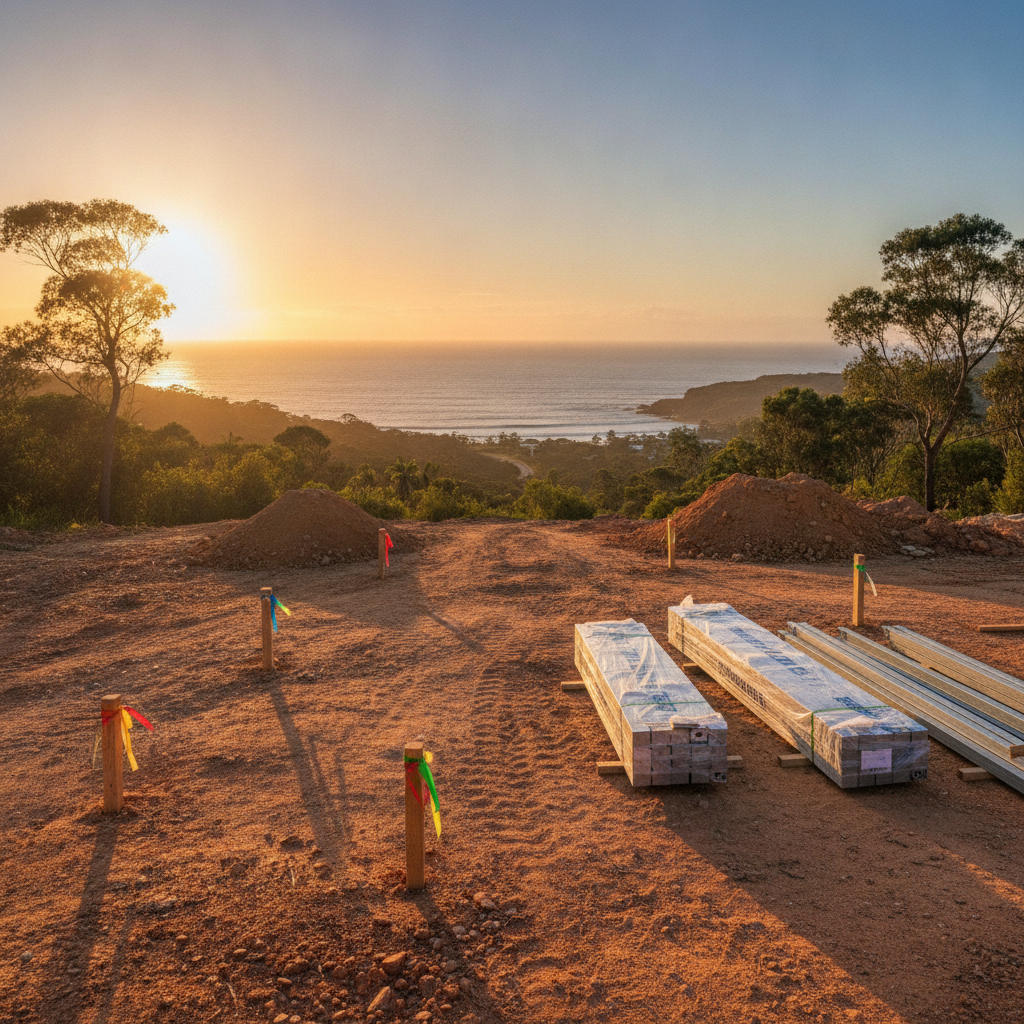
Let's talk about some real-world scenarios. We had a guy up in the hills who had his kit delivered. He had the roofing and the cladding tucked away under some tarps. A week of heavy rain turned his site into a swamp, and a small landslide shifted his materials into a gully. Because he had his Construction insurance sorted, he got the materials replaced. Without it? He'd have been out twenty grand before he even had a wall standing.
Then there's the theft issue. Site theft is rampant in some parts of Queensland and WA. People see a kit home being built and they see an open-air hardware store. They'll take your tools, your copper piping, and even your windows if they're not secured. Make sure your policy covers 'Theft from Open Air' and not just 'Theft following Forcible Entry'. If your kit isn't in a locked shed, forcible entry won't apply, and the insurer will laugh you out of the room.
Managing Your Risk with Steel Frames
One of the perks of building with steel is that it's non-combustible. When you're talking to your insurance broker, tell them you're building with BlueScope TRUECORE steel. In some high-risk bushfire zones (BAL-40 or BAL-FZ), the fact that your house won't act as fuel for a fire can sometimes work in your favor. It won't always lower your premium, but it makes the site safer during construction. Since you aren't storing stacks of timber that can catch a spark from a grinder, you're already ahead of the game.
But remember, the insurance doesn't just cover the frame. It covers the site. If you've got piles of cardboard, plastic wrapping from the insulation, and timber pallets lying around, you've created a fire hazard. Keep your site clean. An insurer can actually deny a claim if they reckon you've been negligent with site housekeeping. It's a bit of a pain, but spend twenty minutes at the end of every day tidying up. It's safer for you and better for your wallet.
The Paperwork Trail
Insurance isn't a 'set and forget' thing. You need to keep a diary. Take photos of the site every Friday afternoon. Take photos of how you've secured your materials. If you ever have to make a claim, the first thing the assessor is going to ask for is proof of how the site was maintained. If you can show them a photo of your neatly stacked steel frames and your locked site fence, they'll have a much harder time knocking back your claim. I've got one mate who records a three-minute video on his phone every time he leaves the site for the weekend. It's clever. It shows the fence was locked and the gear was covered.
Also, check the expiry dates. Building a kit home usually takes longer than you think. If you're doing the work yourself on weekends, that 12-month policy might run out before you've finished the fit-out. Mark the expiry date on your calendar with a big red circle two months out. Renewing a policy is easy; trying to get a new one halfway through a build is a nightmare because most insurers don't want to take on a half-finished project.
So, get your insurance sorted early. Don't wait until the slab is poured. You want cover from the moment you own the materials or the moment you start site works. It’s a few hundred bucks usually, maybe a couple of grand for a big project, but it’s the only way to sleep properly when the wind starts howling and you’re at home thinking about your unfinished house standing out in the weather.