The Great Shift Inland
It used to be that the dream of a rural block was reserved for retirement or the odd weekend escape. Not anymore. I've spent the last decade watching the shift, but since 2020, the floodgates have opened. People are realizing they don't need to be stuck in a 10km radius of the Sydney or Melbourne CBD to hold down a career. Reliable satellite internet changed the game. Now, someone working in fintech or project management can sit on a deck in the Mudgee hills or the Sunshine Coast hinterland and do their 9-to-5 just as well as they did in a high-rise office. But here's the rub. Finding a builder who'll trek out two hours from a major town to put up a house is a nightmare. They'll charge you a fortune for travel time, or they just won't show up. That's why kit homes Australia wide are seeing a massive tech-driven surge. You get the materials delivered to your gate, and you take control of the timeline yourself.
When you're building out past the last street light, logistics are everything. Traditional construction often fails in remote spots because of waste. A tradie forgets a box of specialized screws and that's half a day gone driving back to the nearest hardware store. With a kit, the components are pre-cut and pre-drilled. Everything is calculated. We use BlueScope TRUECORE steel for our frames because it wins on weight and durability. You don't want a heavy timber frame sitting in the dirt getting wet while you wait for a plumber. Steel doesn't warp. It doesn't rot. And if you're in a high BAL (Bushfire Attack Level) zone, which most of these new rural blocks are, it's a massive advantage over older building methods.
The Reality of the Rural Owner Builder
Doing it yourself isn't just about swinging a hammer. Being an owner-builder in Australia is mostly about being a dead-set legend at project management. You'll spend more time on the phone with the local council or chasing up a concrete truck than you will on a ladder. Before you even think about ordering a kit, you've got to suss out your site access. We had a client near Bega who forgot to check the turn-in for a semi-trailer. The truck carrying his whole house couldn't make the bend on the dirt track. He had to hire a smaller hiab and double-handle every single steel pack. Expensive. Tiring. Avoidable. Check your gate widths. Check your overhead branches. Ground prep is your next big hurdle. Don't just tick the 'slab' box. You need to know if you're on reactive clay or rocky ground because that determines your footings. Get a proper soil test done before you even look at floor plans.
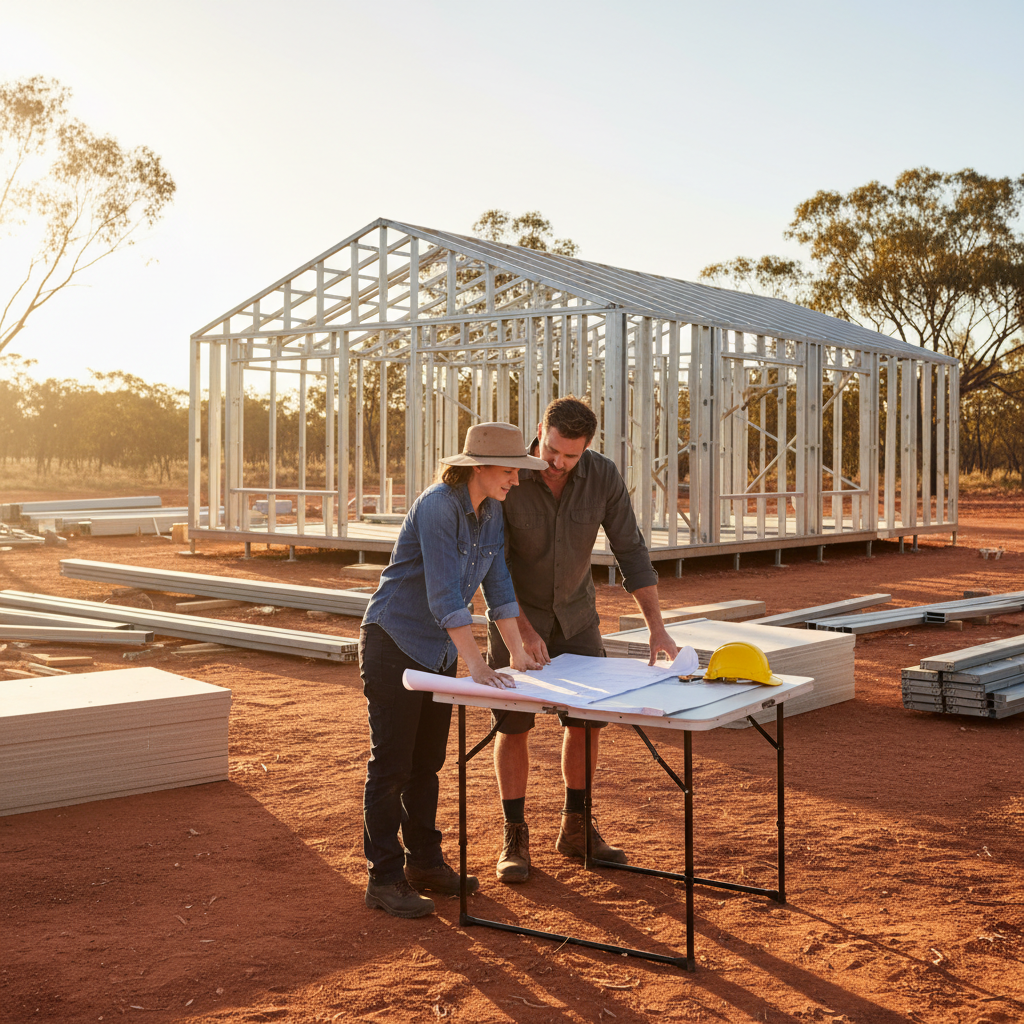
Once your slab is down and those steel frames arrive, the fun starts. But don't get cocky. Even with pre-drilled holes, you need to own a decent impact driver and a laser level. Accuracy is your best mate here. If your bottom plates aren't perfectly square, you'll be fighting the roof trusses for a week. I always tell people to start with the smallest frame first. Get your rhythm. Understand how the bracing works. By the time you get to the main living area, you'll be flying.
Trends We Are Seeing in Regional Design
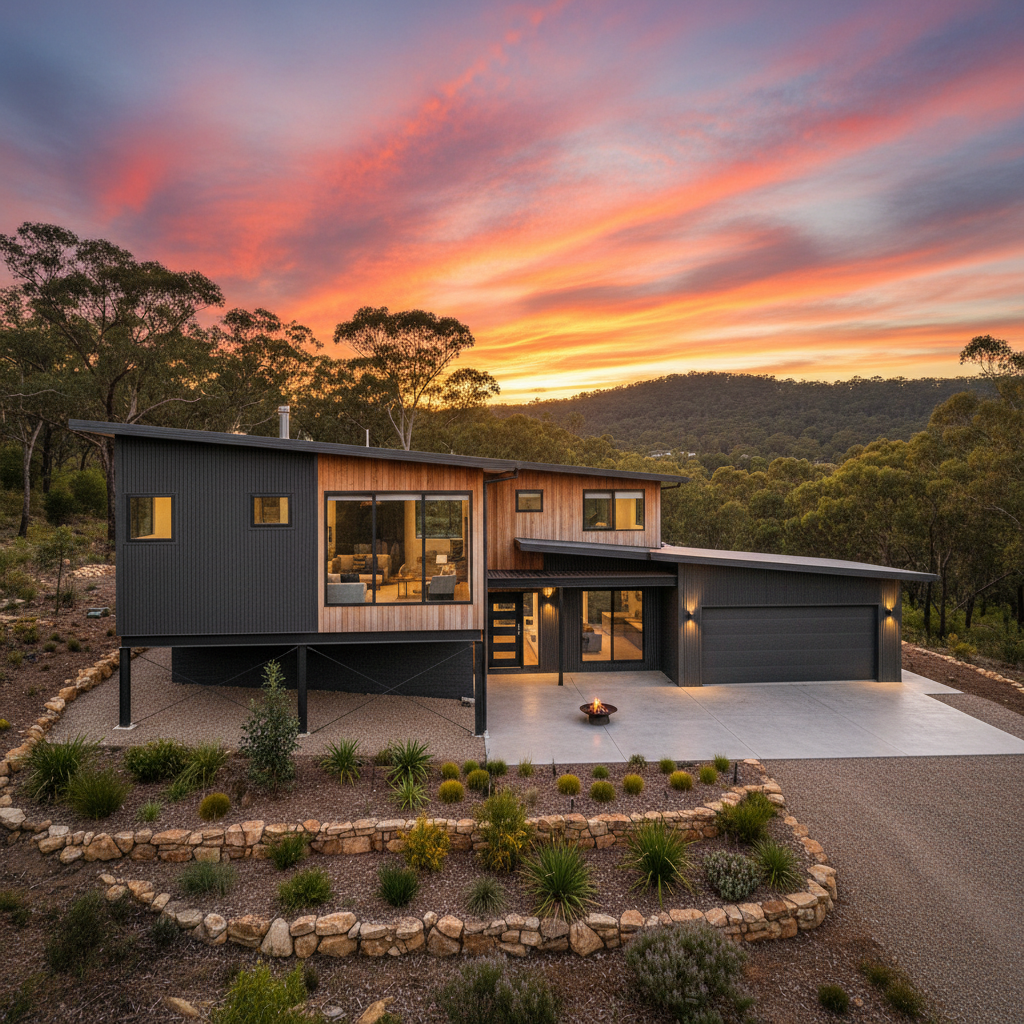
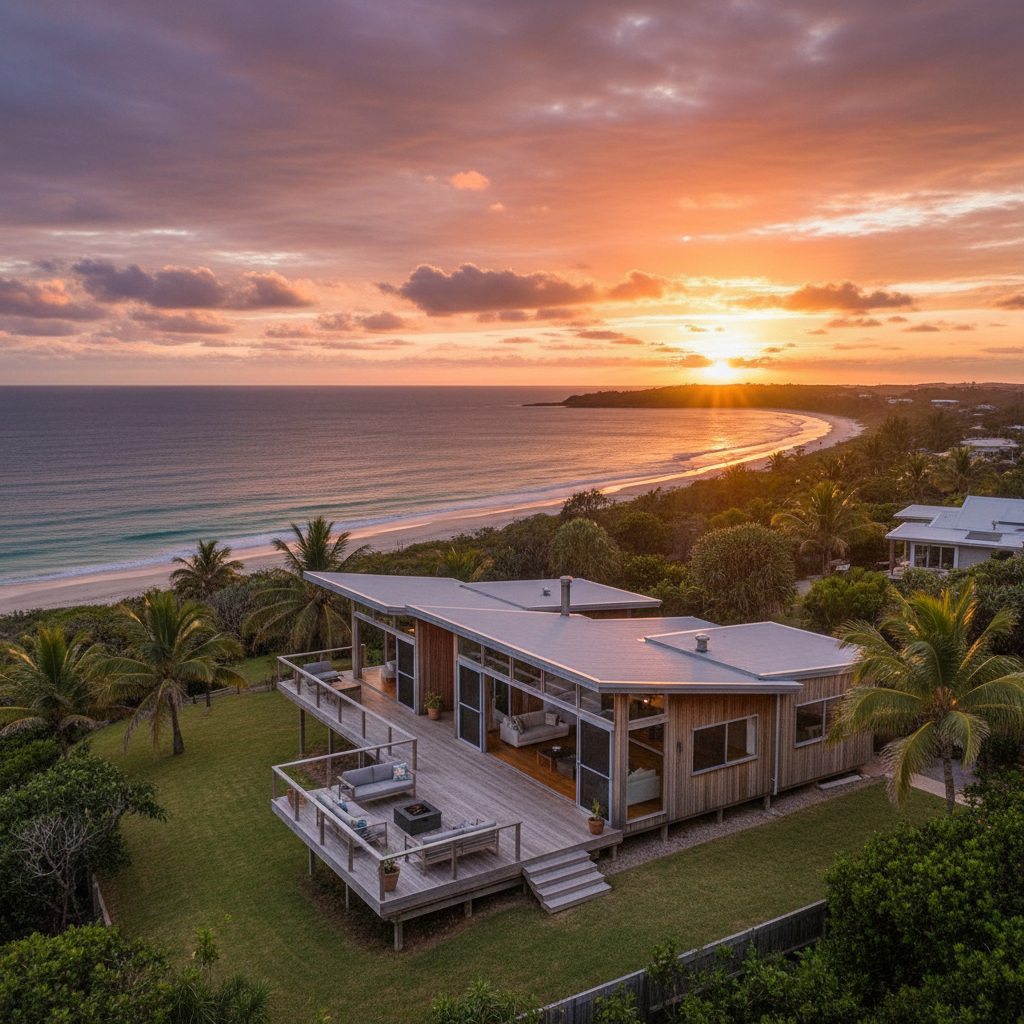
The look of the Australian kit home has shifted away from the basic shed-with-windows vibe. People are getting clever. We're seeing a lot of demand for split-level designs that follow the natural contour of the land rather than flat-benching a whole hillside. It's better for the environment and frankly, looks much classier. Wrap-around verandahs are non-negotiable for most. They aren't just for drinking a beer at sunset either. They provide massive thermal protection for the house. Shading your windows in a Queensland summer or a dry NSW heatwave can drop your cooling needs significantly. Since we use BlueScope steel for the roofing and cladding as well, you can play with different profiles. A sleek nail-strip or standing seam look is very popular for people wanting that modern farmhouse aesthetic without the $800k price tag of an architect-designed build.
Steel Frame Benefits in the Bush
Termites. They are the silent killer of regional Australian homes. In places like the Top End or even parts of rural Victoria, they'll eat a timber frame before you've even finished the internal fit-out. Steel frames eliminate that stress entirely. They're also dead straight. No bows, no knots. When you go to hang your plasterboard, you're not going to find a stud that's twisted 10 degrees since it was delivered. Another thing people overlook is the weight. Steel is lighter than seasoned timber. This means it's easier to man-handle into position if you've only got a couple of mates helping you out on a Saturday morning.
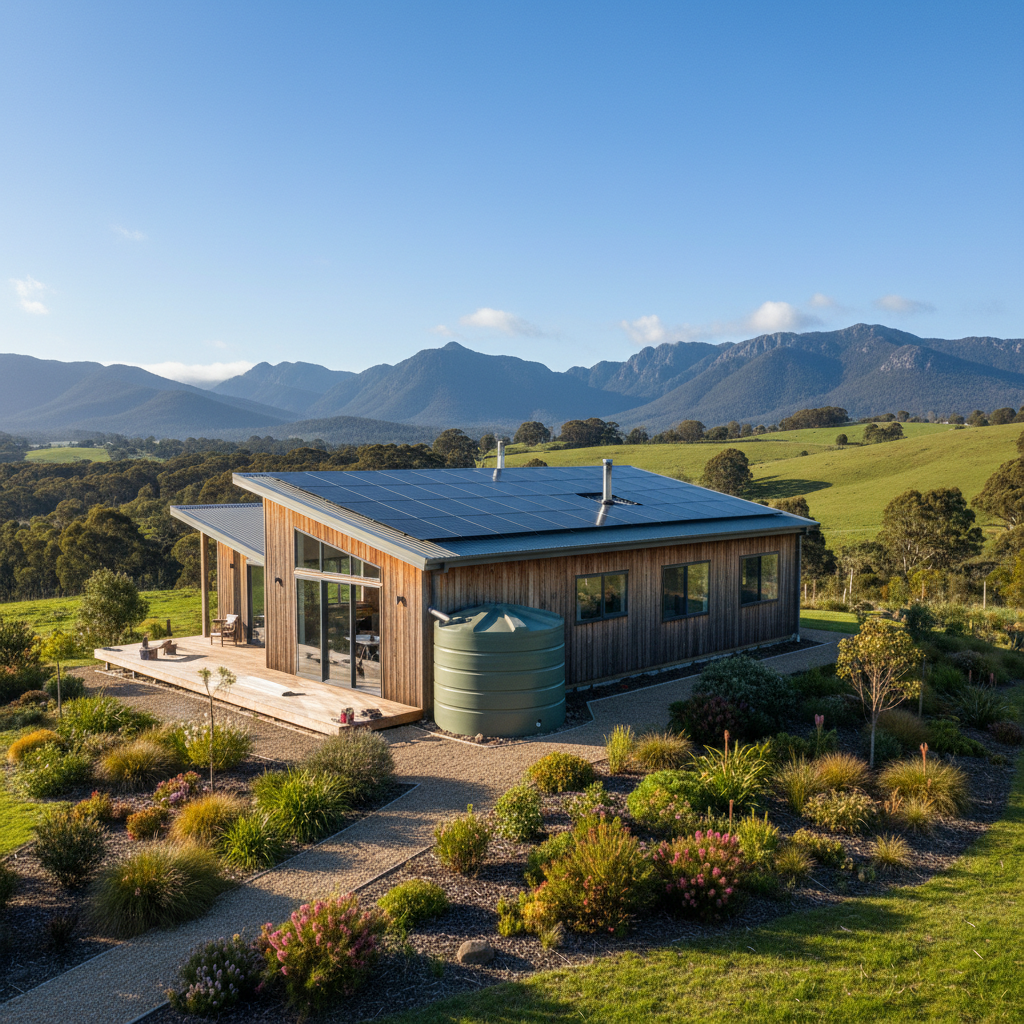
But it's not all sunshine. You've got to think about your services. Remote blocks often mean no town water and no sewer. You'll be looking at poly or steel water tanks and an AWTS (Aerated Wastewater Treatment System). Think about where these sit in relation to your kit home. You don't want your pump screaming right outside your main bedroom window while you're trying to sleep. And solar? If you're going off-grid, make sure your roof orientation is optimized for your panels. Your kit provider should be able to mirror the floor plan to get the best northern sun exposure. Don't just settle for what's on the brochure page.
Practical Tips for the Planning Phase
- Get your Owner Builder permit early. Each state has different rules. In NSW, you'll need to do a short course. In VIC, it's a bit different. Don't leave it until the truck is backing down the driveway.
- Mark out your floor plan on the dirt with some stakes and string. Walk through it. Is the kitchen actually big enough? Can you fit that oversized fridge you love? Seeing it in 1:1 scale on your actual block changes your perspective.
- Talk to your neighbors. If you're new to a rural area, they'll know who the reliable local sparkies and plumbers are. Word of mouth is the only way to hire tradies in the bush.
- Order extra insulation. The kits come with the basics, but if you're in a cold spot like the Snowy Mountains or a furnace like Roma, spend the extra few hundred bucks to upgrade your R-value. You'll thank yourself in three years when the power bill arrives.
The reality is that building a kit home is a massive undertaking. It'll be dusty. You'll get sore hands. You'll probably lose your mind trying to find a specific bag of bolts at 4pm on a Friday. But there's something about standing back and looking at a finished roofline that you put up yourself. It's a different level of satisfaction. Plus, you actually know what's behind the walls. You know it's done right because you did it. Most of the folks we work with aren't professionals, just people who are tired of the city squeeze and want a piece of dirt to call their own. With a bit of common sense and a decent toolkit, it's a goal that's actually within reach for the average Aussie.