The Reality of Building on the Blacksoil
Most people get the bug for a rural retreat while standing on a bare patch of dirt in the middle of nowhere, squinting against the sun and trying to figure out where the best breeze comes from. It starts with a dream of a wide veranda and ends with a pile of paperwork from the local council. But that middle bit, the design phase, is where you actually win or lose the game. Building a kit home on acreage isn't just about picking a floor plan from a website. It's about figuring out how that house is going to survive a 40-degree February afternoon in Dubbo or a freezing morning in the Southern Highlands without costing you a fortune in cooling or splitting every time the clay soil shifts under the slab.
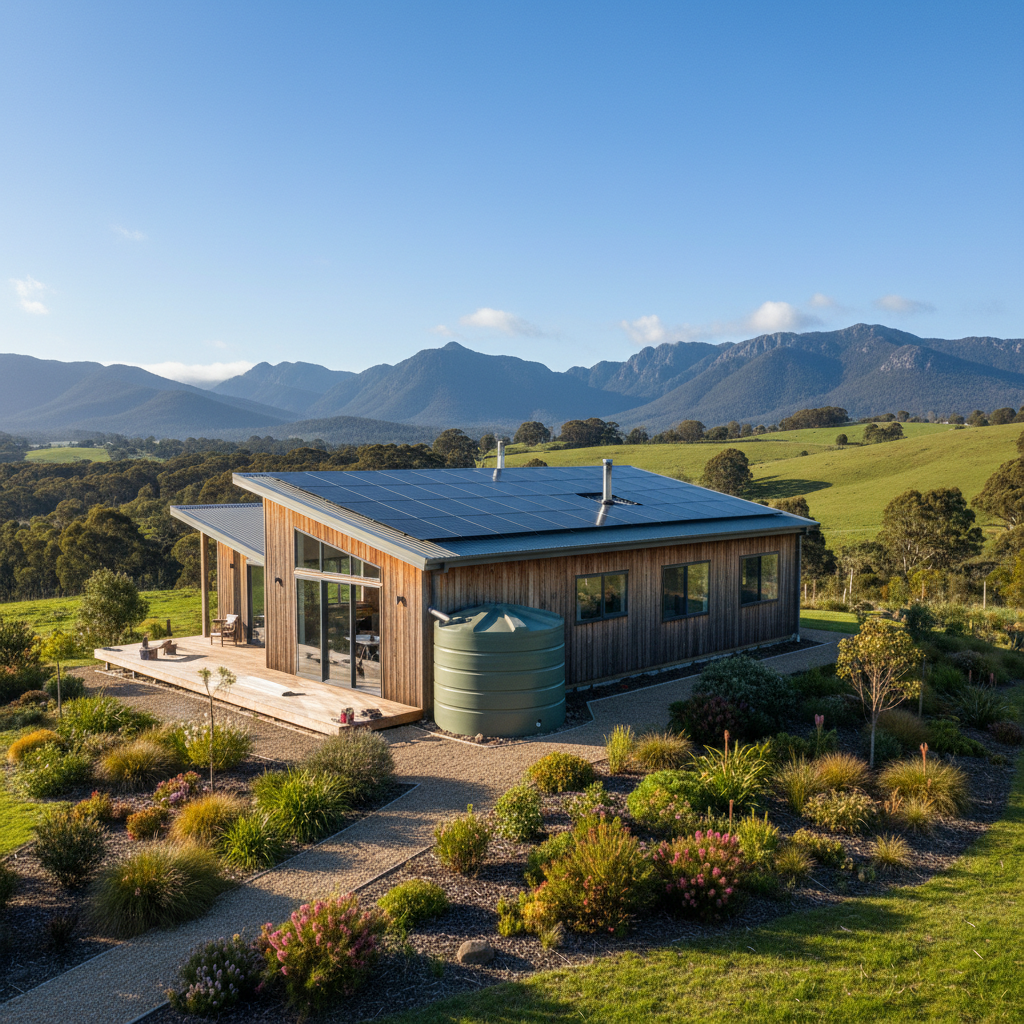
I've seen too many owner-builders get sucked into the trap of picking a design that belongs in a tight suburban street. When you've got space, use it. A rural site gives you the luxury of orientation. If you don't face your living areas north, you've failed before you even started. It sounds basic, but you'd be surprised how many people just plonk the house down parallel to the front gate because it looks right on the site plan. Don't do that. Face those big glass doors north, soak up that winter sun, and let the eaves do the heavy lifting in summer. It makes a massive difference to how the place feels when you're finally sitting there with a cold drink after a day of fencing.
Steel Frames and the Australian Landscape
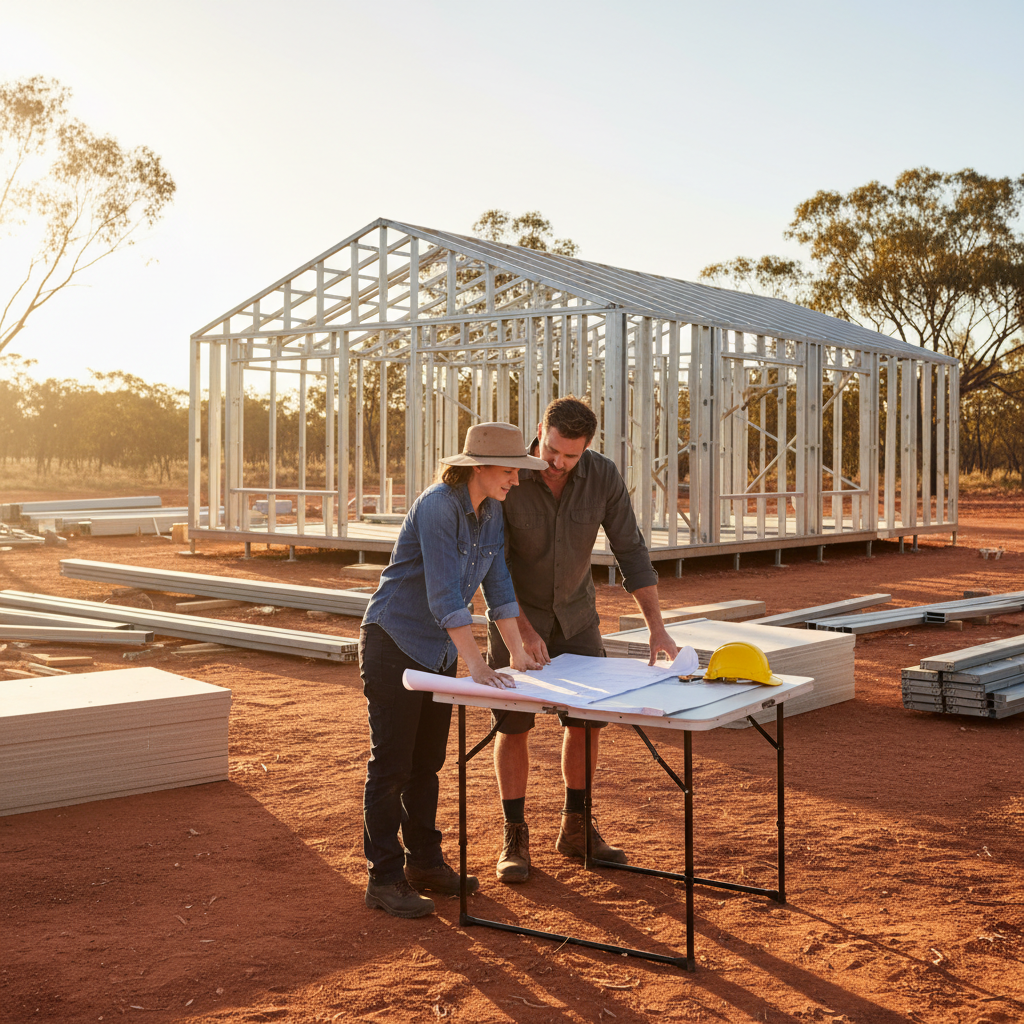
If you're building out in the scrub, termites are a fact of life. They aren't a possibility; they're an inevitability. That's why we stick with TRUECORE steel from BlueScope. It's not just about the bug-proof nature of the stuff, though that's a huge weight off your shoulders. Steel is dead straight. It doesn't warp, twist, or shrink as the moisture leaves the timber. When you're an owner-builder doing your own internal fit-out, having perfectly plumb walls makes life ten times easier. Ever tried to hang a long run of kitchen cabinets on a wonky timber stud? It's enough to make you want to throw your level into the scrub. Plus, steel is light. When the delivery truck drops those frames off, you aren't breaking your back moving them around the site, which is a blessing if you're doing the heavy lifting yourself.
But look, there's a trade-off. Steel conducts heat. You can't just slap cladding on and hope for the best. You need a thermal break. It's a non-negotiable step in the NCC Volume 2 for a reason. Usually, it's a high-density foam strip or a specific wrap that sits between the frame and the cladding. If you skip this, you'll see every stud in your wall through the condensation on a cold morning. It's these little technical details that separate a good kit home from a shed someone's trying to live in.
Designing for the Elements
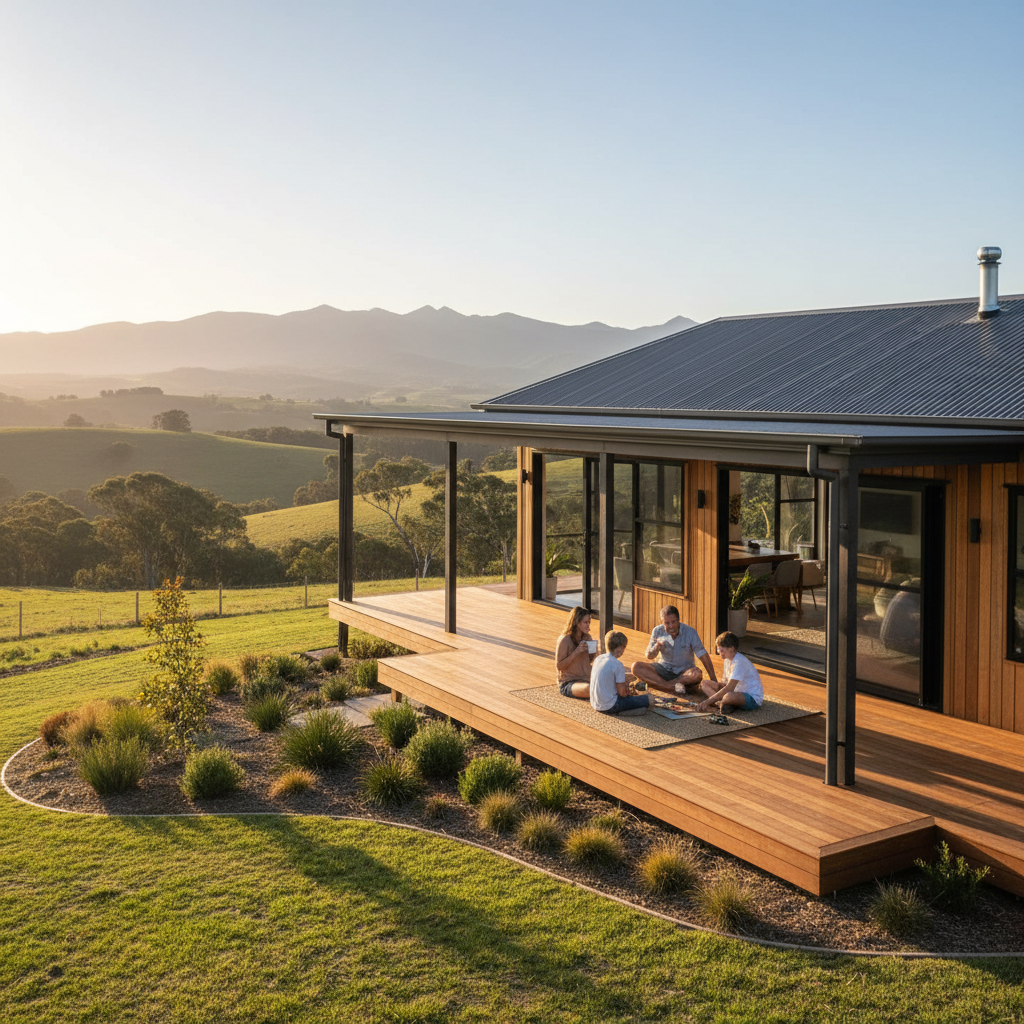
A rural retreat needs to be more than just a box. It needs to breathe. We always recommend wrapping the house in wide verandas. Not just because they look iconic, but because they protect the envelope of the building. Direct sun hitting your windows is the enemy. By the time the sun hits the glass, you've already lost the battle. A two point four metre veranda keeps the walls shaded and gives you a place to kick off your boots when they're caked in mud. Speaking of mud, design your entry with a proper wet room or a laundry with external access. Nobody wants red dirt tracked onto the new floorboards. It's common sense, but easy to forget when you're focused on the master ensuite.
The Bushfire Reality
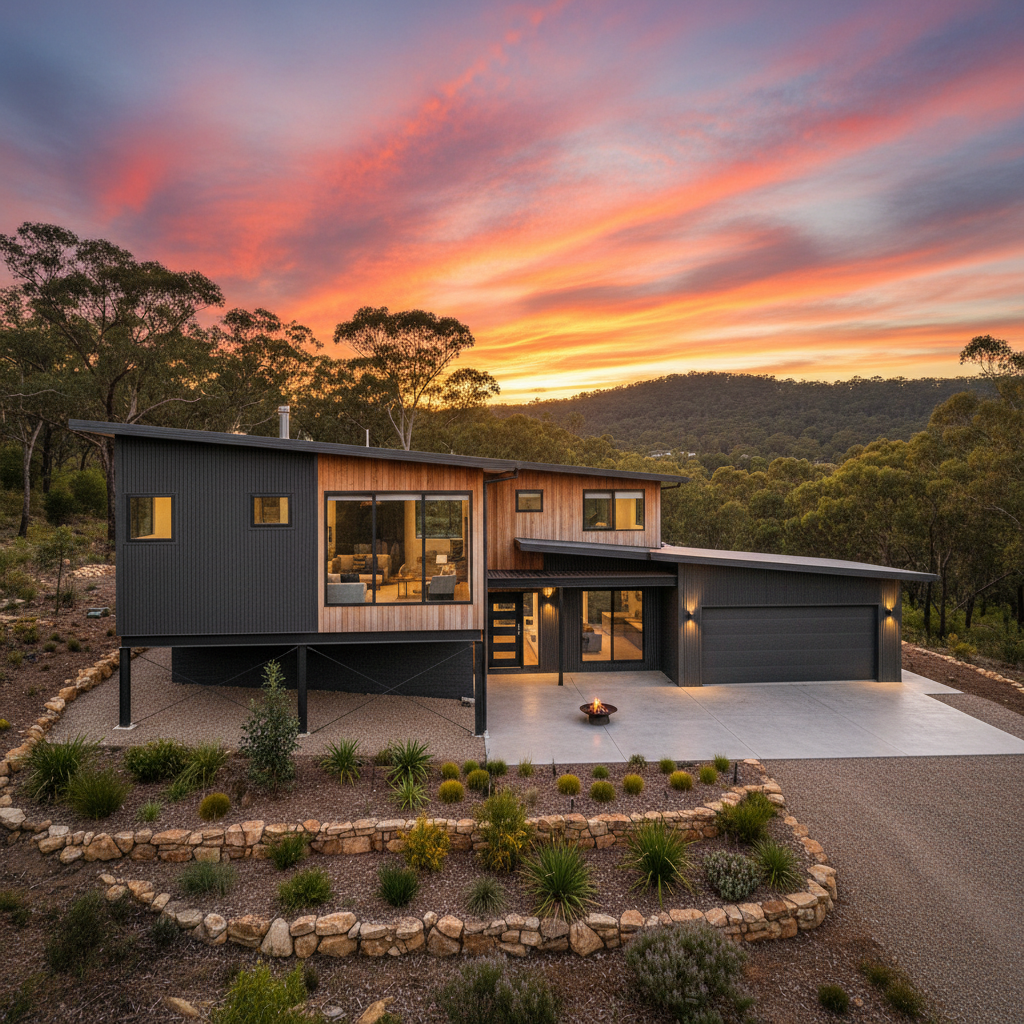
If you're on acreage, you're going to have a Bushfire Attack Level (BAL) rating. It's part of the deal. Whether it's BAL-12.5 or BAL-FZ (Flame Zone), it dictates what you can and can't use on the outside of your house. Steel frames are a great start here because they don't contribute to the fuel load. But you also need to think about your windows and doors. Toughened glass and metal flyscreens aren't just suggestions; they're often legal requirements. We use steel cladding and roofing because it's tough, it handles the heat, and it won't rot when the rain finally decides to show up after a three-year drought.
Tips for the Owner Builder
Managing your own build is a bit like being a conductor for an orchestra where half the musicians haven't shown up yet. You've got to be organized. Here are some bits of advice I've picked up over the years:
- Get your site access sorted early. If a heavy truck can't get in because the track is washed out, they'll drop your kit at the gate and leave. That's a long walk with a steel truss.
- Talk to your plumber before the slab is poured. Retrofitting pipes into a concrete slab is a nightmare you don't want.
- Order your insulation early. Everyone forgets it until the frames are up, and then they're stuck waiting three weeks while the wind whistles through the studs.
- Be realistic about your timeline. If you think it'll take six months, give it a year. Family, work, and weather have a habit of getting in the way of your DIY dreams.
One of the biggest hurdles is the council. Don't go in there with a chip on your shoulder. Be the person who asks for help. Most councils have specific requirements for rural dwellings, like rainwater tank sizes for fire fighting or specific effluent report requirements for your septic system. Get these sorted before you even touch a hammer. If you don't have your DA (Development Application) or CDC (Complying Development Certificate) in your hand, you're just playing with LEGO.
The Lifestyle Shift
Living in a kit home you've helped put together yourself changes the way you look at the house. You know where every screw is. You know exactly how much insulation is in the ceiling because you're the one who crawled up there and pushed it into the corners. There's a satisfaction in that which you just don't get with a volume-built house in the suburbs. You're building a legacy on your bit of dirt. Whether it's a small weekender or a full-scale homestead, the design should reflect how you actually live. If you love cooking, make the kitchen massive. If you spend all your time outside, make the deck bigger than the lounge room. It's your house. Do it your way.
Because at the end of the day, a rural retreat is about peace. It's about sitting on that veranda, looking out over the paddocks, and knowing that you built the roof over your head. It might have been a slog getting the windows in straight, and you might have had a few choice words for the local council, but when the sun sets and the kookaburras start up, it's all worth it. Just make sure you've got a good spirit level and a decent pair of boots. You're going to need them.