The Great Australian Shift: Why We are Moving to the Regions
There is a distinct shift happening across the Australian landscape. More than ever, families, professionals, and retirees are looking toward the horizon and imagining a life far removed from the congestion of the inner suburbs. This movement, affectionately known as the tree-change, is not just about finding a bit of peace and quiet. It is about reclaiming time, embracing nature, and building a lifestyle that reflects personal values.
When you decide to trade the commute for a country road, the first big question is always: where will I live? While regional Australia is full of charming old farmhouses, they often come with decades of maintenance headaches. This is where the modern kit home has stepped in to revolutionise the way Australians settle in rural and regional areas. Kit homes offer a unique bridge between the dream of a bespoke country home and the practical reality of building in a location where traditional builders might be scarce or overbooked.
The Perfect Fit for Regional Blocks
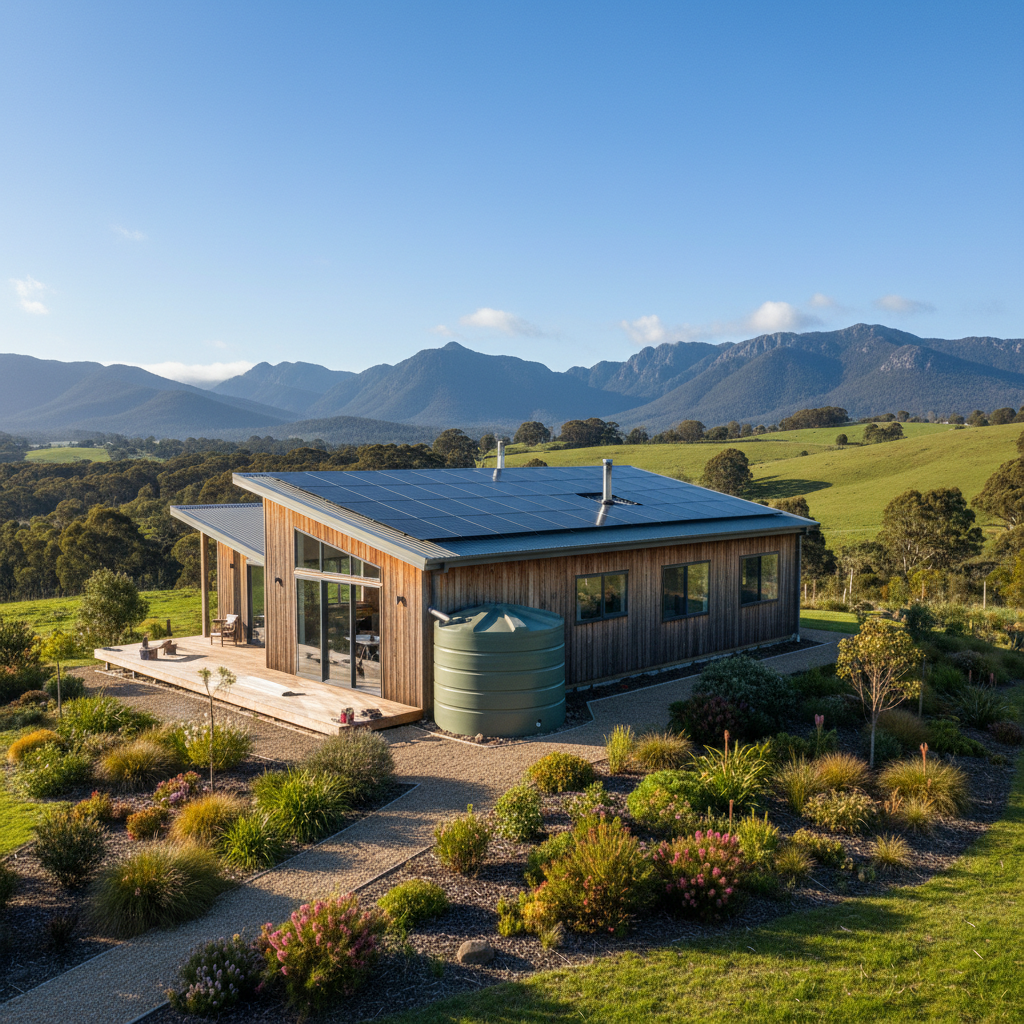
One of the biggest draws of kit homes for tree-changers is their versatility. Whether you have purchased a sloping block in the Hinterland, a dusty acreage in the Riverina, or a coastal patch in the Otways, kit homes are designed to adapt. Unlike standard project builds that require a perfectly flat suburban lot, kit homes allow for greater flexibility in site placement and design.
Because the components are delivered in a comprehensive package, it solves many of the logistics issues that come with regional construction. You are not waiting on a dozen different suppliers to find your remote address. Instead, the core structure, including the durable steel frames, roofing, cladding, and windows, arrives ready to be assembled. This streamlined approach is a game-changer for those moving to areas where local hardware stores might not stock the specialised materials needed for a modern, high-quality build.
The Rise of the Owner-Builder Lifestyle
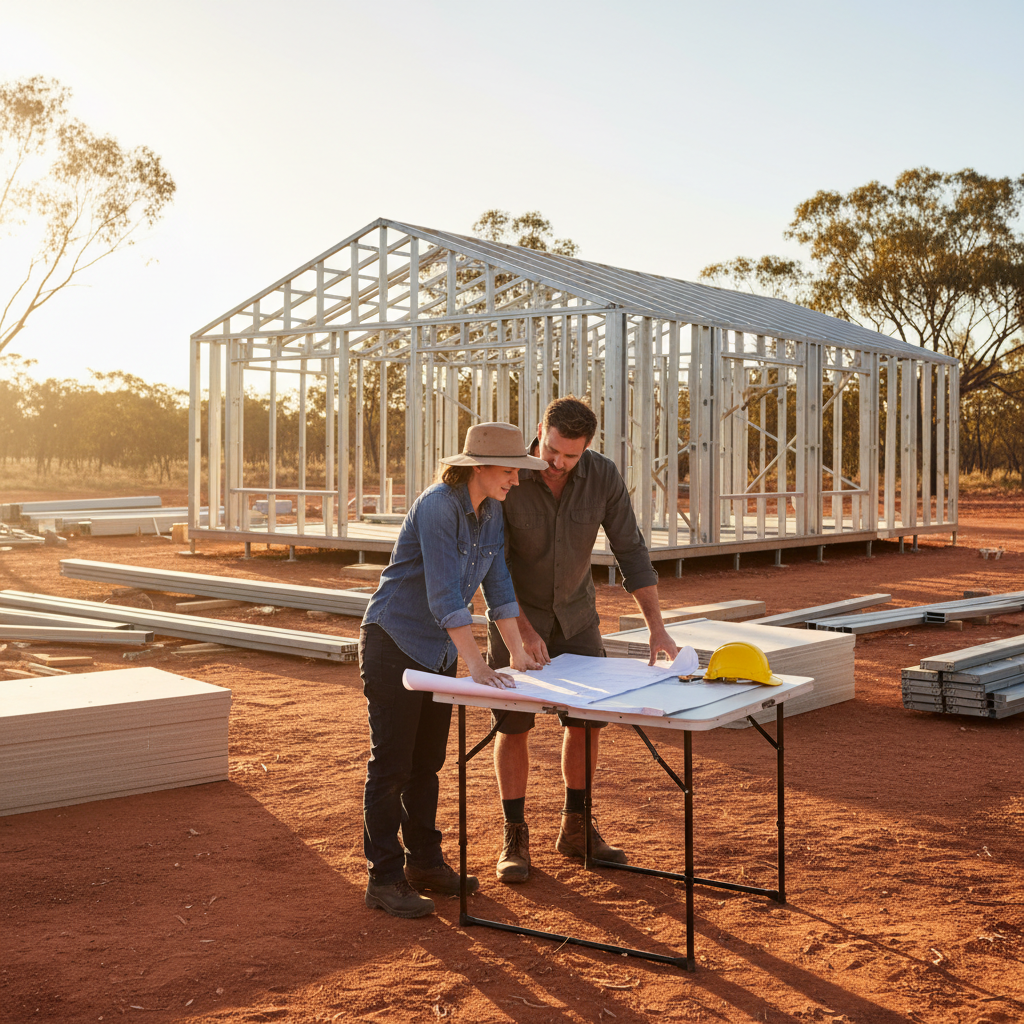
For many tree-changers, the move is about more than just a change of scenery, it is about a change of pace and a desire to be more hands-on. This has led to a surge in the owner-builder trend. Taking on the role of an owner-builder allows you to be the conductor of your own symphony. You manage the trades, oversee the site works, and have a direct hand in the creation of your sanctuary.
Building a kit home as an owner-builder provides a sense of autonomy that is hard to find elsewhere. You aren't just a client watching from behind a fence, you are the project manager. This path requires research and dedication, but the reward is a home that you know inside and out. It allows you to prioritise what matters to you, whether that is a massive wrap-around verandah to take in the sunsets or an open-plan kitchen designed for hosting long Sunday lunches with new neighbours.
Practical Kit Home Tips for Success
If you are considering this path, preparation is your best friend. Here are a few practical tips to keep your project on track:
- Know Your Site: Before you even choose a design, understand your land. Check for bushfire attack levels (BAL), soil types, and wind ratings. These factors will influence everything from your window choices to your cladding.
- Organise Your Storage: When your kit arrives, you will need a flat, dry area to store materials. Having a strategy for site organisation will prevent damage and make the assembly process much smoother.
- Communication is Key: Even as an owner-builder, you will be working with local trades for plumbing, electrical, and the foundation. Build good relationships with these professionals early on. Local knowledge is invaluable.
Embracing Durable Materials for the Australian Climate
Regional living often means facing the elements head-on. From the scorching summer sun to the threat of bushfires and termites, the Australian environment demands a tough house. This is why the trend toward steel finishing has become so prominent in the kit home industry. Many high-quality kits now utilise BlueScope steel and TRUECORE technology for the structural frames.
Steel frames offer a level of precision and durability that is particularly beneficial in regional areas. They won't warp or twist with the seasons, and they are naturally resistant to termites, a major concern for many rural property owners. When combined with quality insulation and high-performance glass, these homes can be incredibly energy-efficient, keeping you cool in the summer and warm during those crisp country winters.
Design Trends: Bringing the Outside In
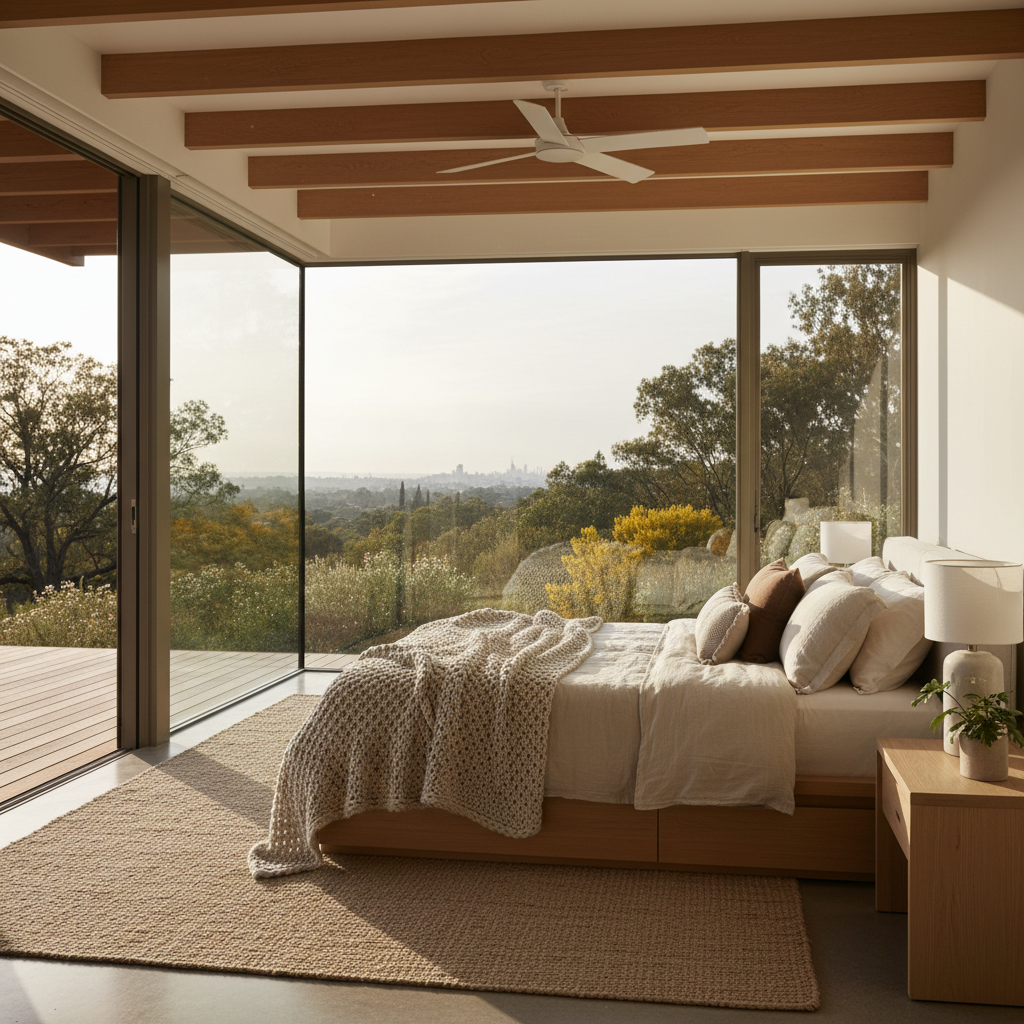
The current aesthetic for modern Australian regional homes is all about connection. We are seeing a move away from closed-off rooms toward expansive, airy spaces that celebrate the view. High ceilings, large windows, and sliding doors that disappear into walls are all popular features in contemporary kit home designs.
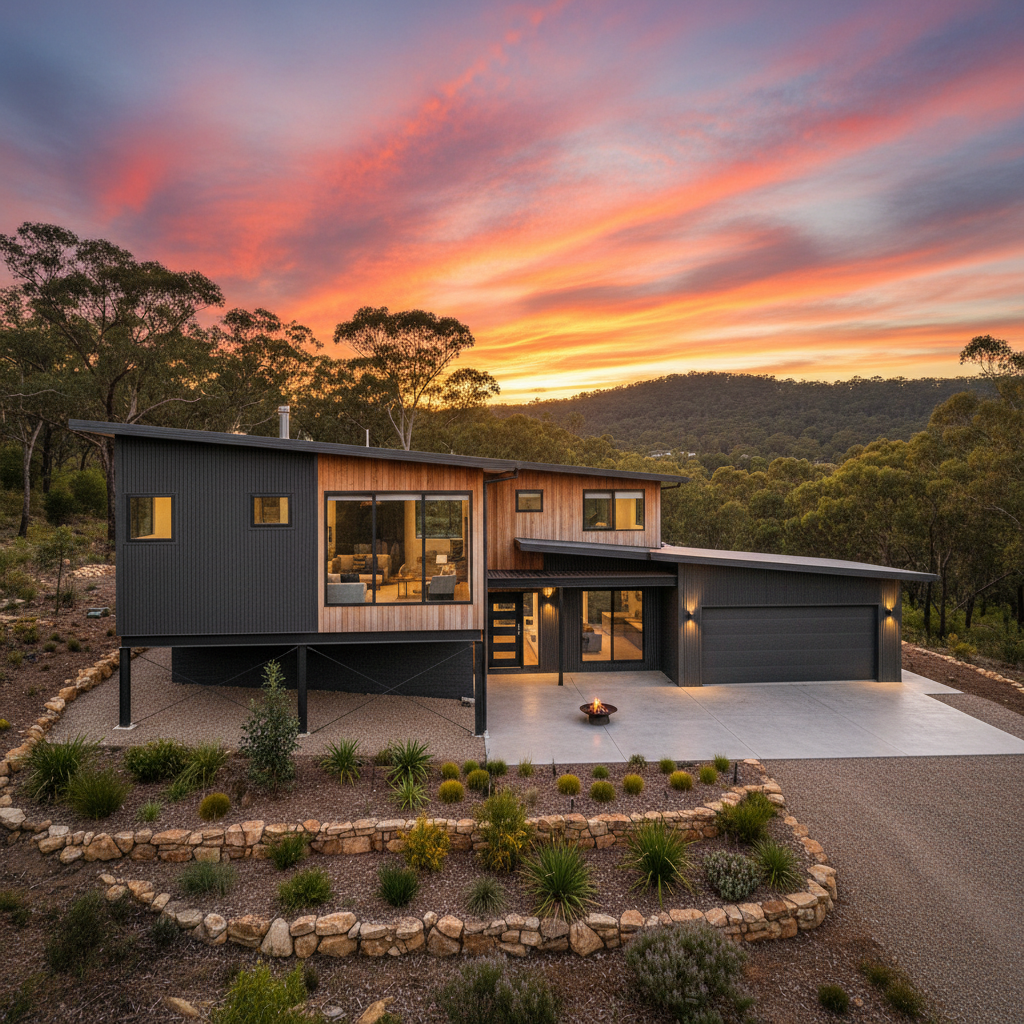
Colours are also reflecting the landscape. We are seeing a shift toward earthy tones, eucalyptus greens, and deep charcoals that allow the house to sit quietly within its environment. The beauty of a kit home is that while the skeleton is provided, the finishing touches are entirely up to you. You can choose cladding that mimics traditional timber or go for a sleek, modern industrial look with corrugated steel.
Owner-Builder Tips for the Technical Phase
Managing the construction phase requires a keen eye for detail. Here is how to navigate the build smoothly:
- The Foundation Matters: Whether you are opting for a concrete slab or a raised floor system, ensure your groundworks are perfect. A level base makes the assembly of steel frames significantly faster and more accurate.
- Sequence Your Trades: Work closely with your plumber and electrician to ensure they are ready to go as soon as the frames are up. This prevents delays and keeps the momentum of the build going.
- Safety First: Managing your own site means you are responsible for safety. Ensure all subcontractors follow proper protocols and that your site is kept clean and hazard-free.
The Lifestyle Advantage
At the heart of the kit home movement is the lifestyle it enables. By choosing a kit, you are often able to move into your new home faster than a traditional bespoke build might allow. This means less time waiting in a rental or caravan and more time starting your new life. You might find yourself with more room for a vegetable garden, space for a workshop, or simply the quietude required to write that book you have been thinking about for years.
The Australian dream is evolving. It is no longer just about the quarter-acre block in the suburbs. It is about freedom, resilience, and a connection to the land. Kit homes provide the framework for that dream, offering a practical, durable, and stylish way to make the leap into regional living.
Conclusion
The journey to a tree-change is an exciting adventure, and choosing the right house is the cornerstone of that transition. Kit homes have proven themselves as a reliable, flexible, and high-quality option for Australians looking to build their own piece of paradise in the regions. By taking the reins as an owner-builder and choosing a home designed for the Australian climate, you are not just building a house, you are crafting a legacy. If you have been dreaming of wider horizons and cleaner air, perhaps it is time to look into how a kit home can turn that vision into a reality. The regions are calling, and with the right plan in place, your new home is closer than you think.