The sky turned that sickly shade of bruised orange over the Blue Mountains back in 2019, and the phone started ringing off the hook. Most people were asking the same thing. They wanted to know if a kit home could actually stand up to a wall of flame or if it was just marketing talk. Look, I will give it to you straight. Nothing is 'fireproof' if the fire is hot enough for long enough, but there is a massive difference between building with a giant stack of kindling and building with Australian made steel.
The Reality of BAL Ratings and Steel
If you are looking at land anywhere near a national park or even just a decent patch of scrub, you are going to meet your new best friend: the Bushfire Attack Level, or BAL rating. It goes from BAL-12.5 all the way up to BAL-FZ (Flame Zone). Once you hit BAL-29 or BAL-40, the regulations start getting skinny on options. This is where steel frames, specifically stuff like TRUECORE from BlueScope, really earn their keep. Timber frames are combustible. That is just physics. When a fire gets into your roof space or under the floor, a timber frame adds fuel to the situation. Steel does not. It is non-combustible. It does not ignite. It does not help the fire spread through the wall cavities while you are trying to get the kids and the dog into the ute.
AS 3959 is the standard you need to get familiar with. It covers the construction of buildings in bushfire-prone areas. Using a steel kit home simplifies a lot of the compliance headaches because the frame itself is not part of the fire load. Plus, when you are talking to a private certifier or council, they tend to breathe a bit easier when they see a steel specification on the plans. It is one less thing for them to knock back.
Why Precision Matters When the Wind Picks Up
Fire is not just about heat. It is about wind and embers. Most houses that burn down in a bushfire actually ignite because of ember attack, not the front of the fire itself. Small gaps in your eaves or around window frames are like an open door for flying embers. Because steel frames are manufactured on CNC machines to the millimeter, they stay straight. They do not warp or twist as they dry out like a piece of wet pine from the local yard. Why does that matter for fire? Because if the frame stays true, your cladding stays tight. Your windows stay square. You do not get those tiny gaps opening up over five years that let embers suck right into your wall cavity.
I have seen timber frames that have bowed so much in the first two years that you could slide a credit card between the flashing and the wall. In a fire, that is a death sentence for the structure. With a kit, you are getting frames that are dead silver-straight from day one and stay that way till the cows come home. It is about peace of mind when the northerly winds start howling in January.
The Owner Builder Advantage in High Risk Zones
Taking on an owner builder project in a bushfire zone is a big swing. You have got to manage the site works, the slab, and finding trades who actually know how to install fire-rated windows. But starting with a steel kit takes a massive chunk of the guesswork out of the equation. We provide the frames, the roofing, and the cladding, often including specialized BlueScope steel like COLORBOND which is tested specifically for Australian conditions.
But here is a tip from someone who has been on plenty of sites. Don't just focus on the frame. If you are building in a high BAL area, you need to think about your footings and your 'under-floor' strategy. Many owner builders forget that if they are on piers, they need to enclose that sub-floor with non-combustible materials or use specific mesh. Since our kits use steel floor systems too, you are already ahead of the curve. You are not putting a wooden deck on a fire-prone slope. That is just asking for trouble.
Termites: The Silent Fire Hazard
This sounds like a stretch, but hear me out. Termites love a bushfire zone because there is heaps of dead wood around. If termites get into a timber-framed house and chew out the structural integrity of a stud or a noggin, the house is already weakened. Then, if a bushfire comes through and puts wind pressure on that building, it is more likely to collapse. Steel frames are 100% termite proof. You can skip the nasty chemicals and the constant hovering over your structural members. You know that frame is as strong in year twenty as it was on day one. It is a one-two punch of protection.
Practical Advice for Your Build
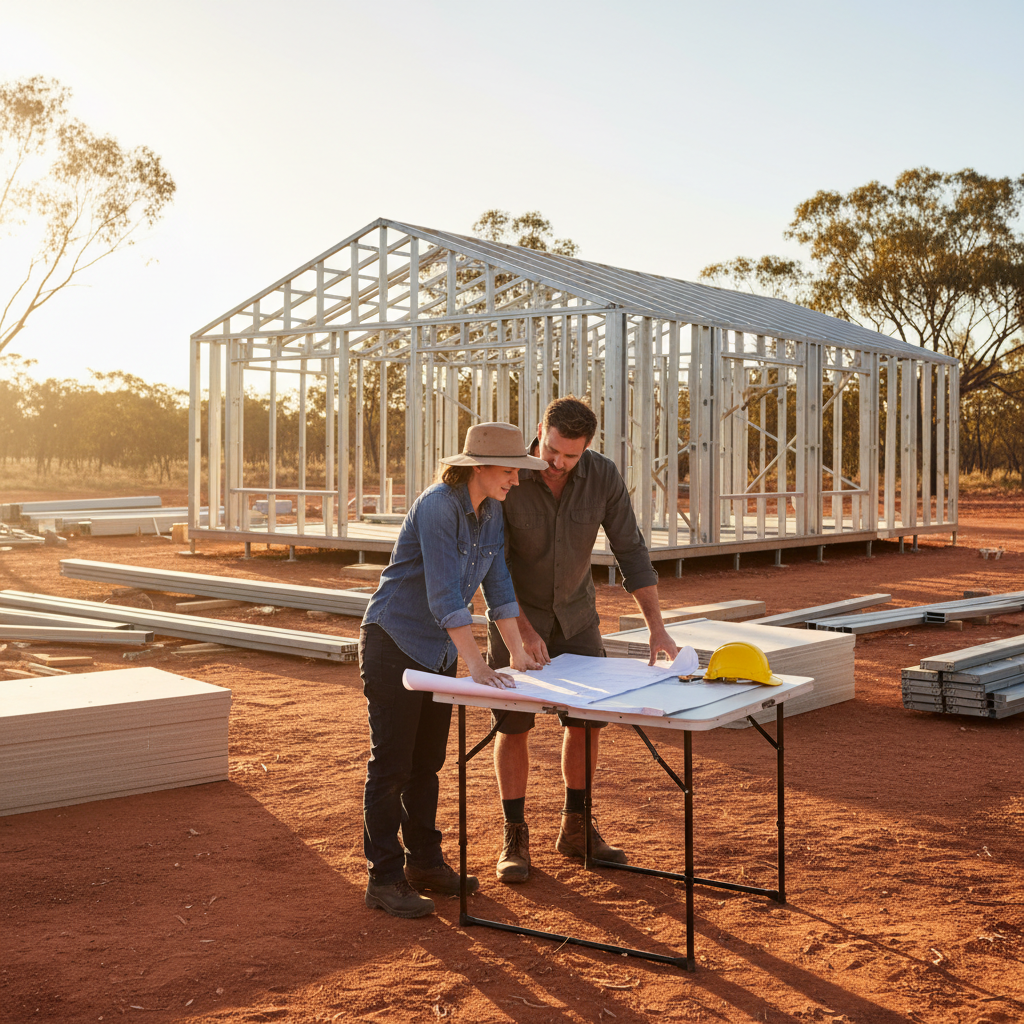
When you get your kit delivered to site, it arrives like a big 3D puzzle. For the DIY crowd, it is much easier to screw together a steel frame that has been pre-punched and labeled than it is to try and out-think a stack of timber. You don't need to be a master carpenter. You just need a good impact driver and a bit of common sense.
Here are a few things to keep in mind:
- Check your BAL rating before you choose your design. A BAL-40 site might require different glass thickness or specific shutters that change the look of the home.
- Clean your gutters. Even with a steel roof and steel frames, dry leaves in a gutter are a huge risk. COLORBOND steel is great, but it is not a magic shield against poor maintenance.
- Sarking is your best friend. Use a high-quality, fire-rated sarking under your tin. it acts as a secondary line of defense against embers and helps with the insulation values.
- Watch the noggins. If you are planning on hanging a massive 75-inch TV or heavy kitchen cabinets, tell us early. We can add extra steel noggins so you aren't hunting for a stud later on.
One thing people often ask is whether the steel gets too hot. We use a thermal break between the frame and the external cladding. This keeps the heat out in summer and the warmth in during winter. It is not just about fire; it is about not roasting like a chicken in your own living room when it hits 40 degrees in Penrith.
The Fallout of a Fire Front
I remember talking to a bloke down near Cooma who had a steel-framed shed and a timber-framed house. After a nasty grass fire went through, the house was a pile of ash. The shed? The paint was scorched and the contents were toast, but the structural steel was still standing. He was able to strip it back and start again much faster than if he had to clear a massive pile of charred wood. That is the resilience people are looking for now. They want a house that gives them a fighting chance.
Building your own home is an enormous task. It is stressful and it will probably rain the day you want to pour your slab. But choosing the right material for the bones of the house shouldn't be the hard part. Steel is light, it is straight, and it doesn't feed a fire. In the Australian bush, that is about as close to a no-brainer as you are going to get. You want to know that when you turn the key for the first time, you have built something that can handle what this country throws at it.