The Blackened Reality of the Australian Bush
I remember standing on a ridge near Marysville back in 2009. The air didn't just smell like smoke, it felt heavy, like it was made of lead and ash. Everything was gone. Looking at the footprints of houses that didn't make it, you start to notice patterns. Timber doesn't just burn, it feeds the beast. This is why when folks ask me about kit homes in Australia, I don't start with the kitchen layouts or the fancy cladding options. I start with the skeleton. If the skeleton is made of wood, you're building a giant pile of kindling. Simple as that.
Steel provides a level of peace of mind that a pine frame simply can't touch. We use BlueScope TRUECORE steel because it's born for this climate. It doesn't warp in the humidity of a Queensland summer, and it won't add one single gram of fuel to a fire. When a bushfire rolls through, embers find the smallest gaps. They get under the eaves and into the roof cavity. If those embers land on a timber truss, it's game over. But steel? It stays put. It's non-combustible. That is the baseline for building out here.
Understanding BAL Ratings and Your Kit Home
Building in Australia means you're going to get cozy with your local council and the Bushfire Attack Level (BAL) system. You might be BAL-12.5, which is mostly just making sure your windows are tough and your gaps are sealed. Or you might be BAL-40 or even BAL-FZ (Flame Zone). The NCC Volume 2 spells this out, and it's not a suggestion, it's the law. Choosing a steel frame kit home gives you a massive head start on meeting these requirements. Because the frame itself won't ignite, you're already ahead of the curve before you've even screwed on the first sheet of cladding.
But don't get cocky. Just because you have a steel frame doesn't mean you can ignore the rest. You still need the right insulation, the right toughened glass, and fire-rated sealants. We provide the frames, roofing, and cladding, but as an owner builder, you need to be the one on-site making sure your sparky isn't leaving massive holes in the internal lining. Fire is lazy. It wants the easiest path. Don't give it one.
The Engineering Behind the Strength
Steel frames are light. You'd think that's a downside when the wind picks up, but it's the opposite. The precision of a CNC-cut steel frame means every notch and every hole is exactly where it needs to be. Unlike timber, which can have knots, splits, or just be plain 'punky', steel is consistent. In a high-heat scenario, timber loses structural integrity fast because the core stays hot and keeps burning. Steel has a melting point well over 1000 degrees Celsius. While it can soften in extreme, prolonged heat, it doesn't provide the fuel that keeps a house fire roaring from the inside out.
Plus, termites. Let's be real. If the fire doesn't get your house, the white ants want a crack at it. They can't eat steel. You won't be waking up at 2 AM hearing the sound of a thousand tiny jaws chewing through your wall studs. That alone is worth the investment.
Advice for the Aussie Owner Builder
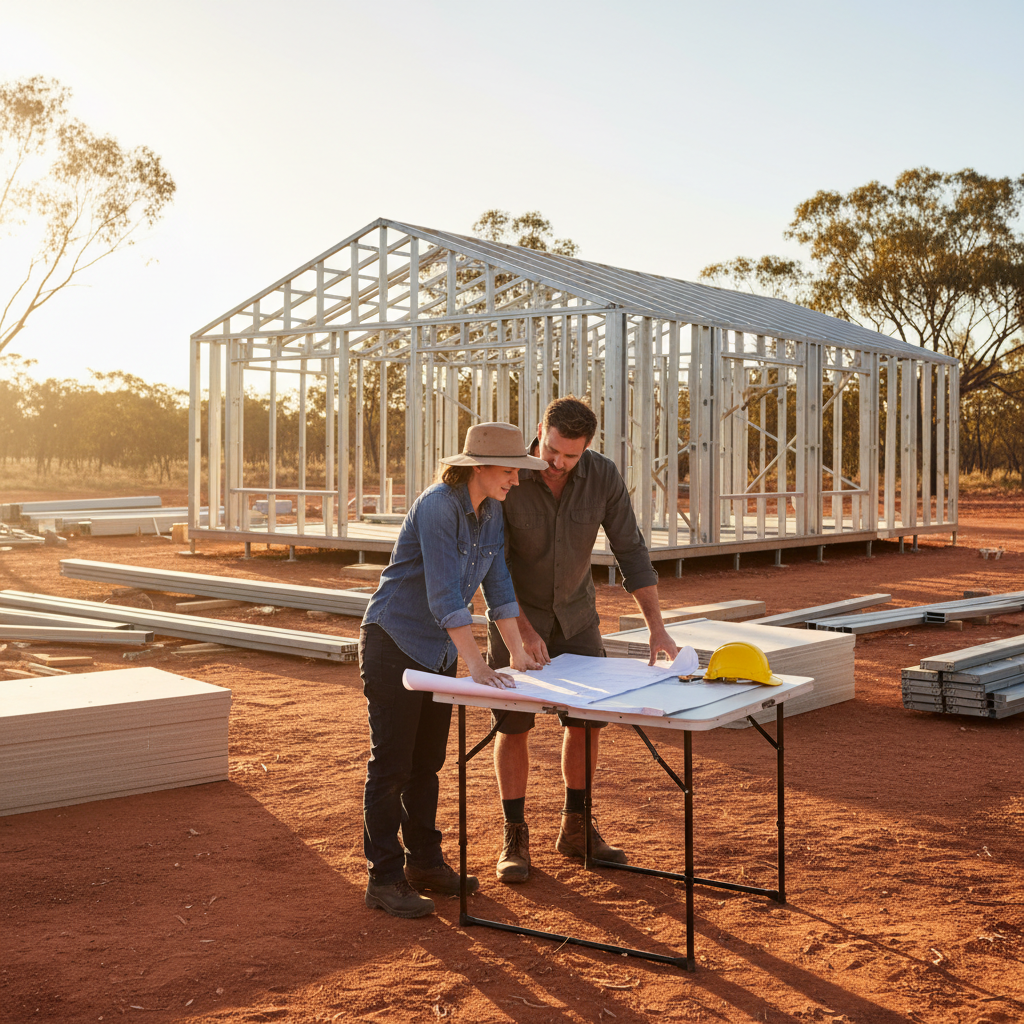
Taking on a kit home as an owner builder is a massive project. It's more than just swinging a hammer on weekends. You're the project manager. You're the one haggling with the concreter because his slab is 10mm out of square. When your steel kit arrives on the back of a hiab truck, you'll see why people love them. The frames arrive in easy-to-handle sections. They're straight. They stay straight. If you've ever tried to straighten a bowed pine stud with a power planer while the sun is beating down on your neck at midday, you'll know why steel is a godsend.
Here is a tip I tell every person who buys a kit from us: Get your site works right. Do not skimp on the slab. If your slab is wonky, your steel frames will tell on you immediately. Wood is forgiving because you can shave it down. Steel is honest. It's precise to the millimeter. Use a laser level. Check it twice. Then check it again before you pour.
What's Actually in the Kit?
There is a bit of confusion out there about what a kit actually is. We provide the bones and the skin. You're getting the TRUECORE steel frames, the roof trusses, the Colorbond roofing, and the external cladding. We throw in the windows and the doors too. But the rest? That's on you. The interior fit-out, the plumbing, the electrical, the kitchen cabinets - that's where you get to put your own stamp on it. It means you aren't paying a builder's margin on every light switch and floorboard. You control the quality of the finish.
Because you're arranging the trades yourself, you can find a local plumber who knows the area. You can find a sparky who isn't going to charge you 'city prices' just because you're building a nice house. It’s hard work. You'll have dirt under your fingernails for six months. But the first night you sleep in a house you managed yourself? There's nothing like it.
Design Flexibility for Harsh Environments
Living in rural Australia often means dealing with wild weather. Heavy rain, high winds, and that blistering heat. Steel frames allow for wider spans. You can have those big, open-plan living areas without needing massive, heavy lintels that break your back during installation. Want a huge window to look out over the paddock? Steel handles those loads with ease. And because the frames are lightweight, you aren't fighting with heavy lifting equipment as much as you would with traditional materials.
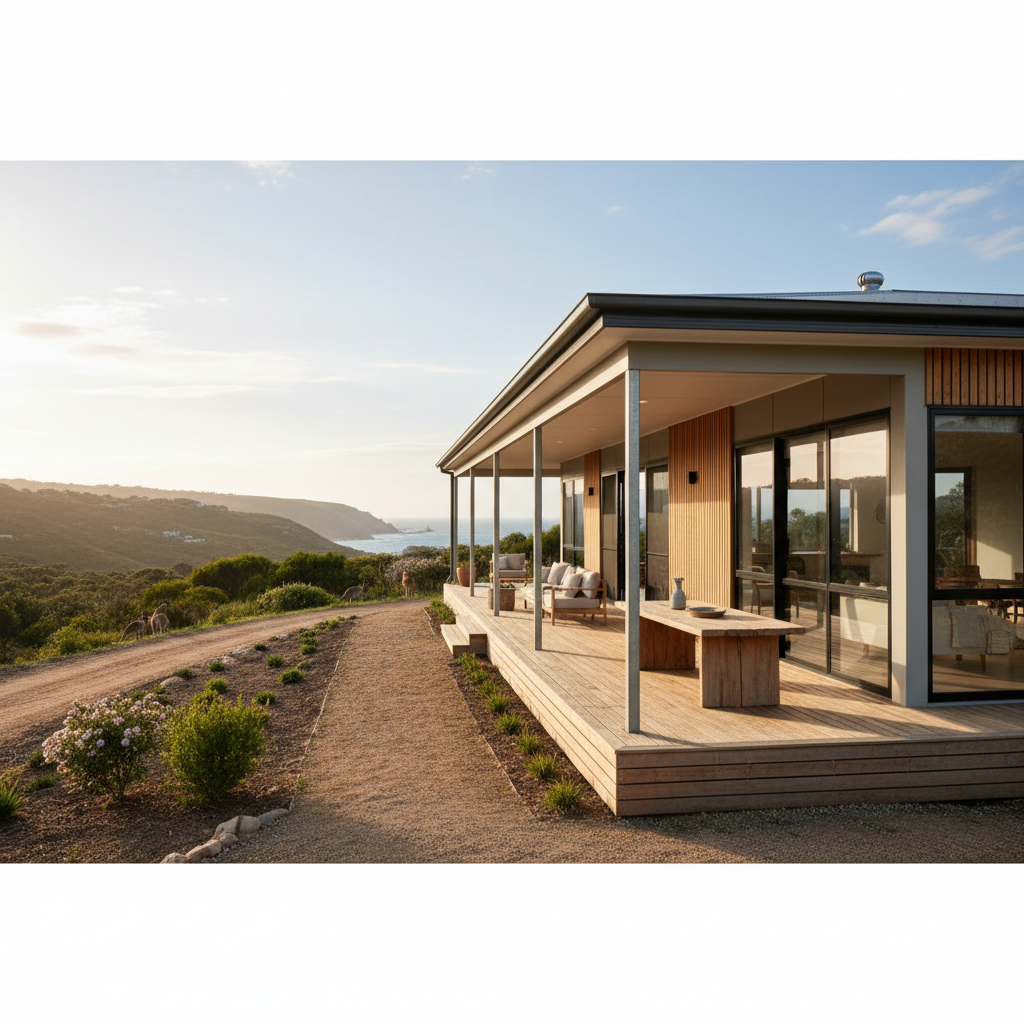
I’ve seen plenty of designs over the years. The ones that work best are the ones that respect the land. Use wide eaves to keep the sun off the walls. Choose Colorbond colors that reflect heat, like Surfmist or Shale Grey. Don't go for a dark roof in the middle of a paddock unless you want to live in an oven. The insulation we include helps, but smart design choices are what make a house livable for the long haul.
Steel frame kit homes aren't some new-age experiment. They are a practical, tough solution for a tough country. They're built for the bloke who wants a solid house that won't rot, won't burn, and won't get eaten by bugs. When you're standing on your finished deck with a cold drink in your hand, watching the sun go down over the gums, you'll be glad you went with the steel skeleton. It's the smartest move you can make for your peace of mind and your hip pocket in the long run. Get your hands dirty, stay on top of your trades, and build something that’s going to last as long as the land it's sitting on.