Is a Kit Home Actually Cheaper? The Honest Truth for Aussie Builders
If you’ve been scrolling through real estate listings lately, you’ve probably noticed that the 'Australian Dream' currently comes with a nightmare price tag. With the average cost of building a new home in Australia now hovering somewhere between $300,000 and $600,000 (and that’s before you even think about the land), it’s no wonder that kit homes have surged in popularity.
But here’s the million-dollar question: Is a kit home genuinely more affordable than a traditional project home or a custom build? Or are the savings just a clever marketing illusion? To get to the bottom of the kit home vs. traditional build debate, we need to look past the 'starting at' price tags and dive into the nitty-gritty of Australian construction finance.
The Breakdown: What Does a Kit Actually Cost?
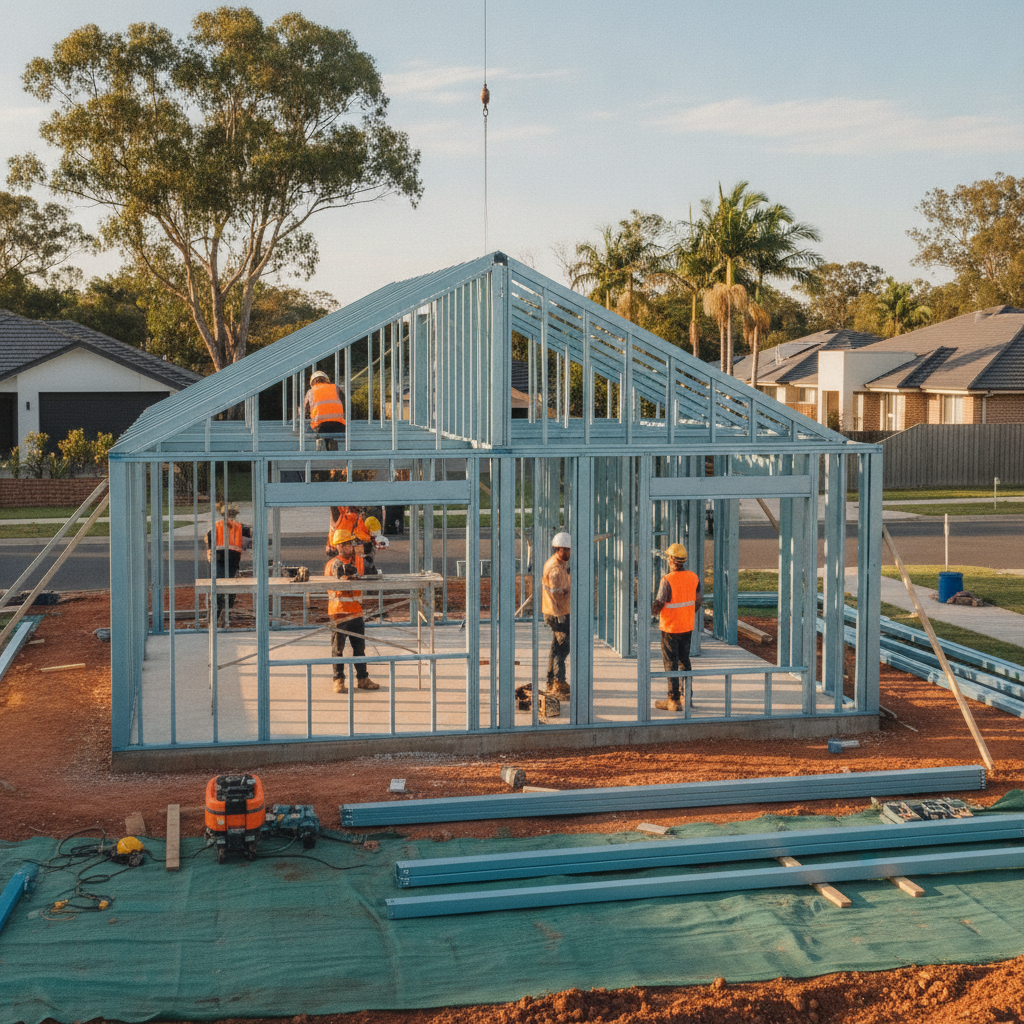
When you sign a contract with a traditional project builder, you’re usually paying for a 'turnkey' product. They handle the approvals, the site works, the construction, and the final coat of paint. In contrast, kit homes Australia style are a different beast. You are purchasing the components-the 'skeleton' and the 'skin'-of the house.
A high-quality kit typically includes:
- Precision-engineered steel frames (often using BlueScope TRUECORE steel for termite and fire resistance).
- Roofing, guttering, and external cladding.
- Windows and external doors.
- Insulation and fixings.
A kit for a three-bedroom home might cost you between $80,000 and $150,000. On paper, that looks like a steal. However, a traditional build for the same size might be quoted at $350,000. The "gap" between the kit price and the final move-in price is where your budget lives or dies.
The Hidden Variables: Site Works and Infrastructure
One of the biggest financial traps for first-time owner-builders is forgetting that the house doesn’t just 'land' on the block. Regardless of whether you buy a kit or build traditionally, site costs are a massive variable.
In Australia, site costs can range from $20,000 to over $100,000 depending on your terrain. You need to budget for:
- Soil Tests and Contour Surveys: Essential for engineering.
- Slab or Footings: Kit homes generally don't include the concrete slab.
- Service Connections: Connecting electricity, water, and sewage/septic to your site.
- Bushfire (BAL) and Cyclone Requirements: Depending on your location, you may need upgraded glass or specific cladding, which can add 10-20% to your build cost.
The Owner-Builder Advantage: Where the Savings Live
The primary reason a kit home is cheaper than a traditional build isn’t just the materials-it’s the management margin. A traditional builder typically charges a margin of 15% to 25% on top of all trades and materials to cover their overheads and profit. When you choose the kit home route, you become the 'Project Manager' or 'Owner-Builder'.
By managing the trades yourself-hiring the plumber, the sparky, and the plasterer directly-you are effectively pocketing that 20% margin. On a $300,000 project, that’s $60,000 back in your pocket. Furthermore, if you have the skills to do some of the labor yourself (like painting, landscaping, or even assembling the steel frames), your savings grow exponentially.
Kit Home Tip: The 'Rule of Three'
A common mistake is thinking the kit price is the total price. Historically, a good rule of thumb for Australian kit homes is the Rule of Three. Take the price of your kit, and triple it. If the kit is $100k, your finished home (including slab, trades, and fit-out) will likely be around $300k. This is still often significantly cheaper than a custom builder, but it’s a much more realistic figure for your bank manager.
Construction Finance: A Different Kettle of Fish
Standard home loans are easy to get for traditional builds because the bank has a fixed-price contract to look at. Financing a kit home project as an owner-builder is trickier. Australian banks are often more conservative with owner-builder loans because they see more risk.
To secure finance, you will usually need:
- An Owner-Builder permit.
- A detailed cost estimate (and we mean detailed).
- A larger deposit (often 20-30% rather than 10%).
- An appraisal of the finished value from a licensed valuer.
Pro Tip: Look for mortgage brokers who specialise in construction or owner-builder loans. They know which lenders are kit-friendly and which ones will run for the hills.
Durability and Long-Term Costs
When comparing costs, you have to look at the long-term ROI. Australia is a harsh environment. Termites cause millions of dollars in damage every year, and bushfires are a constant reality. This is where the material choice becomes a financial decision.
Opting for a kit with a steel frame (like BlueScope TRUECORE) provides a level of financial protection. Steel is 100% termite-proof and non-combustible. Over 30 years, the money you save on termite inspections, chemical treatments, and lower insurance premiums can add up to tens of thousands of dollars. Traditional timber-framed project homes may be cheaper in some regions initially, but the maintenance profile is different.
Owner-Builder Tips: Managing the Budget
If you've decided the kit home path is for you, follow these financial golden rules:
- The 15% Buffer: Always, always have a 15% contingency fund. In construction, things go wrong. A pipe bursts, a delivery is delayed, or the council demands a last-minute change. Without a buffer, your project can stall.
- Quote Everything Twice: Don't take the first quote from a plumber or electrician. Get three quotes and ensure they are all quoting on the exact same scope of work.
- Order Early: With current supply chain fluctuations in Australia, locking in prices for your internal fit-out (kitchens, bathrooms, flooring) early can save you from mid-project price hikes.
The Verdict: Is It Worth It?
The real cost comparison between a kit home and a traditional build isn't just about the invoice from the supplier. It’s about equity.
If you build a kit home for $300,000 (including land and site works) and the market value of the finished house is $450,000, you have 'manufactured' $150,000 in equity through your own time and management. A traditional build rarely offers this level of immediate equity because you are paying market rates for every single hour of labor and management.
So, is a kit home cheaper? Yes-but only if you are prepared to put in the 'sweat equity' or the 'management equity.' If you want to sit back and have someone hand you the keys, stick to a project builder. But if you want a high-quality, durable home (like a steel-framed Aussie classic) and you want to keep more of your hard-earned money, the kit home path is a financially superior route.
Conclusion
Navigating the Australian housing market requires a sharp eye on the bottom line. Kit homes offer a unique opportunity to bypass the high overheads of big building firms, giving you more control over your budget and your finished product. By understanding the true costs-from the steel frames to the final plumbing fixtures-you can build a home that is both beautiful and financially smart. Ready to start your owner-builder journey? Grab a calculator, get your soil test done, and start comparing those quotes!