Thermal Performance in the Great Southern Land
Building a home in Australia presents a unique set of challenges. From the humid tropics of Far North Queensland to the frosty mornings in the Tasmanian highlands, our climate is as diverse as it is demanding. When you choose to build a kit home, you are taking the reins of your future comfort. One of the most critical technical aspects of this journey is understanding insulation techniques, specifically how they integrate with modern steel frame construction.
For owner builders, insulation is about much more than just stuffing some glass wool into a wall cavity. It is a science that involves managing heat flow, controlling moisture, and ensuring your home remains energy efficient year round. Because kit homes often feature BlueScope TRUECORE steel frames, the approach to insulation requires specific technical knowledge to ensure the best possible thermal outcome.
Understanding the Role of Steel Frames and Thermal Bridging
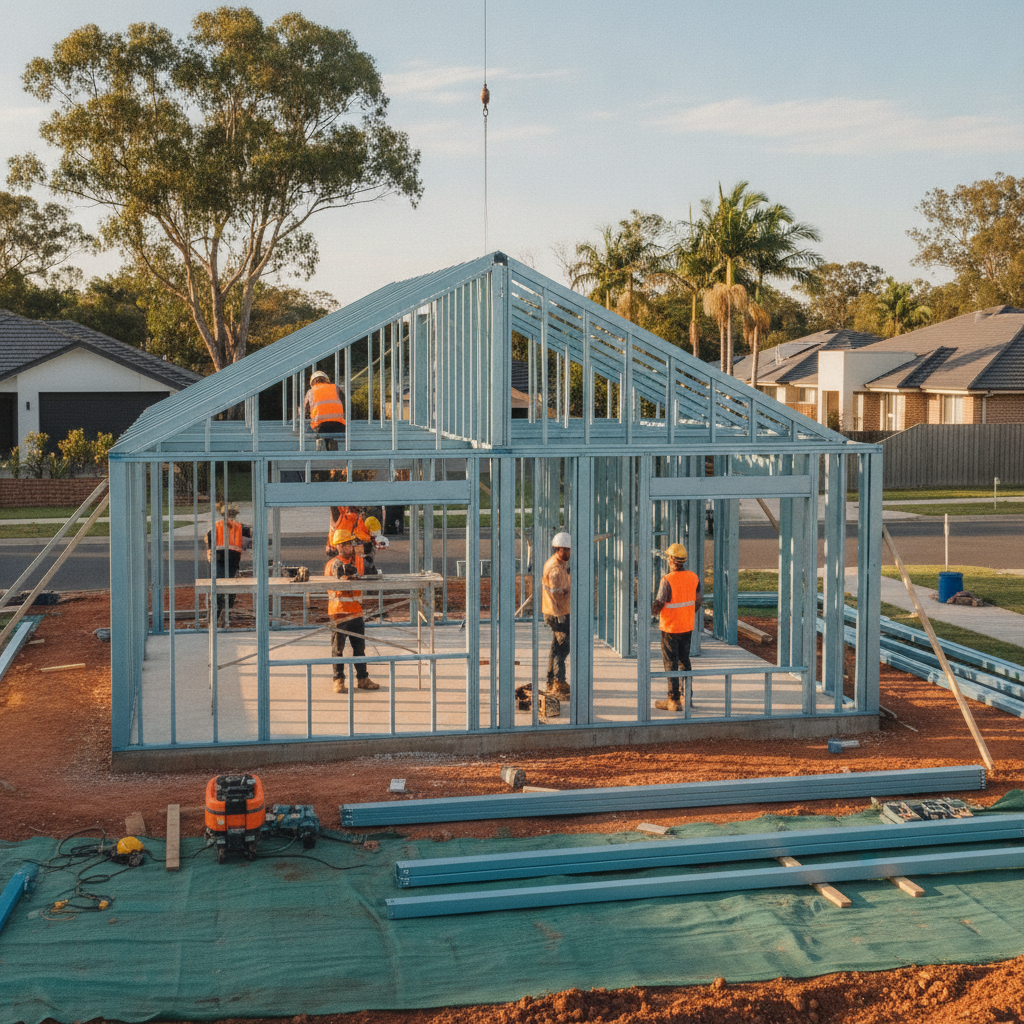
Steel is an incredible building material. It is straight, true, termite proof, and non combustible. However, from a purely thermal perspective, steel is highly conductive. This leads to a phenomenon known as thermal bridging. A thermal bridge is a pathway that allows heat to bypass your insulation by travelling through the silver studs of the frame itself.
In winter, heat from inside your home wants to escape through the steel studs to the cold air outside. In summer, the scorching Australian sun heats up your external cladding, and that heat can travel through the frame into your living space. To combat this, modern building techniques focus on creating a thermal break. This is a layer of insulation material placed between the steel frame and the external cladding, effectively snapping the thermal bridge and keeping your home temperate.
Breaking Down Climate Zones
The Nationwide House Energy Rating Scheme (NatHERS) divides Australia into various climate zones. Your insulation strategy must be tailored to where you are building. What works in a coastal Sydney suburb will not be sufficient for a project in the Victorian Alps.
The Hot and Humid North (Zones 1 and 2)
In regions like Darwin or Cairns, the goal is to keep the heat out and manage high humidity. Here, reflective insulation (foils) plays a massive role. By reflecting radiant heat from the sun before it hits the bulk insulation, you significantly reduce the load on your cooling systems. Ventilation is also key, allowing the home to breathe and shed heat quickly once the sun goes down.
The Mixed Climates (Zones 3, 4, 5, and 6)
Places like Brisbane, Perth, and Adelaide experience hot summers and cool winters. This requires a balanced approach. You need enough bulk insulation (R-value) to keep the warmth in during July, but you also need reflective barriers to bounce back the summer sun. A common technique here is using a high quality vapour permeable sarking under the cladding.
The Cold Climates (Zones 7 and 8)
In Canberra, Hobart, or alpine regions, the focus shifts heavily toward heat retention. This is where high R-value bulk batts in the walls and ceilings are non negotiable. Insulation should be packed tightly without being compressed (as compression reduces its effectiveness) to ensure no gaps are left for heat to escape.
Practical Tips for Owner Builders: Installing the Envelope
As an owner builder, you are often the one overseeing the installation or doing it yourself. Here are some technical tips to ensure your kit home performs at its peak.
- Prioritize the Thermal Break: When working with steel frames, always use a thermal break strip or a continuous layer of rigid foam insulation between the frame and the metal cladding. This is often a requirement under the National Construction Code (NCC) for a reason.
- Seal the Gaps: Even the best insulation is compromised if air can leak in and out. Use high quality sealing tapes on your sarking joins and ensure that windows and doors are flashed and sealed correctly.
- Mind the Electrics: When installing bulk batts, never cover LED downlights or electrical cables unless they are specifically rated for it. Leave the required clearance to prevent overheating and potential fire hazards.
- Roof Space Ventilation: Use whirlybirds or eave vents to allow hot air to escape from the roof cavity. This prevents a heat reservoir from forming above your ceiling insulation.
The Importance of R-Values
You will see the letter R everywhere when shopping for insulation. This stands for Thermal Resistance. The higher the R-value, the better the material resists heat flow. In Australia, we typically look at Total R-values, which is the combined resistance of the insulation material, the building products (like the cladding and plasterboard), and even the air gaps within the wall.
For ceiling insulation, we often recommend aiming for a minimum of R4.0 to R6.0 depending on your zone. For walls, R2.0 to R2.5 is a common standard. Remember, adding a bit extra during the build stage is far cheaper than trying to retrofit insulation once the plasterboard is up.
Managing Condensation and Moisture
A well insulated and sealed home can sometimes become too airtight, leading to condensation issues. When warm, moist air from cooking or showering hits a cold surface (like a steel stud or the back of your cladding), it turns into water. Over time, this can lead to mould and structural issues.
The solution is using vapour permeable membranes (often called wraps or sarking). These materials act like a high tech jacket for your house. They allow water vapour to escape from the inside of the home to the outside, but they prevent liquid water (rain) from getting in. This keeps your steel frame dry and your insulation effective.
Why Steel Frames Offer a Precise Finish
Building with a BlueScope TRUECORE steel frame actually makes the insulation process more predictable. Because steel doesn't warp, twist, or shrink, your wall cavities remain perfectly square. This means your insulation batts fit snugly without the gaps that often occur in timber frames as the wood dries out and moves over time. The precision of a kit home frame ensures that the thermal envelope remains intact for the life of the building.
The Multi Layered Approach
The most successful Australian builds use a multi layered insulation strategy. This typically includes:
- Reflective Foil: To bounce away radiant heat.
- Bulk Insulation: To slow down conducted heat.
- Thermal Breaks: To stop heat travelling through the steel frame.
- Air Gaps: Proper spacing between layers to enhance the R-value.
Conclusion
Taking on the role of an owner builder for your kit home is a rewarding way to create a space tailored to your lifestyle. By focusing on the technical aspects of insulation early in your planning phase, you ensure that your home isn't just beautiful, but also sustainable and comfortable. Understanding your climate zone and the specific requirements of steel frame construction will pay dividends in lower energy bills and a much happier living environment. Take the time to get the details right, use quality materials like vapour permeable membranes and high R-value batts, and you will enjoy the benefits of your hard work for decades to come.