Taking the Reins of Your Owner-Builder Journey
There is a unique sense of pride that comes with standing on a plot of land and knowing that the house rising from the soil is a result of your own management, sweat, and vision. In Australia, the owner-builder path is a well-trodden one, offering a way to create a high quality home while staying deeply involved in every decision. However, the transition from 'dreamer' to 'project manager' can be a steep learning curve. When you choose a kit home, you are already one step ahead because the structural components, like the steel frames and roof cladding, arrive as a cohesive package. But the secret to a smooth build does not just lie in the materials, it lies in your ability to stay organized.
Staying organized as an owner-builder is about more than just a tidy desk. It is about managing timelines, coordinating various trades, and ensuring that everything from your BlueScope steel frames to your window flashes are ready exactly when they are needed. In this guide, we will explore the practical systems you can put in place to ensure your kit home project remains a source of joy rather than a source of stress.
The Central Nervous System: Your Project File
Before the first delivery truck arrives on site, you need a system for information management. Construction generates an incredible amount of paperwork: council approvals, engineering certifications, delivery schedules, and technical specifications. Many successful Australian owner-builders use a dual system: a digital cloud-based folder for easy access on their phone, and a physical 'site bible' kept in a waterproof tub on the block.
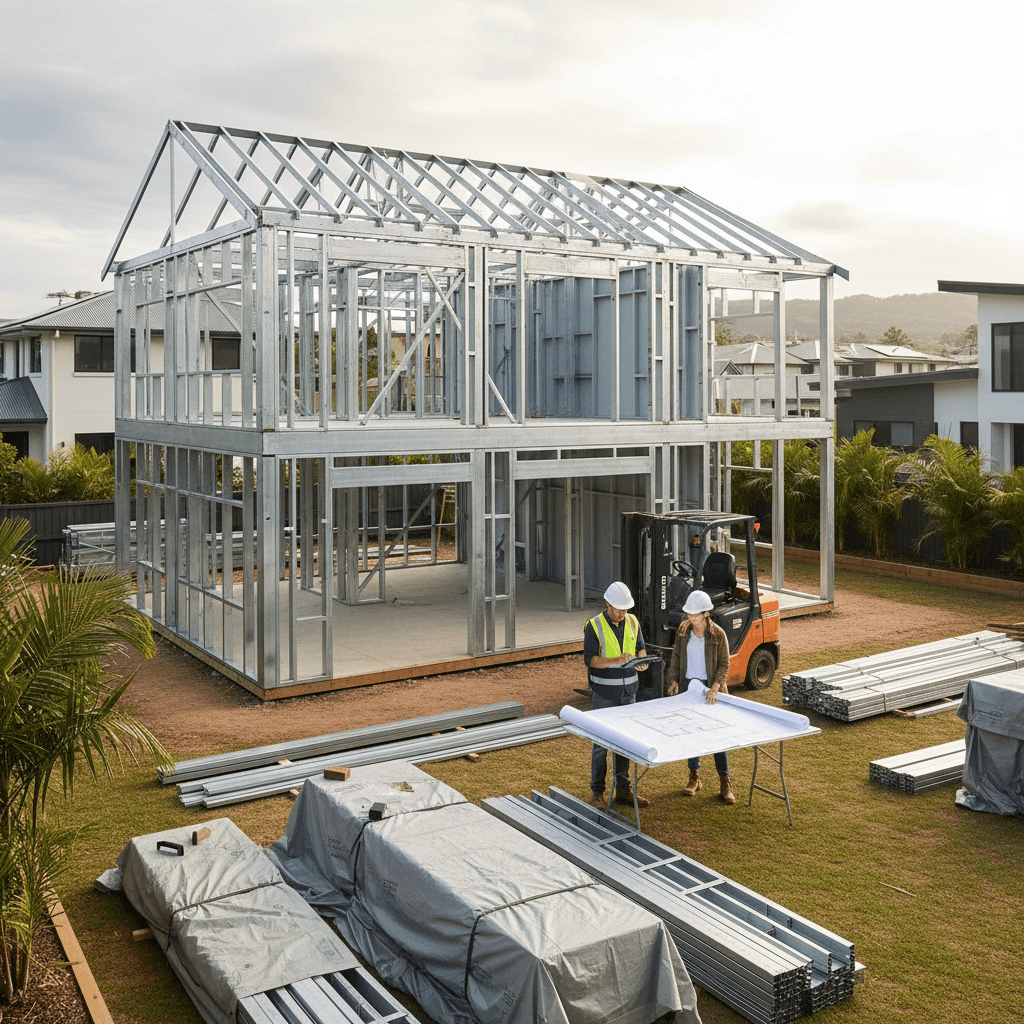
Your site bible should contain the latest version of your plans. It is a common mistake to work off an old revision, which can lead to costly errors when setting out plumbing or electrical points. Having the physical plans pegged to a temporary workbench ensures that when a plumber or electrician asks a question, you have the authoritative answer right at your fingertips. Organization starts with having one single source of truth for the entire project.
Mastering the Delivery Schedule
One of the biggest advantages of a kit home is that the heavy lifting of sourcing structural components is done for you. Your kit will typically include your frames, trusses, roofing, cladding, and windows. However, these items often arrive in stages, and your site needs to be ready to receive them. Managing the 'logistics dance' is a core skill for any owner-builder.
When your steel frames are scheduled for delivery, you need to ensure there is a clear, flat area for the truck to unload. If the site is muddy or cluttered, the driver may not be able to drop the materials where you need them, forcing you to move heavy steel components by hand later on. Check your delivery manifest against what arrives immediately. If you are missing a box of fasteners or a specific piece of flashing, knowing on day one is much better than finding out three weeks later when the roofers are standing on the ladder waiting for parts.
The Art of Trade Coordination
As an owner-builder, you are the conductor of an orchestra. You might have an excavator, a concreter, a plumber, and an electrician all needing access to the site in the early stages. The key to staying organized here is clear communication and realistic lead times. Good tradespeople in Australia are often booked out weeks or months in advance. If you wait until the slab is poured to call a sparky, you might find yourself waiting a long time.
Create a simple Gantt chart or a visual timeline. Map out the sequence: site cut, plumbing rough-in, slab pour, frame assembly, and so on. Share these milestones with your trades and keep them updated. If a week of heavy rain delays your slab, call your frame assembly team immediately. Keeping everyone in the loop prevents the frustration of trades turning up to a site that is not ready for them, which is a sure-fire way to lose their rapport and priority.
Site Safety and Cleanliness
It sounds simple, but a clean site is an organized site. Construction debris, offcuts of timber, or scraps of steel can quickly turn a workplace into a hazard. Make it a rule to spend the last thirty minutes of every day on site tidying up. Stack your materials neatly and cover anything that needs protection from the elements, like your insulation batts or internal doors.
An organized site also sends a professional message to your contractors. When a carpenter walks onto a clean site where the kit materials are neatly stacked and the plans are laid out, they are naturally more inclined to work with precision and respect for the project. It shows that the owner-builder is in control and expects a high standard of work.
Technical Knowledge: Understanding Your Kit
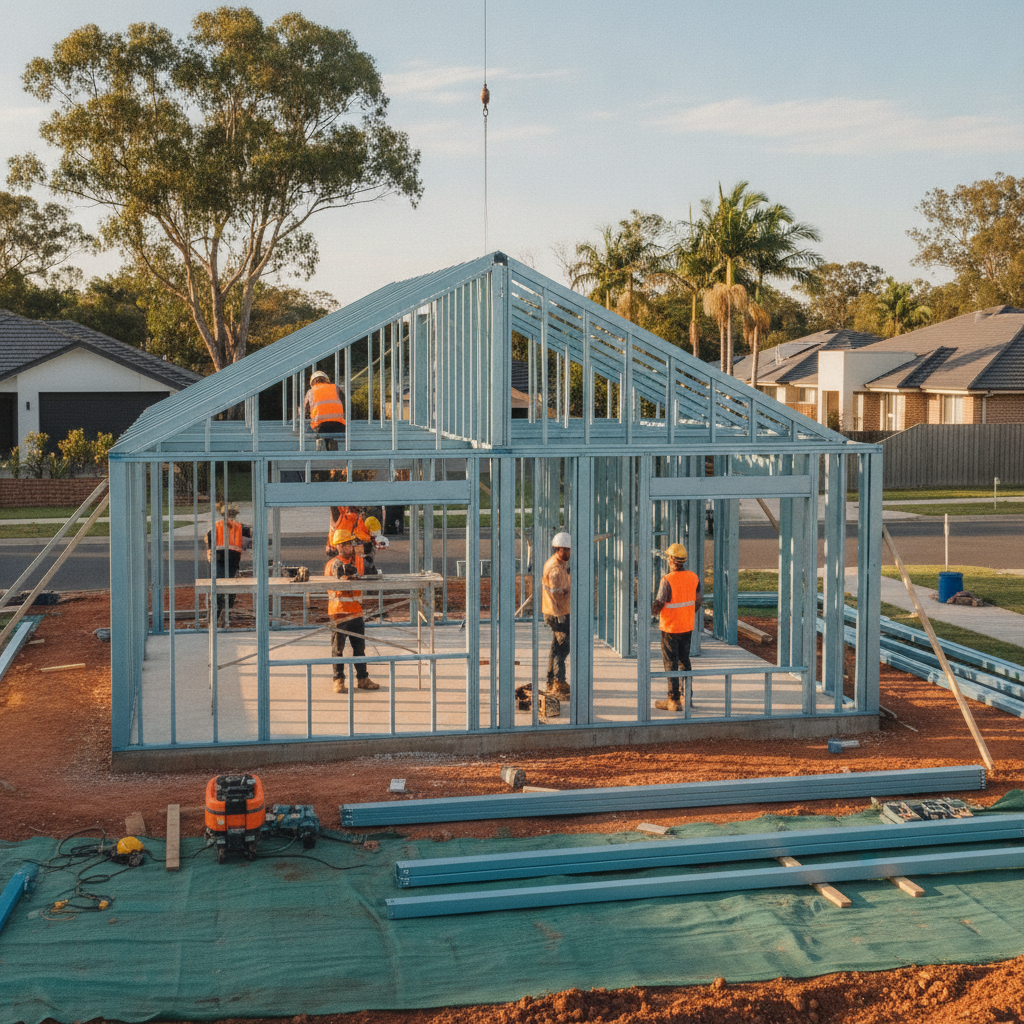
Organization is also about mental preparation. Even though you are managing the build, you should have a thorough understanding of how your kit home goes together. Take the time to read through the assembly guides for your steel frames and trusses before they arrive. Steel frames made from TRUECORE steel are lightweight and often come with pre-punched holes for electrical and plumbing, which makes the job easier, but you still need to understand the assembly sequence.
If you understand the technical requirements of the cladding or the specific way the windows need to be flashed, you can spot potential issues before they become permanent. This proactive approach is the essence of being an organized owner-builder. You aren't just reacting to problems; you are anticipating them through education and preparation.
The Importance of the Checklist
Human memory is fallible, especially when you are balancing a full-time job and a home build. Checklists are your best friend. Create checklists for every stage: a 'pre-pour' checklist for the slab, a 'lock-up' checklist for when the windows and doors are installed, and a 'fix-out' checklist for internal finishes.
Before the concrete truck arrives, walk the site with your plumbing and electrical plans. Are the pipes in the right spot for the island bench? Is the floor waste centered for the shower? Ticking these off on a physical list provides peace of mind and ensures that nothing is overlooked in the hustle and bustle of a busy site day.
Managing Your Own Expectations
Finally, being organized means organizing your own mindset. There will be delays. There will be days when the weather doesn't cooperate or a delivery is delayed. An organized owner-builder builds 'buffer time' into their schedule. Don't plan for the plumber to arrive the exact same hour the frames are finished. Give yourself a few days of breathing room. This reduces stress and allows you to handle the inevitable hiccups of construction with a level head.
Building your own kit home in Australia is a transformative experience. By using steel frames and a comprehensive kit, you have already simplified the supply chain. By applying these organizational strategies, you simplify the process. Focus on clear communication, rigorous documentation, and a clean site, and you will find that the journey of building your own home is just as rewarding as the final result.
Conclusion
The path of an owner-builder is one of the most challenging and rewarding projects you will ever undertake. While the physical work of assembling your kit home is a huge part of the process, the mental work of organization is what ultimately determines the success of the project. By treating your build with the same professionalism as a commercial site manager, you ensure that your Australian kit home is built to the highest standard, on a timeline that works for you. Keep those plans dry, keep the site clean, and enjoy every moment of watching your vision take shape.