Keeping Your Project High and Dry: The Owner Builder Guide to Site Drainage
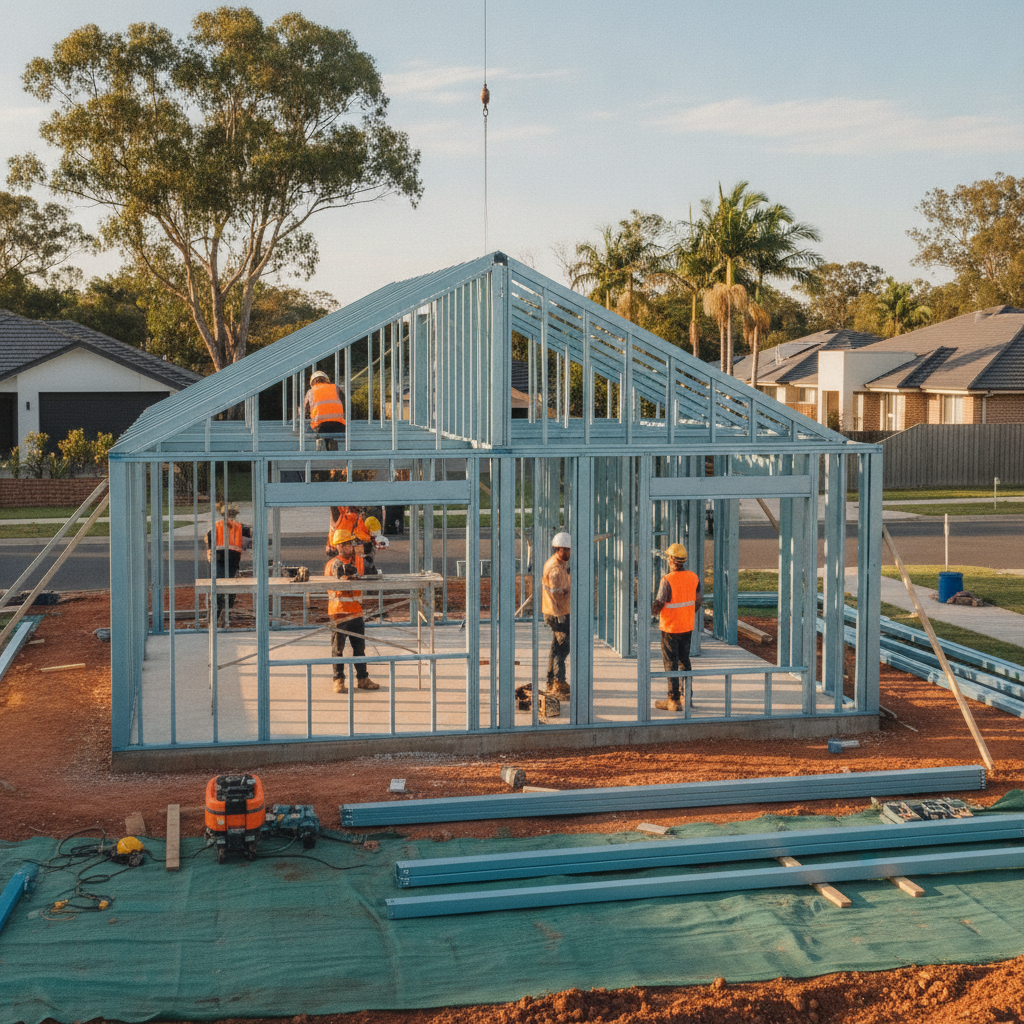
When you first receive your steel frame kit home delivery, it is a moment of immense pride. You see the high quality BlueScope TRUECORE steel, the precision engineered frames, and the promise of a beautiful new residence. However, before those frames can be bolted to the slab, there is a technical hurdle that often catches owner builders off guard: drainage. In the Australian climate, where we swing from drought to torrential downpours in a matter of hours, managing water is the most critical technical skill you can master.
Poor drainage is the leading cause of structural issues in Australian homes. It leads to reactive soil movement, slab heave, and moisture ingress that can compromise even the best construction. This guide delves into the technical building techniques required to ensure your site remains stable and your kit home stays bone dry for decades to come.
The Fundamental Principles of Site Grading
Before any trenches are dug or pipes are laid, you must understand site grading. The goal is simple: water must always move away from the building footprint. For owner builders, this starts during the initial site cut. The ground should fall away from the slab at a minimum gradient of 50mm over the first metre. This is a non-negotiable building standard that prevents water from pooling against the concrete edge.
If you are building on a sloping block, which is common for many kit home projects in regional Australia, you face the additional challenge of "run-on" water. This is water flowing from higher ground toward your house. To manage this, you need to implement a series of diversion techniques before the house even goes up.
The Role of Cut-and-Fill Areas
When you create a flat building pad on a slope, you create a "cut" (where you dug into the hill) and a "fill" (where you added soil). The area where the cut meets the flat pad is a prime candidate for water accumulation. Technical expertise here involves creating a V-shaped spoon drain at the base of the cut. This simple earthwork channel intercepts water and directs it around the side of the house toward the lawful point of discharge, such as a street kerb or a designated soakage pit.
Surface vs. Sub-Surface Drainage
A comprehensive drainage plan for a kit home involves two distinct systems: surface drainage and sub-surface drainage. Understanding the difference is vital for any owner builder managing their own site works.
Surface Drainage: The First Line of Defence
Surface drainage is all about what you can see. It involves the gutters and downpipes that come with your kit, as well as the grated drains in your driveway or patio. The most common mistake made by DIY builders is underestimating the volume of water a standard Australian storm can produce. Ensure your downpipes are connected to a solid PVC stormwater system as soon as the roof is on. Leaving downpipes to discharge directly onto the ground during construction can saturate the soil and lead to uneven settling of the slab.
Sub-Surface Drainage: Protecting the Foundations
Sub-surface drainage deals with ground water. If your site has heavy clay soil or a high water table, you will need to install agricultural pipes (ag-pipes). These are perforated pipes wrapped in a geotextile fabric (often called a "sock") and buried in a trench filled with 20mm blue metal or recycled aggregate. The ag-pipe is designed to collect water that has soaked into the ground and carry it away before it can exert hydrostatic pressure on your footings or seep under the slab.
Techniques for Retaining Walls and Drainage
Many kit home builds involve some level of landscaping or retaining walls to level the site. This is a high-risk area for water pressure. If you are building a retaining wall more than a metre high, it must have its own dedicated drainage system. This usually involves a line of ag-pipe at the base of the wall on the uphill side, covered with free-draining gravel. Without this, water builds up behind the wall, significantly increasing the weight and pressure, which can lead to wall failure and subsequent soil movement near your home.
The Lawful Point of Discharge
As an owner builder, you are responsible for where your water goes. You cannot simply pipe your backyard runoff into your neighbour's property. Every Australian council has regulations regarding the "Lawful Point of Discharge." This might be a street water table (the kerb), a council stormwater pipe, or an on-site detention (OSD) system.
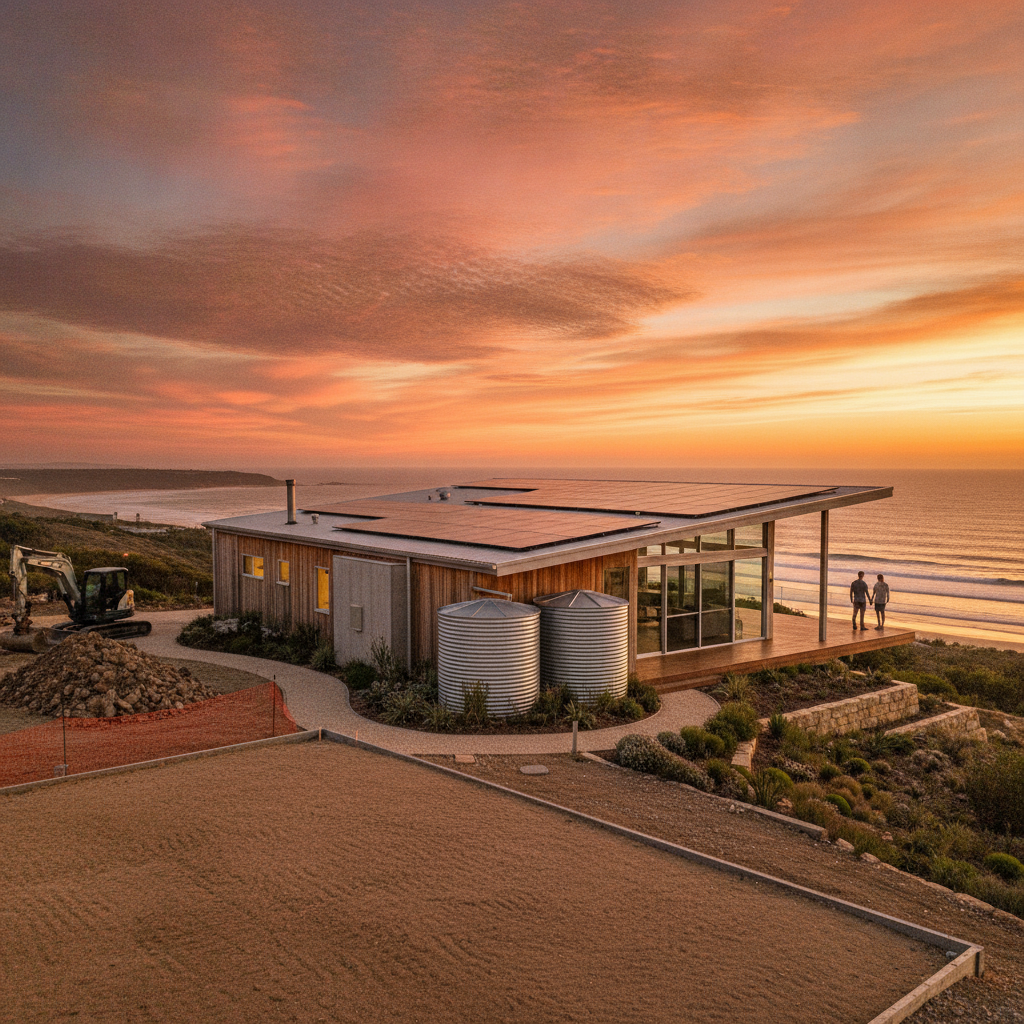
In rural areas where council connections aren't available, you will likely be using your kit home's roof area to harvest water into tanks. However, you must still plan for the "overflow." When those tanks are full during a wet winter, where does the excess go? A well-constructed "rubble pit" or "leach drain" is a common building technique here. This is a large underground hole filled with rock that allows water to dissipate slowly into the surrounding soil without causing erosion.
Integrating Drainage with Your Steel Frame Kit
One of the benefits of a steel frame kit home is the precision of the structure. When your TRUECORE steel frames arrive, they are perfectly straight and true. To maintain this precision, the ground underneath must remain stable. This is why we place such a heavy emphasis on drainage. Steel frames don't warp or twist like timber, but if the ground beneath the slab moves due to moisture changes, the entire structure is put under stress.
When installing your windows and external doors, ensure the flashing is integrated correctly with your external cladding. This ensures that any water hitting the walls is directed out and down, rather than behind the cladding where it can pool on the slab edge. This is a critical technical detail that bridges the gap between the kit components and the site preparation.
Owner Builder Tips for Success
- Document your pipes: Before you backfill any trenches, take photos of every pipe in the ground with a measuring tape visible. This is invaluable if you ever need to dig in the yard later or if you need to troubleshoot a blockage.
- Test before you cover: Use a garden hose to run water through your stormwater pipes before you bury them. It is much easier to fix a poorly angled pipe now than when it is under 300mm of soil.
- Mind the fall: Standard stormwater pipes require a minimum fall of 1:100. That means for every 10 metres of pipe, it should drop 100mm. Use a laser level or a high-quality spirit level to ensure you aren't creating "bellies" in the pipe where silt can collect.
- Protect your vents: If you are building on a raised floor system rather than a slab, drainage and ventilation go hand-in-hand. Ensure that your site drainage prevents water from sitting in the sub-floor area, as this can lead to humidity issues regardless of the framing material used.
Conclusion
Building your own kit home is a rewarding journey that gives you total control over the quality of your residence. While the steel frames and the beautiful finishes get all the glory, the success of your build rests on the technical work you do in the dirt. By mastering site grading, understanding the difference between surface and sub-surface water, and ensuring a clear path for discharge, you are protecting your investment for the long haul. Remember, in the world of construction, water is a great servant but a terrible master. Take the time to get your drainage right from day one, and you will enjoy a stable, dry, and comfortable home for a lifetime.