Preparation is the Foundation of Every Successful Build
There is a unique kind of excitement that comes with being an owner-builder in Australia. You have selected your floor plan, finalized your design tweaks, and the delivery date for your steel frame kit is finally circled on the calendar. But before the truck arrives with your high-quality BlueScope TRUECORE steel frames, roofing, and cladding, there is an immense amount of technical groundwork to cover. In the world of building techniques, site preparation is often where the success of the entire project is decided.
Many first-time builders make the mistake of thinking site prep is just about clearing a few trees and leveling the dirt. In reality, it involves a complex sequence of surveying, soil testing, drainage planning, and logistical coordination. Proper preparation ensures that when your kit arrives, the assembly process is seamless, safe, and efficient. Let us dive into the technical essentials of getting your site 'kit-ready'.
Understanding Your Soil and Site Classification
Before any earth is moved, you need to understand what you are building on. In Australia, site classification is a critical building technique governed by AS 2870 (Residential Slabs and Footings). A geotechnical engineer will perform a soil test to determine how much the soil is likely to move, shrink, or swell based on moisture content. This classification (such as Class A, S, M, H1, or P) dictates the type of slab or flooring system you must install.
For those using steel frames, having a perfectly level and stable foundation is non-negotiable. Steel is manufactured to millimetre precision. Unlike timber, which can be shaved or packed on-site easily, steel frames expect a level surface. Getting your site classification right early means your slab or sub-floor will be engineered correctly for your specific plot of land, preventing structural issues years down the line.
The Art of Site Clearing and Benchwork
Once you have your permits and soil tests, it is time for the heavy machinery. Site clearing involves removing vegetation, debris, and any large rocks that interfere with the building footprint. However, a common mistake is clearing ONLY the area where the house goes. You need to consider the 'work zone'.
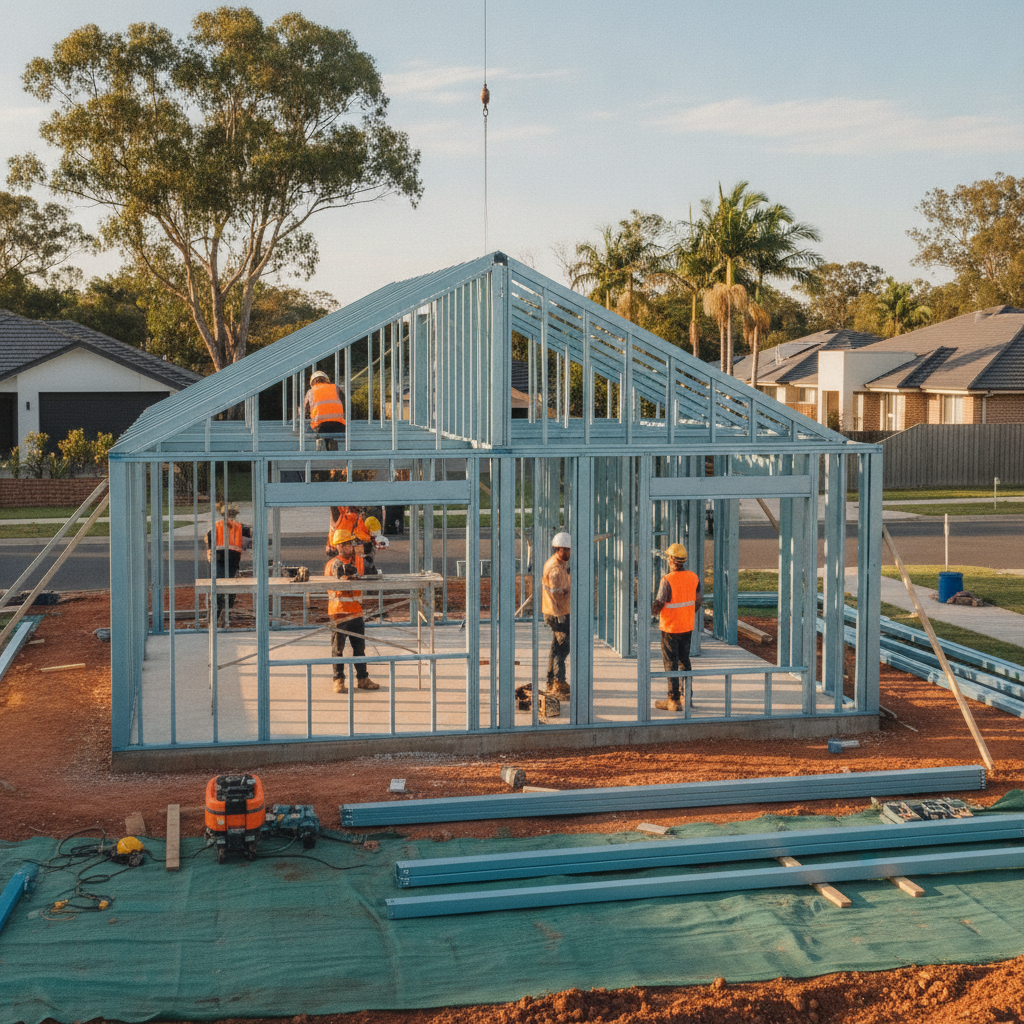
As a building technique, 'benching' or leveling the site involves creating a flat pad. You should aim for a site bench that is at least 1.5 to 2 metres wider than the actual house footprint on all sides. This extra space provides a safe walkway for installers, room for scaffolding, and a dry area to stack your kit components when they are unloaded. Remember, once those steel frames are off the truck, you do not want to be tripping over tree roots or navigating muddy slopes while carrying a wall panel.
Drainage: The Silent Protector of Your Build
Water is the enemy of any construction site. An underrated building technique for site prep is the installation of temporary and permanent drainage solutions before the kit arrives. If your site is on a slope, you need to divert surface water away from the building pad using 'cut-off' drains or swales.
If a heavy Australian downpour hits while your kit is being delivered or during the early stages of the frame assembly, a lack of drainage can turn your site into a swamp. This not only makes the work dangerous but can also compromise the stability of your prepared pad. Ensure that your site has a clear path for water runoff that does not impact your neighbors or public roads.
Logistics and Delivery Access
Kit home delivery involves large trucks, often with cranes or 'moffett' forklifts. One of the most practical building techniques is 'access planning'. You must view your site through the eyes of a heavy vehicle driver. Are there low-hanging power lines? Are the gate posts wide enough? Is the driveway consolidated enough to support a 20-tonne truck without it getting bogged?
If the delivery truck cannot get close to your building pad, the components may have to be dropped at the street front. This adds hours of manual labor and increases the risk of damaging materials like cladding or windows as you move them across the site. Clear a wide, firm path all the way to the storage area. If your site is particularly tight, talk to your provider early about split deliveries or smaller vehicle options.
Organizing Your Drop Zone
Where you put the kit after it is unloaded is just as important as how it gets there. Systematic organization is a building technique that saves days of labor. You want to designate a 'drop zone' that is:
- Flat and stable to prevent materials from warping or falling.
- Close to the slab, but not in the way of where the walls will be raised.
- Upwind of dusty areas if possible.
- Equipped with dunnage (timber sleepers or pallets) to keep the steel frames and cladding off the bare ground.
We recommend grouping materials by their order of use. Your floor systems and wall frames should be the most accessible, while the insulation and internal doors can be tucked further back or kept in a secure, dry shed. Always have heavy-duty tarpaulins ready to cover the kit, protecting it from both the scorching sun and unexpected rain, even if the steel frames are naturally weather-resistant.
Services and Rough-in Preparation
While the kit consists of the structure and shell, the plumbing and electrical 'rough-in' must be coordinated with your slab or sub-floor installation. Before the concrete is poured or the floor frames are finalized, ensure your licensed trades have laid the necessary pipes and conduits. For steel frame homes, this is a breeze because the frames often come with pre-punched service holes. However, the connection points in the ground must be exactly where the plans dictate. Use a surveyor to double-check the 'set out' of your footings. Being off by 100mm can cause significant headaches once you start standing walls.
Safety First: Site Fencing and Signage
In Australia, site safety is a priority and often a legal requirement. Before your kit is delivered, ensure your site is secure. Temporary fencing prevents unauthorized access and keeps your materials safe from theft or vandalism. Additionally, you will need to display your owner-builder permit and required safety signage. Providing a dedicated space for a site toilet and a bin for construction waste is not just about compliance; it keeps the site organized and professional, which reflects in the quality of the building work.
Final Checklist Before the Truck Arrives
1. Confirm the site is level and the slab is fully cured (if applicable).
2. Ensure the site is clear of debris and overhead hazards.
3. Verify delivery vehicle access and turn-around points.
4. Have a supply of waterproof covers and dunnage ready.
5. Check the weather forecast for the delivery window.
6. Notify neighbors of the upcoming delivery to maintain good relations.
Conclusion
Site preparation is the unsung hero of the construction process. By applying these building techniques, you transition from being someone who owns a kit to someone who is effectively managing a construction project. Proper groundwork ensures that once the steel frames arrive, you can focus on the rewarding task of assembling your home rather than solving logistical puzzles or fixing drainage issues. Take the time to get the earth right, and the rest of your build will follow suit.