Setting the Foundation for Success
There is a unique kind of excitement that comes with deciding to build your own home. In Australia, the owner-builder path is a time-honored tradition, and choosing a kit home is one of the smartest ways to balance high quality with personal involvement. However, before those precision-engineered steel frames arrive on the back of a semi-trailer, there is a mountain of literal and figurative groundwork to be done.
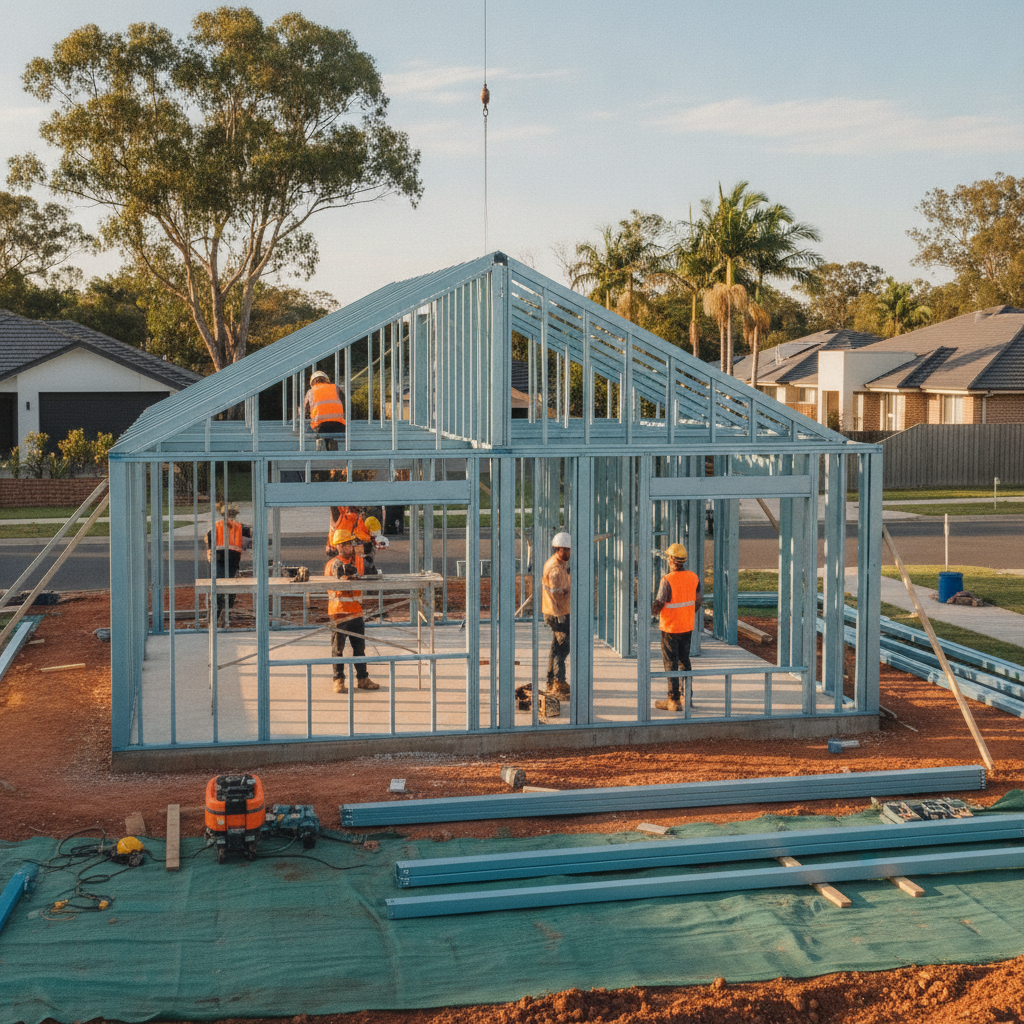
Site preparation is the most critical phase of any residential construction project. For kit home builders, this stage dictates how easily the rest of the build will flow. If your site is level, accessible, and properly serviced, the assembly of your BlueScope steel frames will feel like a dream. If not, you might find yourself battling delays before the first wall is even standing. In this guide, we dive deep into the technical building techniques required to get your Aussie block ready for delivery day.
Understanding Your Soil: The Geotechnical Report
Before you move a single bucket of dirt, you need to know what you are standing on. In the world of Australian building techniques, the S, M, H, and E soil classifications are your roadmap. A geotechnical engineer will conduct a site investigation to determine the soil type and its reactivity. This matters because Australian soils, particularly clay-heavy ones, expand and contract significantly with moisture changes.
Your kit home relies on a stable foundation. If you are building on highly reactive clay (Class H) or problem sites (Class P), your slab design will need to be significantly more robust than one on stable sand. Obtaining this report early ensures that when you hire your concreter, they are quoting on the correct amount of steel reinforcement and concrete volume for your specific patch of earth.
Clearing the Path: Site Access and Clearance
One of the most overlooked aspects of the owner-builder journey is the sheer size of the delivery vehicles. Kit homes arrive in large batches, often on heavy rigid trucks or articulated trailers. You must ensure there is a clear, all-weather access path from the public road to your designated unloading zone.
Consider the following technical requirements for access:
- Vertical Clearance: Check for low-hanging branches or power lines. You generally need at least 4.5 meters of overhead clearance.
- Turning Circles: A semi-trailer needs a significant radius to turn. If your driveway is a narrow, winding track, you might need to arrange a smaller delivery vehicle or a trans-shipment point.
- Surface Integrity: Soft mud is the enemy of heavy machinery. If your build starts in winter, consider laying down crushed rock or a temporary road base to prevent the delivery truck from getting bogged.
The Art of Site Leveling and Excavation
A level site is a happy site. While kit homes can be built on sloping blocks using stumps or piers, many Australian homeowners prefer a concrete slab on ground. This requires a process known as cut and fill. Excavation involves removing soil from the high side of the build platform and using it to raise the low side.
Precision is key here. If the fill is not compacted correctly to Australian Standards (AS 3798), your slab could subside over time, leading to structural issues. This is why many owner-builders hire professional earthmovers who specialize in house pads. Remember, the area you clear should be at least two to three meters wider than the actual footprint of the home to allow for scaffolding and safe movement during the frame assembly.
Managing Water: Drainage During and After Construction
Proper drainage is a fundamental building technique that protects your investment. During the site prep phase, you must plan for how rainwater will move around your site. Uncontrolled water can erode your site pad or pool against your foundation, which is a recipe for disaster with reactive soils.
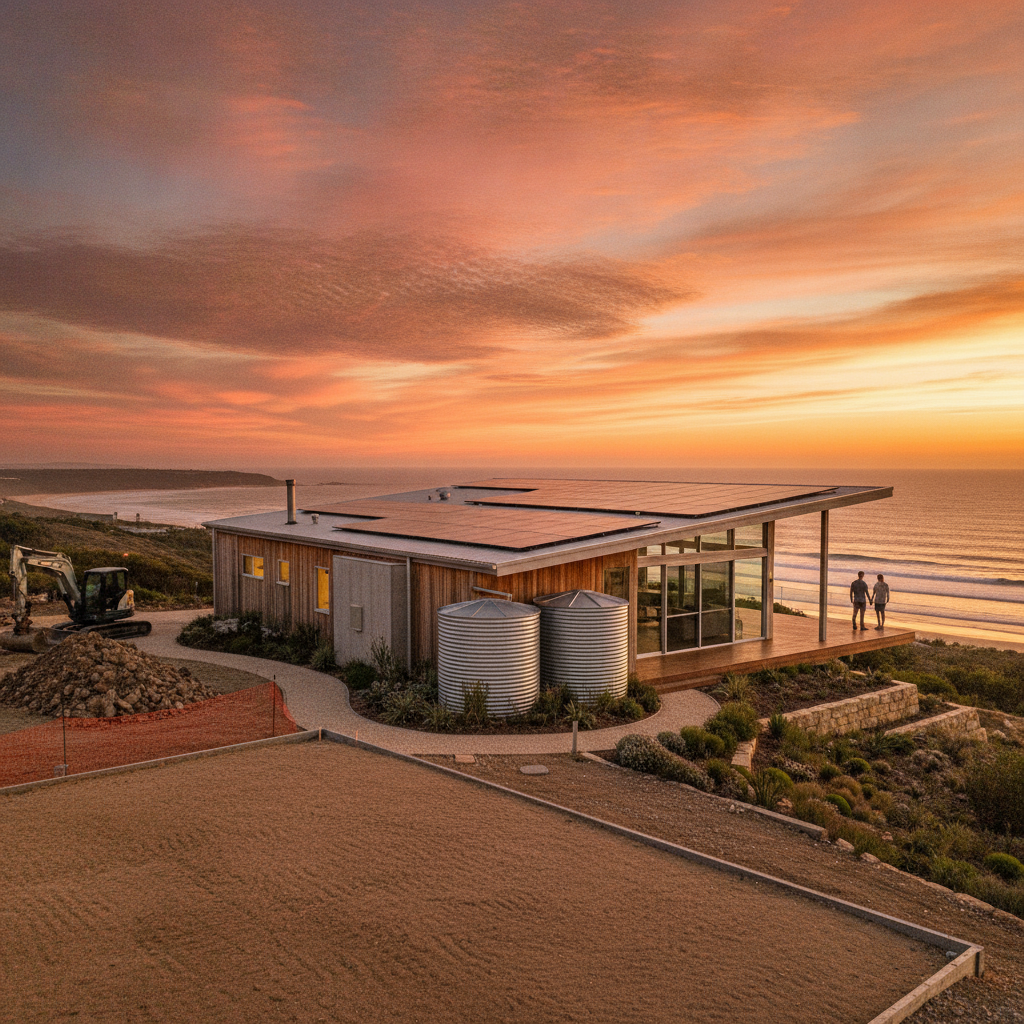
Implement silt fences to manage runoff and keep your neighbors happy. Once the pad is cut, consider installing temporary swale drains to divert water away from the building area. It is also the ideal time to plan your permanent stormwater solution, whether that is a connection to the council main or a large-scale rainwater tank system, which is a common requirement in many rural Australian regions.
Services and Pre-Plumb Requirements
Before the concrete for your slab is poured, all the beneath-slab services must be in place. This includes your sewer pipes, water inlets, and electrical conduits. Coordination is vital here. As an owner-builder, you will need to manage the timing between your plumber, your electrician, and your concreter.
Since your kit home comes with a fixed floor plan, the placement of these pipes must be millimetre-perfect. If a toilet waste pipe is 20cm off the mark, it can be a costly exercise to fix once the concrete has set. Always double-check your plumbing layout against the architectural drawings provided with your kit before the concrete truck arrives.
The Staging Area: Where Everything Goes
When your kit home arrives, it doesn't just come as one box. You will be receiving steel wall frames, roof trusses, bundles of cladding, roofing sheets, windows, and doors. You need a designated staging area that is:
- Level and Dry: Keep your components off the ground using dunnage (timber sleepers) to allow for airflow and prevent moisture damage.
- Organized: Ask the driver to unload items in the order you will need them. Your wall frames should be easily accessible first, while your insulation and internal doors should be tucked away safely for later.
- Secure: Even though steel frames are hardy, you want to protect your windows and doors from accidental damage or site theft.
Why Steel Frames Make the Next Steps Easier
Once your site is prepped and the kit is delivered, the benefits of modern building techniques become clear. Using BlueScope TRUECORE steel means your frames are straight and true. Unlike traditional timber, they won't warp, twist, or shrink while sitting on your site during the prep phase. This dimensional stability is a lifesaver for owner-builders, as it ensures that your windows will fit perfectly and your walls will be dead-straight every time.
A Final Checklist for Delivery Day
To ensure a smooth transition from a vacant site to a construction zone, run through this final list a week before delivery:
- Confirm with the local council if you need a temporary crossing permit for the heavy vehicle.
- Ensure your site toilet and temporary fencing are installed as per safety regulations.
- Check that you have a clear spot for a skip bin or waste management area.
- Verify that your site has power (either temporary pole or a reliable generator) and a water source.
Conclusion
Preparing your site is about more than just moving dirt, it is about creating a controlled environment where your build can thrive. By focusing on technical accuracy during the excavation, drainage, and service installation phases, you take the stress out of the delivery day. For an Australian owner-builder, the satisfaction of seeing those steel frames rise on a perfectly prepared pad is the first major milestone in creating a lifelong home. Take the time to get the groundwork right, and the rest of your kit home project will follow suit.