Taking the Reins: Your Guide to Owner Builder Approval in Australia
There is a unique sense of pride that comes with building your own home. In Australia, the owner builder path has become an increasingly popular route for those wanting to be deeply involved in the creation of their sanctuary. It is about more than just picking out paint colours, it is about project management, quality control, and the satisfaction of seeing a structure rise from the ground under your supervision.
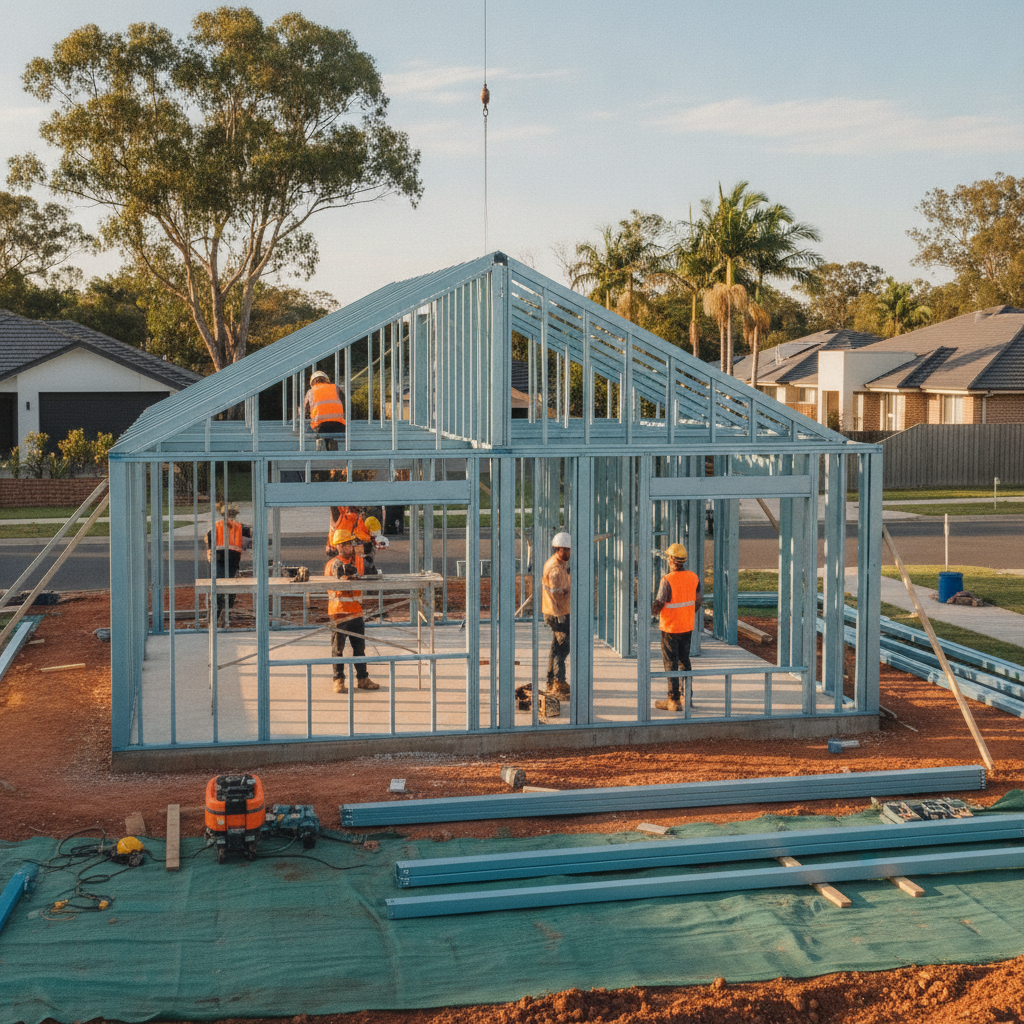
Kit homes are a natural partner for the owner builder journey. By providing a high quality skeleton, such as a BlueScope Steel TRUECORE frame, along with the external skin of the building, a kit home simplifies the logistics. However, before you can start bolting frames together or installing cladding, you need to clear the most important hurdle: getting legal approval to be an owner builder in your specific state or territory.
What Does it Actually Mean to be an Owner Builder?
Before diving into the paperwork, it is vital to understand the role. As an owner builder, you take on the legal risks and responsibilities usually reserved for a licensed general contractor. You are responsible for site safety, engaging licensed trades for specialised work like plumbing and electrical, and ensuring the entire project meets the Building Code of Australia.
The beauty of the kit home model is that it provides a structured starting point. You aren't starting with a blank stack of timber and a saw. You are starting with precision engineered components that fit together according to a set plan. This takes a significant amount of the guesswork out of the structural phase, which is often the most daunting part for a first timer.
State by State: Navigating the Approval Process
Regulations for owner builders vary significantly across Australia. Here is a breakdown of what you need to know for the major regions when planning your kit home build.
New South Wales (NSW)
In NSW, if the value of the work exceeds $10,000, you must obtain an owner builder permit from NSW Fair Trading. Before you can apply, you are required to complete an approved owner builder education course. This course covers the basics of site management, safety, and legal obligations. If the project value is over $20,000, you will also need to show that you have completed the 'Work Safely in the Construction Industry' (White Card) training.
Queensland (QLD)
The Sunshine State has a robust system managed by the Queensland Building and Construction Commission (QBCC). You need an owner builder permit for any work valued over $11,000. Similar to NSW, you must complete an approved owner builder course. A key tip for QLD residents: ensure your kit home supplier provides all the necessary engineering certificates early, as these are critical for your QBCC application and local council building approval.
Victoria (VIC)
In Victoria, the Victorian Building Authority (VBA) oversees owner builder projects. You can only be an owner builder for a single home in any given five year period. You must obtain a Certificate of Consent from the VBA if the value of the work is over $16,000. You will also need to complete an e-learning assessment provided by the VBA to demonstrate your understanding of the duties involved.
Western Australia (WA)
WA operates under the Building Services Board. If the value of your kit home project exceeds $20,000, you need to apply for owner builder approval. One specific requirement in WA is that the land must be owned in your personal name (rather than a company or trust) to qualify for the standard owner builder path.
Practical Tips for a Smooth Approval Process
Getting your permit is a legal requirement, but preparing for the permit is where the real work happens. Here are some hands-on tips from the owner builder perspective.
1. Get Your White Card Early
Even if your state doesn't strictly require a White Card for the permit application itself, you will need it to step onto a construction site legally. It is a one day course that provides foundational knowledge on safety. It is better to have this tucked away in your wallet before you even start looking at floor plans.
2. Understand the 'Value of Work'
When authorities ask for the value of the work, they aren't just asking what you paid for the kit. They generally mean the total estimated cost of the completed project, including materials, labour (even if you are doing it yourself), and finishing. Be honest and realistic in these estimates to avoid issues with insurance or inspections later on.
3. The Importance of Detailed Plans
Council and building certifiers need to see exactly what you are building. When you choose a kit home, ensure your provider includes comprehensive architectural drawings and site-specific engineering. Using steel frames made from BlueScope Steel is often a benefit here, as the engineering is precise and widely recognised by Australian certifiers for its durability and termite resistance.
The Kit Home Advantage for Owner Builders
Why choose a kit home for your DIY project? For the owner builder, it is all about risk mitigation and efficiency. When you manage a build from scratch, you are responsible for sourcing every stud, every sheet of bracing, and every box of screws. A kit home streamlines this process.
The steel frames used in modern Australian kit homes are incredibly lightweight compared to traditional timber, making them easier to handle on site without heavy machinery. Because they are manufactured to millimetre-perfect specifications, you won't spend days on site with a plane trying to level out a wonky wall. This accuracy flows through to every other stage of the build, making it easier for your plasterers and joiners to achieve a high quality finish.
Essential Responsibilities Once You Are Approved
Once that permit is in your hand, the real journey begins. As the project manager of your own home, your focus should shift to three main areas:
Site Management and Safety
You are the site supervisor. This means ensuring the site is fenced, has appropriate signage, and that every trade who enters is licensed and follows safe work practices. Keeping a clean site is not just about aesthetics, it is about reducing trip hazards and maintaining an efficient workflow.
Engaging Trades
Unless you are a licensed plumber or electrician, you cannot do those jobs yourself. Part of being a successful owner builder is building a good rapport with local trades. When you tell them you are building a kit home with a steel frame, they often appreciate the straight lines and lack of rot or twists, which makes their job of running wires and pipes much simpler.
Documentation and Inspections
Keep a detailed site diary. Take photos of everything, especially things that will be covered up by walls, like insulation and plumbing runs. You will need to coordinate with a building surveyor or inspector at critical stages, such as the footings/slab, the frame stage (where your steel frames will be inspected), and the final completion.
A Note on Longevity and Design
Building your own home is an investment in your lifestyle. Australian conditions can be harsh, which is why kit homes have evolved to be so resilient. Choosing materials like TRUECORE steel frames and quality cladding ensures that the hard work you put in today will stand up to the sun, wind, and rain for decades to come. Modern kit designs offer open-plan living and contemporary aesthetics that rival any bespoke architectural build, allowing you to create a home that reflects your personal style.
Final Thoughts: Is the Owner Builder Path for You?
Becoming an owner builder in Australia is a challenging but incredibly rewarding pursuit. It requires a level of dedication, a willingness to learn, and an organised mind. By choosing the kit home route, you give yourself a head start with a proven system and high quality materials. Getting your state approvals in order is simply the first step in a journey that ends with you turning the key in a front door that you helped put there.
Take the time to research your local council requirements, enrol in your state's mandatory courses, and start conversations with your kit provider early. With the right preparation, the home of your dreams is well within your reach.