Stop building rooms you'll never use
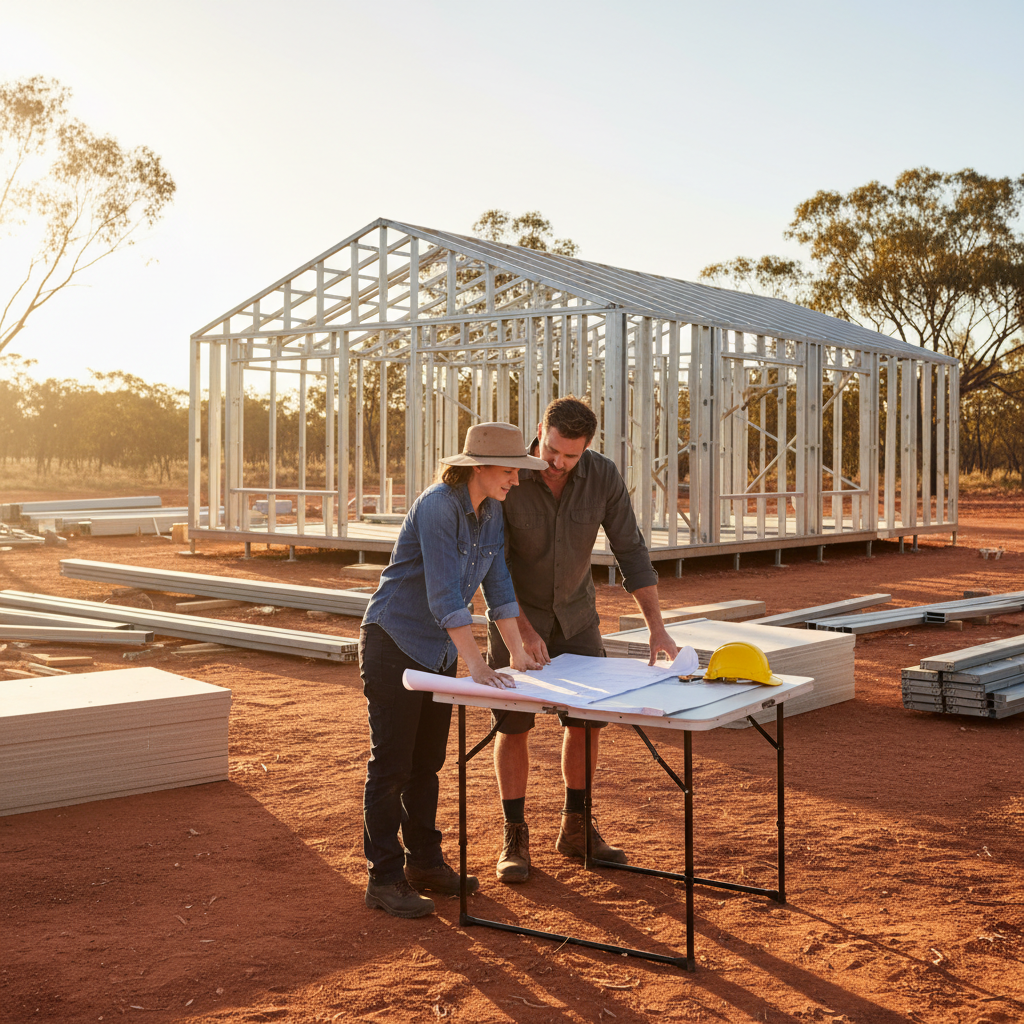
I was standing on a site up near Gympie last month, looking at a half-finished frame with a bloke name Gav. He'd spent twenty years in a suburban brick-and-tile where every room was a box. The kitchen was separate. The lounge was separate. Even the hallway felt like a tunnel. He told me the best thing he ever did was scrap the formal dining room in his new kit home plans. Nobody uses a formal dining room in 2024. Not in Australia. We live in our kitchens. We live on our decks. If your floor plan doesn't reflect that reality, you're just paying for plasterboard and doors that'll stay open 99 percent of the time anyway.
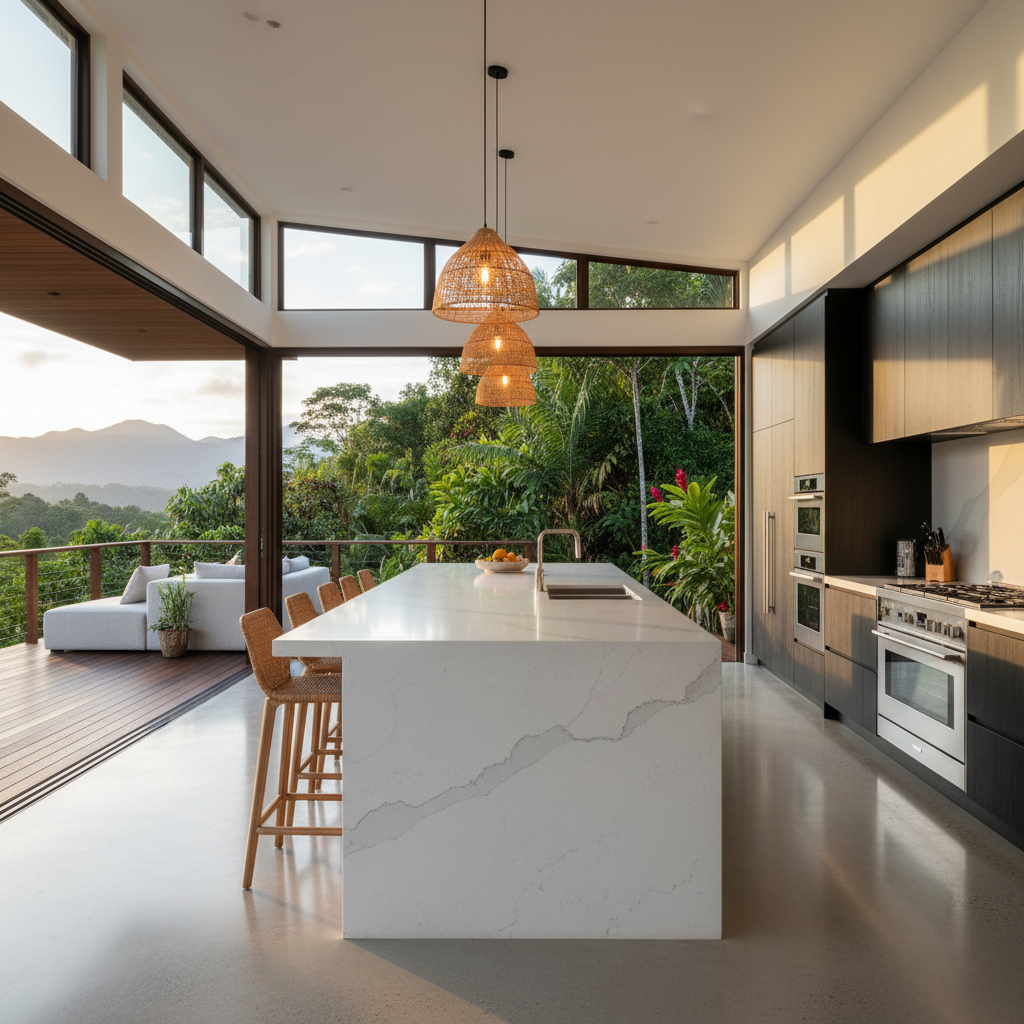
Open plan living isn't just about knocking down a wall and hoping for the best. It's about flow. It's about being able to see the cricket on the telly while you're flipping sausages in the kitchen, or keeping an eye on the kids in the backyard while you're making a coffee. In the kit home world, this shift toward massive, airy spaces has changed how we think about structure. You can't just have a thirty-foot span without some serious backbone.
The hidden engineering of the great room
When you walk into a modern open plan kit home, you'll notice the ceiling just seems to float. There aren't usually many load-bearing timber sticks cluttering up the middle of the room. This is where steel frame construction really earns its keep. Because we use BlueScope TRUECORE steel, we can achieve spans that timber just can't touch without needing a massive, bulky beam that drops down and ruins your ceiling height. It's light. It's straight as a gun barrel. Plus, it gives you that crisp, modern look because steel doesn't warp or twist over time like seasoned hardwood sometimes does when the humidity hits 90 percent in January.
I always tell owner-builders to look at the roof trusses. In a kit home, those steel trusses are doing the heavy lifting. Because they're engineered to be incredibly strong, you can often leave huge areas of your floor plan completely open. No awkward pillars in the middle of your lounge room. No random stumpy walls. Just one big, beautiful space that catches the breeze from the sliding doors. Speaking of doors, if you're going open plan, do yourself a favor and go for the widest stacker doors the budget allows. It's the difference between a house that feels 'nice' and a house that feels like a luxury retreat.
Zoning without walls
One mistake people make with open plans is making it too open. You don't want to feel like you're living in a basketball stadium. You need 'zones'. This is where the lifestyle aspect kicks in. Instead of a wall, use your furniture or floor levels to define the space. A kitchen island bench is the classic 'anchor'. It's the hub. It says 'this is where we eat and talk', while the rug ten feet away says 'this is where we crash and watch movies'.
Think about acoustic privacy too. Open plan is great until someone wants to watch an action movie while you're trying to read in the next zone over. I suggest using high-density insulation batts in the internal walls that do exist around bedrooms and bathrooms. It's a small cost during the build phase but it saves your sanity later. When you're an owner-builder, you've got the power to make these calls. You aren't stuck with the 'standard' cheap stuff a volume builder would chuck in.
Practical tips for the kit home owner-builder
If you're looking at kit home designs right now, pull out a red pen. Look at the kitchen-to-alfresco flow. Is it seamless? If you have to walk around three corners to get a plate of steaks to the BBQ, the design has failed. You want that indoor-outdoor transition to be effortless. Most of our kits come with generous window and door allowances, but you need to think about orientation. North-facing glass is your best friend in a southern winter, but in the Top End, you'll be screaming for deep eaves and shade.
- Check your BAL rating early. If you're in a bushfire-prone area (BAL-29 or BAL-40), your window and door requirements change. Steel frames are a massive advantage here because they aren't combustible.
- Don't skimp on the slab. Most kit homes sit on a concrete raft slab. Make sure your plumber has your 'wet area' locations 100 percent sorted before that concrete truck arrives. There's no moving a toilet drain once the slab is poured.
- Organize your trades early. Electricians and plumbers love steel frames because the service holes are already punched out for them. It saves them drilling through timber all day, which should, in theory, save you a bit on the hourly rate if they're honest blokes.
- Consider ceiling heights. An open plan space feels twice as big if you bump the ceilings from the standard 2.4m up to 2.7m. It's a small upgrade in the kit cost for a massive lifestyle payoff.
Why steel makes sense for the DIY crowd
I've seen plenty of blokes and women tackle their own builds. The reason they go for steel kits isn't just because it's termite-proof, though in places like Queensland or WA, that's a huge weight off your mind. It's because the frames arrive like a giant Meccano set. Everything is pre-punched. Everything is labeled. You aren't standing there with a tape measure and a hand saw trying to figure out if your vertical studs are plumb. If the holes line up and the bolts go in, the house is square. It takes the guesswork out of the structural side of things.
Also, steel frames are light. You aren't going to break your back lifting a wall section into place with a couple of mates. It makes the site cleaner, too. No piles of sawdust or offcuts rot in the dirt. Just a tidy site and a frame that'll stay straight for fifty years. Because let's face it, if you're doing the hard yards of owner-building, you want to do it once and do it right.
The 'Big Room' lifestyle
At the end of the day, we aren't just building a shed to sleep in. We're building a place for Sunday lunches and Christmas mornings. The open plan trend in Australia isn't a fad; it's a response to how we've realized we actually want to live. We want light. We want air. We want to feel the breeze coming off the coast or the hills. By choosing a kit home with an intelligent, open layout and a solid steel spine, you're setting yourself up for a house that works with you, not against you. Don't be afraid to customize. Move a window. Delete a wall. Make it yours. That's the whole point of doing it yourself.
So, next time you're scrolling through floor plans at midnight, stop looking at the square meterage and start looking at the sightlines. Can you see the sunrise from the kitchen? Can you talk to your guests while you're prepping dinner? If the answer is yes, you're on the right track to a home that actually fits the Australian lifestyle.