Owner Builder Approval: Your State-by-State Kit Home Checklist
So, you’ve decided to tackle a kit home. Good on ya. You’re not alone. Heaps of Aussies are clocking that building your own place, on your own terms, makes a lot of sense. But before you even think about swinging a hammer or pouring a slab, you need to get your owner builder approval sorted. And let me tell you, it’s not a one-size-fits-all thing across Australia. Each state and territory has its own hoops you gotta jump through. We’ll go through NSW, VIC, QLD, SA, WA, and TAS here. NT and ACT have their own rules too, but these six cover a fair chunk of the country.
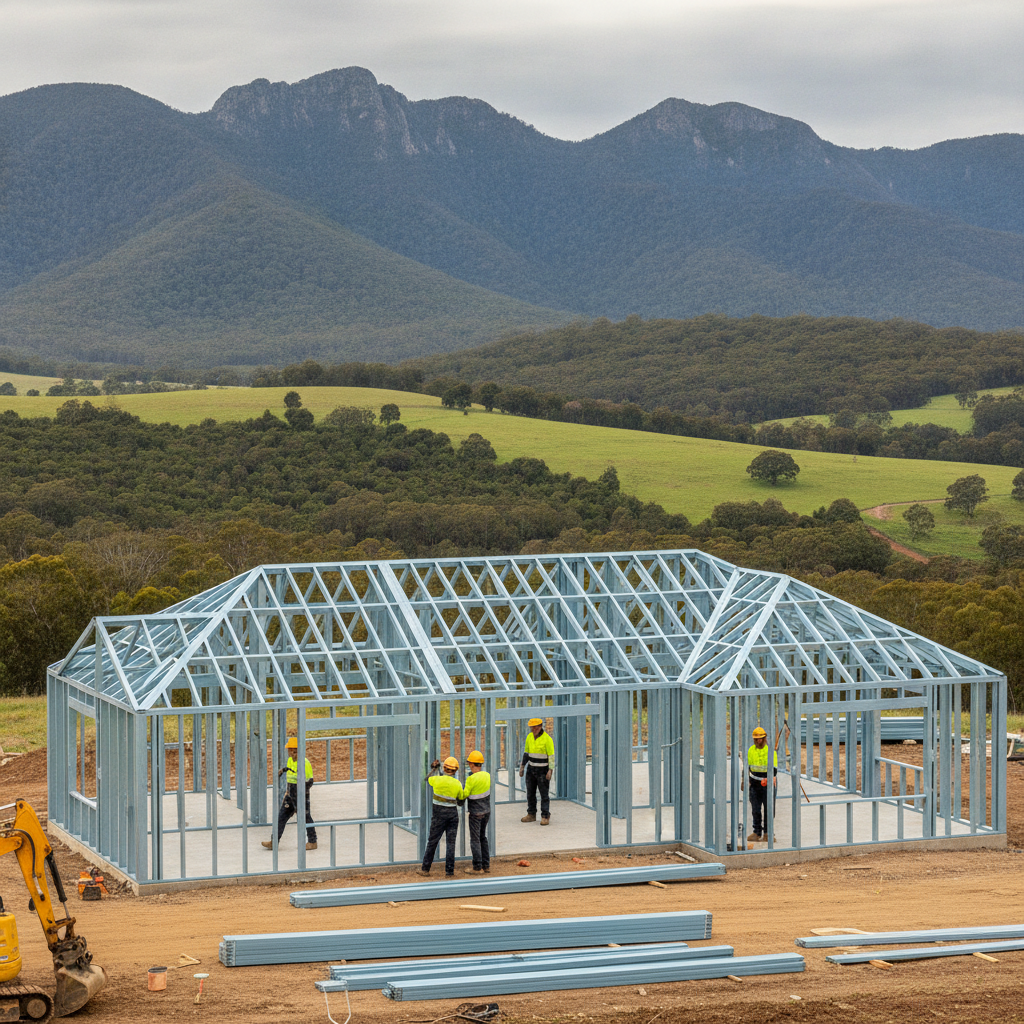
It’s a bit of paperwork, sure, but it’s there to protect you, the future homeowners, and anyone working on site. Get this wrong, and you’re looking at fines, insurance nightmares, and delays you just don’t need. Especially when you’re building with steel frames, like the TRUECORE stuff we use, you want everything above board. Steel frames might be tough and straight, but the council ain't always that forgiving if you skip a step.
Why Owner Builder Approval Matters for Your Kit Home
Basically, this approval says, “Yeah, this person knows enough to run a building site and is responsible for it.” It means you’re taking on the role of head contractor. You’ll be hiring tradies, making sure the work is up to scratch, organising materials – including getting your kit delivered – and dealing with all the council inspections. It's a big job, not for the faint-hearted. But you get control, and potentially save a truckload of cash.
Without it, you can’t legally do building work over a certain value. In most states, that threshold is pretty low, so a whole kit home project will always need it. It also ties into your insurance. Public liability, personal injury, and home warranty insurance – these are all critical. Good luck getting coverage if you’re building illegally.
New South Wales (NSW) Owner Builder Rules
NSW is pretty strict. To get your owner builder permit from NSW Fair Trading, you usually need to tick a few boxes:
- Over 18: Obvious, right?
- Land Ownership: You gotta own the land, or have a long-term lease.
- Live There: You intend to live in the home once it’s built.
- One in Five Years: You can only get one permit every five years, unless there are special circumstances. They don’t want people just building and flipping houses without a builder’s licence.
- Project Value: If your project is valued over $10,000, you need the permit. Spoiler: a kit home will always be over this.
- Owner Builder Course: This is the big one. You need to complete an approved owner builder course. It covers things like work health and safety (WHS), basic construction principles, and your legal responsibilities. Don't skimp on this. It's actually useful.
- WHS Induction: If the work is over $250,000, you also need a White Card (general construction induction training). It's a short course, but mandatory for working on a site.
You apply through Fair Trading. You’ll need your course certificate, proof of identity, land title, and a copy of your council-approved plans. Get your DA or Complying Development Certificate (CDC) first, because they’ll ask for it.
Victoria (VIC) Owner Builder Rules
Victoria's setup is handled by the Victorian Building Authority (VBA). Their rules are a bit different.
- Project Value: For domestic building work over $16,000, you need a Certificate of Consent from the VBA. Yes, $16,000. Your kit home will sail past that.
- Land Ownership: Same as NSW, you need to own the land.
- Intention to Reside: You must intend to live in the house.
- One in Five Years: Similar to NSW, one owner builder project every five years.
- No Course Needed: Unlike NSW, there's no mandatory owner builder course in VIC. However, that doesn't mean you shouldn't get educated. Seriously, if you're going into this blind, you're asking for trouble. Grab some books, do an online course, talk to tradies.
- Knowledge & Skills: While there's no course, the VBA does expect you to have the knowledge and skills to manage the building project. They'll assess your application, and if they think you're way out of your depth, they might knock you back.
You'll need your building permit application submitted or approved by your local council or building surveyor before applying to the VBA for the Certificate of Consent. Get all your ducks in a row. They'll also want to see your plans, permits, and usually a cost estimate for the work.
Queensland (QLD) Owner Builder Rules
Queensland’s Building and Construction Commission (QBCC) looks after owner builder permits up there. It's a similar story to the other states.
- Project Value: If the work is valued over $11,000 (yes, even lower), you need a permit.
- Owner Builder Course: You need to complete an approved owner builder course. This is non-negotiable.
- One in Six Years: QLD gives you six years between projects, which is a bit more generous than some states.
- Live There: Yep, intent to live in the house.
- Land Ownership: Must own or have a lease on the property.
Apply directly to the QBCC. You'll need your course certificate, proof of ownership, a copy of the contract for purchase of the kit home (if you've got it), and plans. Don't forget, even for a steel frame kit, you still need to adhere to all the local building codes, especially if you're in a cyclonic region or a high BAL (Bushfire Attack Level) area. TRUECORE steel frames inherently resist fire and termites, which is a plus, but you still need all the specific construction details designed in.
South Australia (SA) Owner Builder Rules
Consumer and Business Services (CBS) in South Australia handle owner builder matters. They're a bit more relaxed on the course front, but still want you to be competent.
- Project Value: For work over $12,000, a Development Approval (DA) from your council is needed. The owner builder rules come into play when you’re doing that work yourself.
- Declaration: You need to sign a declaration stating you understand your responsibilities.
- No Course: SA doesn't mandate an owner builder course, but like VIC, common sense dictates you should educate yourself. There's plenty of info out there, from industry associations to online resources.
- One Project: You can generally only get one owner builder approval in a five-year period.
You essentially apply for your development approval through your local council. They'll be the ones checking your plans, your proposed construction, and making sure everything complies with the NCC (National Construction Code). When you're dealing with a kit home, especially one with a pre-engineered steel frame, a lot of the structural work is already taken care of design-wise, which helps with DA, but your site-specifics are still on you – foundations, services, connections. This is where your owner builder responsibilities kick in.
Western Australia (WA) Owner Builder Rules
The Department of Mines, Industry Regulation and Safety (DMIRS) oversees owner builder requirements in WA. Their process involves a bit more emphasis on proving competence without necessarily a formal course.
- Project Value: If the value of the work exceeds $20,000, you need an owner builder permit.
- Knowledge & Skills: You must demonstrate you have sufficient knowledge and skills to manage the construction. This could be through previous experience, relevant qualifications, or even a detailed project plan.
- Live There: Yep, intention to reside.
- One in Six Years: Similar to QLD, you’re generally limited to one owner builder permit every six years.
- Land Ownership: Must own the land.
You apply to DMIRS directly. You'll need your council's building permit application details, proof of ownership, and documents showing your competence. This might mean providing a resume, details of past projects, or a detailed construction schedule. Be prepared to show them you've really thought this through, not just on the design, but on the management side too. A kit home streamlines things, but you're still coordinating the slab, plumbing, electrical, and fit-out.
Tasmania (TAS) Owner Builder Rules
Tasmania’s got its own system, managed by Consumer, Building and Occupational Services (CBOS). They're pretty straightforward.
- Project Value: If the work is over $12,000, you need to be an owner builder.
- No Course: Similar to VIC and SA, there's no mandatory owner builder course.
- Declaration: You need to sign a declaration confirming your understanding of responsibilities.
- Land Ownership: You need to own the property.
- One Every 10 Years: Tasmania has the longest gap – generally only one owner builder permit every 10 years. They really want you building your own primary residence.
Apply for your owner builder permit through CBOS. You’ll need your local council’s building permit information, details of the project, and proof of land ownership. In Tasmania, especially with some of the harsher weather conditions you can get, proper design and construction are crucial. Using a well-engineered steel frame kit gives you a head start, but you, as the owner builder, are still responsible for making sure the whole build, including all the connections and finishes, stands up to the local conditions and the NCC.
General Tips for All Owner Builders (No Matter Your State)
- Read the Fine Print: Seriously, every state’s owner builder guide has pages of info. Don’t skim it. Read every word.
- Get Your Plans Approved First: Before you even think about applying for owner builder, you usually need council approval for your home design. This means your Development Application (DA) or Complying Development Certificate (CDC) should be in hand. Your kit home supplier will provide the engineering for the frame, but your site plan and overall design still need council sign-off.
- Insurance is Non-Negotiable: Public liability insurance, personal accident insurance, and home warranty insurance (if required in your state). Don’t start without it. A slip, a fall, a dropped tool – it happens.
- Know Your Limits: Be honest with yourself about what you can do. If you've never even changed a lightbulb, maybe don't plan on doing all the electrical. Hiring licensed tradies for critical work like plumbing, electrical, and structural concrete is always a good idea. Even if you're handy, know when to call in the pros.
- WHS (Work Health and Safety) is Paramount: You’re the boss. You’re responsible for everyone’s safety on site, including your mates helping out. Hard hats, safety boots, clear work zones. Don’t cut corners.
- Budget for Contingencies: Things go wrong. Weather, supplier delays, discovering something unexpected once you start digging. Always add 10-15% extra to your budget for those 'just in case' moments.
- Keep Records: Every receipt, every email, every council document, every invoice from a tradie. Keep it organised. You'll thank yourself later.
Building a kit home is a massive undertaking, but it's incredibly rewarding. Getting that owner builder approval is your first real step on that path. It shows you’re committed. Do the legwork, follow the rules for your state, and you’ll be well on your way to that new place.