Owner Builder Approval: Your Ticket to a Rural Kit Home Dream
Right, so you've been eyeing off that patch of land outside town, maybe a few acres with a bit of bush, perfect for a kit home. You've probably spent countless nights on the couch, laptop open, looking at designs – a three-bedder, maybe something with a big verandah, imagining the quiet. But before you even think about ordering a steel frame kit, there's a crucial hurdle: becoming an owner-builder. For many dreaming of a rural setup, it's not just an option, it's the only practical way to get things done without blowing the budget. And trust me, the approval process isn't the same across the country. It's a bit of a dog's breakfast, state by state.
This isn't just about saving a buck, though that's a big part of it. It's about control. It's about knowing every bolt, every timber, every bit of plumbing that goes into your place. You’re the boss. But with that control comes responsibility, and a fair bit of paperwork. Let's dig into what you'll actually need to do to get your owner-builder approval, depending on where your block of dirt is.
Why Owner-Builder? Especially Out Rural
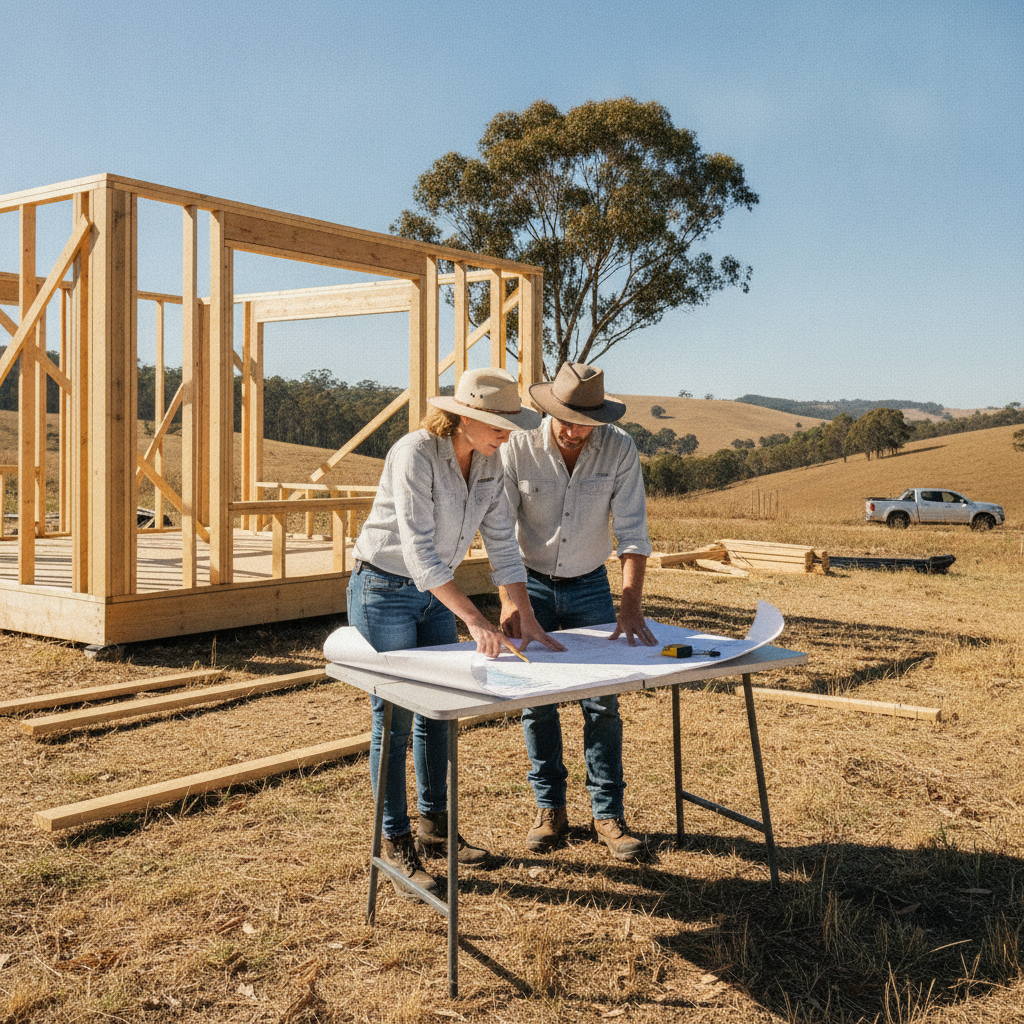
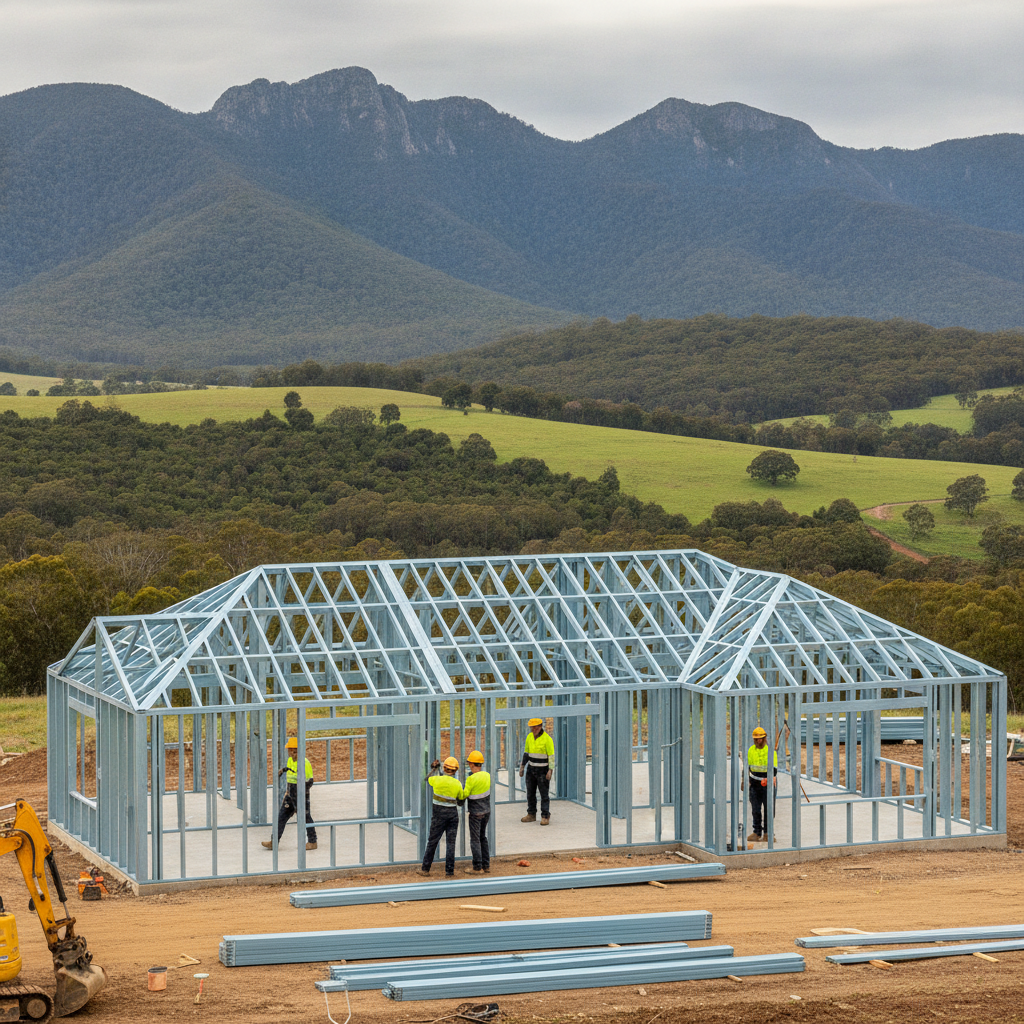
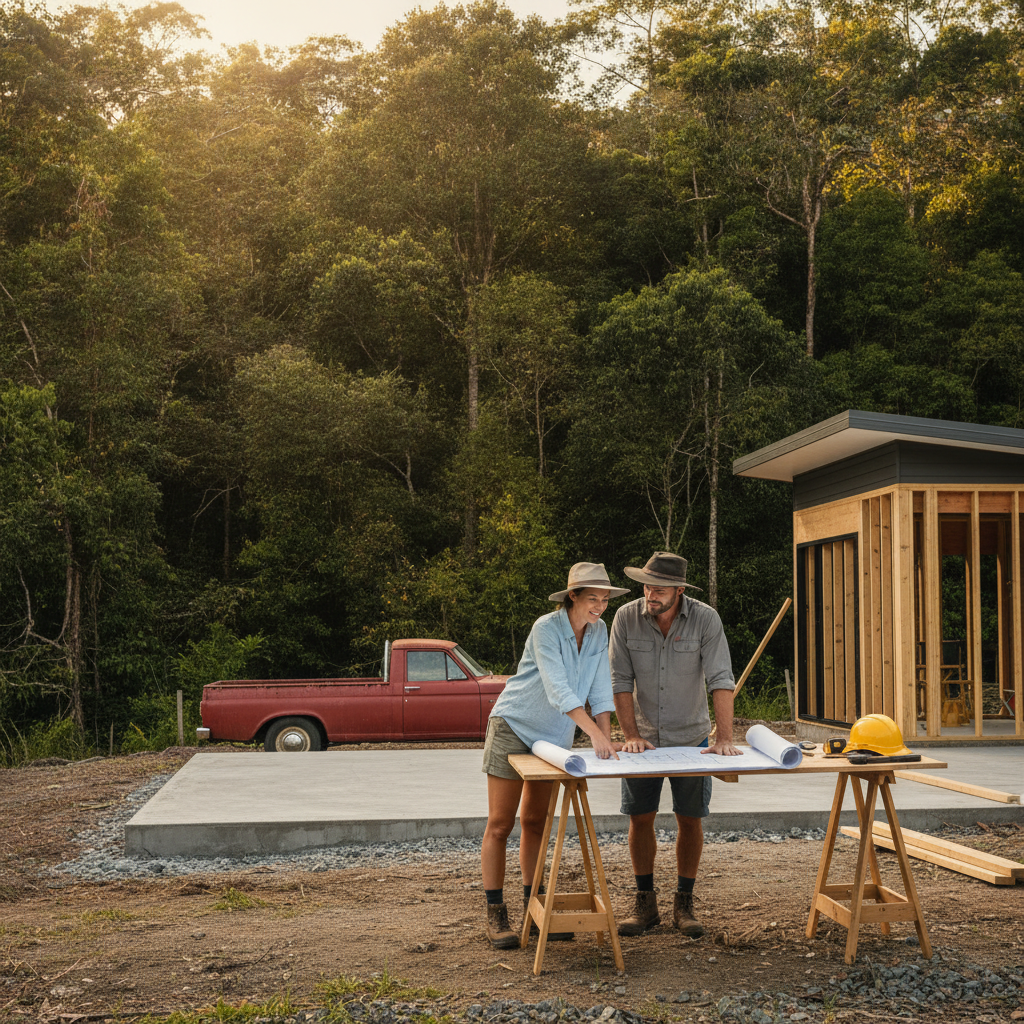
Out in the sticks, finding a builder willing to travel for a reasonable price? Good luck with that. Often, they're flat out closer to town, or the travel costs make your eyes water. So, you become the project manager. You’re calling the shots, organising the tradies – the earthmover, the concretor for your slab, the plumbers, the sparkies. You're the one sorting out when the roof sheets arrive and making sure the windows are ready for install when the frames go up. It’s a massive undertaking, yeah, but it's incredibly rewarding when you finally get the keys and know you built the damn thing yourself. Plus, with a good quality steel frame kit, you're starting with a solid, square foundation, which makes a heap of the later stages simpler.
Being an owner-builder means you're taking on the legal responsibilities of a builder, which is why the states have these approval processes. They want to make sure you know what you're doing, or at least that you've got some clue about managing a construction site and understanding your obligations. Safety, quality, environmental stuff – it all falls on you.
New South Wales: Getting Your Owner-Builder Permit
In NSW, you'll be dealing with NSW Fair Trading. To get an owner-builder permit, you've got a few hoops to jump through. First up, you need to be the owner of the land or have a long-term lease. Obvious, but worth stating.
You'll need to complete a recognised owner-builder course. These courses cover things like WHS (Work Health and Safety), project management, legal obligations, and basic building technology. They’re online, usually, and you can knock them over in a weekend if you're keen. You'll get a Statement of Attainment at the end. Make sure it's a course approved by NSW Fair Trading, don't just pick any old thing.
Then there's the 'value of work' thing. If the work, including materials and labour (even your own time, effectively), is valued over $10,000, you need a permit. For a kit home, especially a rural one, you're definitely going over that. You'll also need to prove you live on or intend to live on the property once it's finished. This isn't for speculators, it's for people building their own homes.
Documentation is key here. Get your development application (DA) or complying development certificate (CDC) sorted with your local council first. You'll need those approvals. Then it’s your plans, specifications, and a detailed cost estimate. They want to see you've thought it through. Apply online via the NSW Fair Trading website. They're usually pretty good, but sometimes it takes a bit for them to process it all, especially if you're missing something. Don't leave it to the last minute.
Queensland: Building Your Dream in the Sunshine State
Queensland's system is run by the Queensland Building and Construction Commission (QBCC). Similar to NSW, you need to own the land and intend to live in the house. You can only get one owner-builder permit every six years, unless there are special circumstances. They're not keen on people making a habit of it.
The value threshold for needing a permit in Queensland is $11,000. Again, your kit home will easily sail past that. You'll need to complete an approved owner-builder course, similar to NSW, covering safety and management. Get that Certificate III in Business (Owner Builder) or an equivalent. They're pretty strict about it.
The application form needs to be filled out carefully. You'll attach your course certificate, proof of ownership, and your building approval from your local council. The QBCC website has all the forms and guides. They expect you to understand your obligations under the Building Act 1975 and the Work Health and Safety Act 2011. Don't skim over that stuff. If you're building with steel frames, especially out where termites are an issue, it's a good talking point for your application – showing you're thinking about long-term durability and common rural problems.
Victoria: Rules from the Victorian Building Authority (VBA)
In Victoria, it's the Victorian Building Authority (VBA) that handles owner-builder applications. The requirement for a Certificate of Consent from the VBA kicks in if the value of the domestic building work is over $16,000. Most kit homes will clear this by a mile.
You need to be the owner of the land and intend to live in the dwelling. Fair enough. Unlike NSW and QLD, Victoria doesn't generally require you to complete a specific owner-builder course before applying. However, and this is a big however, you *are* expected to demonstrate a sufficient level of knowledge to manage the project safely and effectively. This means you need to be able to understand plans, manage trades, and know your way around building regulations. If you haven't got a background in construction, you might still want to do a course just for your own peace of mind, even if it's not strictly mandatory for the application.
You'll need a building permit from your local council first. The VBA will want to see that. Then it’s proof of ownership, and a declaration that you understand your responsibilities. They'll also check if you've done any other owner-builder projects in the last five years. You’re typically limited to one project every five years. The VBA website is your go-to for forms and guidance. Make sure all your permits from council are locked in before you approach the VBA.
Other States: A Quick Rundown
- South Australia: If your project is valued over $12,000, you need an owner-builder licence from Consumer and Business Services (CBS). You need to be over 18, own the land, and intend to live there. No mandatory course, but you need to demonstrate competence and knowledge of building practices. They'll ask for plans and specifications.
- Western Australia: Building Commission WA is your port of call. An owner-builder permit is needed for work over $20,000. You must live in the house for at least three years after completion. You’ll need to do an owner-builder course, usually a unit of competence from a Certificate IV in Building and Construction. Proof of ownership, plans, and council approval are all required.
- Tasmania: Consumer, Building and Occupational Services (CBOS) handles it. If the work value is over $12,000, you need a permit. You have to own the land and live in the home. No specific course, but you're expected to manage the job competently. You can only get one permit every five years.
- ACT: Access Canberra is the relevant authority. If the work is over $11,250, you need an owner-builder licence. You must own the land and occupy the building for at least a year after completion. You'll need to complete an approved owner-builder course.
- Northern Territory: Building Advisory Services issues permits. If the work is over $12,000, an owner-builder permit is required. You must be the owner-occupier. No specific course, but they need to be satisfied you can manage the construction safely and to standard.
Top Tips for Rural Owner-Builders
- Do the Course (Even if Not Mandatory): Seriously, even if your state doesn't force a course on you, do one. It'll give you a massive leg up on understanding your responsibilities, WHS requirements, and what to expect. Knowledge is power, and it can save you a heap of headaches and money down the track.
- Council First, Always: Before you even think about owner-builder permits, get your development approvals and building permits from your local council. This is the big one. They'll set out exactly what you can build, where, and to what standards. And for rural blocks, this often means bushfire attack level (BAL) ratings, sewerage systems, water tanks, and access roads. Don't skip this, or your kit home dream will hit a brick wall.
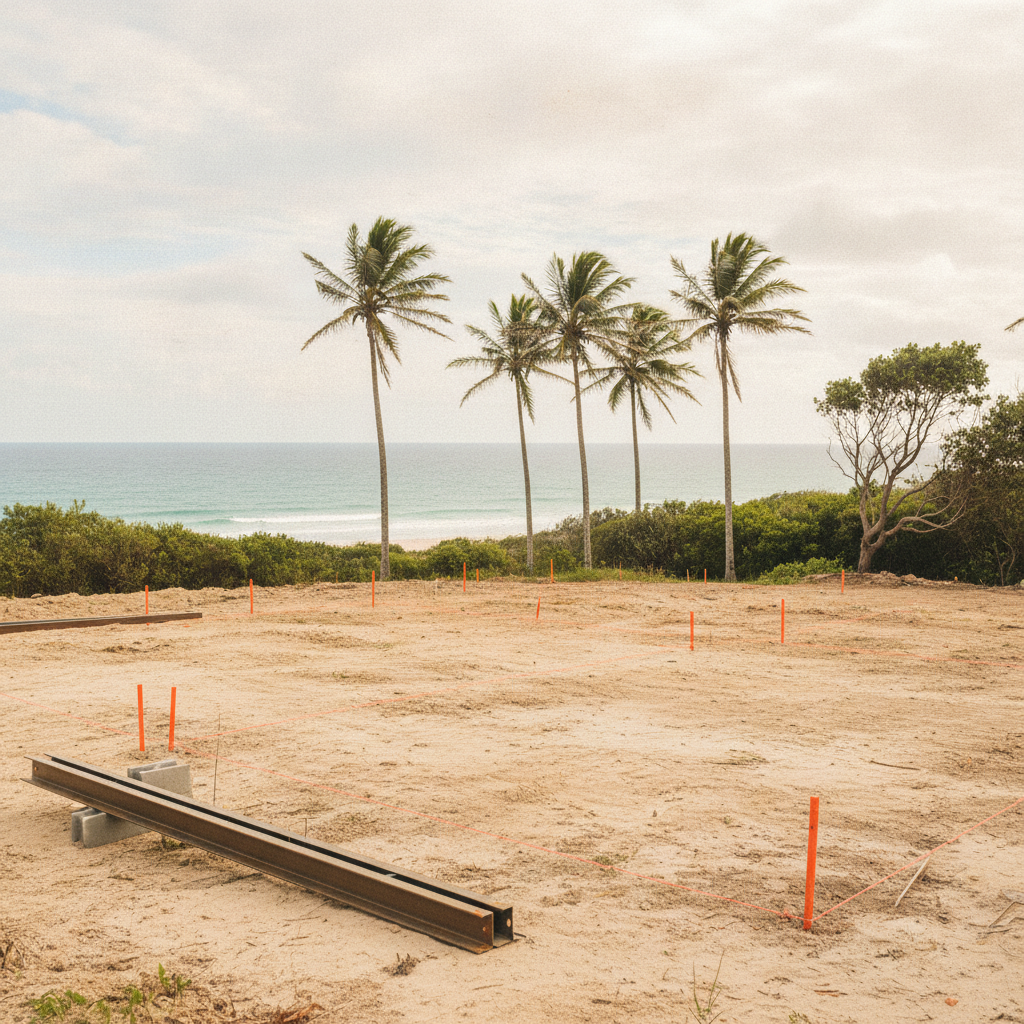
- Get Your Site Surveyed Properly: For rural blocks, you need to know exactly where your boundaries are, any easements, and the fall of the land. A good survey will save you grief when it comes to positioning your house, planning earthworks, and connecting services.
- Understand WHS (Work Health and Safety): As an owner-builder, you are responsible for the safety of everyone on your site – yourself, family helping out, and all the tradies you hire. Get proper site inductions done. Have a first aid kit. Make sure scaffolding is erected by professionals. It's not a joke, people get hurt.
- Keep Meticulous Records: Every single receipt, every email, every phone call summary, every photo of the build. Document everything. This isn't just for tax; it's your proof if there are ever any disputes with tradies or suppliers.
- Hire Good Tradies: Don't just go for the cheapest quote. Ask for references, check their licences, and look at their previous work. A good concretor laying a perfect slab for your steel frame kit is worth their weight in gold. A dodgy one can mess up your whole project. Get detailed quotes in writing, outlining exactly what's included.
- Know Your Kit: Read the assembly manuals for your kit home cover to cover. Understand how the steel frames bolt together, how the roof goes on, the cladding system. The more you know, the smoother the build.
Becoming an owner-builder for your rural kit home is a big commitment. It's not just about getting the permit; it's about being ready to run a construction site. But with the right preparation, understanding the rules for your state, and a bit of grunt work, that dream of yours, living out in the quiet, in a place you built, can absolutely become a reality. It's a tough gig, but it's one of the most satisfying things you'll ever do.