Creating a Sanctuary for the Whole Family
In Australia, our pets aren't just animals that live in the backyard. They are members of the family who join us for morning coffees on the deck and movie marathons on the sofa. As the popularity of kit homes continues to rise across the country, more owner-builders are looking for ways to integrate their furry friends into the very fabric of their new home design. Whether you are building a coastal retreat or a rural homestead, the flexibility of a kit home allows you to tailor your space to suit your lifestyle, and for many of us, that lifestyle revolves around our pets.
Designing a pet-friendly home is about more than just putting a dog bed in the corner. It is about choosing materials that withstand the wear and tear of paws, creating layouts that facilitate easy cleaning, and ensuring your companions are safe and comfortable. This guide explores the latest trends in pet-centric design and offers practical tips for anyone embarking on an owner-builder journey with their pets in mind.
The Foundation: Flooring That Stands the Test of Time
When you are managing your own kit home project, one of the most critical decisions you will make during the fit-out phase is flooring. While soft, plush carpets might feel great underfoot, they are often a magnet for pet hair, stains, and smells. Instead, Australian homeowners are leaning toward hard-wearing surfaces that look stylish but can handle a frantic greeting from a Golden Retriever.
Highly Durable Options
- Polished Concrete: This is a popular choice for modern kit homes. It is incredibly durable, cool in the Australian summer, and very easy to mop. Because a kit home typically sits on a concrete slab, polishing the structural floor is a clever way to save on material costs while achieving a high-end industrial look.
- Luxury Vinyl Planks (LVP): Not to be confused with the old-school lino, modern LVP is scratch-resistant, waterproof, and surprisingly soft. It mimics the look of timber without the risk of claw marks.
- Tiles: Large format porcelain tiles are a classic for a reason. They stay cool and are virtually impossible for a pet to damage. Just ensure you choose a grout color that is a little darker to hide any dirt tracked in from the garden.
The Ultimate Mudroom: A Great Australian Addition
One of the biggest advantages of building a kit home is the ability to choose a floor plan that truly works for your environment. If you live in a region with red dirt or wet winters, a mudroom is a game-changer. Positioned at the entry point from the backyard or garage, the mudroom serves as a transition zone.
For pet owners, this space can be levelled up with a DIY dog wash station. By planning your plumbing early with your trades, you can install a raised tiled basin with a handheld shower head. This makes washing the dog after a trip to the beach or a muddy walk significantly easier on your back. Include some built-in cabinetry using the same materials as your kitchen for a cohesive look, providing a dedicated spot for leashes, treats, and grooming supplies.
Seamless Indoor-Outdoor Living
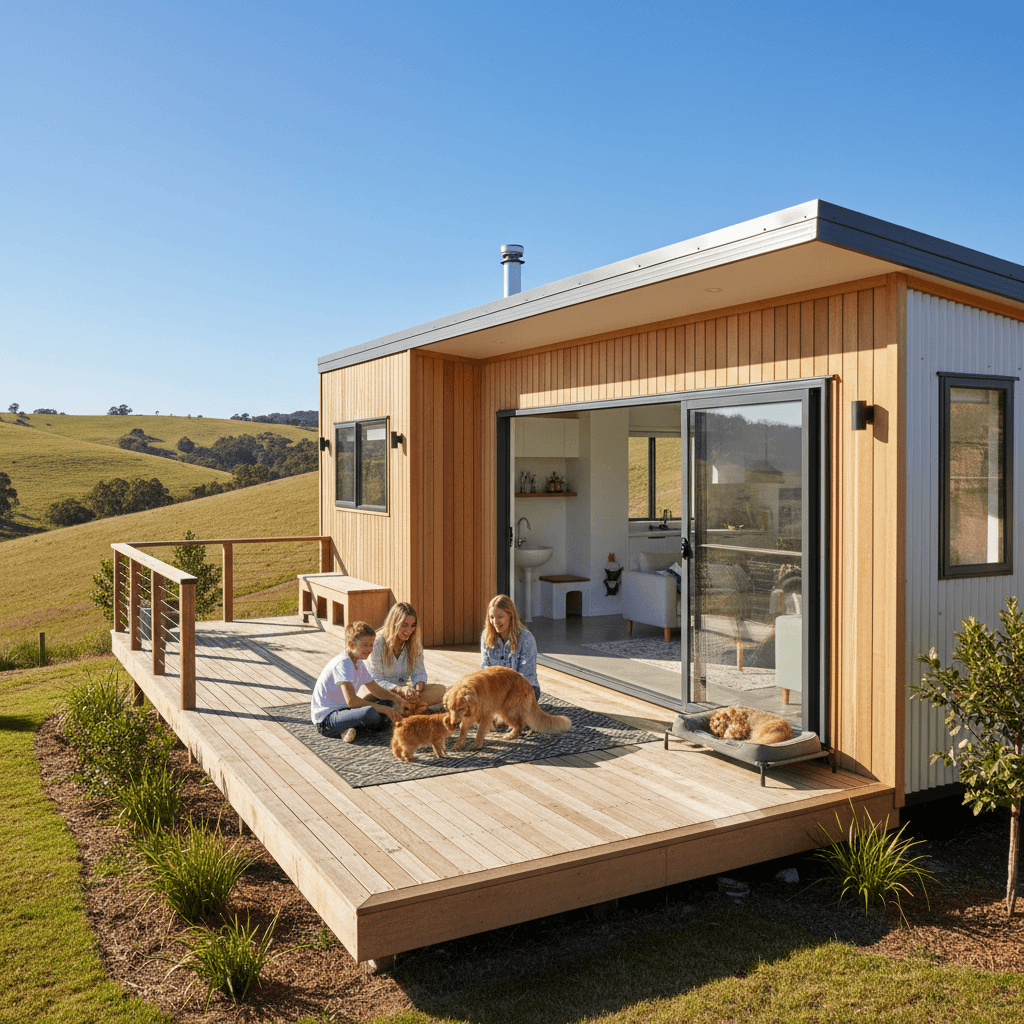
Australian housing trends are focused on erasing the line between the indoors and the outdoors. For our pets, this means freedom of movement. When selecting the windows and doors for your kit home, consider the placement of integrated pet doors. Many modern glass sliding doors can be fitted with high-quality pet inserts that maintain the thermal efficiency of your home while allowing your cat or dog to come and go as they please.
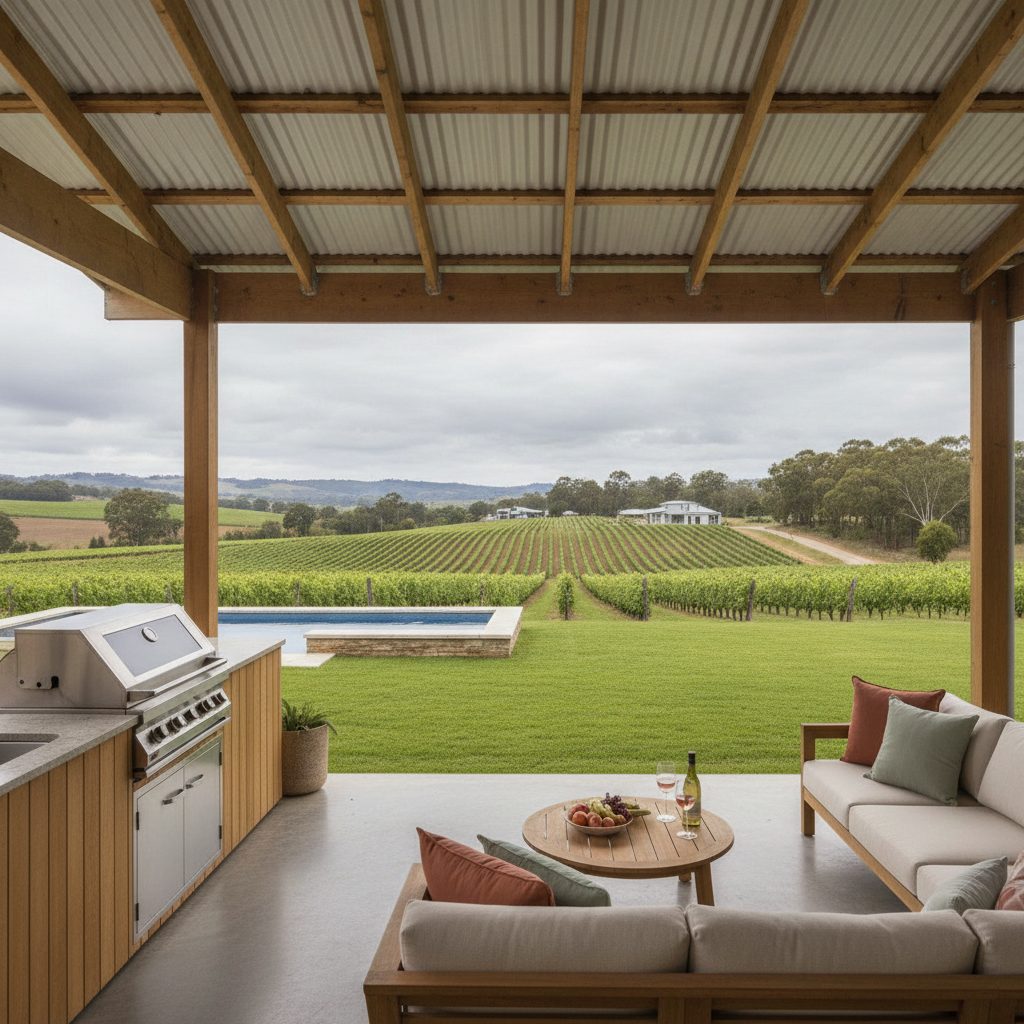
Designing large decks or alfresco areas is another hallmark of the kit home lifestyle. Using durable decking materials ensures that the space remains a safe place for pets to lounge. Since most kit homes utilize high-quality steel frames, you have the structural integrity to create wide, open spans and large doorways, which not only look beautiful but create a clear sightline so you can keep an eye on your pets while they are playing in the backyard.
Owner-Builder Tip: Safe and Durable Materials
As an owner-builder, you have the final say on the finishing touches. When it comes to walls, consider using semi-gloss or satin finishes for paint in high-traffic areas. These are much easier to wipe down than matte finishes when a wet dog decides to have a good shake after a bath. Additionally, consider the height of your windows. Many pets love to look outside, so low-set windows or 'picture windows' can provide hours of entertainment for a housebound cat or a curious dog.
Bespoke Built-ins for Four-Legged Friends
The beauty of the 'Design and Lifestyle' approach is finding clever ways to reduce clutter. Pet crates and bulky beds can often disrupt the flow of a room. A growing trend in Australian homes is the 'under-stair' or 'under-bench' pet nook. If your kit home design includes a staircase or a large kitchen island, talk to your cabinet maker about leaving a void that can be turned into a cozy, integrated den for your pet. This keeps their sleeping area tucked away but still part of the social hub of the home.
Steel Frames: The Quiet Advantage
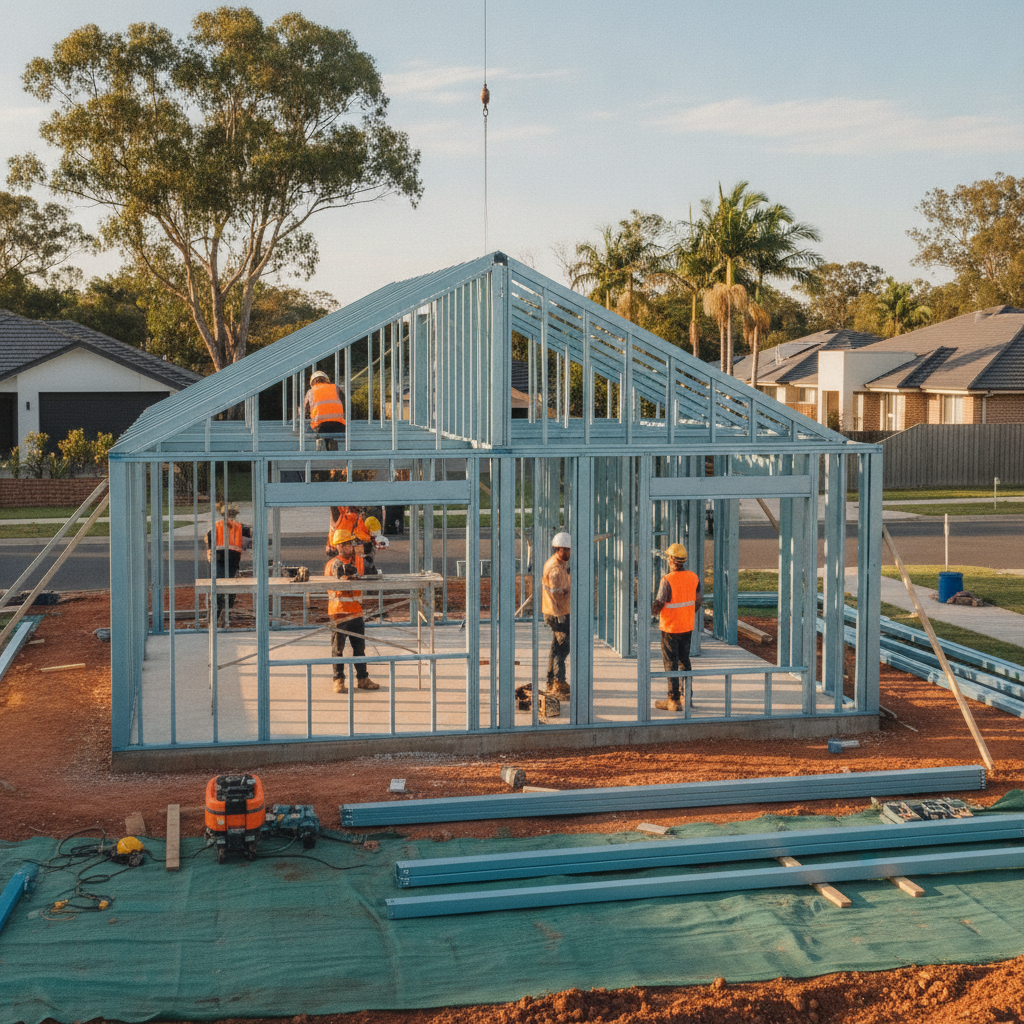
While design is about aesthetics, the bones of the home matter too. Using Australian made BlueScope steel frames offers a subtle but important benefit for pet owners: peace and quiet. Steel frames are dimensionally stable, meaning they don't warp or twist over time. This reduces the 'creaks and groans' that can sometimes spook sensitive pets during a storm or high winds. Furthermore, steel frames are termite-proof, ensuring that the structural integrity of your sanctuary is never compromised, giving you one less thing to worry about as you manage your build.
Landscaping for Safety and Stimulation
The design process doesn't end at the walls of your kit home. For many Australians, the dream is a large block where pets can roam. Consider 'pet-scaping' your garden by avoiding toxic plants like lilies, sago palms, or certain types of ivy. Create shaded zones using pergolas or native trees so your pets have a cool place to retreat during the peak of summer. Using secure, attractive fencing is a must, and many owner-builders find that echoing the cladding colors of their kit home in their fencing creates a professional, architecturally designed look.
Practical Tips for Planning Your Pet-Friendly Kit Home
- Plan for Plugs: Ensure you have power outlets in tucked-away corners for things like automatic water fountains or self-cleaning litter boxes.
- Storage is Key: Dedicate a specific cupboard in your laundry or kitchen for bulk pet food storage to keep the bags out of sight.
- Choose Pet-Friendly Fabrics: When it comes time to furnish your new home, look for fabrics like microfibre or outdoor grade textiles that are resistant to snags and easy to clean.
- Think About Acoustics: If you have a barker, consider high-quality insulation in your kit home walls to help dampen the sound and keep the neighbors happy.
Conclusion
Investing in a kit home gives you the unique opportunity to build a space that isn't just a house, but a tailored environment for your entire family, including those with fur and feathers. By focusing on durable materials, clever layouts like mudrooms and integrated dens, and taking advantage of the open-plan flexibility that steel frame homes provide, you can create a stunning home that stands up to the rigors of pet ownership without sacrificing style. Building as an owner-builder is a rewarding journey, and seeing your pet settle into a space designed specifically for their comfort is perhaps the greatest reward of all.