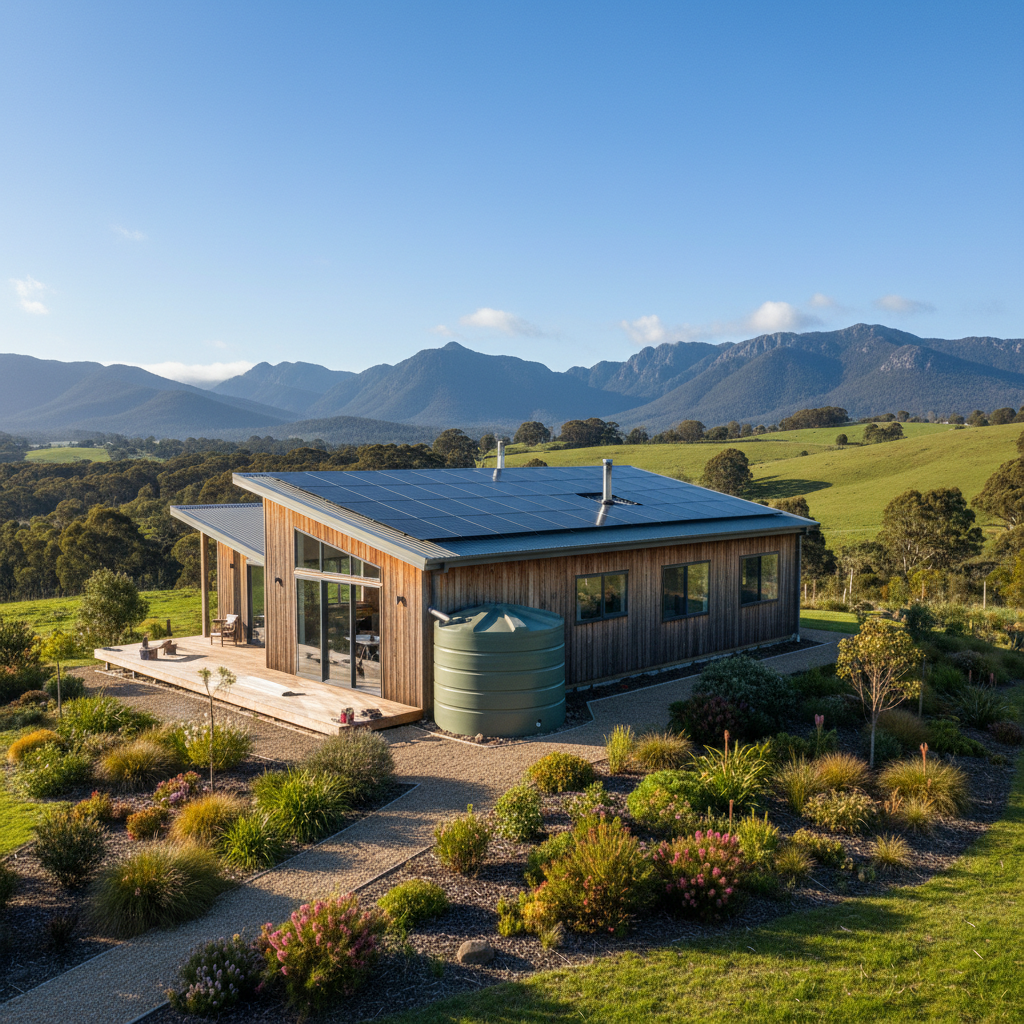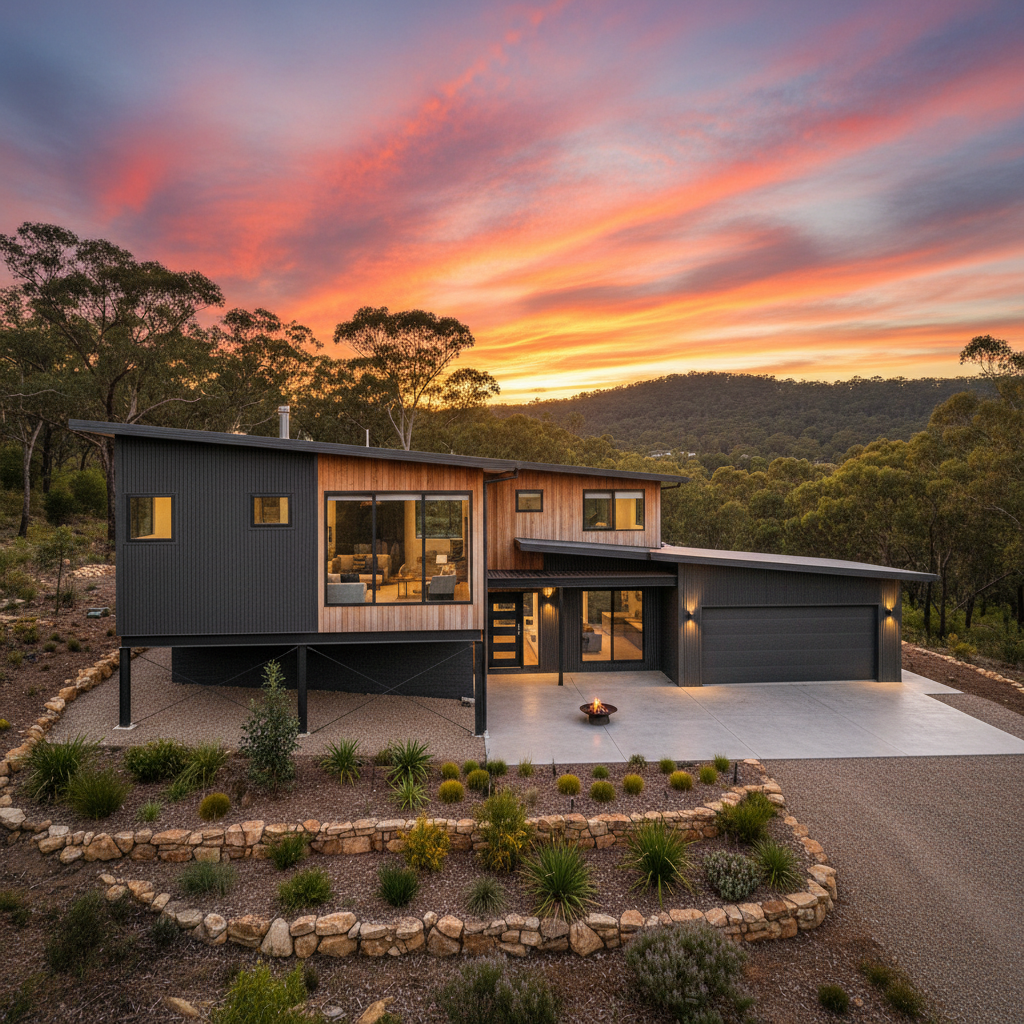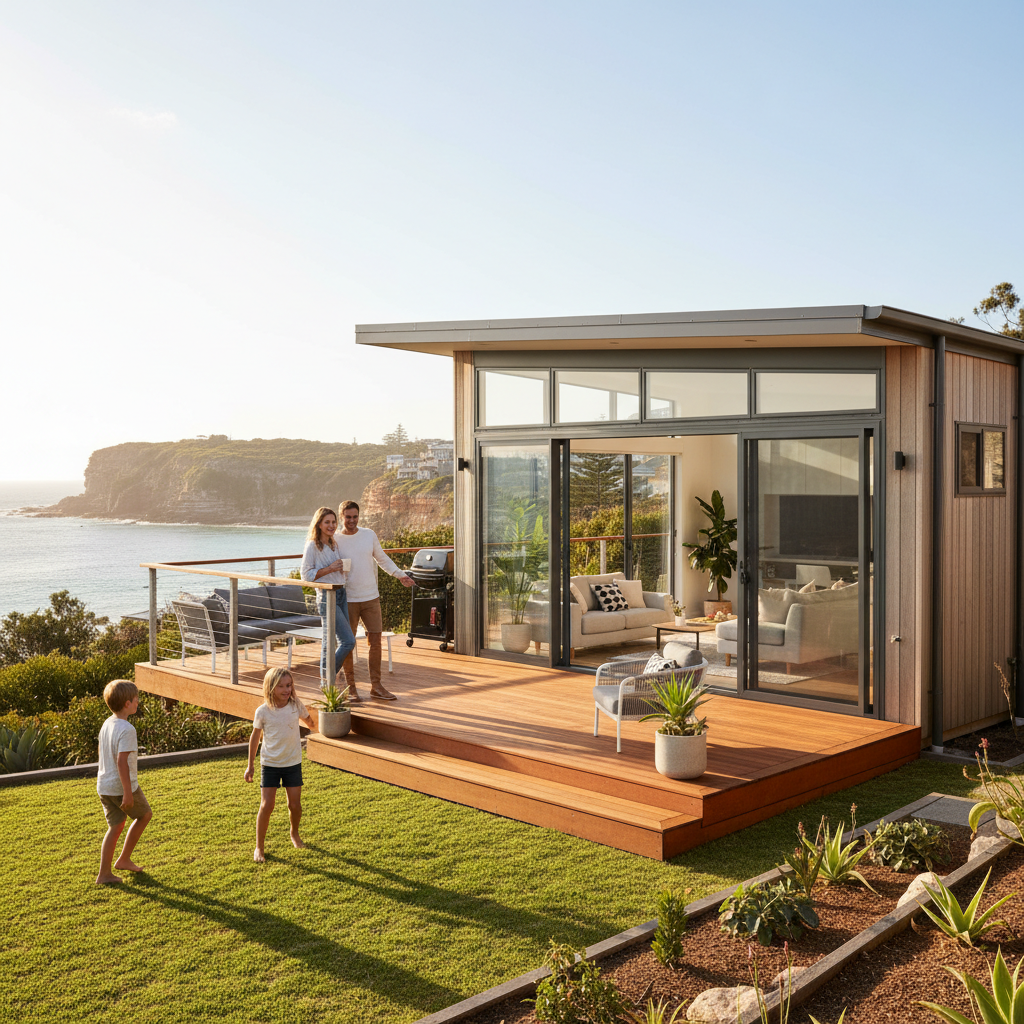
The suburban shift is here to stay
It was Tuesday afternoon in late 2020. Most of us were jammed into a corner of the kitchen trying to run a Zoom meeting while the kids fought over the remote in the next room. That was the moment the open-plan dream died for a lot of Australians. We spent twenty years knocking down walls only to realize that, when you're actually living in a house 24/7, those walls are pretty handy for sanity. These days, the phone doesn't stop ringing with people looking for designs that offer something more than just a big square room. They want zones. They want quiet. They want a house that works as hard as they do.
The Australian housing market has shifted. We aren't just looking for a place to sleep and store the mower anymore. Home has become the office, the gym, and the sanctuary. This is why kit homes have seen a massive resurgence. When you're an owner-builder, you aren't stuck with what a volume builder thinks you need based on a cookie-cutter estate plan in western Sydney. You get to decide where the study goes. You get to decide if that extra bedroom should actually be a sound-proofed media room because you're tired of hearing the teenager play Fortnite at 2am.
Zoning beats open-plan every day of the week
If you look at modern Australian design trends, the 'Great Room' is shrinking. People are asking for 'broken-plan' living now. This means using the structural flexibility of steel frames to create nooks and separate wings. Because steel has a high strength-to-weight ratio, you can still have those wide spans if you want them, but the smart money is on creating distinct zones. A customer down in Gippsland recently modified their four-bedroom kit to include a massive 'mudroom' entry. Why? Because they realized during lockdowns that they needed a transition space to dump the boots and the stress before hitting the living area. It's about flow.
And let's talk about the home office. A desk in the corner of the lounge doesn't count. We're seeing owner-builders prioritize 1.5-size bedrooms. That extra half-space is specifically for a permanent workspace with decent lighting and power points that aren't buried behind a bedhead. If you're building with a Truecore steel frame, it's dead easy to calculate your internal wall placements to accommodate these desks without sacrificing the walk-in robe. Plus, steel is dead straight. No wavy walls when you're trying to install custom joinery for a home library.
Practicality for the owner-builder
When you take on the role of an owner-builder, you're the boss. You manage the site, you book the sparky, and you coordinate the plumbers. It's a big job, but it gives you total control over the finished product. One tip I always give people is to look at your site orientation before you even unroll the plans. In Australia, we've got a sun that wants to bake us half the year. If you're building out in Dubbo, you want your living areas facing north with decent eaves to catch that winter sun but block the summer heat. Most kit designs are adaptable. You can flip the floor plan to suit your block's aspect. It sounds simple, but you'd be surprised how many people forget until the slab is poured.
Another thing. Termites. If you're building in Queensland or northern NSW, termites aren't a possibility, they're an inevitability. Using a steel frame kit means the skeleton of your house is literally inedible to them. It's one less thing to stress about when you're doing your owner-builder compliance checks. You still need your barriers for the timber fit-out, but the structural integrity stays solid.
The Rise of the Multi-Generational Kit
Housing isn't getting any cheaper and families are staying together longer. We're seeing a huge spike in 'dual-key' style kit homes. This is basically a standard home split into two separate living zones under one roofline. One side for the parents, one side for the adult kids or the grandparents. Because a kit arrives as a pre-engineered package of frames and trusses, it’s much faster to get to the 'lock-up' stage than traditional stick-building. This is a massive win if you’re living in a caravan on-site while you build. Nobody wants to spend two years in a Jayco with a chemical toilet.
Technical bits you shouldn't ignore
If you're diving into this, you need to get familiar with the National Construction Code (NCC) Volume 2. It’s the bible for residential building in Australia. Even if you aren't swinging the hammer yourself, you need to know what your trades should be doing. For instance, when your windows and doors arrive with the kit, make sure they meet the specific Bushfire Attack Level (BAL) rating for your area. If you're in a BAL-29 zone, your glazing and screens have to be up to scratch or the council inspector will knock you back before the gyprock even goes up.
Windows are the most expensive 'hole' in your house. In the post-pandemic design world, we're seeing people opt for larger spans of glass to bring the outside in. It helps with the cabin fever. But big glass means big heat loss or gain. Talk to your kit provider about double glazing options early. It’s a lot harder to change your mind once the frames are standing on the slab. Most kits come with standard aluminium frames, which are great, but the glass spec is where the real comfort happens.
The shed-to-house trap
I see this a lot. Someone buys a cheap farm shed and thinks they can just chuck some insulation and a sliding door in it and call it a home. Don't do it. A residential kit home is engineered differently. The portal frames, the bracing, and the connection details are all designed for human habitation under AS 4100 or AS/NZS 4600. A shed isn't. When the wind picks up in a storm, a house frame is designed to handle the pressure without the walls racking. Stick to a purpose-designed residential kit. Your local council will thank you, and your insurance company actually might cover you if the worst happens.
Owner-Builder Tip: The slab is everything
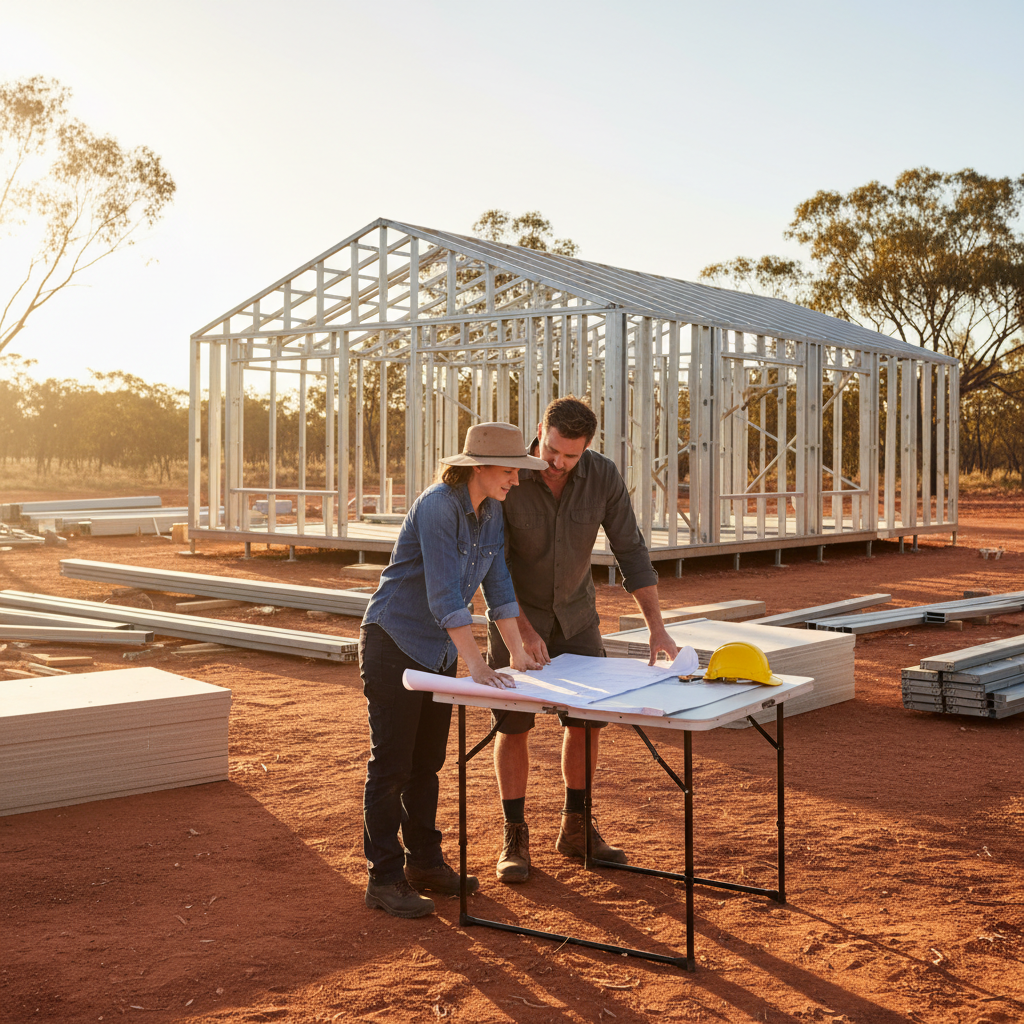
If your slab is out by even 10mm, your steel frames won't sit right. Steel is unforgiving. Unlike timber, you can't just shave a bit off with a plane if it doesn't fit. You want your concreter to be a perfectionist. Get your kit delivery timed for a few weeks after the slab is poured so it has time to cure properly. When those frames arrive, check the packing slip against what's on the truck. Everything is numbered. It’s like a giant Meccano set for adults. If you’ve got a clear site and a straight slab, the standing of the frames can happen remarkably fast. It’s probably the most satisfying part of the whole build.
Building your own place isn't for the faint of heart, but it's the only way to get exactly what you want in a market that's increasingly rigid. Australians are smart. They know that the old way of building doesn't necessarily fit the new way of living. We're looking for resilience, quiet spaces for work, and structures that won't get eaten by bugs or warped by the sun. A well-designed kit, a good slab, and a bit of grit can get you there. Just make sure you plan for that home office. You're going to need it.