The Great Australian Squeeze
Walk around any new estate in Western Sydney or the northern sprawl of Brisbane and you'll see the same thing. Huge houses on tiny blocks. Eaves almost touching. No yard left for a hills hoist, let alone a gum tree. It’s a bit of a joke, really. Because of this, we're seeing a massive shift in how people actually want to live. They're ditching the four-bedroom-plus-theatre-room monster for something they can actually manage. The movement toward smaller, smarter kit homes isn’t just about making do with less space. It’s about not being a slave to a house that takes three hours to vacuum.
I’ve seen blokes who spent twenty years in massive suburban sprawls suddenly decide they want a 60-square-metre secondary dwelling in the backyard for their parents, or a tight two-bedroom kit home on a bush block near Mudgee. They want quality over quantity. They want a steel frame that’ll stand up to termites and won’t warp when the humidity hits 90 percent in January. But mostly, they want a design that doesn't waste a single millimetre.
The End of the Formal Dining Room
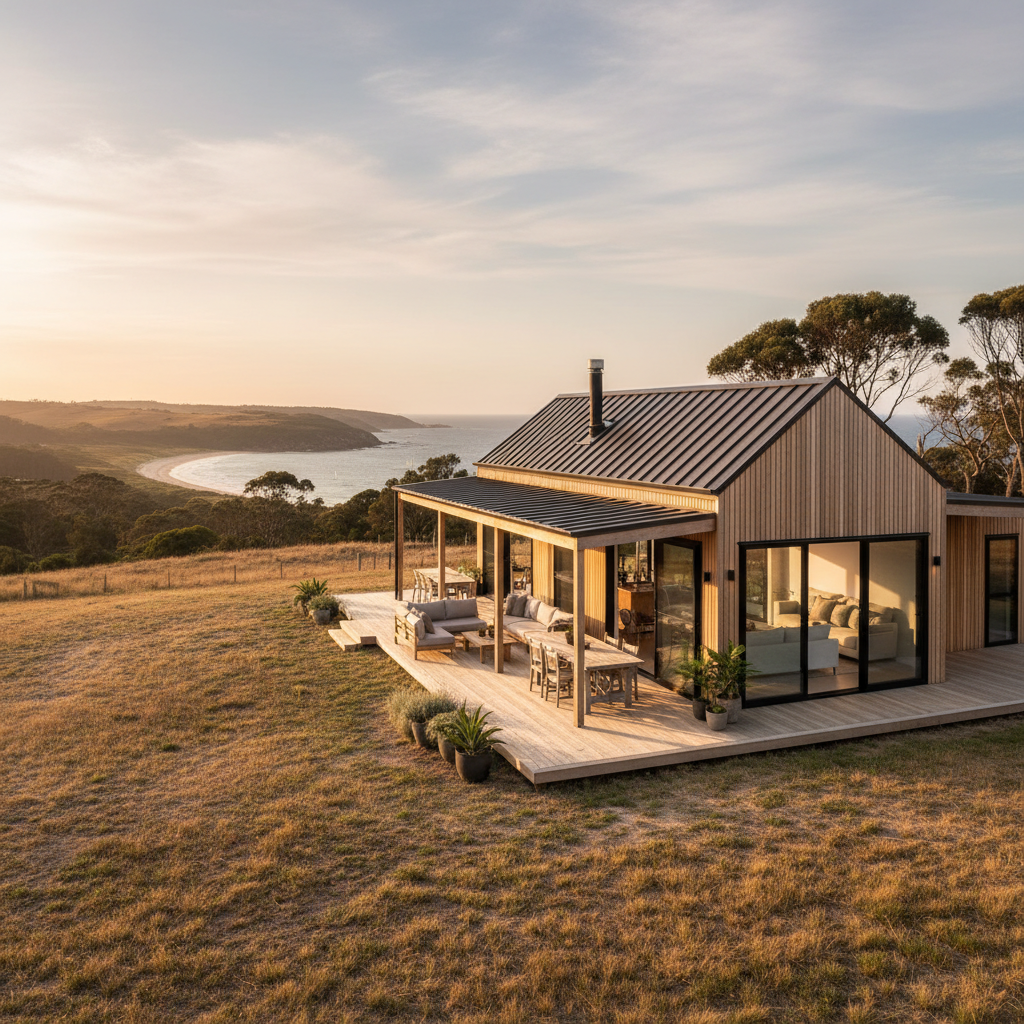
Nobody uses them. Honestly. We’ve looked at hundreds of floor plans over the years and the first thing to go in a smart, modern design is the dedicated dining room. People want big, open-plan kitchen and living areas that bleed into the outdoors. In Australia, your deck is your second lounge room. If you’ve got a kit home with a decent roofline that extends over a timber deck, you’ve basically doubled your living space for a fraction of the cost of adding a masonry room. Plus, it feels better. Air actually moves. You aren't boxed in by four walls and a tiny window.
Smart design is about sightlines. If you can stand at your kitchen sink and see right through the living area to the trees outside, the house feels massive. It doesn't matter if the actual footprint is small. We recommend looking for designs with high ceilings or skillion roofs. Steeper pitches or raked ceilings inside a steel-framed kit give you that volume. It’s the difference between feeling like you’re in a shoe box and feeling like you’re in a coastal retreat. And since steel frames like the TRUECORE brand allow for those wider spans without needing bulky internal load-bearing walls, you can keep things open. No annoying pillars in the middle of your kitchen.
Owner Builders are Getting Savvy with Materials
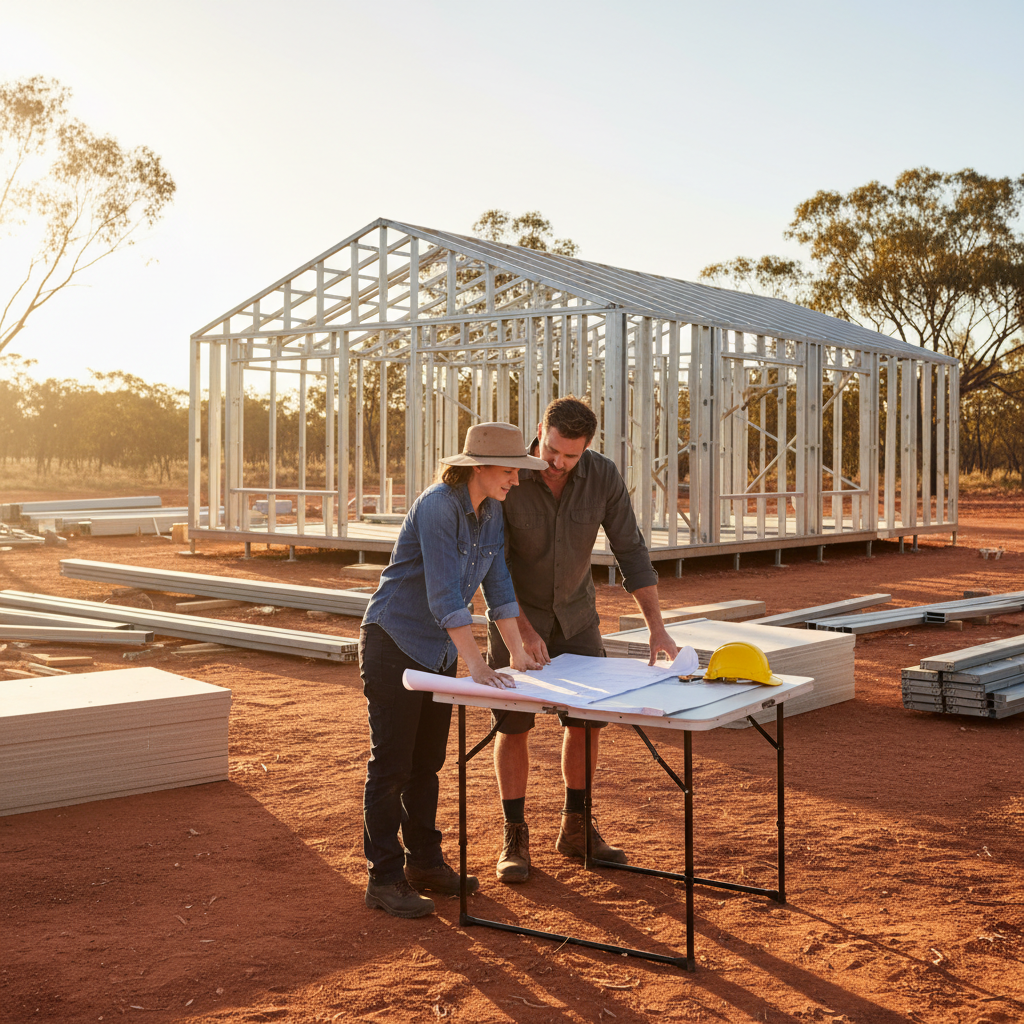
If you're taking on the project yourself as an owner-builder, you've got to be realistic about what you can handle on the tools. That’s why the trend is moving toward kit homes that arrive with the heavy lifting done. You get the frames, the trusses, the roofing, and the cladding all sorted. It’s like a giant Lego set for adults, but with better instructions and heavier stakes. But here is the thing. Small designs are harder to get right than big ones. Every cupboard counts. Every door swing matters.
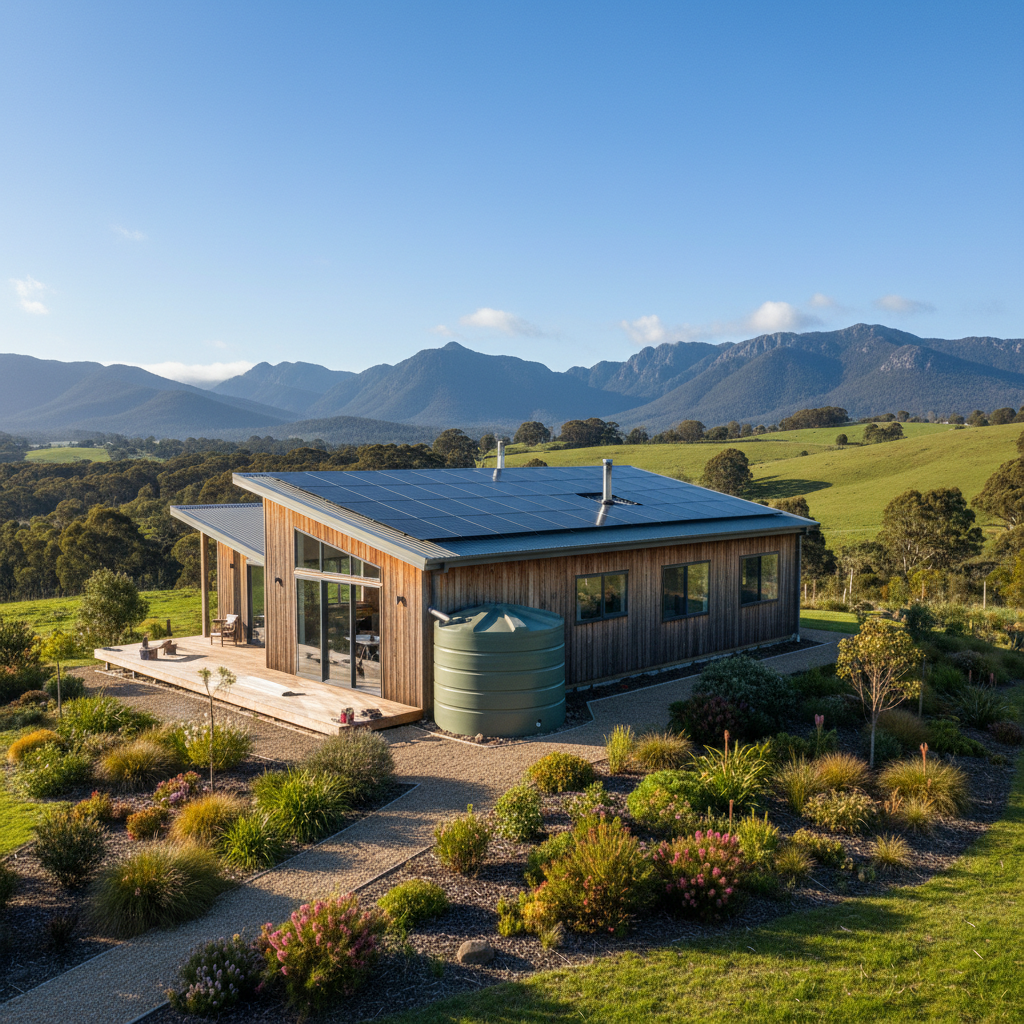
One trick we tell people is to look at the window placement. If you're building a smaller kit, don't just chuck windows anywhere. You need to think about the sun. In Australia, north-facing glass is gold. It keeps you warm in winter and, if your eaves are designed right, keeps the sun out in summer. A lot of the stock-standard builders just mirror a plan and plonk it on the site. As an owner-builder, you can actually take the time to rotate that kit so it works with the land. It sounds simple, but you'd be surprised how many people forget it until they're sitting in a glass box at 4pm in February sweating through their shirt.
Technical Realities of Build Quality
We use BlueScope steel for a reason. It’s straight. Wood is great, don't get me wrong, but it moves. It bows. It has knots. When you're building a small, high-end kit home, you want your walls to be perfectly plumb so your cabinetry fits first time. There is nothing worse than trying to install a beautiful kitchen in a small space and finding out the wall has a 10mm belly in it. Steel doesn't do that. It stays where you put it. This is especially vital for the DIY crowd. If your bones are straight, everything else follows.
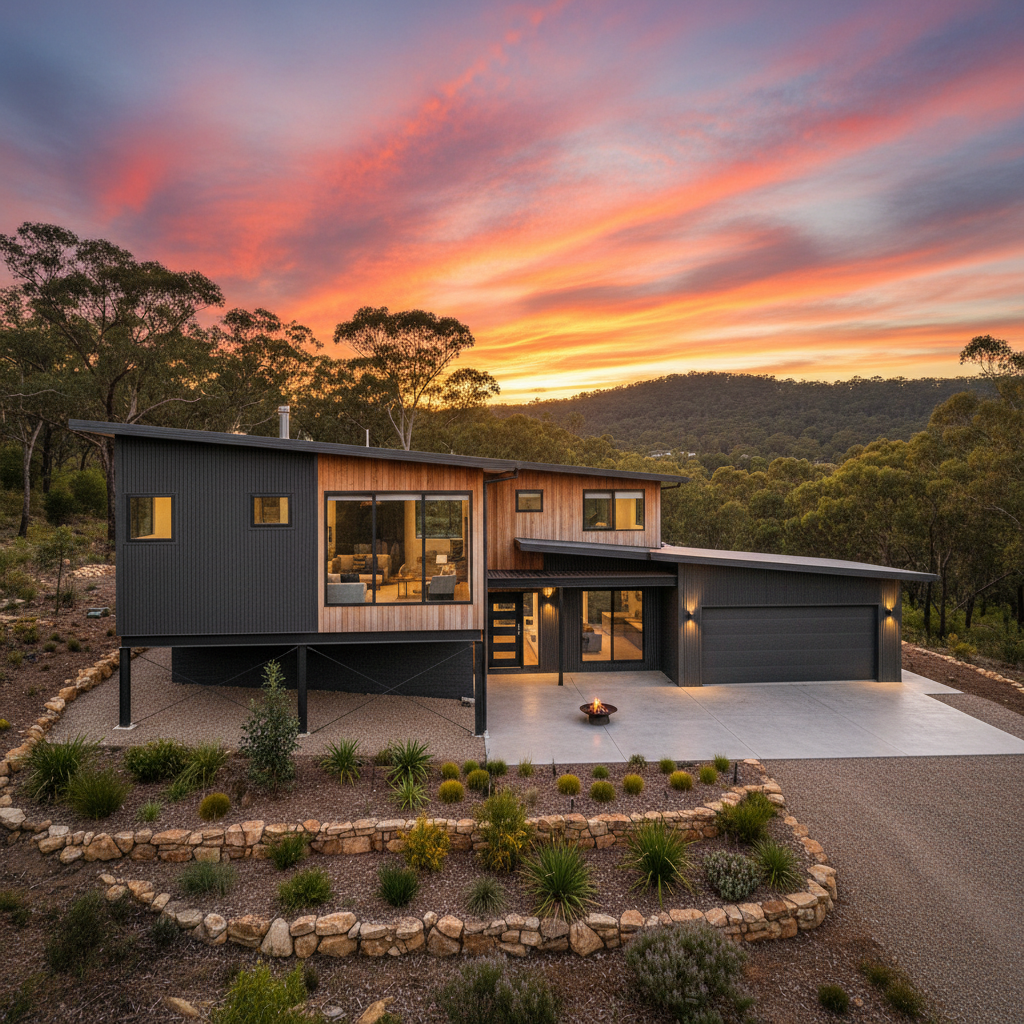
Also, think about BAL ratings. Bushfire Attack Levels are no joke anymore. Many of our customers are building in regional areas like the Blue Mountains or the Victorian high country. Steel frames and metal cladding aren't just a design choice there; they're a practical necessity. You want a house that gives you the best chance when things get hairy. Plus, termites can't eat steel. That's a huge peace of mind factor when you're building in the scrub.
Practical Tips for Your Kit Home Project
Don't jump in without a plan. Here are a few things I've learned from watching people do this for fifteen years:
- Check your local council rules before you even look at floor plans. Every shire has different rules about secondary dwellings or minimum house sizes. Don't fall in love with a kit you can't build.
- Get your slab right. Everything starts with the concrete. If the slab is out of square, you're going to be fighting the frames the whole way. Spend the extra time or money to get a top-tier concretor who knows how to read house plans.
- Insulation is not where you save money. Put the best stuff in the walls and ceiling while the frames are open. You'll thank me when the first heatwave hits.
- Manage your trades early. Plumbers and sparkies are busy. Don't wait until the frames are up to start calling around. Get them lined up weeks in advance.
The Shift Toward Quality
The trend we're seeing across Australia isn't just about saving money on a smaller footprint. It's a lifestyle choice. People are tired of spending their weekends doing maintenance on a house that's too big for them. They'd rather have a high-spec, two-bedroom kit home on a nice piece of dirt than a McMansion in a suburb where they don't know their neighbors. It's about freedom. Freedom from a massive mortgage and freedom from endless house chores.
When you take control as an owner-builder, you see exactly what goes into the walls. You know the quality of the steel. You know the insulation is tucked into every corner. You know the windows are flashed correctly. There’s a massive amount of pride in that. It’s not just a house; it’s something you orchestrated. And in the current market, that sense of control is worth more than a few extra spare rooms you'll never sit in anyway. Smaller is definitely better, provided the design is smart and the materials can handle the Aussie sun. So, stop looking at the five-bedroom plans. Think about how you actually live every day and build for that instead.